Vodou Footprints: Outside the Blood Walls

Day11_Abomey-4

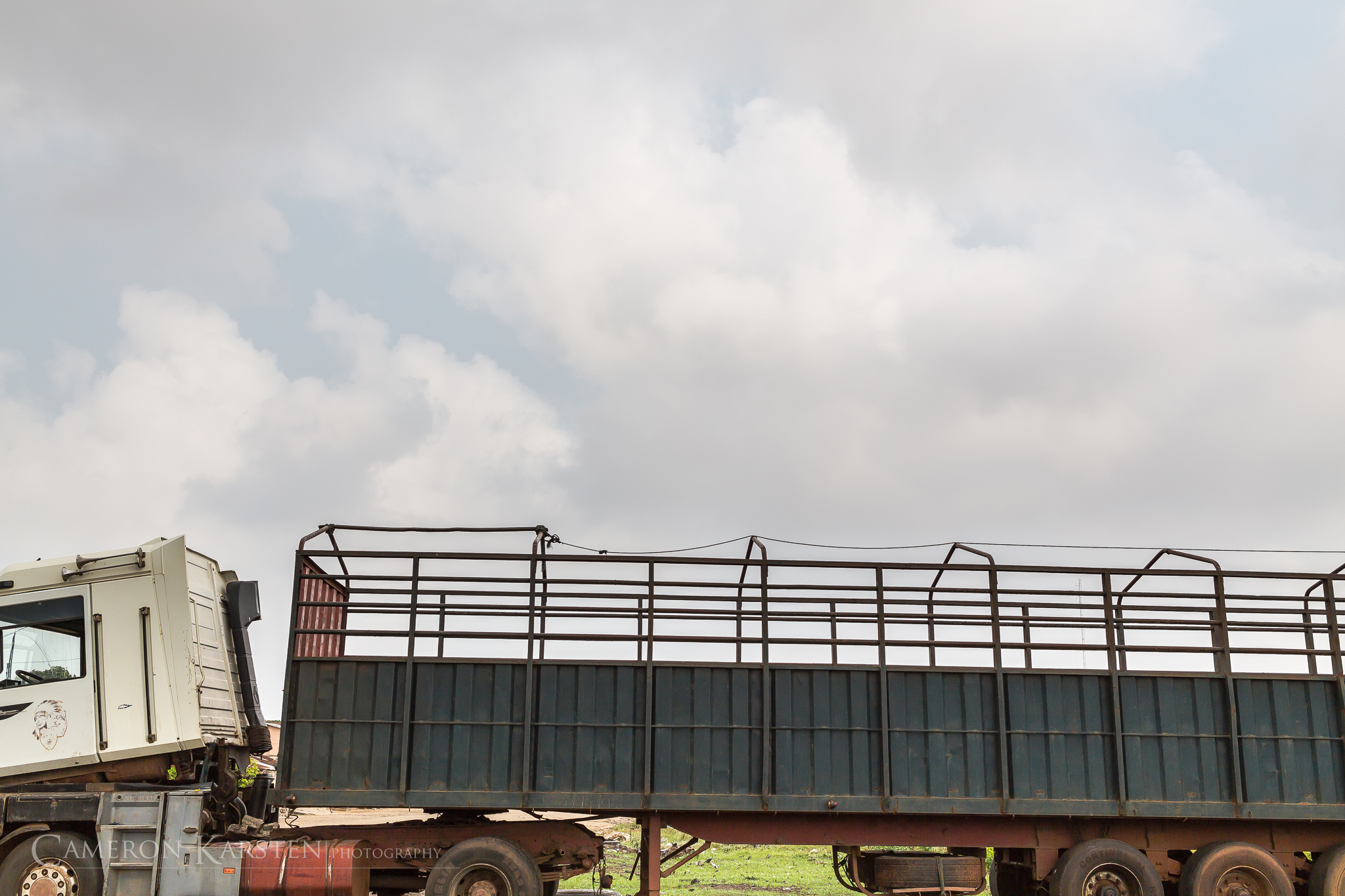
Careening east we leave Togo and turn northward, passing into Central Benin. It is flat. I think Africa and I think extremes. Something like Vodou, yes. Extreme. And now when I think Central Benin, heading north just off the coastline, I picture extreme flatness. The roads are straight as an arrow, gray asphalt that moves with the sun’s curvature. Arid dirt lines the peripheral with scrubland leading into an empty horizon. Towns come and go, stopping points for megalithic lorry trucks that bump along the three-day journey into Burkina-Faso and Niger, names in and of themselves that feel extreme. Andretti, or Geoffrey, is a fast driver. He’s our driver, and he’s safe. But going through Central Benin to Abomey feels like forever.

Abomey is the central focal point for power, the power that once was called the great Kingdom of Dahomey. It was a royal city and it was feared by its neighbors (remember the first King of Ganvie? He turned into a stork and fled across waters he was so afraid). It was feared by the colonial powers and nearly defeated the French in the year 1892. It was feared by its own people, traitors who were captured, pushed off its towering walls and sacrificed to the gods. And it is here that Bruce Chatwin’s character Francisco Manoel de Silva in The Viceroy of Ouidah, the beguiled Brazilian slave trader, was sent to as a prisoner, only to escape with the King’s mad half-brother:

The palace of Abomey had tall walls made of mud and blood but very few doors. It lay at a distance of twenty-three thousand, five hundred and two bamboo poles from the beach. In its innermost compound lived the King, his eunuchs and three thousand armed women.

Day2_Cotonou-11

It is here where the walls are made from the blood of enemies, where the King had the pleasure of sitting on a throne of skulls, as well as choosing from a harem of 40+ women for an evening’s lover. It is here where protection came in the form of those three thousand armed women, the world’s only true knowledge of the existence of the famed Amazonian women warriors; bare-chested females who hacked off heads and bit their foe with razor sharp teeth filed to points. Extreme.

It was dark by the time we reached Abomey, dark just as the night da Silva walked the length of those many bamboo poles into the Kingdom of Dahomey. To foreigners the Kingdom itself could not even be pronounced. The French misspoke it, the culture’s native tongue Danhomé, which in Fon means in the belly of Dan. This is the name of the great Vodou snake god—bringer of life and fertility, the symbolism of eternal recycling. But today it has erased that meaning, succumbing to the French woes, contrived to an erred Dahomey.

Day8_Ouidah-168

We got our room and sat down for dinner. A man arrived. Menus? Instead he asked if we wanted to see a Vodou ceremony. Right now? Yes. We had to go now. We all looked at each other. He was serious. We were serious. This was our moment with Dan, the master of a fertile project— Danhomé reconciled! Let’s go.

The man flagged three motorbikes once we were out on the dark dusty roads. In Abomey, there are few streetlights and those that worked are as yellow as a melted crayon mixing with its close orange counterpart. The tungsten stain is eerie in the damp heat of inner Africa, with no breeze but passing transportation. Once on the back of our motorbikes, we sped off down foreign roads and eventually arrived at an alleyway. We got off, paid for our fare and our escort’s. There was no music. Hardly any people. we knew we were thinking the same thing: Shit. What have we done.

Day2_Cotonou-4

Follow me, he said. So we did like puny submissive sheep leaving the tungsten night to follow our shepherd into the shadows of a narrow alley. There was dust beneath our feet, fine red African dirt that would easily soak up the blood spilled from our dying bodies. He was just looking for another human sacrifice: The blood of two foreigners! Abomey’s new theme among the throngs of Vodou tourists.

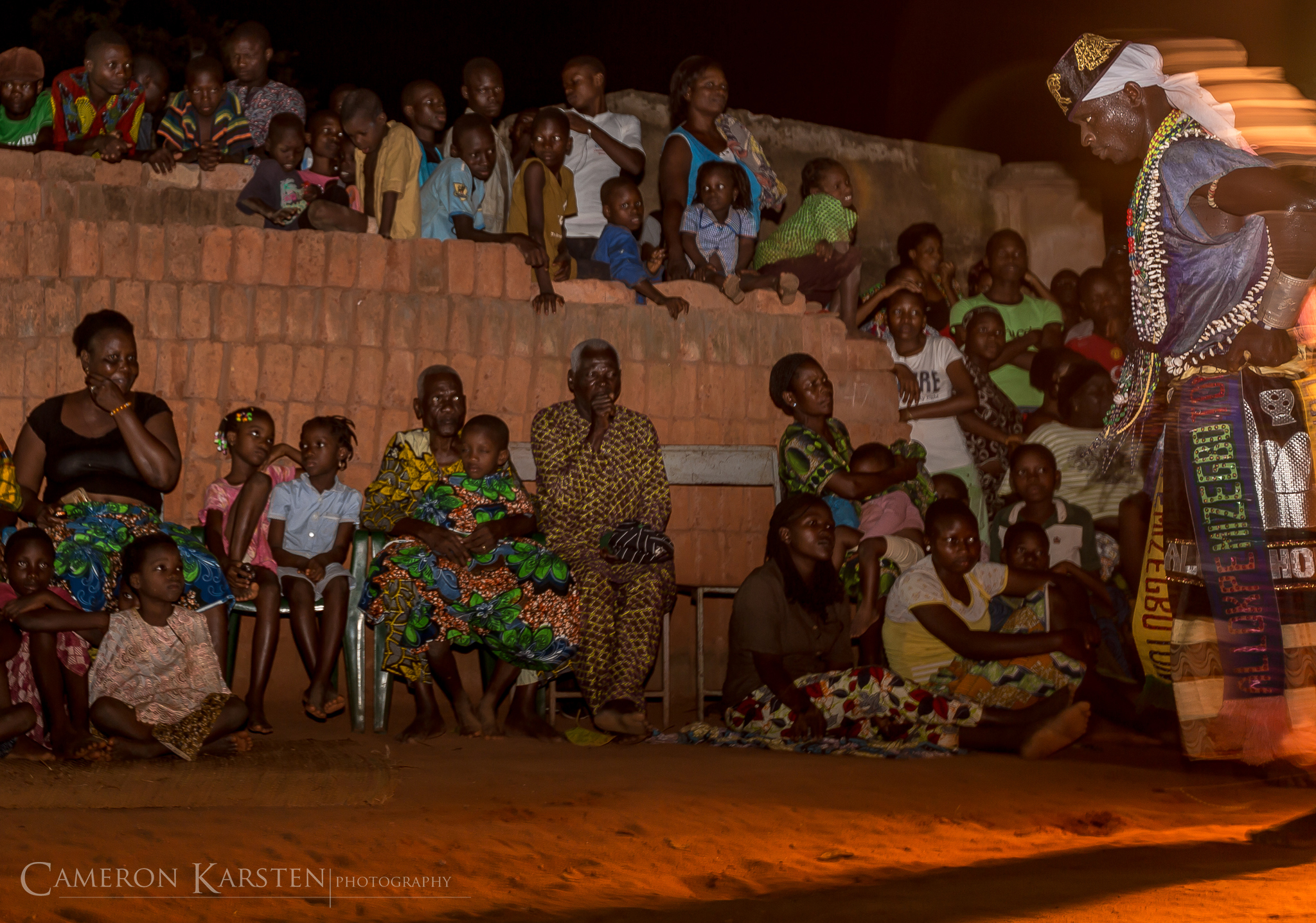
The man who led us here was in front and he kept waving us onward as my fists clenched tighter with each twisting corner. I felt like the walls were closing in, my backpack of camera gear tightening on my chest with each heavy breath. Then there was music. Tam tams drumming. People singing. An air of excitement reaching our thriving bodies. The yellow-orange glow began to return. Suddenly from the darkness we rounded another corner and stepped into the thrill of a local Vodou ceremony.

Day11_Abomey-24-Edit

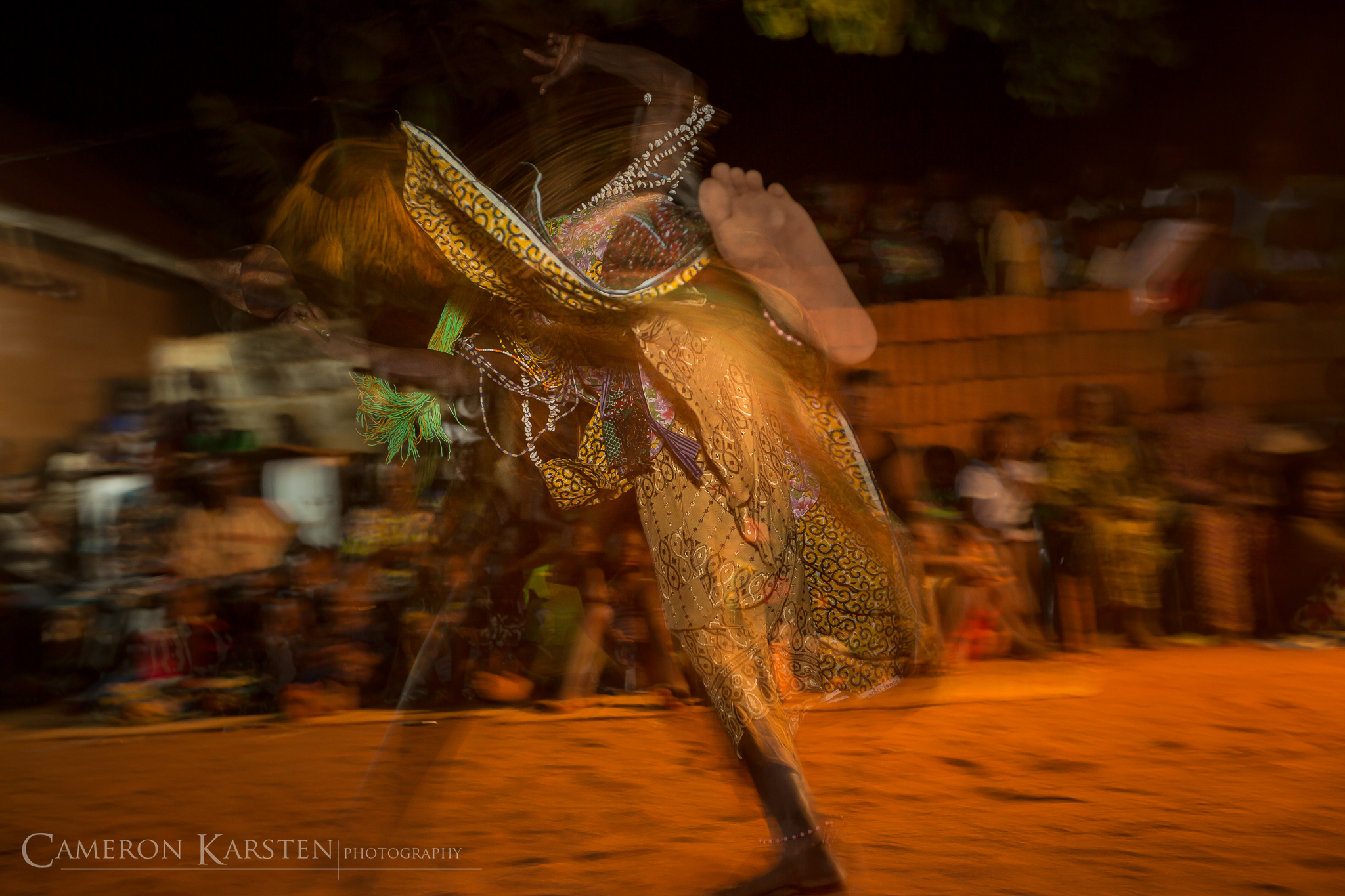
It took minutes that felt like hours to negotiate with the head priest. Meanwhile we were standing by in a thick crowd of black skin. Everyone was pushing together, inching closer to see the performers in trance, taking on the likeness of their gods. They spun in gallant costumes, led by the auditory energy of the drummers who sat under a dim light beneath an expansive green tree. People sat on the dirt, dignitaries in plastic chairs and locals up on the walls and roofs of the surrounding housing. I loosened my fists. Relaxed my shoulders and let out an air of tense breath. I felt my whole body relax into this sacred space of Vodou, a space that we have submersed ourselves in for close to two weeks. We were documenting, exploring and inevitably becoming a part of this culture, a practice that supersedes any other form of religion since the dawning of humanity. 24/7 we were breathing Vodou and spinning its threads within our minds.

Day11_Abomey-36-Edit

For the next two hours we secured the trust and permission of the people to photograph their local ceremony. Two white photographers with their cameras and lenses and one flash each. We crouched near the Vodou practitioners, studying their movements, watching their feet kick up the red earth and stamp back down to the timing of the many drum beats. We stared and felt that process when an outsider slowly melds into the inner circle. It was impossible not to become a part of the discovery.

As photojournalists and writers, we strive every second to learn more about our subject. Knowledge is the avenue to the complete intimacy of exposure. When the project was first proposed—Hey, how about Vodou?—we knew very little if anything. Pins, needles and a doll? No thanks Hollywood. This goes beyond the misnomer of one of the world’s most unidentified cultures that holds its complex belief system in absolute secrecy. But as the modern age reveals itself and as the lucrative endeavors within the tourism industry help provide for individuals, families and their country, Benin in particular has opened its doors just slightly, allowing those willing enough to go the distance, entrance into a place of origin where signs of evolution are omnipresent.

Day11_Abomey-30

The ceremony ends. Our guide, the man who led us to this remote part of Abomey, where the magic history of Vodou and the powers of a royal city in the likes of Timbuktu and Zanzibar dominate, took us away. We were back at our hotel, a sweet little spot called Chez Monique. It was late. The kitchen was asleep as a group of large women lounged next to a blaring television, only paying attention during fits of sleeplessness—a strange scene with the romantic French tongue licking at the shadowed night. A blue cast flickered into these thick crevasses. We sat down. Our food was still warm; a plate of couscous with half a chicken and half a rabbit. The night governed and that feeling permeated deeper: The traveler in a far land with the ebbs and flows of successes, not judged by good or bad, but merely by the feeling of excitement and the fluctuations of extremes, traveling from one end to the next and back again. A life of the unknown. This is Vodou land, beyond pins and needles.

Next essay –>

Day11_Abomey-35

Day11_Abomey-43

Day11_Abomey-41

Day11_Abomey-53

logo_blackTrajan

Vodou Footprints: Cotonou’s Spark

Day2_Cotonou_Egungun-336

I’m four beers deep and still have the need for another. It’s only 90°F, but 85% humidity feels much hotter—as though my blood is simmering from the inside out. I’ve sweat all water from my body and therefore have settled for the coldest beer a man can find. Here it’s Castel, a favorite from Ethiopia. Although I know it’s not scientifically sensible, the heat has decreed my parched lips the ultimate authority. At one point, it looks as though the barman has run out. So when a case of chilled Les Beninoise is proudly unveiled, the relief amongst the patrons is palpable. I might just survive this after all.

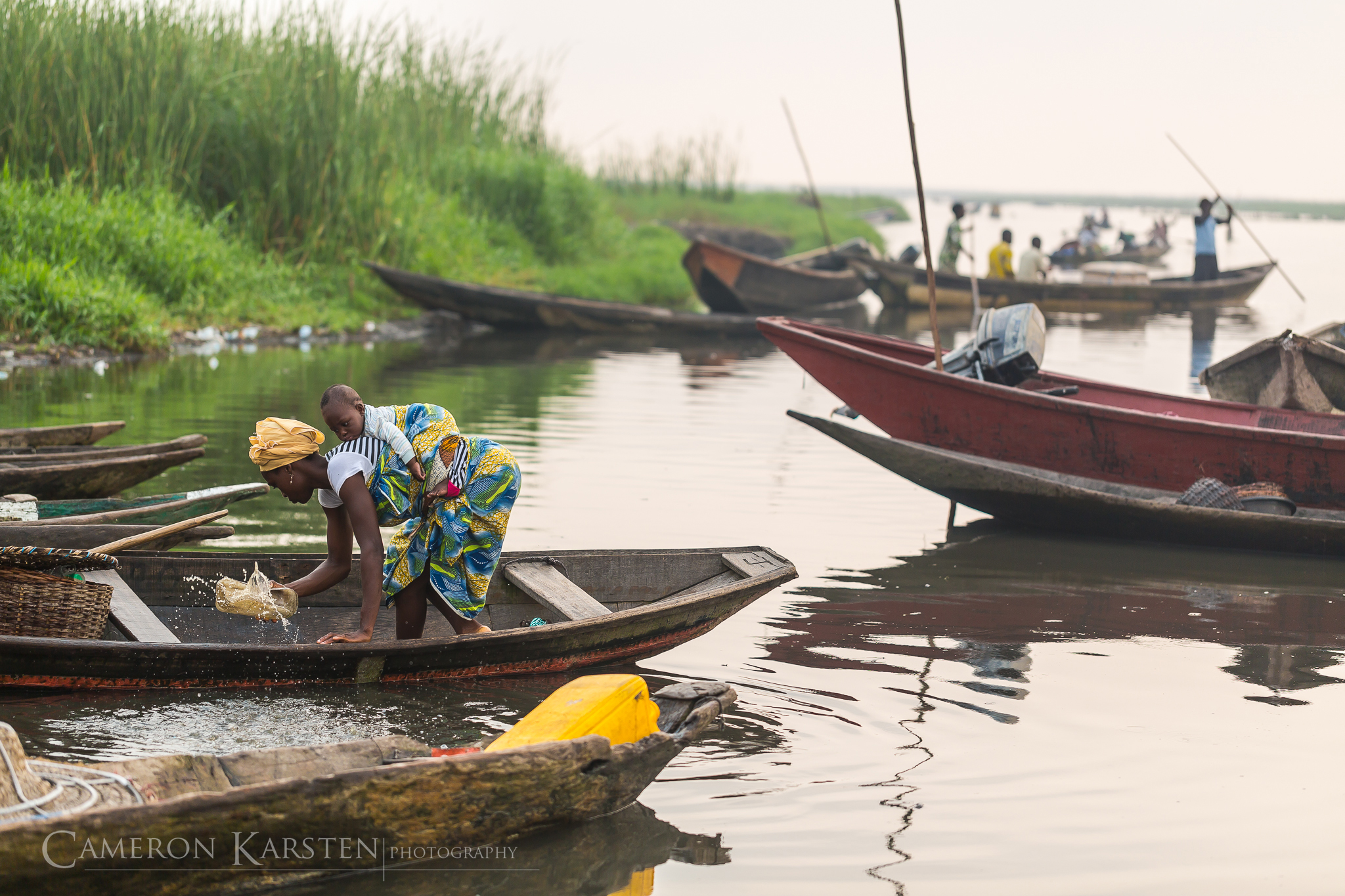
Cotonou is an African mega-metropolis. This means it’s not fun. Streets are clogged with dirt, dust, and worst of all, a constant plume of suffocating exhaust. It is full of life, and yet its conditions seem to defy it. Nevertheless, with population estimates exceeding one million, the inhospitality of this land simply cannot match the resilience of its inhabitants.

Day5_Allada-42

Welcome to Benin’s unofficial capital and undeniable commercial force. It is a city of hustle and bustle—a city whose voice is a cacophony of screaming motors and exposed engines. Where bush-taxis appear and dissolve at each shifting gear. Monstrous lorry trucks creak from bent chassis and blare horns willy-nilly. And the omnipresent zemidjan (motorbike) blisters the road with fearless abandon. A mind will not rest in a city with such movement.

Of course, there is no way to avoid this city. One must fly into the airport of Cotonou Cadjehoun to land in Benin. This is how I arrived, after 37 hours of relatively painless travel. Upon arrival, however, my body instantly succumbed to the shock of the heat. A heavy sweat filled the creases of my back and brow. My nose filled with a miasma of burning trash and hot spice. I was disintegrating. At customs, the usual challenge of patience became nearly intolerable in this climate. Time above the desk registered 2AM. I was exhausted, and still there were cases to collect—not only those filled with more or less replaceable clothes, but also thousands of dollars’ worth of photography and video equipment. My mind wandered. I was helpless among the fray of fatigue.

Day2_Cotonou_Egungun-18

Incredibly, everything (including my arranged pickup) arrived incident-free, and I quickly secured the necessities of bed, air-con, and mosquito net. The next thirteen hours were nonexistent.

When I awoke, Constantine had arrived and was similarly in need of recovery. He slept. I slept more. Instinctively, we both knew that whatever lay before us demanded the utmost mental and physical preparation—no matter how unforeseeable and incomprehensible.

***

The Dantokpa Market is over twenty hectares in size and grosses over a million dollars a day. We met its alleyways with amazement—the endless stalls contrived of scraps of wood and stacked with every conceivable produce, electronic device, food, and knickknack. Baguettes abutted sunglasses. Plastics flanked pottery. Eerie fluorescent liquids from Passotome glowed in unlabeled water bottles. Fried fish charred under a searing sun-glare while flies swarmed in frenzy. And no matter what the ware, a smell that can be described only as uncomfortable pervaded. But these things only piqued minimal interest. We sought something more bizarre—something more truly sacred to the people of West Africa: the fetish.

Day2_Cotonou-16

We had met at the Eddie Adams Workshop in upstate New York a mere three months before. As we traded stories and aspirations of travel and photography, we quickly formed a strong connection—a common desire to capture beautiful images of cultures around the world. On the second day of the workshop, he had approached me with a simple enough question: “How ‘bout a project?”

“Well, yeah. I’m interested.” Unbeknownst to me, he was proposing a much larger collaboration than I understood at the time.

“How about Voodoo?” he asked.

My hesitation was barely noticeable. “Hell, yes,” I blurted. Just like that. Although I knew little about Voodoo (or perhaps because of that ignorance), I couldn’t turn down such an enticing opportunity. It hadn’t been a question; it had been a summoning.

Day4_AbomeyCalavi-161

Three months later, we saw our first glimpse of the fetish. At Marché Dantokpa, we came across a table laid with an assortment of dried animals and constituents: monkey heads, gator claws, mandibles, chameleons, snake skins, and numerous bone fragments. To our untrained eyes, most of it was practically unrecognizable; but we knew we’d hit the jackpot.

It was guarded by two young Beninese men who clearly wanted nothing to do with us. At first, they simply ignored our presence. Undeterred, we continued to ogle the various items with wonderment—all the while attempting that woeful balancing act of respectful distance and inquiring curiosity. A few moments later, it was obvious that we weren’t intimidated by their coldness, and so the guards began to shoo us away: “No tourists! C’est mal por vous!”

We had no choice but to leave, and leave we did—but not without first satisfying and redoubling our growing determinations to see and to know what exactly had sent us halfway around the world in the first place.

Day3_Ganvie-40

Even still, little could we have predicted that within hours of dismissal we’d suddenly find ourselves thrust headfirst into the ceremony of the Thron god, face-to-face with Egungun spirits, and openly accepted into the Vodou community. Ultimately, the fetish market of dried livers and crispy hyena hairs, fascinating as it was, would be but a rousing sip from the bountiful tonic of Benin.

We had caught the spark of Cotonou.

Next essay –>

Day5_Allada-204

Day3_Ganvie-238

Day6_AlladaVodou-84

Day2_Cotonou-141

logo_blackTrajan

Firefly Salon Fall 2013

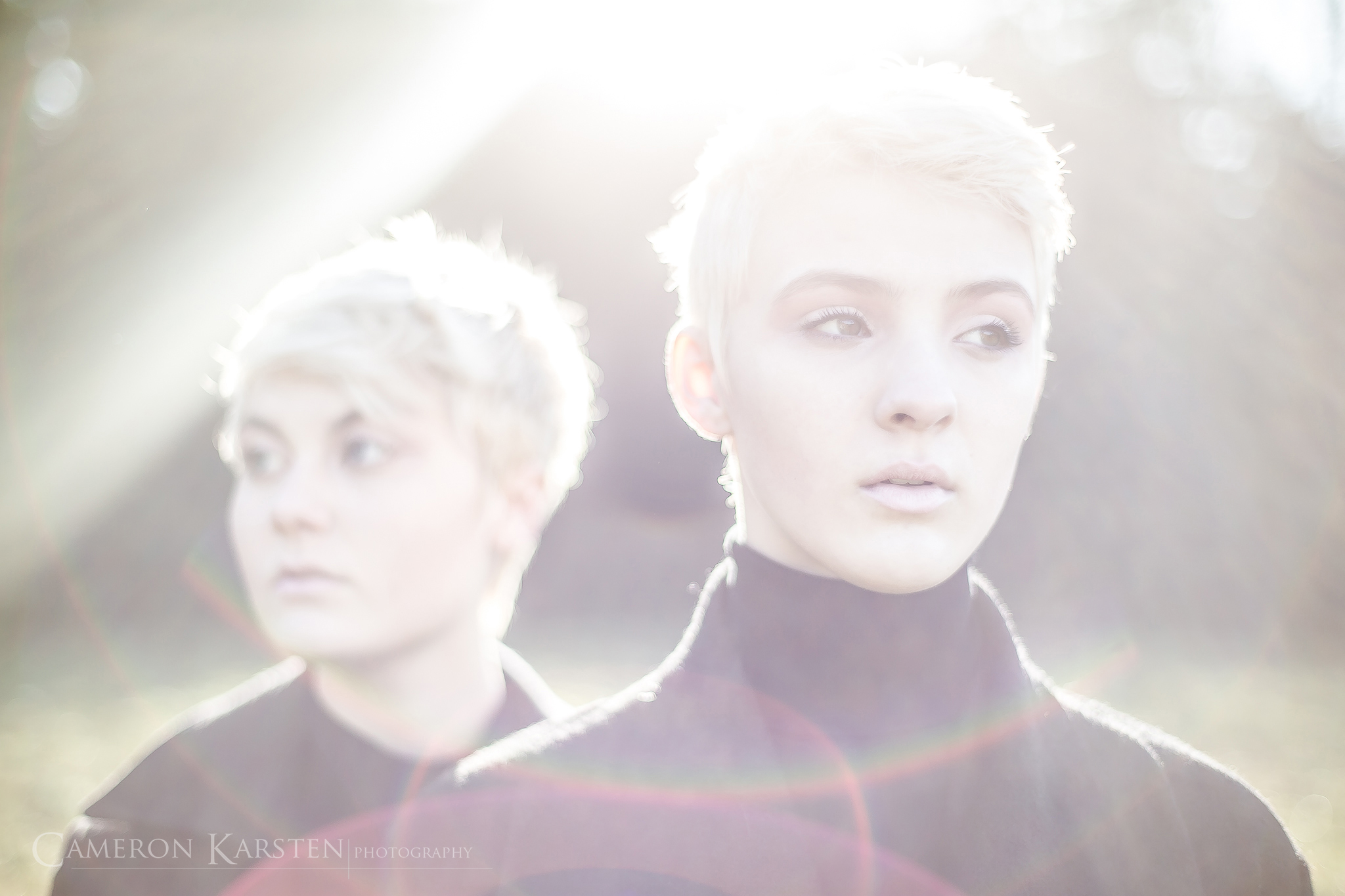
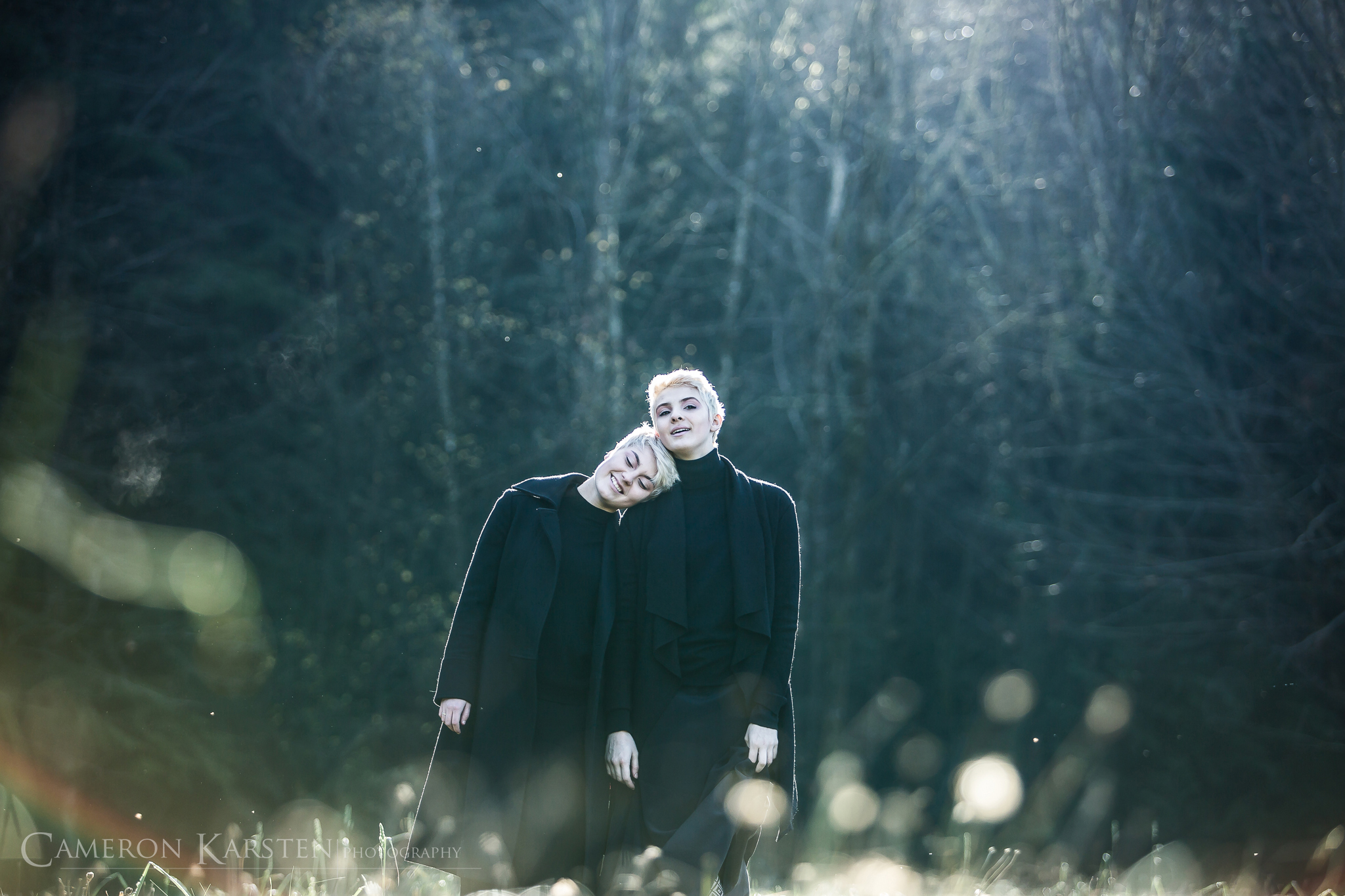
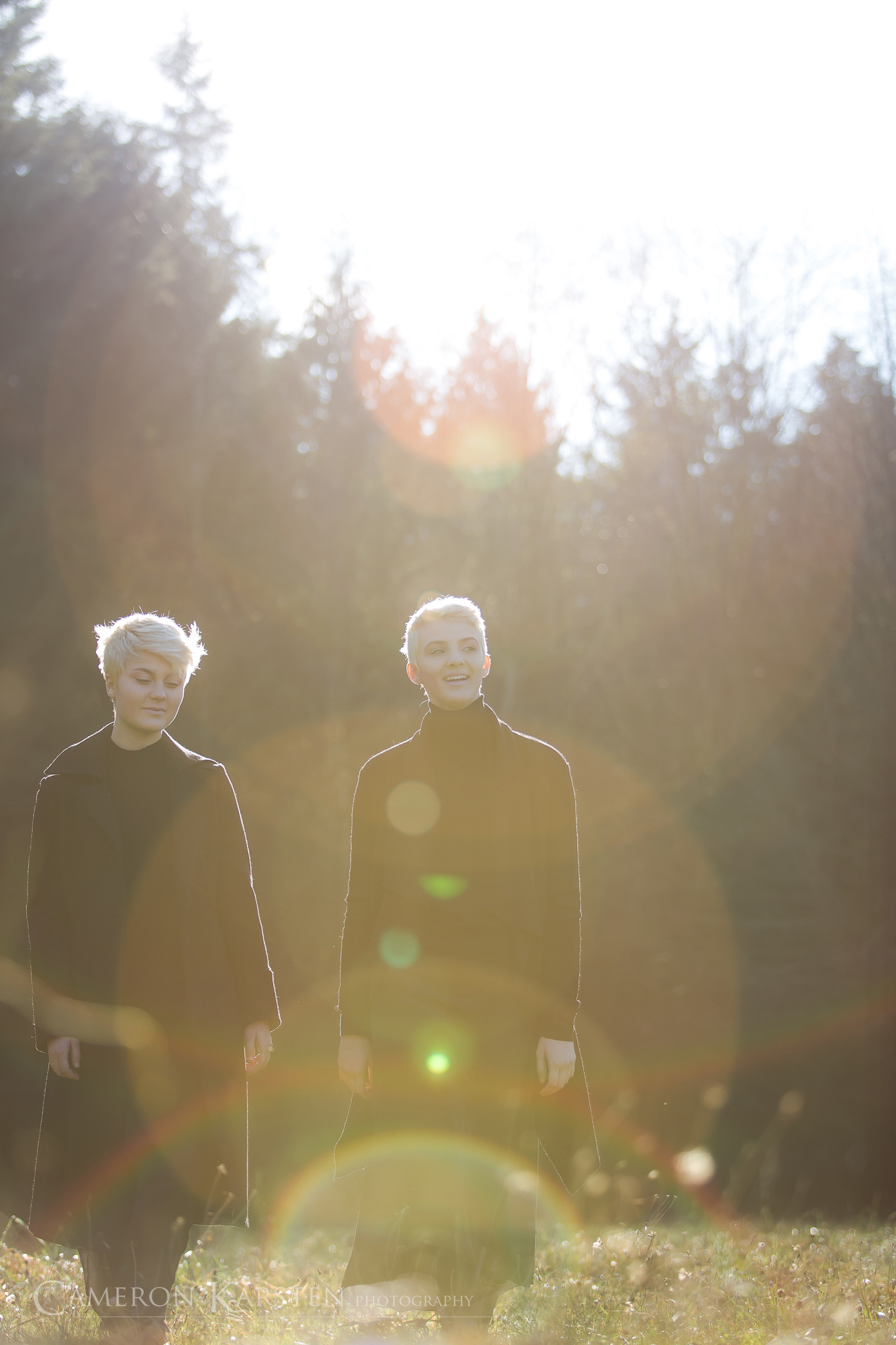
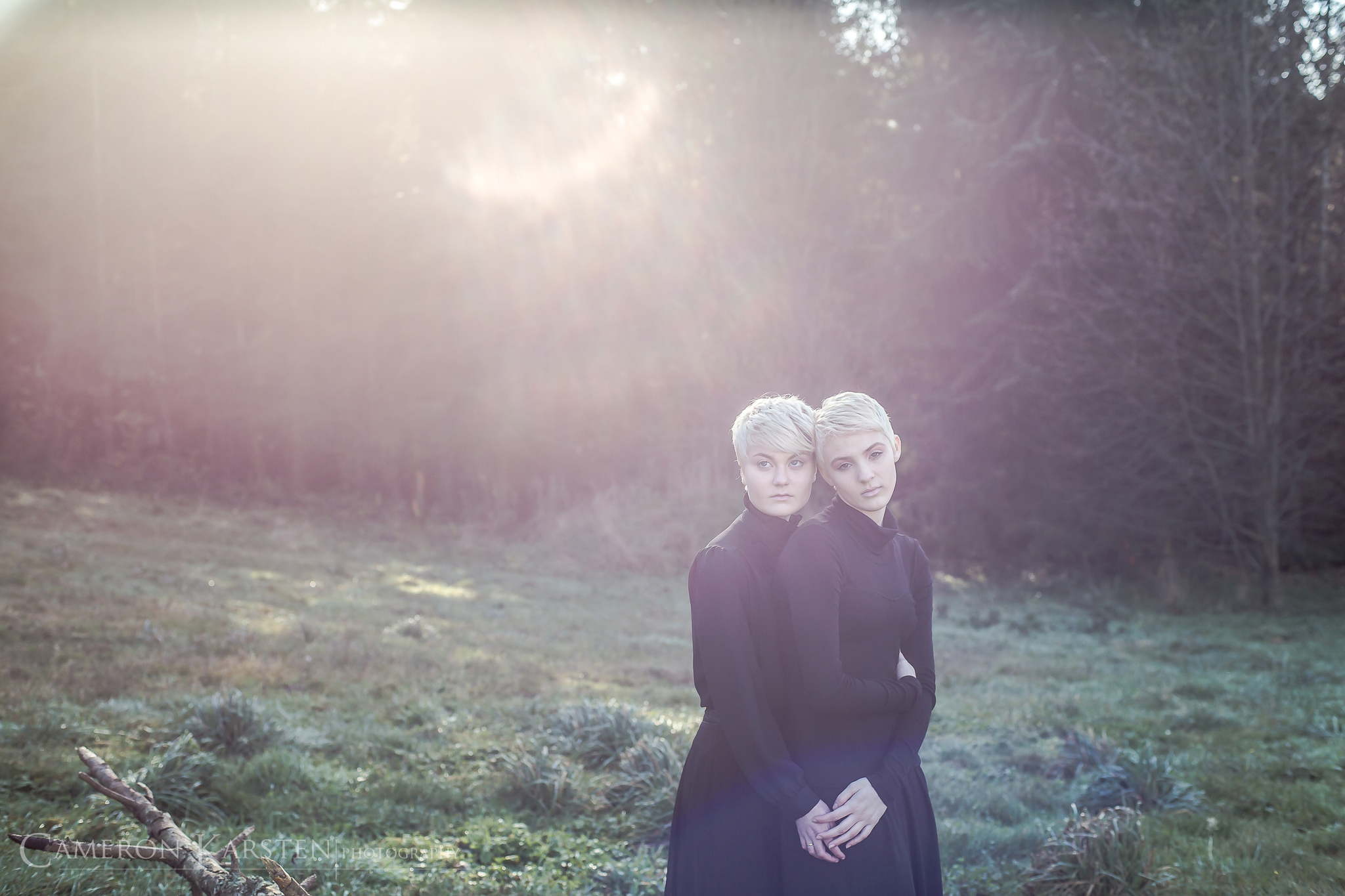
FireFlySalon-367Fall 2013 passed in the wind, and the styles of Firefly Salon became light but short, simultaneously dark but long with contrasting shadows. Sisters both exit and enter the woods through a ray of cool warmth.

FireFlySalon-186

FireFlySalon-195

FireFlySalon-259

FireFlySalon-297

FireFlySalon-350

FireFlySalon-334

FireFlySalon-579

FireFlySalon-561

FireFlySalon2-87

FireFlySalon2-99

FireFlySalon2-61

HMU by Todd and Bronwyn Baylor of Hair by Firefly

Styling by LK

Wardrobe by Sweet Deal and Eloisa

logo_blackTrajan

America’s Gun Culture: The Young Guns

MatixC-243

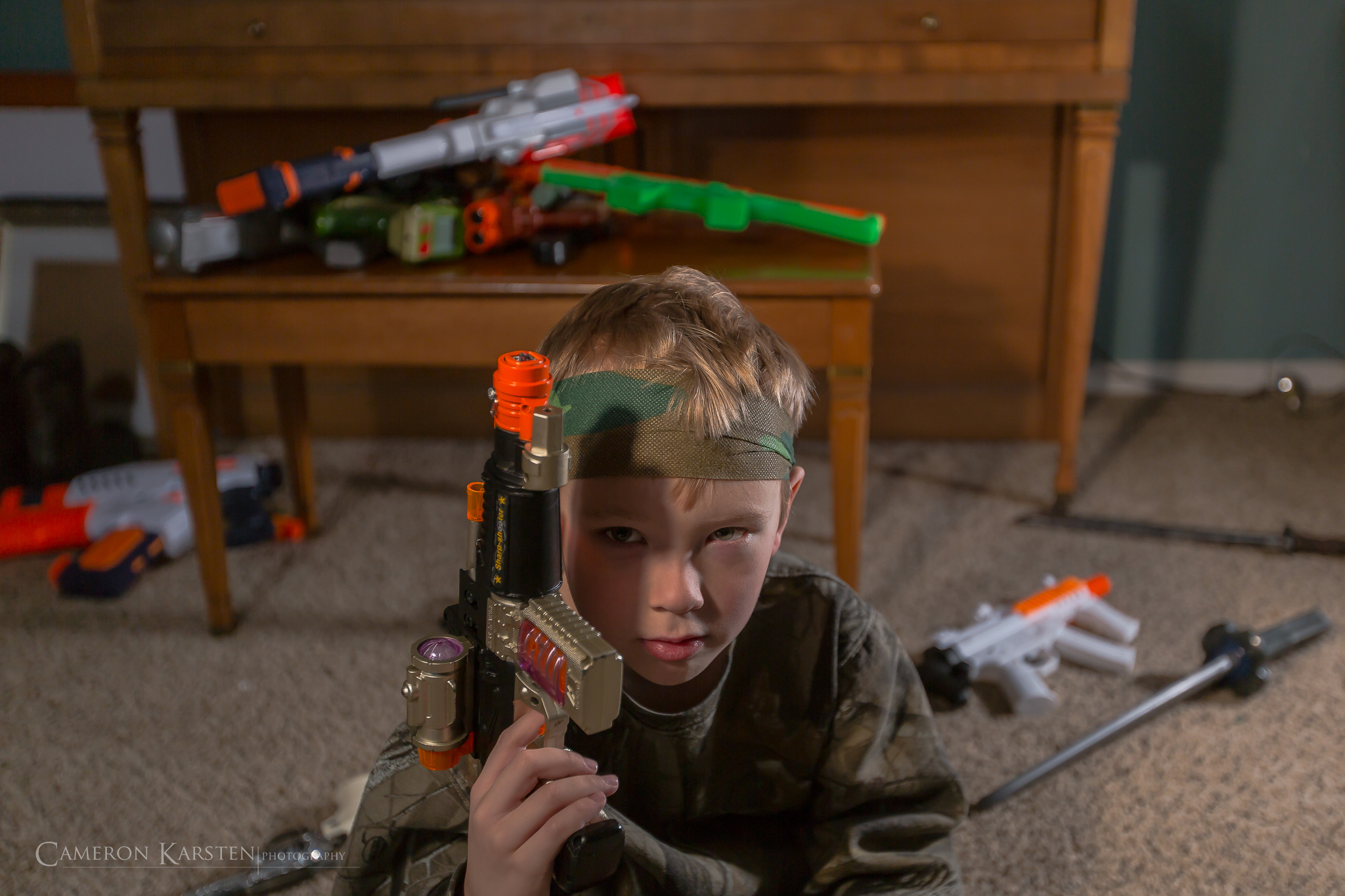
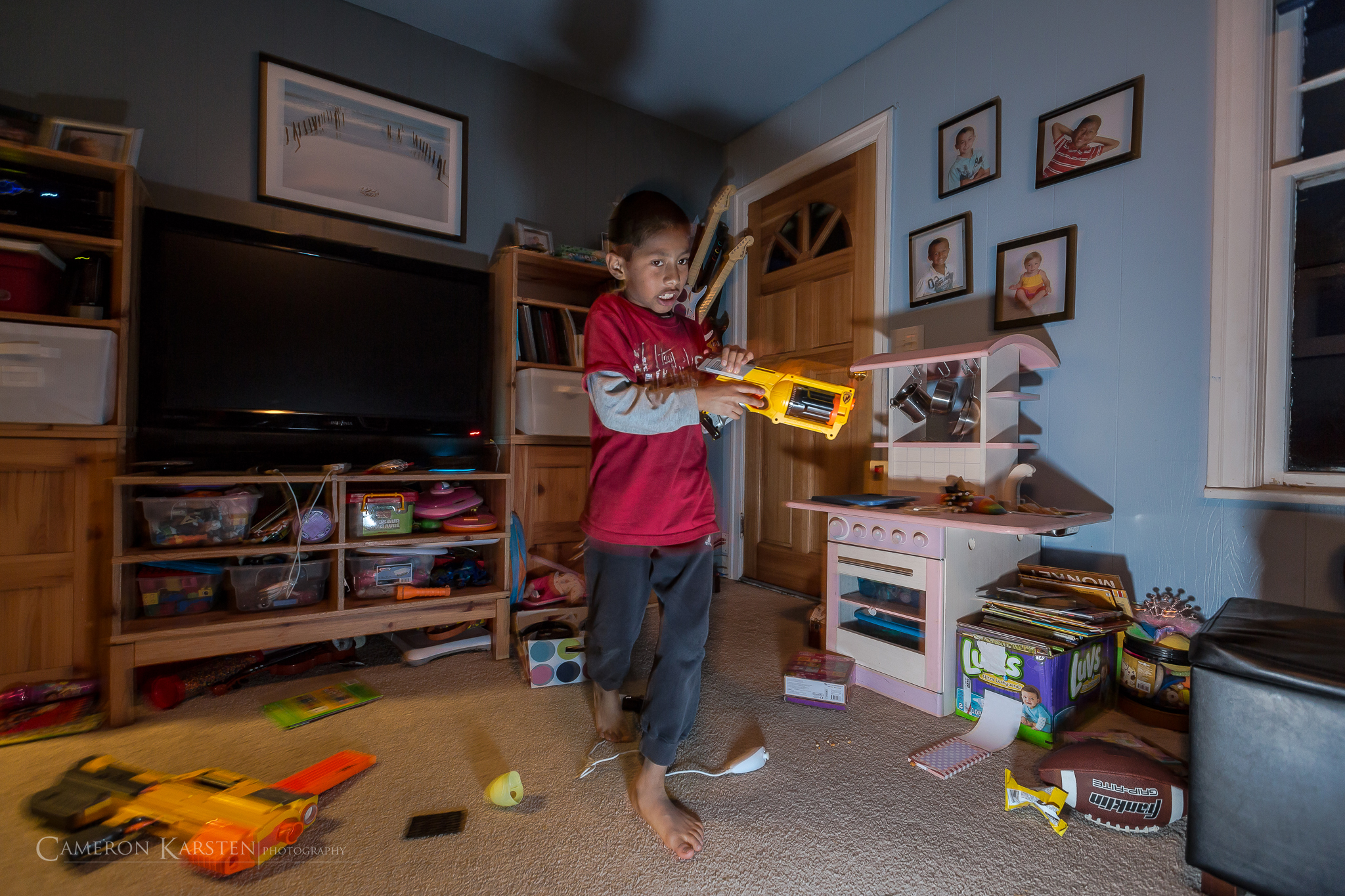
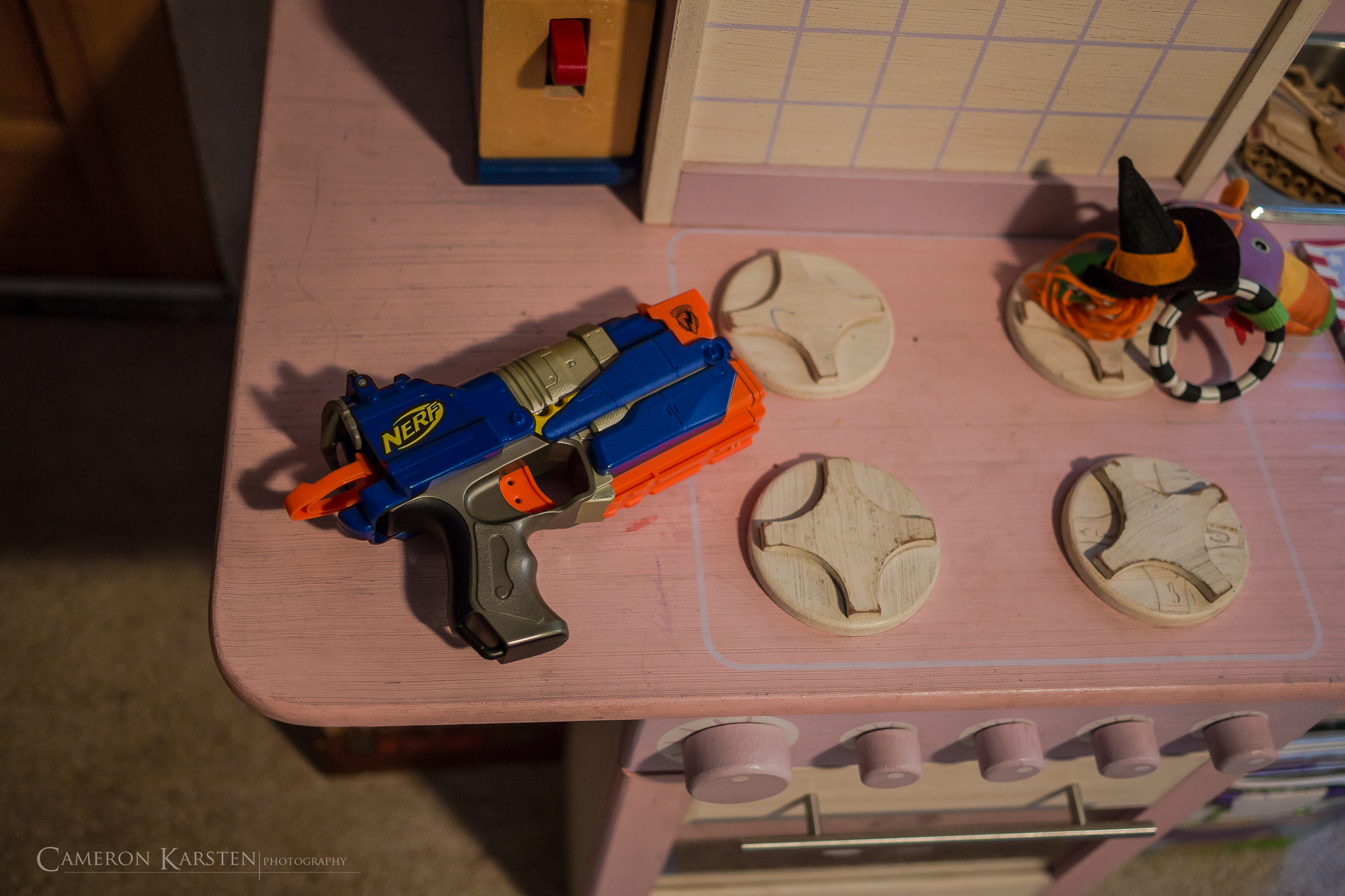
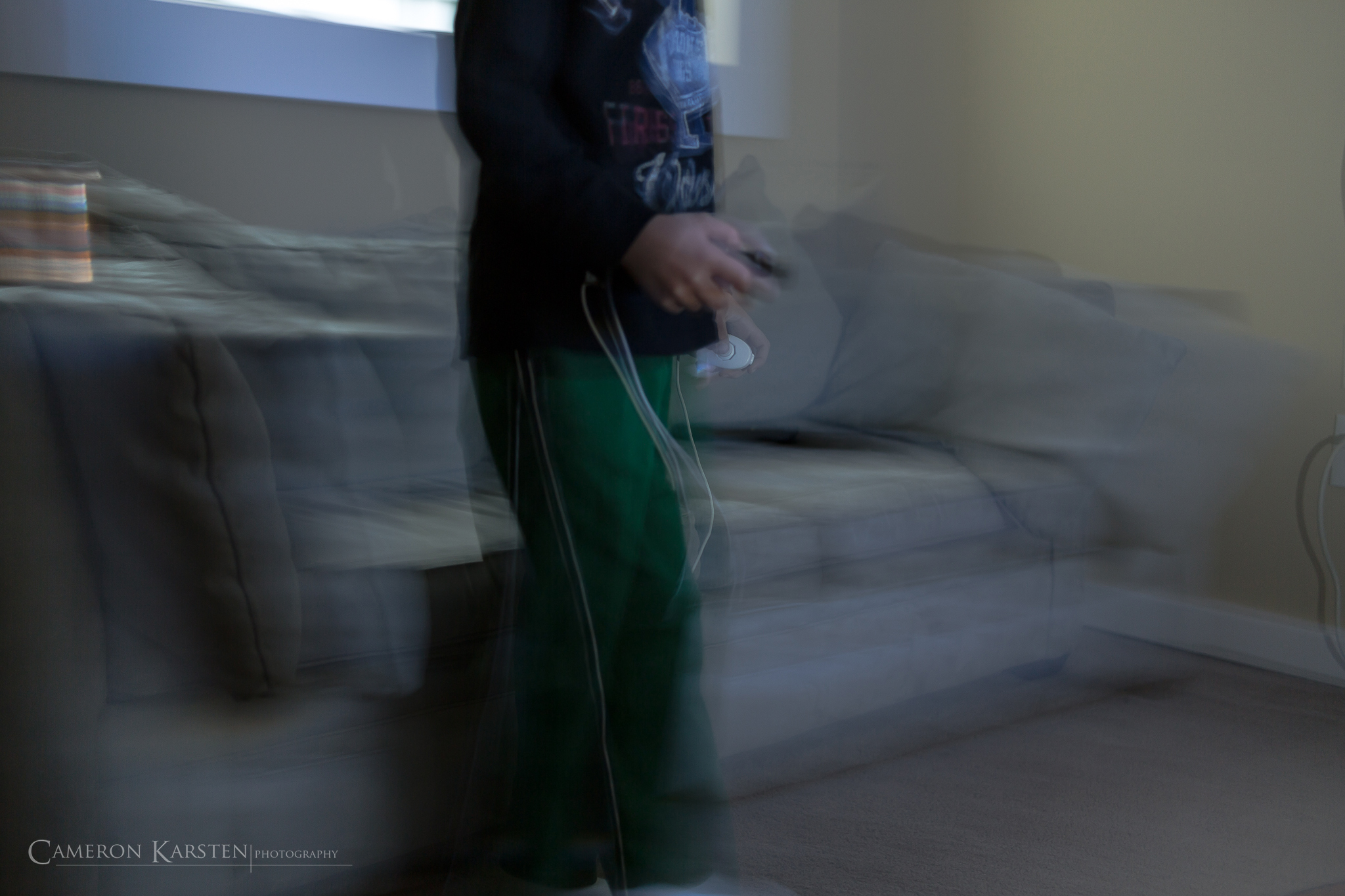
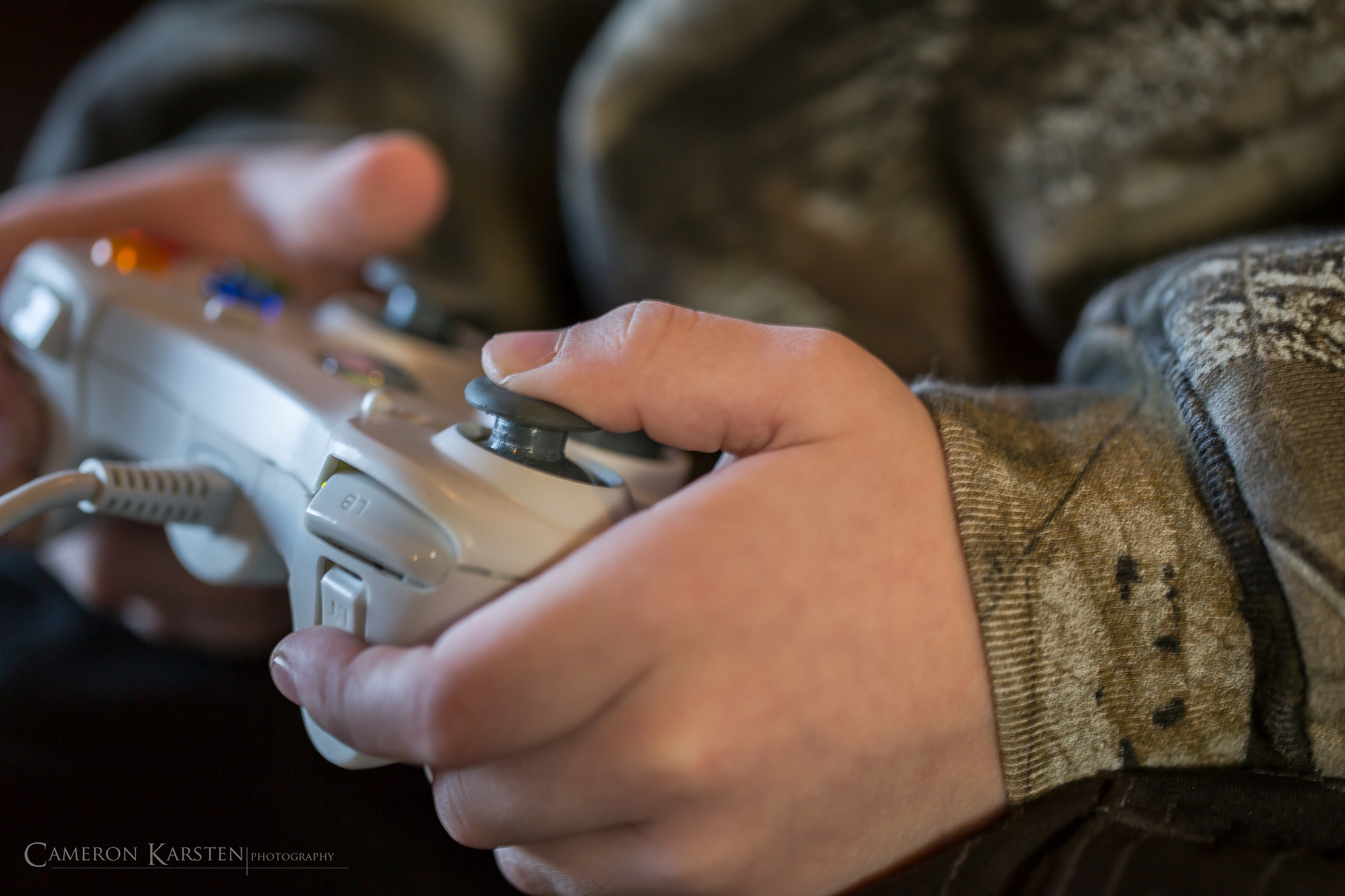
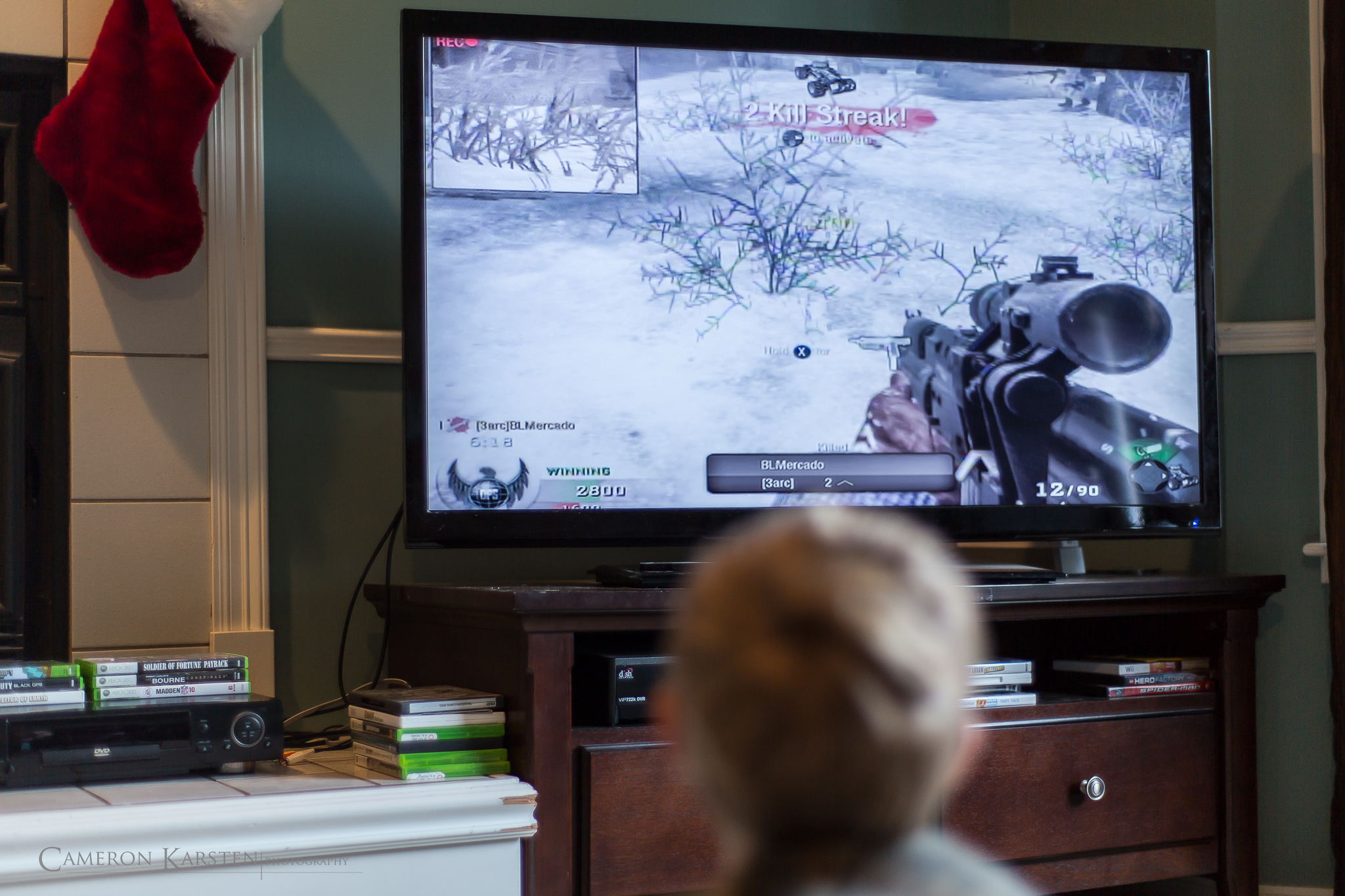
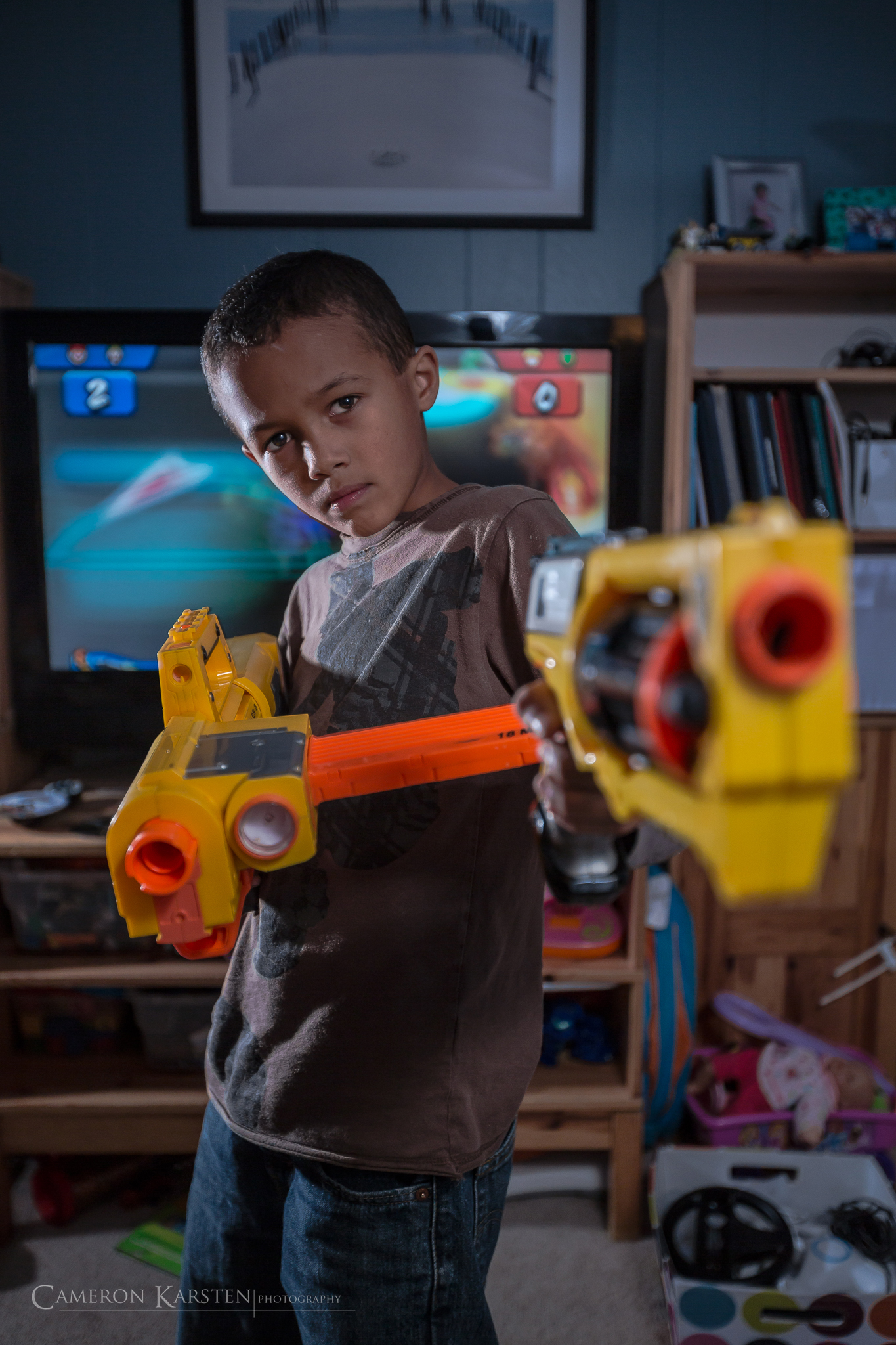
America has a gun problem. According to a Small Arms Survey in 2007 , 88 out of 100 Americans own a gun. That’s worthy of world domination. And after the latest elementary outbreak of gun violence in Sandyhook, Conn., questions continue to raise about the connections between guns, violent video games, and our American youth. Here are some images from an on-going project involving America’s young guns.

FieldsPlay-257

FieldsPlay-199

FieldsPlay-129

FieldsPlay-128

FieldsPlay-120

FieldsPlay-14

FieldsPlay-27

FieldsPlay-60

FieldsPlay-57

One mother I spoke with regarding the project declined to take part, but mentioned a story about her son. He was never permitted to play with toy guns. He wasn’t ever exposed to them in their household or on television. And she was unaware about any activities involving toy guns at their friends’ homes, but as soon as he reached a certain age where he began to develop his own personality, walk and make decisions on his own, something became apparent. When they would stroll on the beach or trek in the woods, the boy was instantly drawn toward sticks. These inanimate objects took on a life of their own. They became his toy guns. To this day she refuses to buy him any of these colorful plastic pieces.
DanePortrait-22

BroganVG-60

BroganVG-41

BroganVG-20

MatixC-110

MatixC-75

MatixC-27

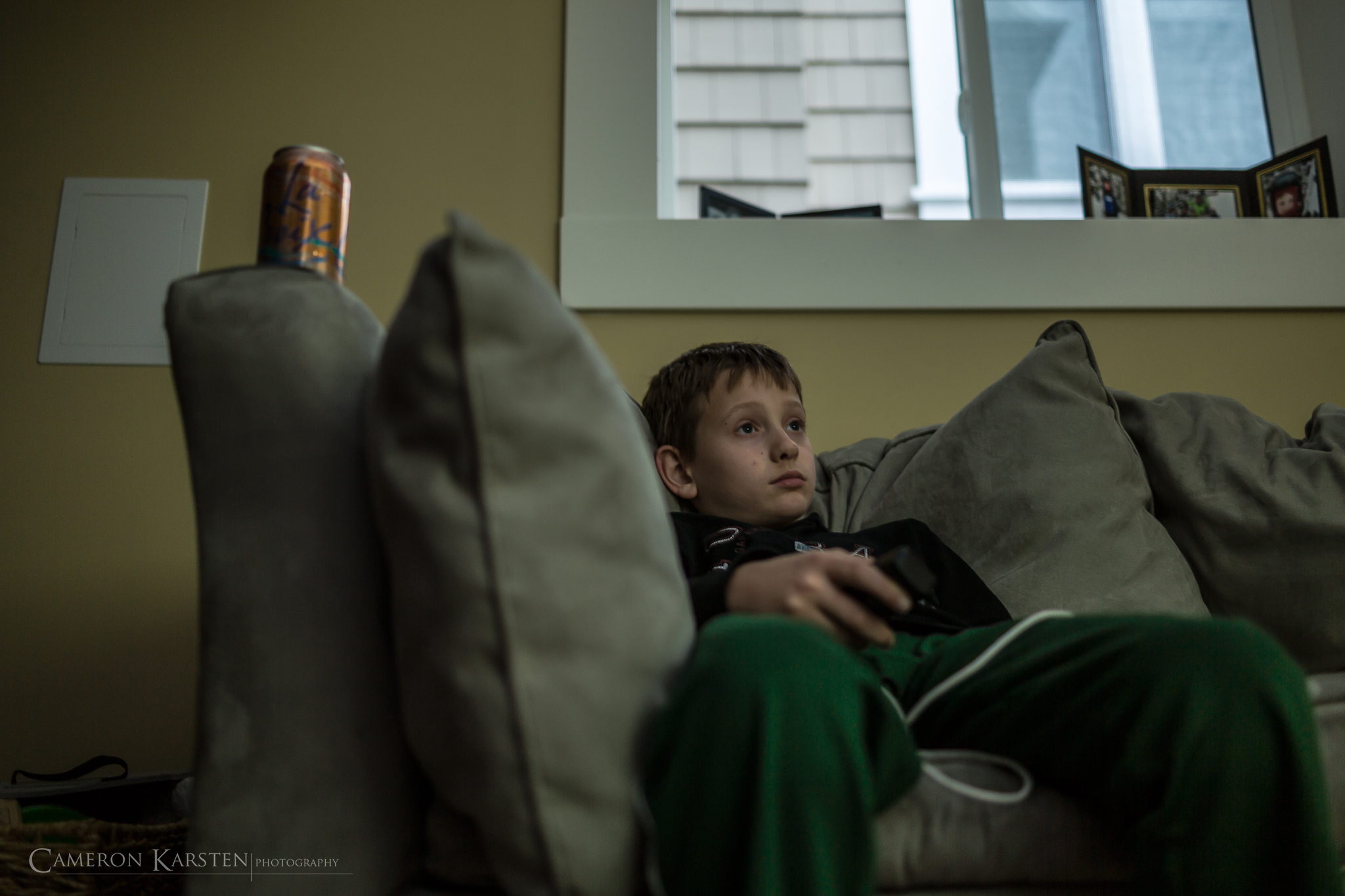
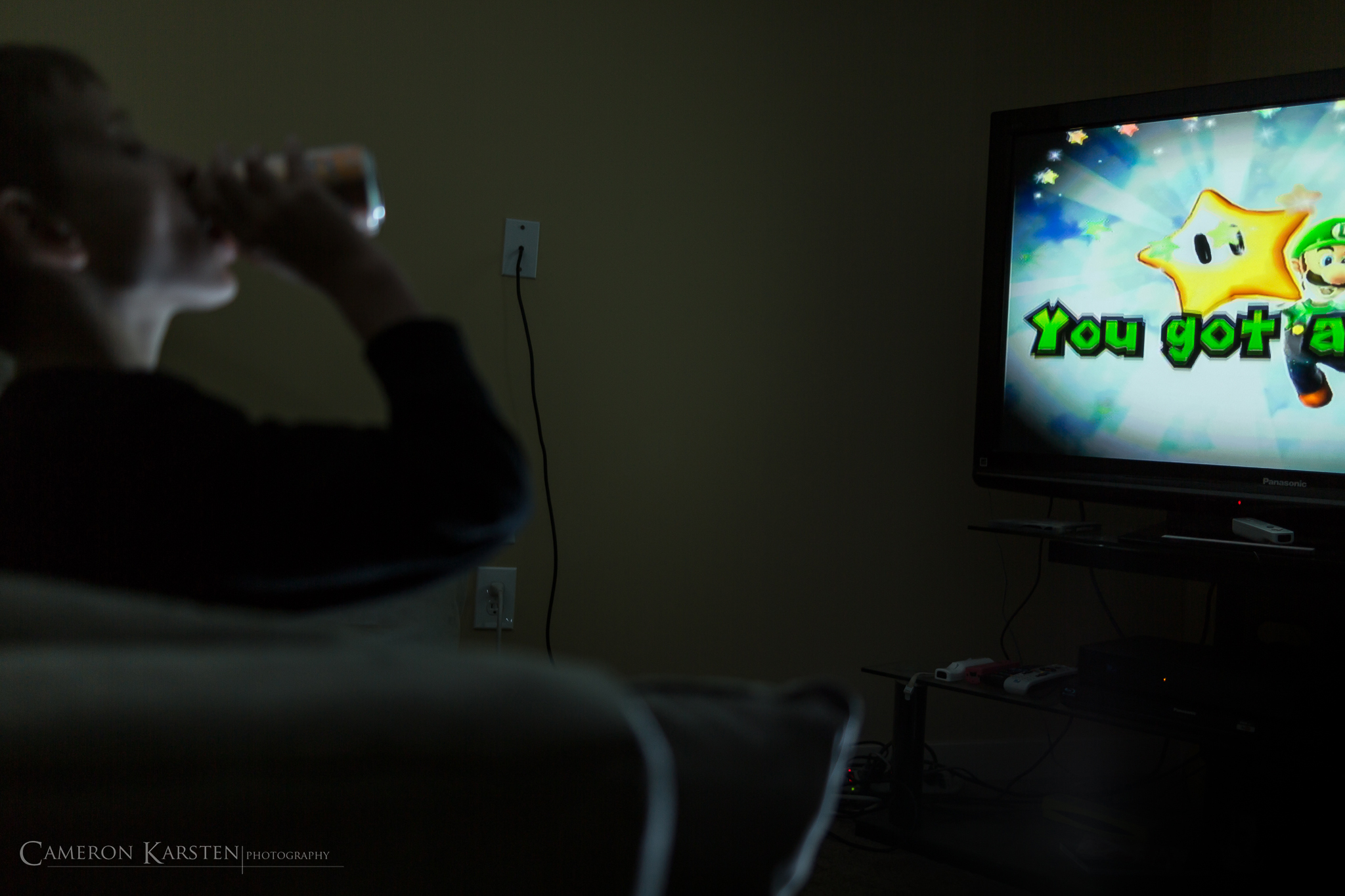
When the United States military encourages their soldiers to play violent video games while on leave, and as the advent of drones is taking presence above foreign skies, it is intriguing how large the gaming industry has become. Not only is it exciting, competitive and imaginative, but it is also a fantasy world without consequences besides GAME OVER. From Mario Brothers to Grand Theft Auto, there has been an incredible evolution, blurring the lines of reality. America’s youth are also hooked.

MatixC-208

MatixC-273

MatixC-251

MatixC-287

For more, please visit America’s Gun Culture

logo_blackTrajan

Coast Mountain Culture Magazine (Winter 2013/2014) – Board Artisan

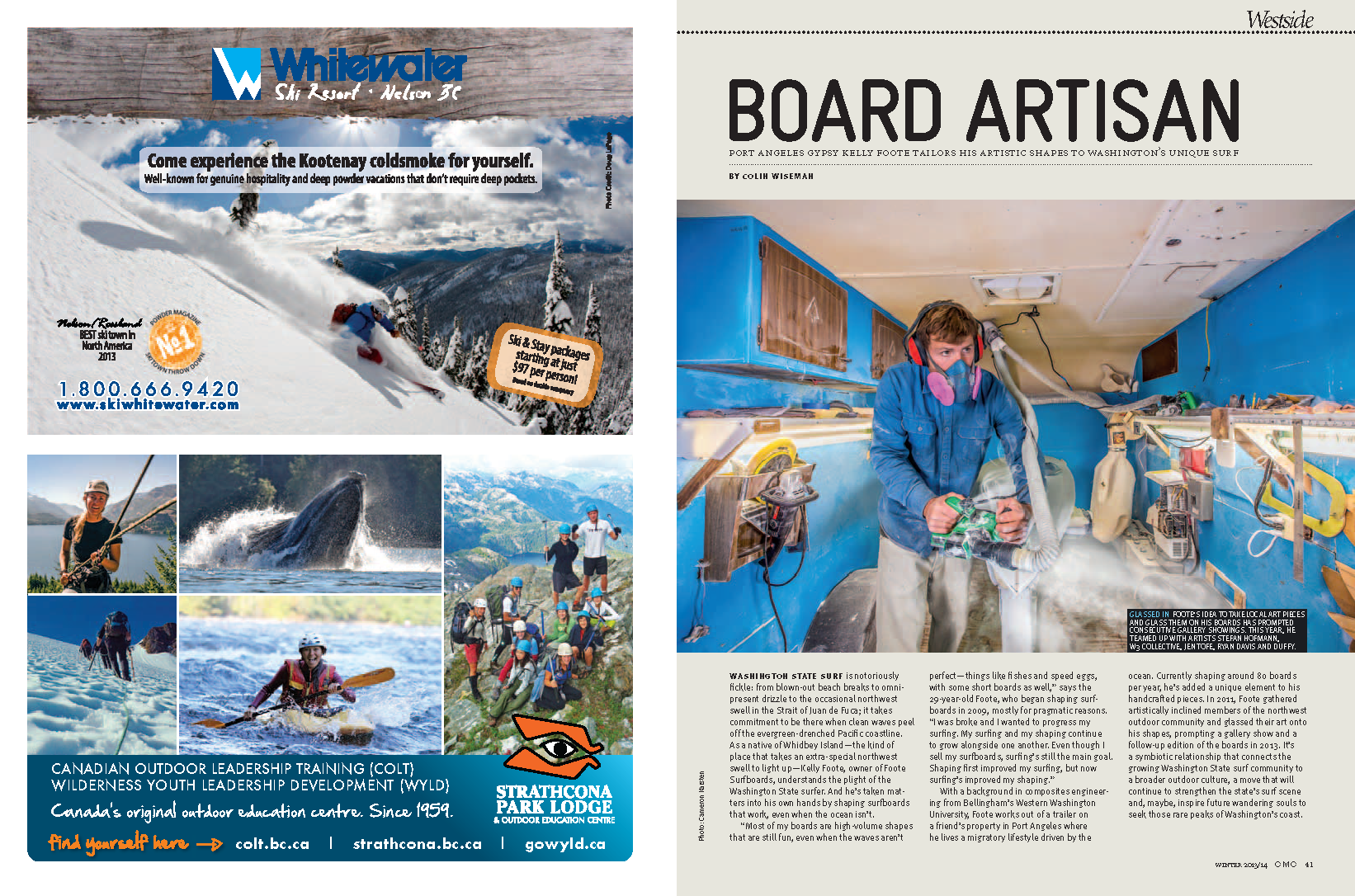
KellyFooteSpreadKelly Foote is a good friend and amazing surfboard shaper. We have a few more projects in mind that we’re currently developing, so stay tuned. However, here’s a lil’ tid bit written up on Kelly’s unique shaping talent and killer lifestyle on the Olympic Peninsula in Coast Mountain Culture’s newest issue, along with a great shot of mine that fits the spread nicely. Well done Mr. Foote and thanks CMC!

logo_blackTrajan

Ethan Currier – Sculpting the Power of Stone

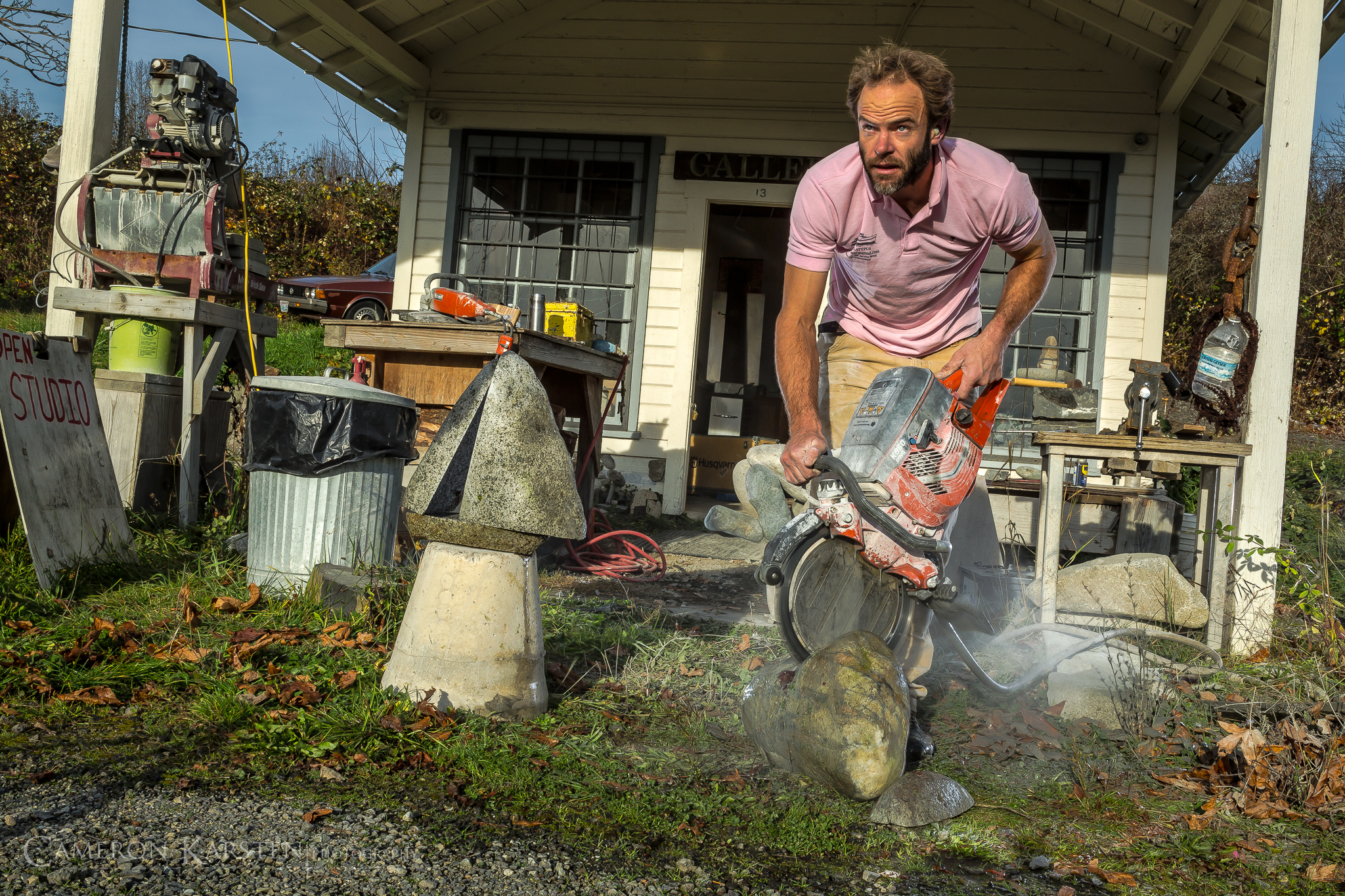
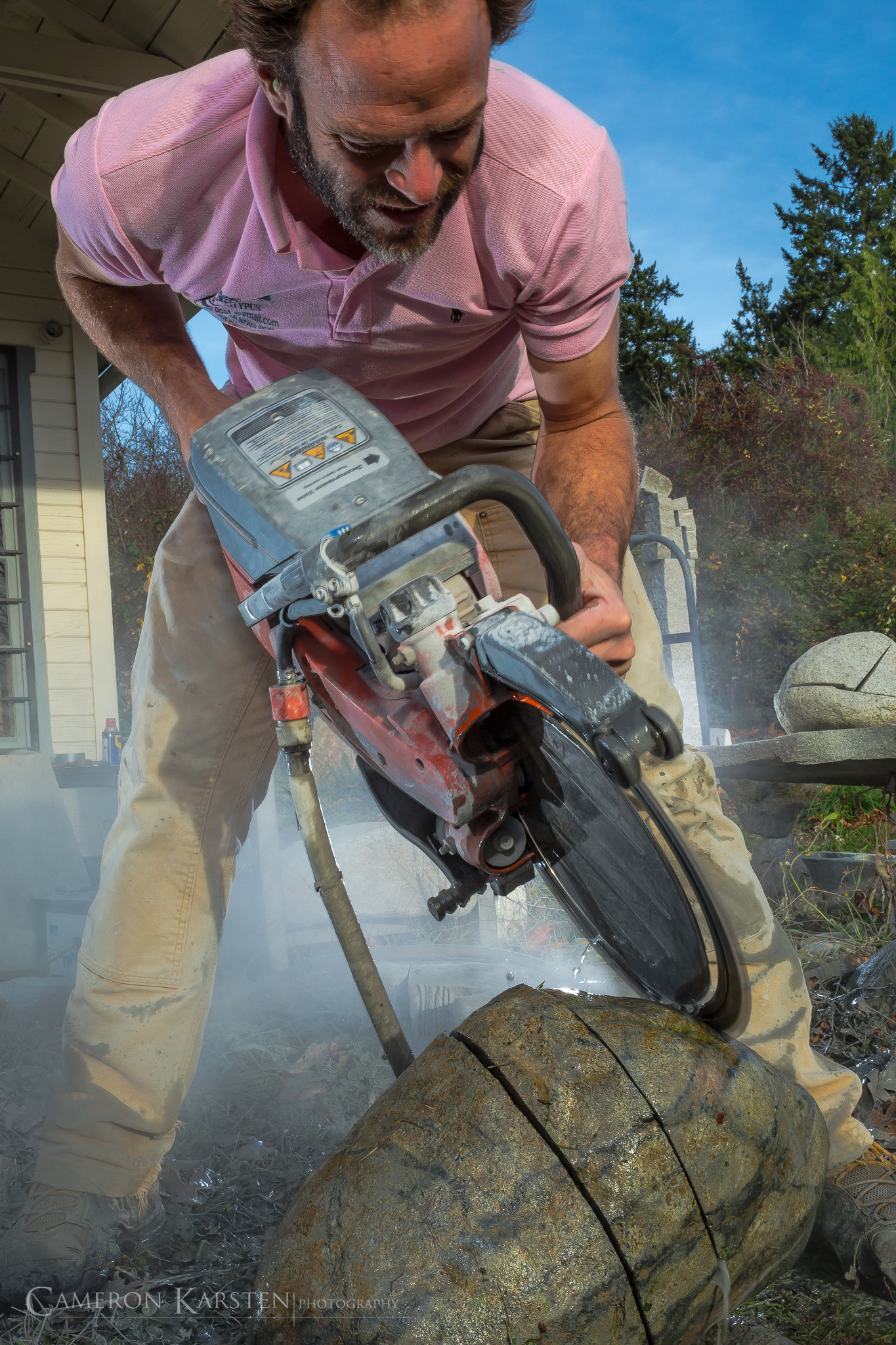
EthanCurrier-366To cut stone sounds like a recipe of alchemy. But it takes power, not always the power of enormous piston-driven spikes and powder-lit explosives. Often, with the right hand-tools and visionary skill, rocks can be as easily molded as clay. Meet Ethan Currier.

EthanCurrier-76-Edit

EthanCurrier-102

EthanCurrier-162

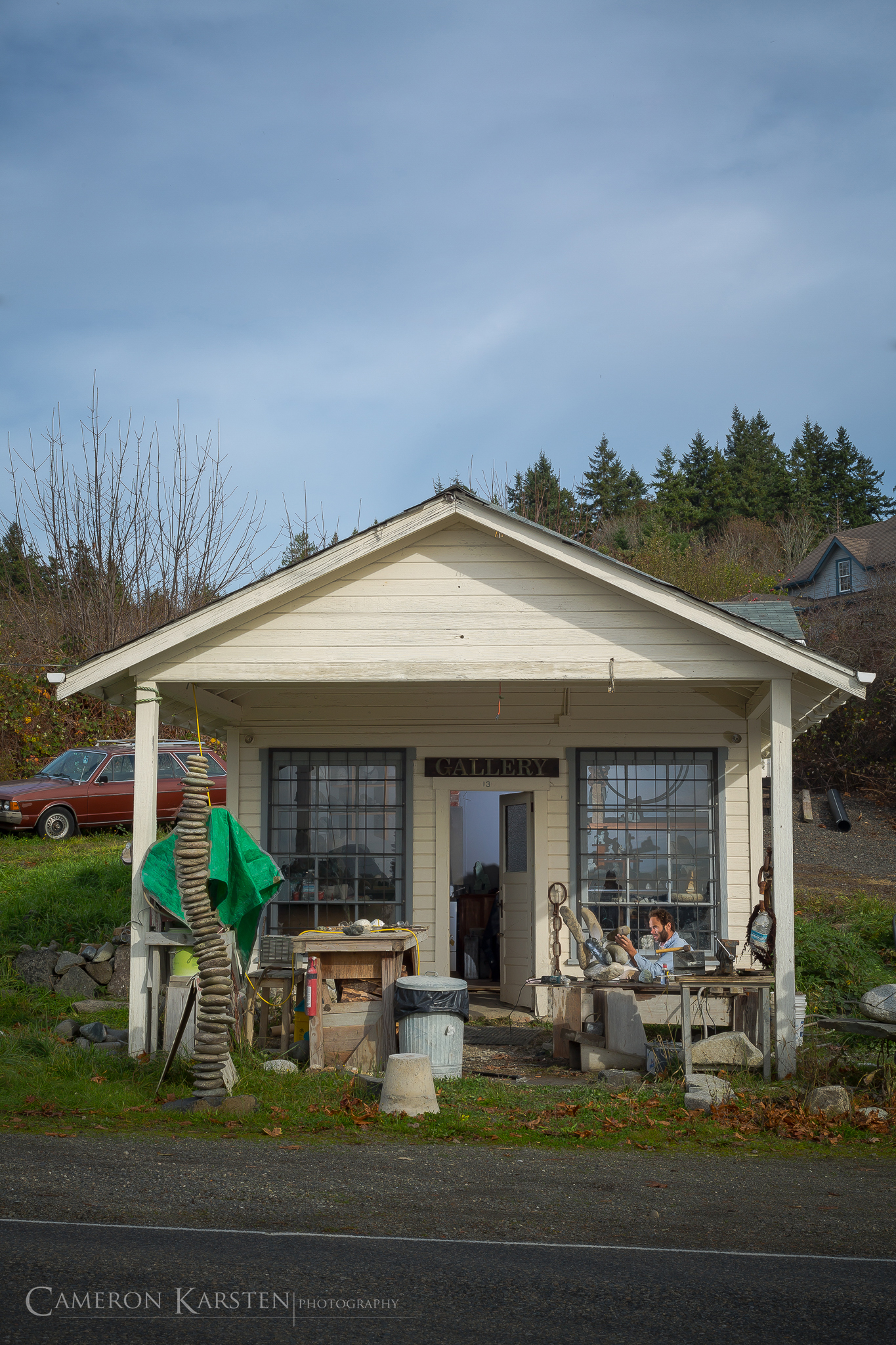
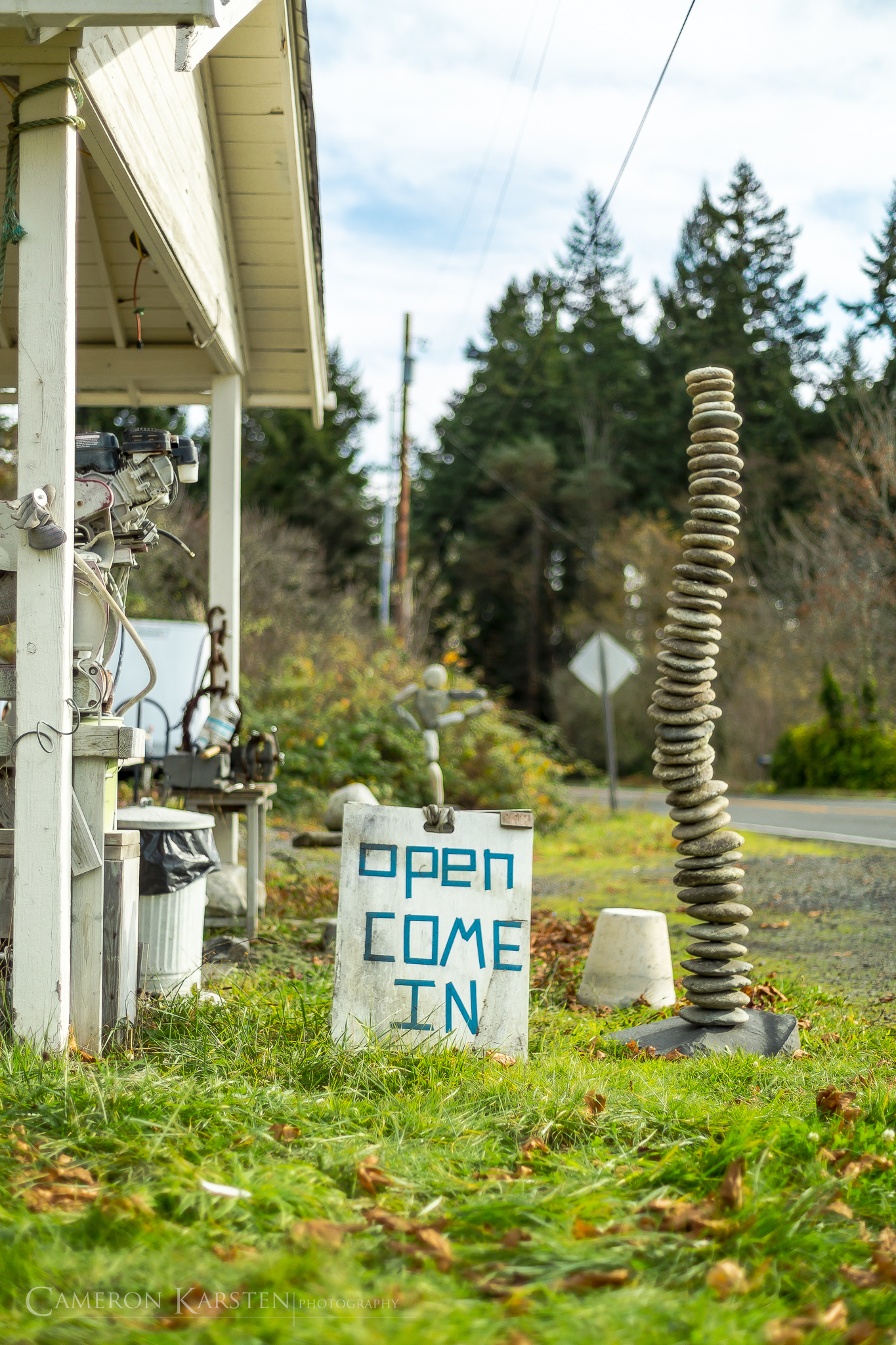
EthanCurrier-244When on Bainbridge Island, Ethan lives in Eagle Harbor aboard his 1940s’ refurbished navy boat, building unique rock sculptures by day. Located in a small modest workshop, which once ran as a single-pump gas station, Ethan brings in specific stones to match his concept of upcoming projects, visualizing their forms and structure prior. By design and with the use of few hand-tools, these ordinary stones take on new organic shapes.

EthanCurrier-267

EthanCurrier-184

EthanCurrier-129

EthanCurrier-276

EthanCurrier-235Having spent the summer on the east coast working on boats and building commissioned pieces for personal gardens and cityscapes, Ethan continues to create, building a reputation and potential-future following like those of artists Andy Goldsworthy and Dale Chihuly. A controvertial sculpture on a city-owned island Blakely Rock brought him in contact with people who both love and disapprove of his work. Over four nights in the middle of winter in 2012, Ethan installed a 12-foot tall stone man in the common yoga posture Tree Pose. Visible from the east shores of Bainbridge Island, as well as along the Seattle-Bainbridge ferry route, the sculpture has become in need of further special attention. Upon his recent return, people have continually asked him about it. He responds with a calming smile, “It needs repairs.” Locals now are expressing their interest in helping in anyway possible in its resurrection.

EthanCurrier-406

EthanCurrier-397

EthanCurrier-83

EthanCurrier-228

logo_blackTrajan

Robert Carlson’s Glass Mind

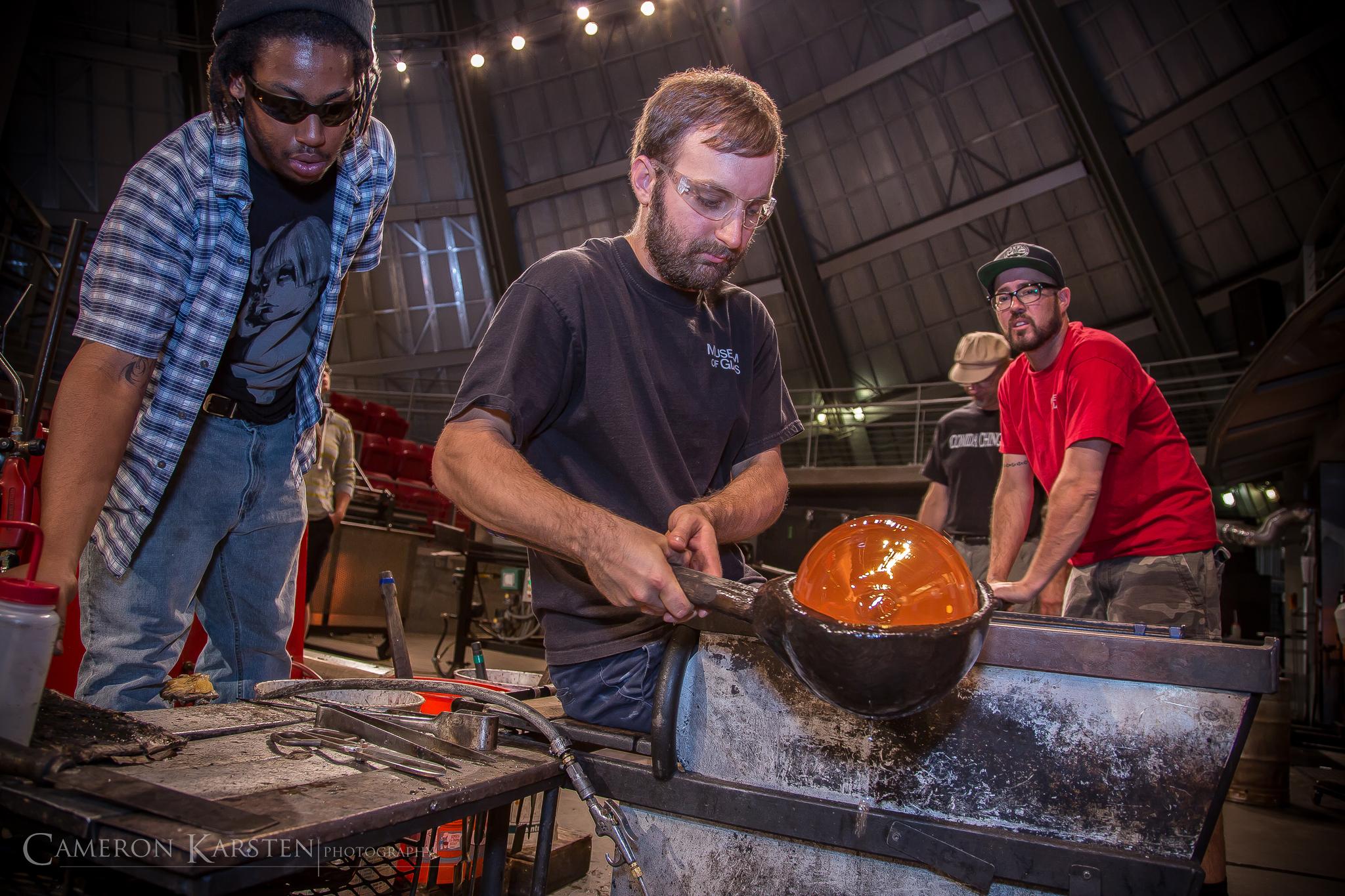
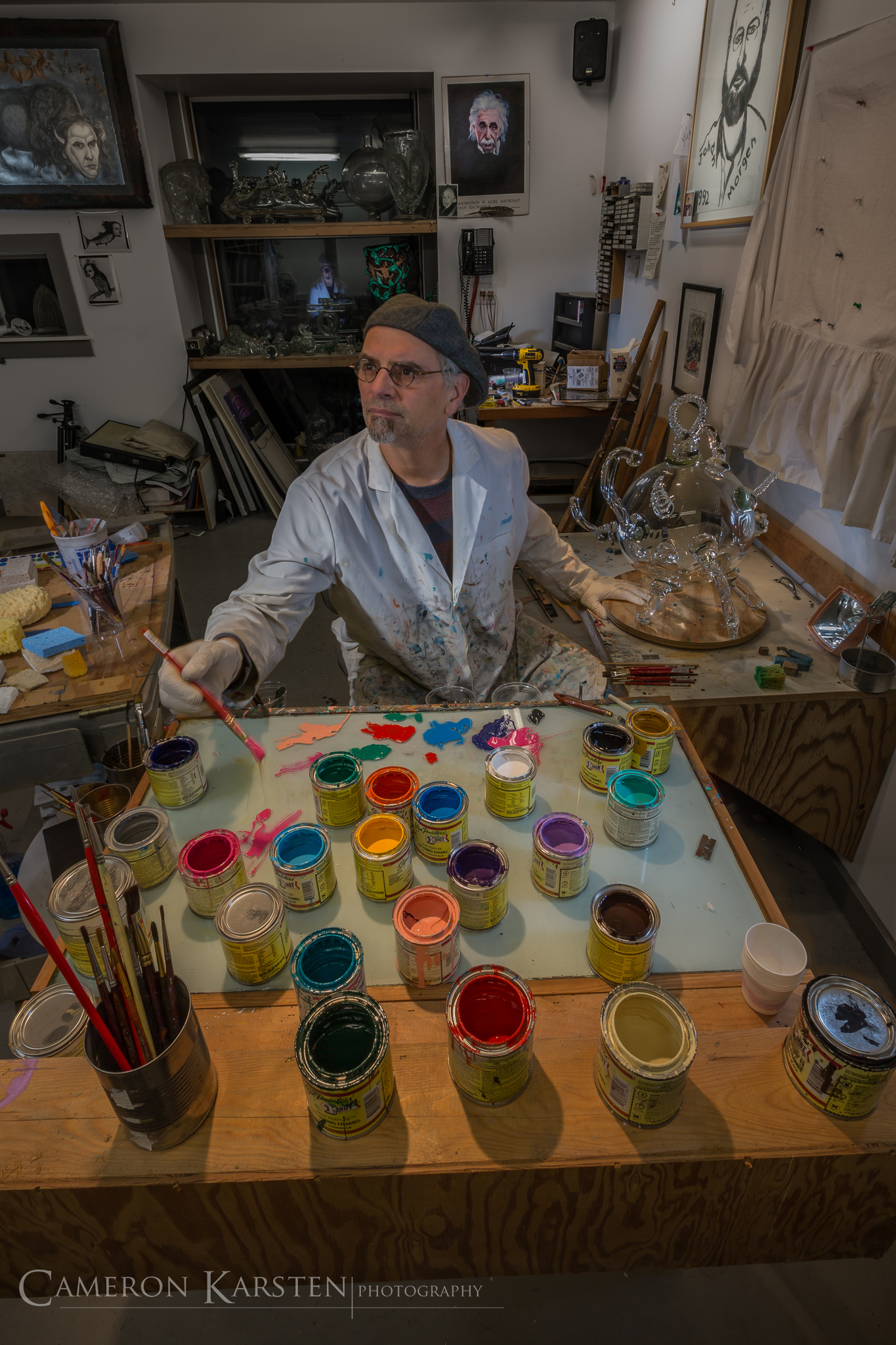
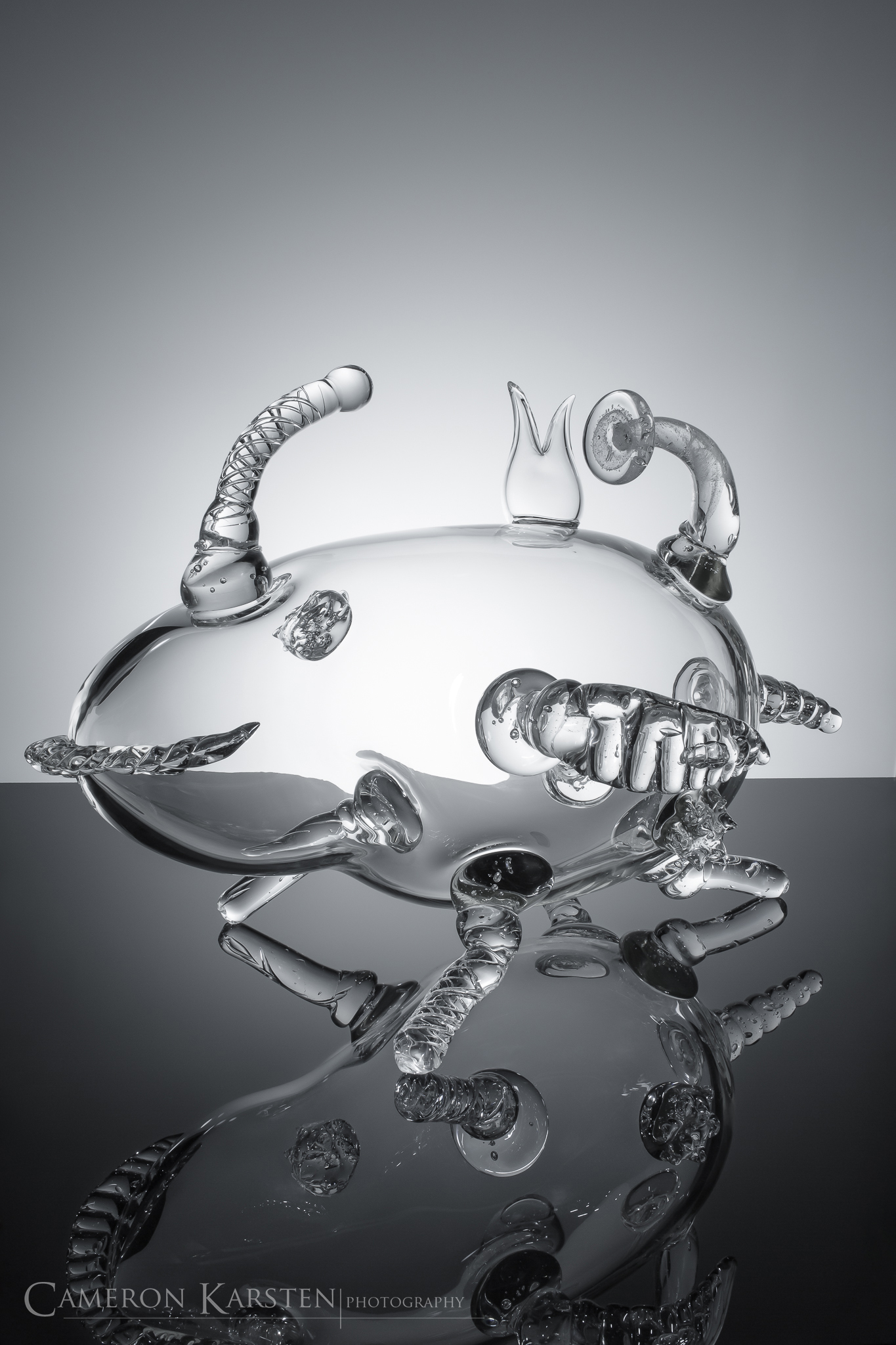
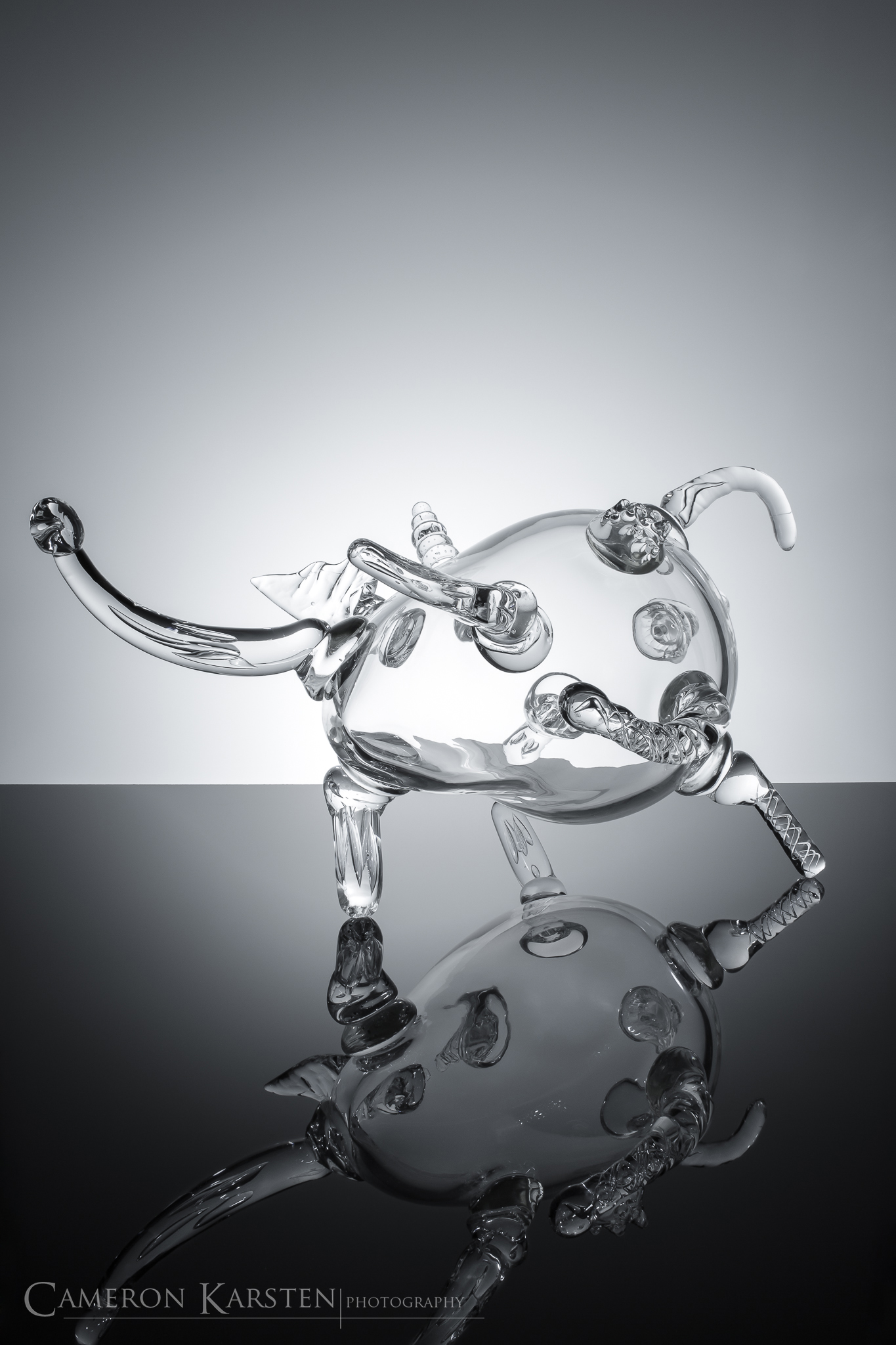
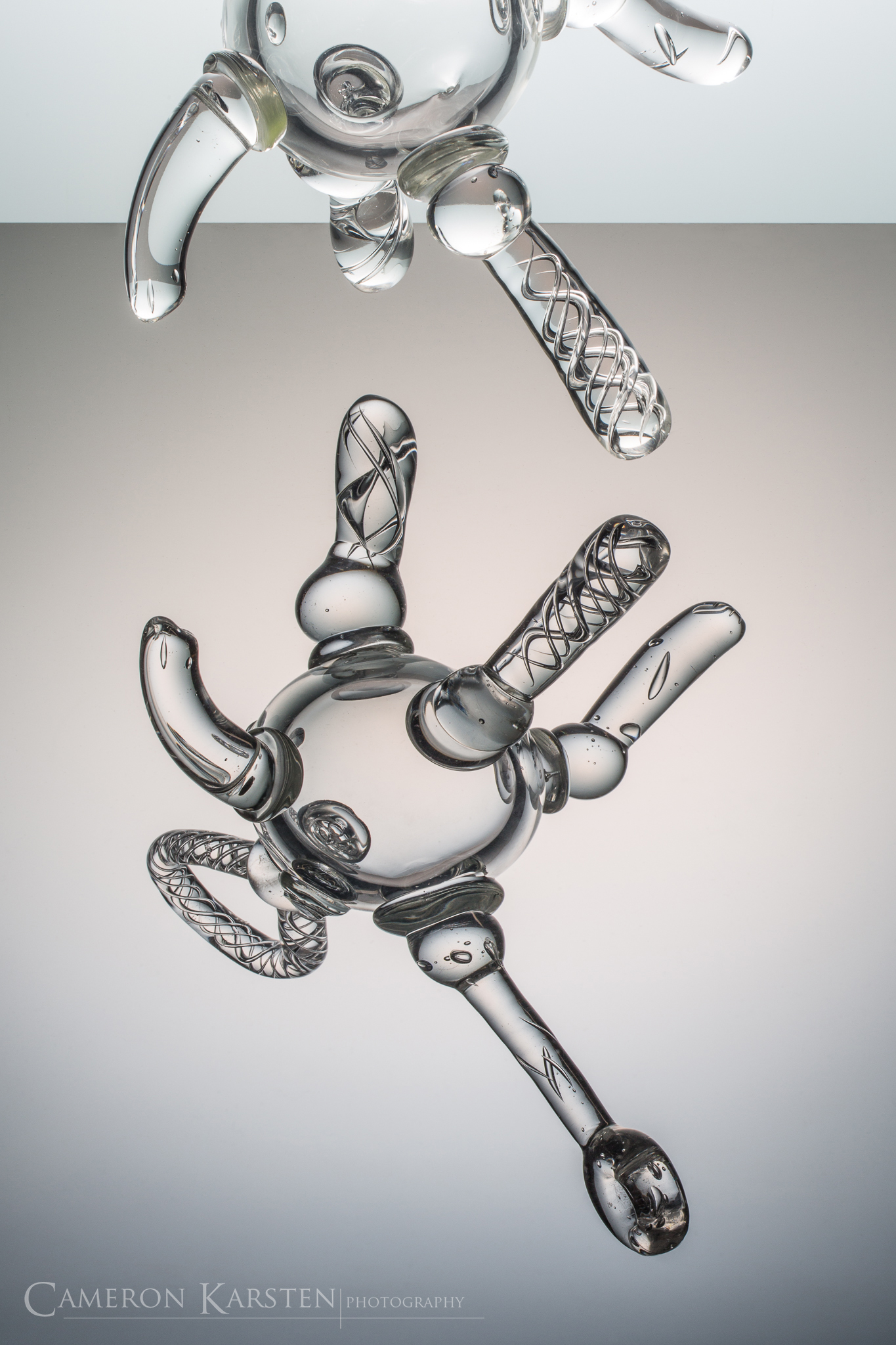
BobCarlson-15Robert Carlson is an internationally-renowned glass artist and a master not in disguise.  Bob lives his life as an artist, from his work to his art collections and the uniqueness of his home, to the way he parties and likes his martinis.  I had the opportunity to photograph Bob while he was an artist-in-residence at the Museum of Glass Hot Shop in Tacoma, Washington, where he came up with and devised his newest creations from an imagination wild. Bob is pictured up, sketching his latest invention, pulling from depths of his mind something real.
BobCarlson-93

BobCarlson-373

BobCarlson-504

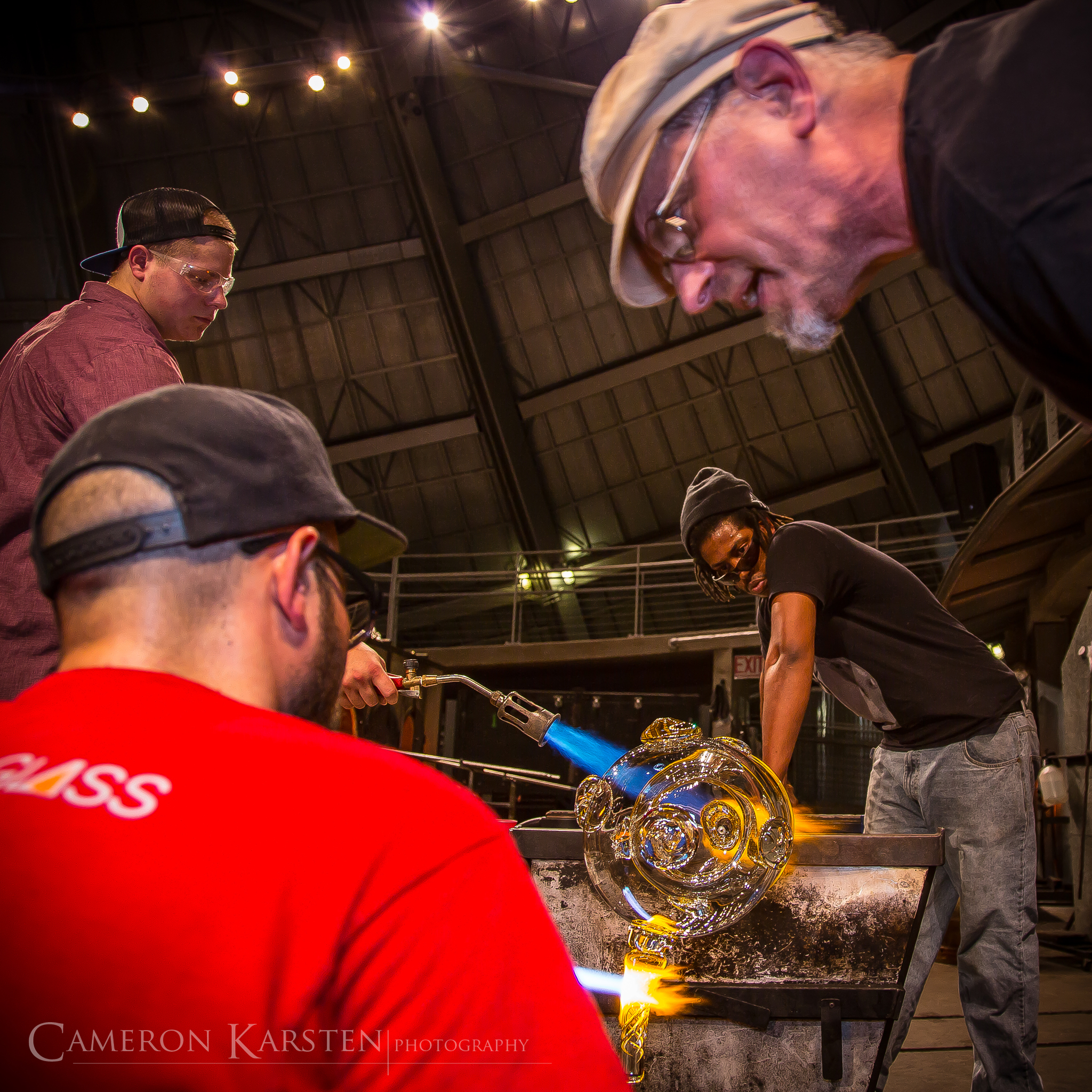
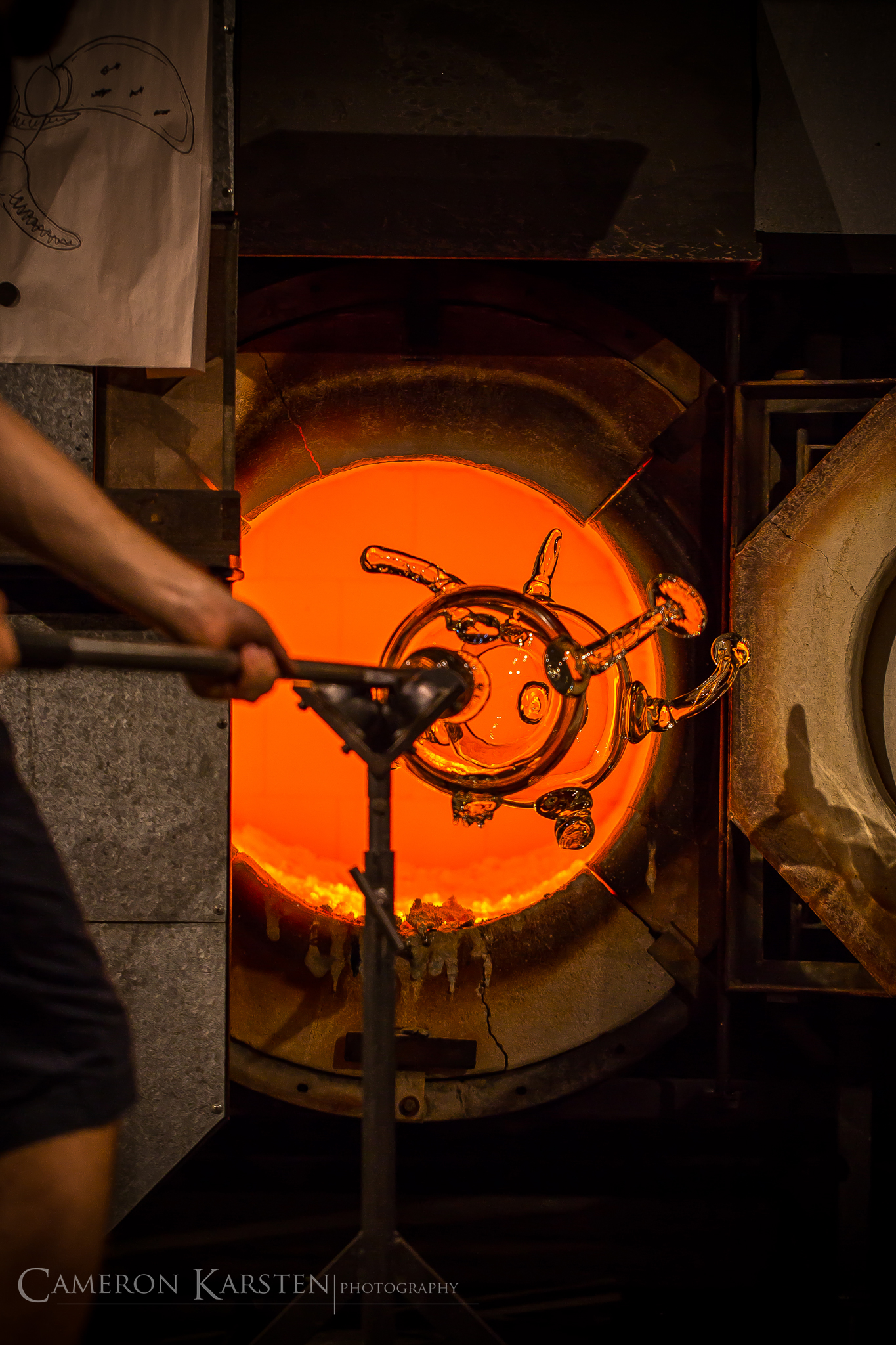
BobCarlson-448On-hand apprentices assisted Bob throughout the week-long residency. Typically, after the glass is blown and cooled, he’ll spends months with the pieces, studying their forms and subtle messages found within shapes and processes.  Next he employs a reverse-painting technique using mirrors to create the imagery. These will appear on the back side of the glass structures, which take on a whole new dimension while viewing through the various refractions of glass.

BobPortrait-020-Edit

BobCarlsonVert-044-EditHowever, after observing the unusual orbs and their phalangeal crystals, Bob decided otherwise and kept the mirrors on their walls and the pigments in their cans. The work was completely new and glorious in their own form. They are both animalistic and alien. They explore the connection of sexuality and misplaced possession. The glass art can be placed on one side and quickly flipped to be placed on a new set of legs, changing the viewers understanding of what is and what can be. These pieces are works of a genius, derived from a life undisguised from beauty itself.

RobertCarlson_Glass-042-Edit

RobertCarlson_Glass-048-Edit

RobertCarlson_Glass-059-Edit

RobertCarlson_Glass-055-Edit

RobertCarlson_Glass-035-Edit

BobCarlson-038-Edit

BobCarlson-029-Edit

BobCarlson-019-Edit

logo_blackTrajan

India – People + Places

They-Told-Us-To-Sit---Version-3India is a monstrous mothership of light.  I’ve spent 8 months total in the country, traveling from north to south along the west edges.  It is its’ own planet, huge and all-consuming.  I love reflecting back on my travels; the people, culture, food, the lessons learned.  I can’t wait to return.

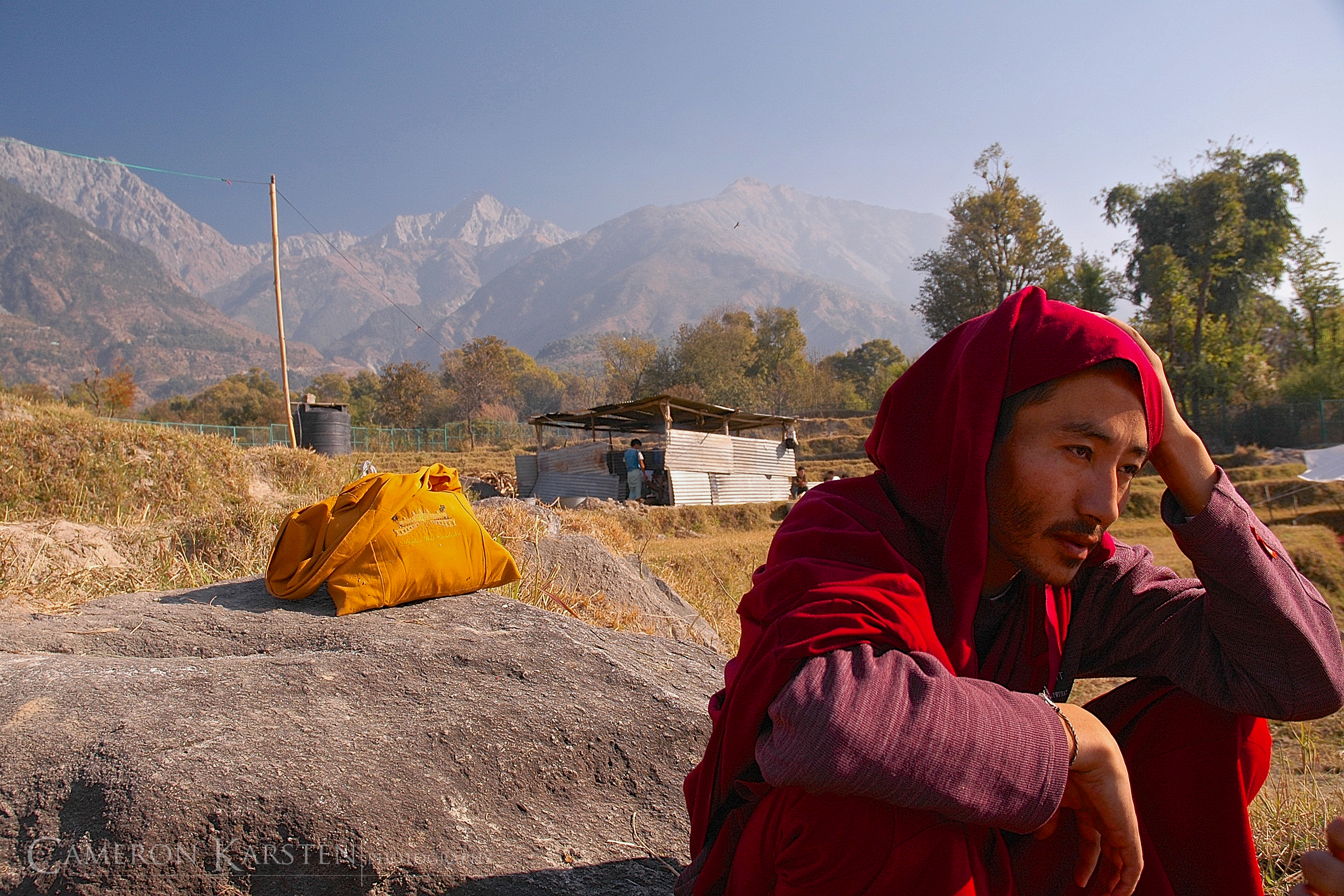
An-Orange-Dove---Version-2Buddhist monk passing along a Peace Crane made out of origami paper

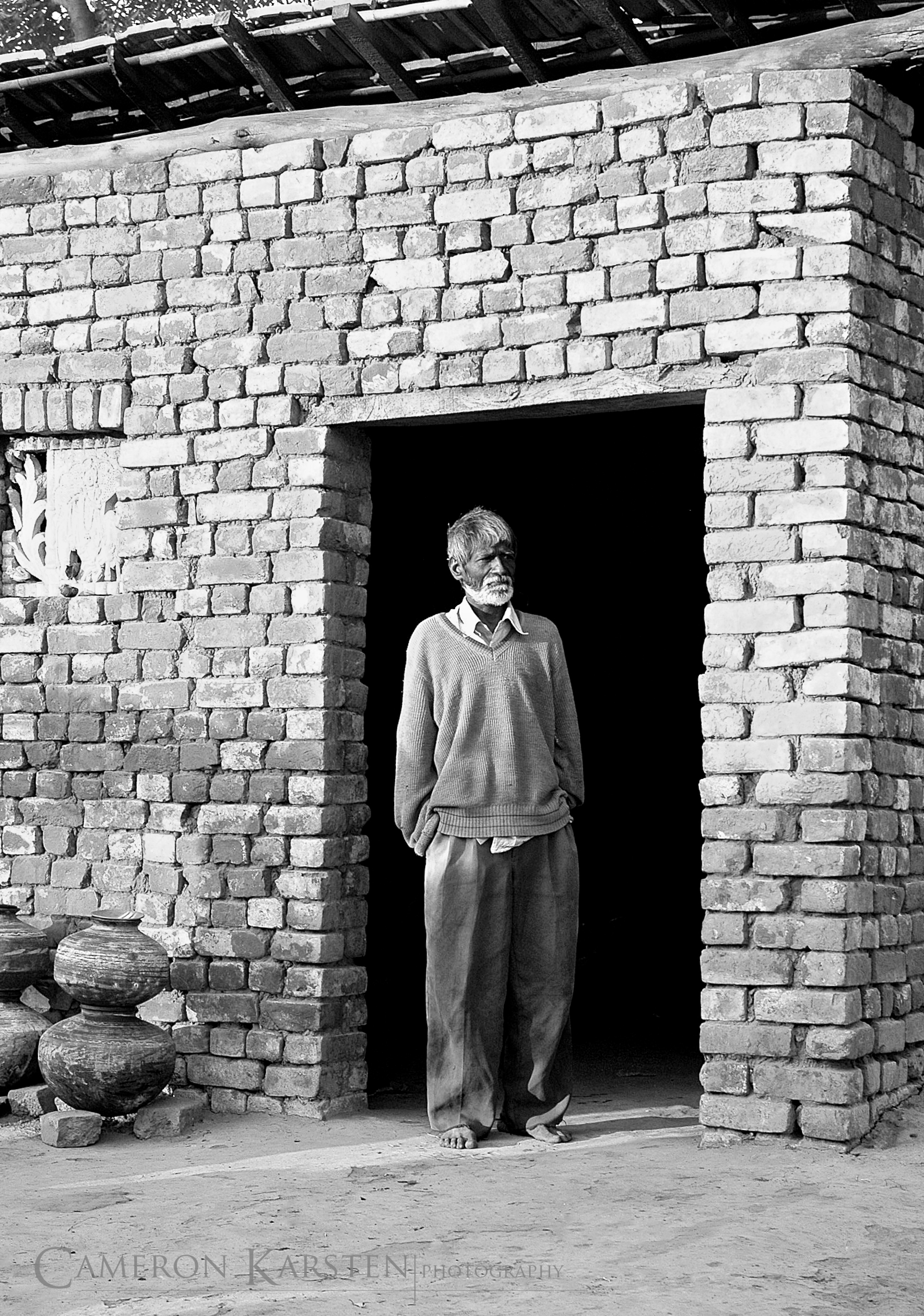
DSC_0037999---Version-2Man & hut in the Gujarat Desert

Indian-Blessings---Version-3Mother India

Shiva's-MaskingShiva on the streets of New Delhi

Thoughts-of-Another-Home---Version-2Exhaustion in exile in the Himalayas

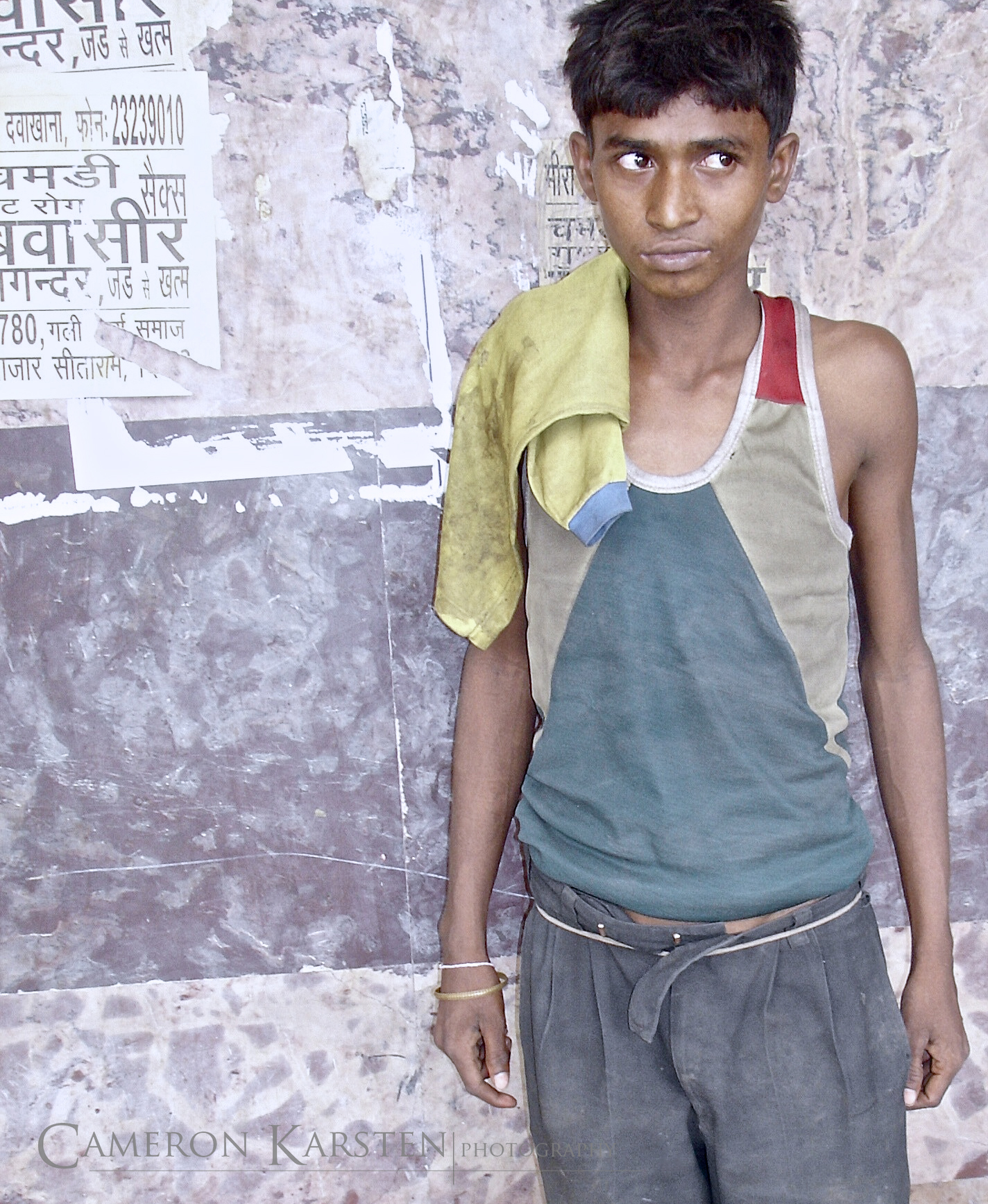
DSC_0016999---Version-2Boys outside the meeting hall

For more, please visit Travel at cameronkarsten.com

Cameron Karsten Photography


Africa – People + Places

Cultures-ClashI’ve been sifting through imagery as I prepare to head to New York City for the 2013 Eddie Adams Workshop and meetings with potential clients.  What I’ve found has allowed me to relive the beautiful memories of past travels and the people and places I met.  Here, Africa represents itself in all its wondrous enjoyment, with the hopes of near returns on future assignments.

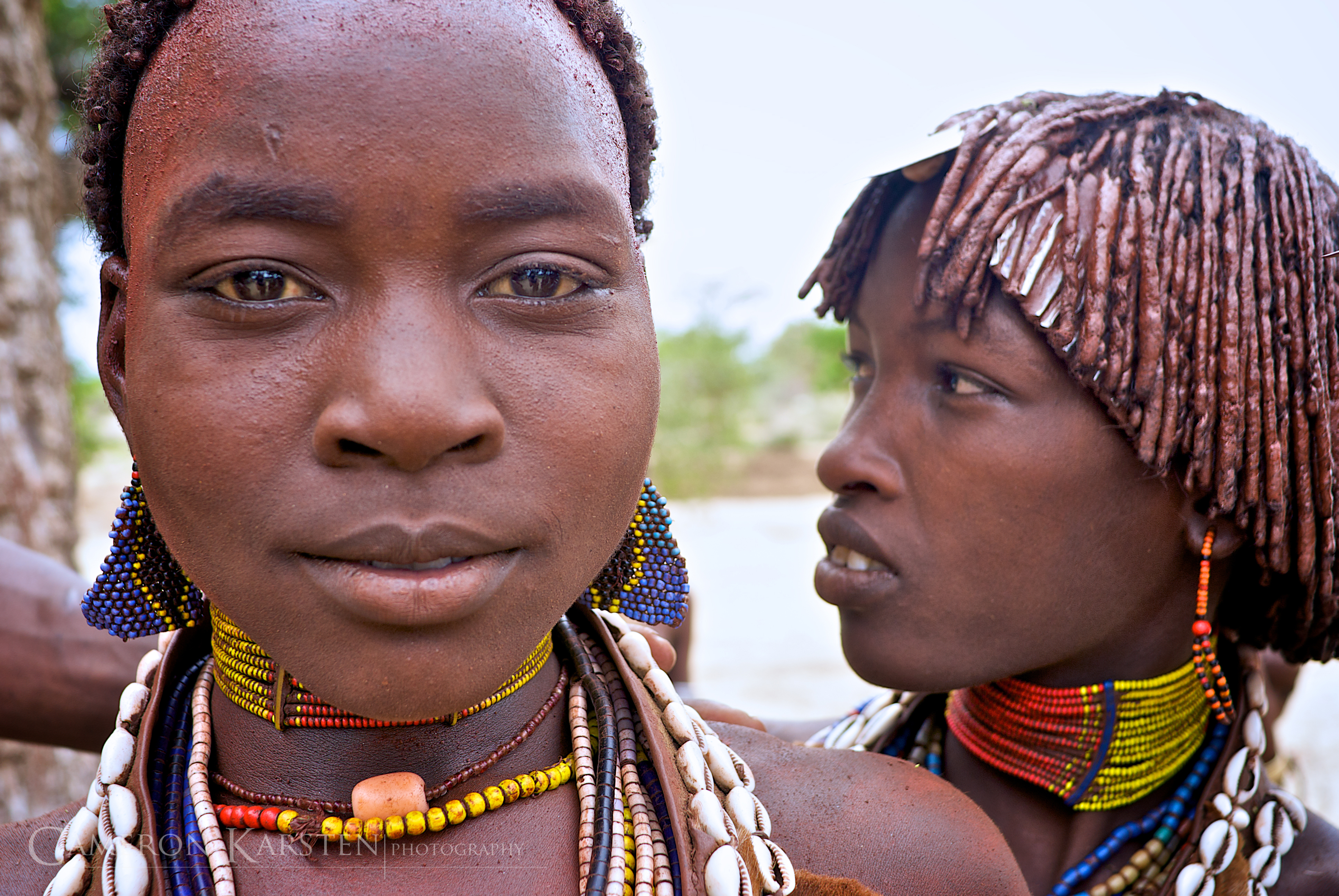
DSC_0086-(4)---Version-3Hamar, Omo Valley, Ethiopia

DSC_0206---Version-3Somewhere in the Afar Desert, Ethiopia

Gold-Stars,-Happy-FacesThe Layla House Adoption House, Addis Ababa, Ethiopia

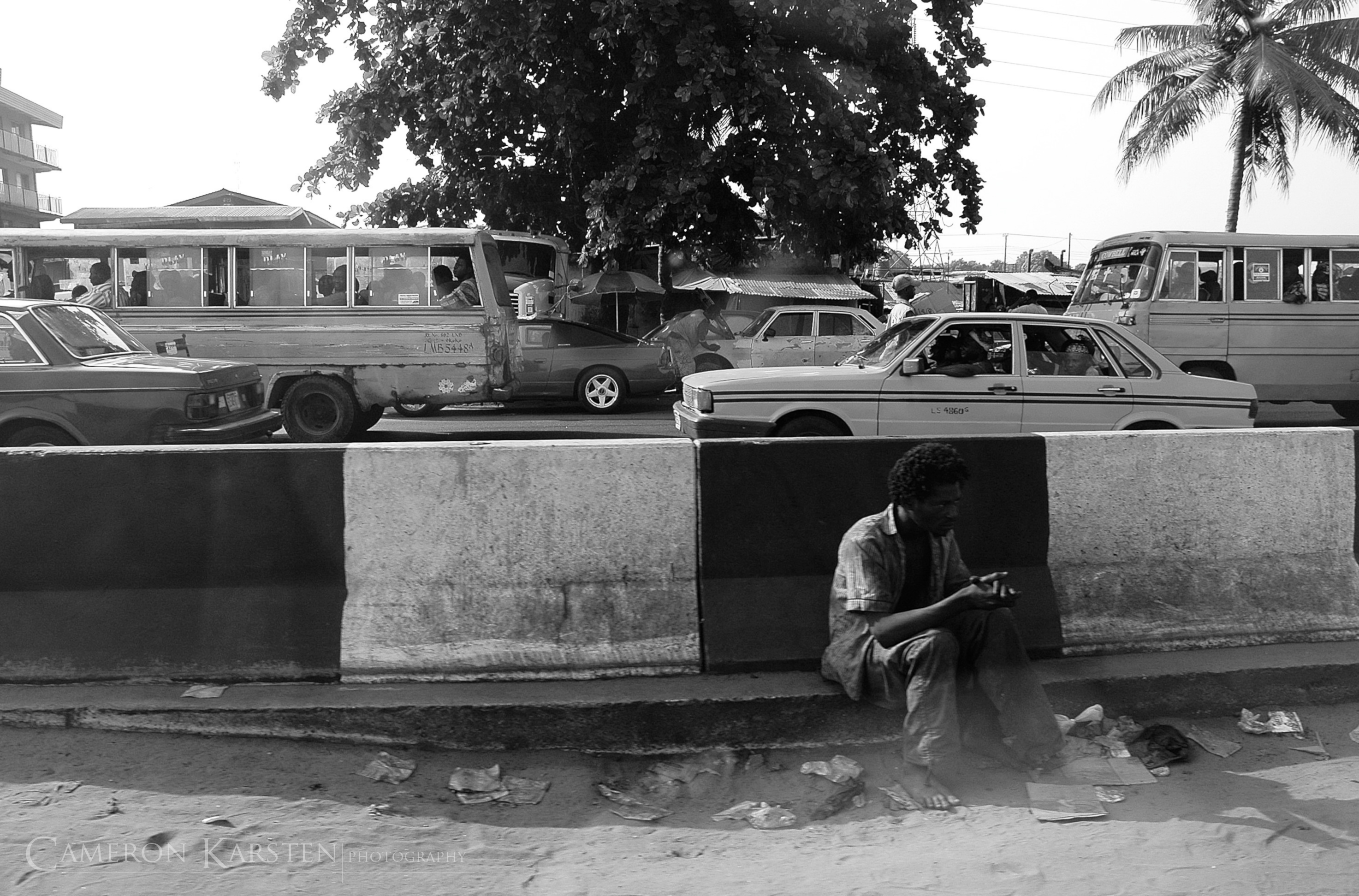
DSC_0179---Version-3The streets of Lagos, Nigeria

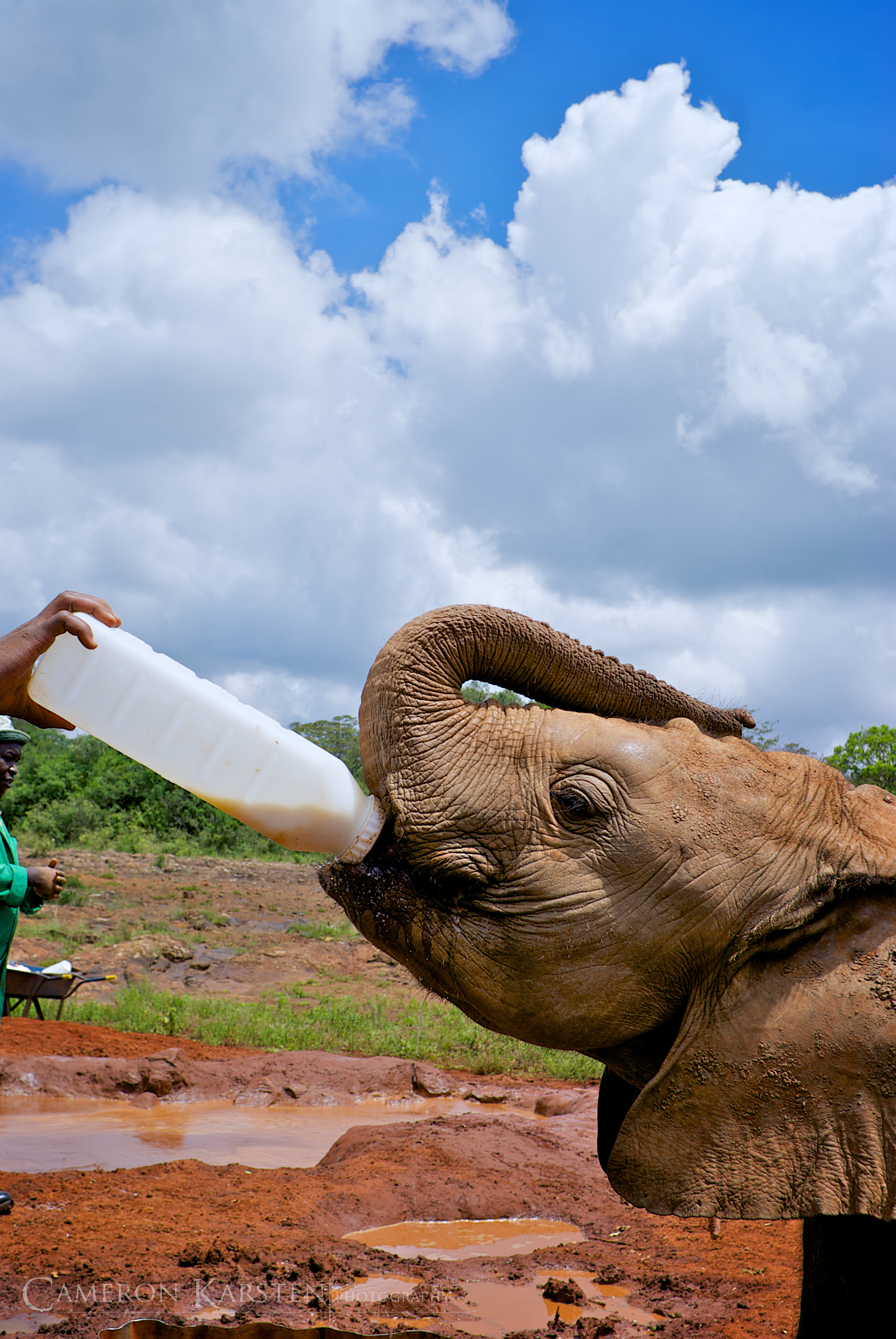
DSC_0024---Version-2The David Sheldrick Wildlife Trust, Nairobi, Kenya

DSC_0307-(1)---Version-5Hamar boy, Omo Valley, Ethiopia

High-RisenDiani Beach, Kenya

DSC_0009-(4)---Version-3Hamar girls, Omo Valley, Ethiopia

Tuti-AliveTuti, Omo Valley, Ethiopia

For more please visit: Travel

Cameron Karsten Photography

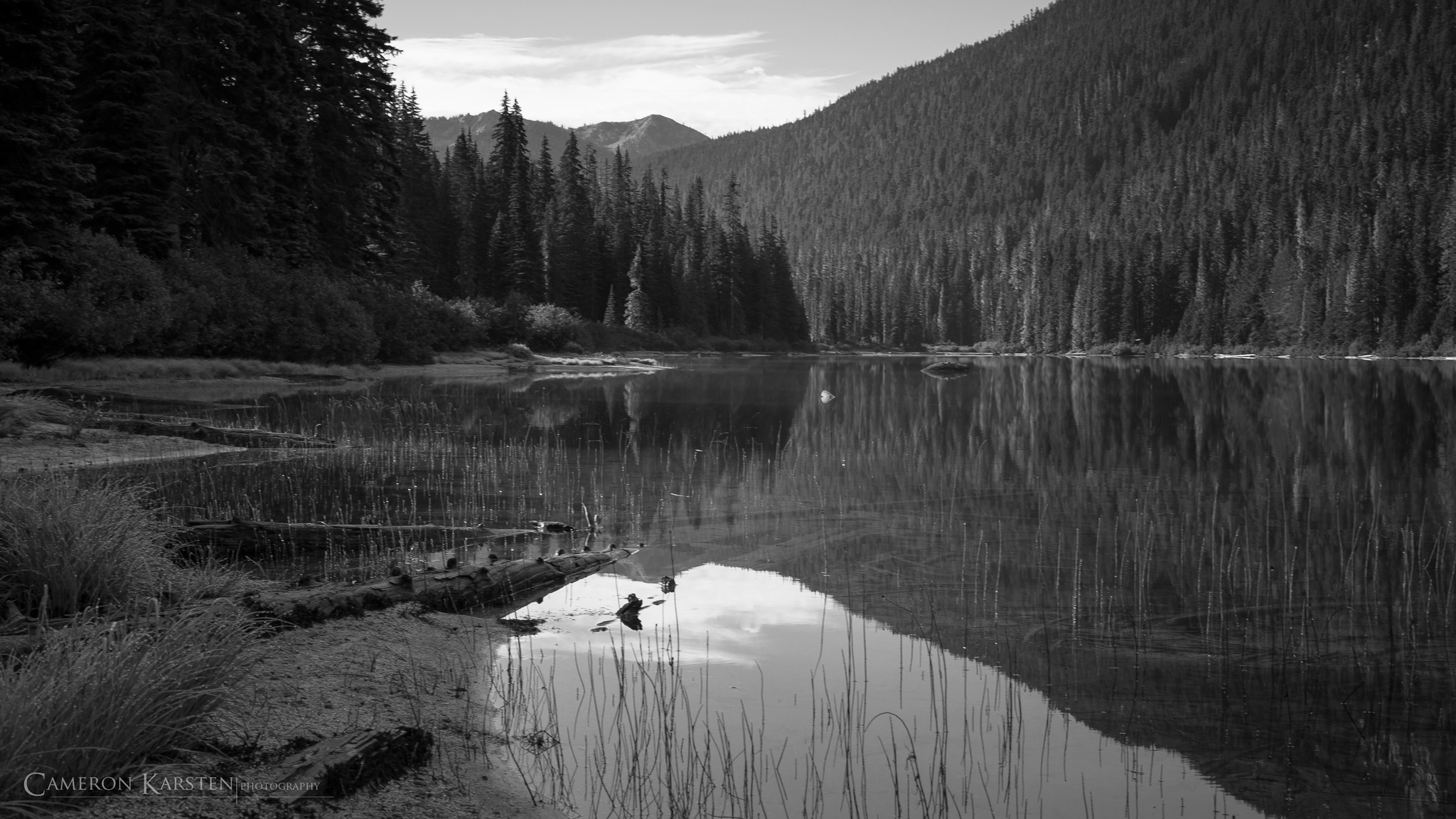
Alpine Lakes Wilderness Area (B+W)

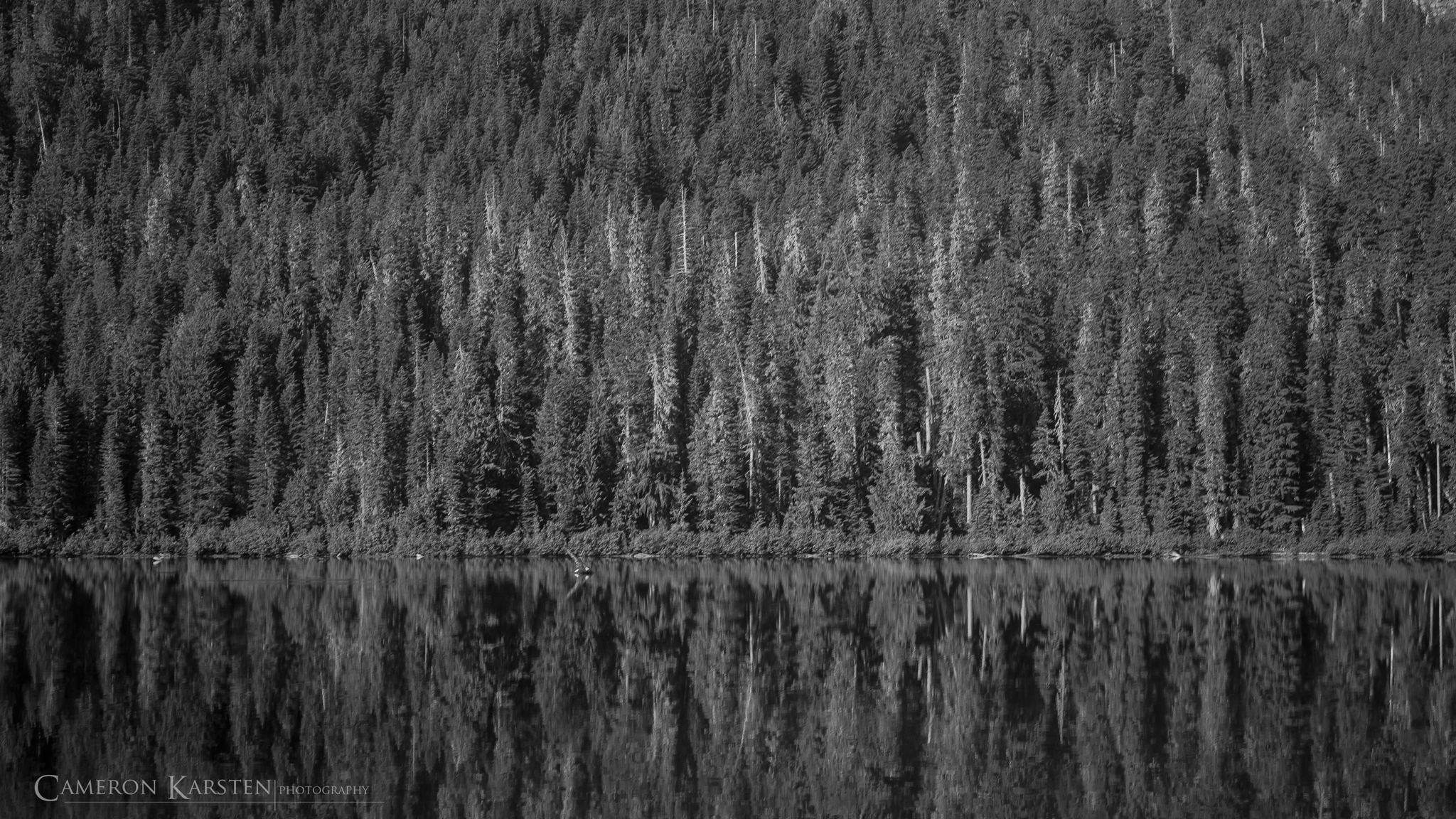
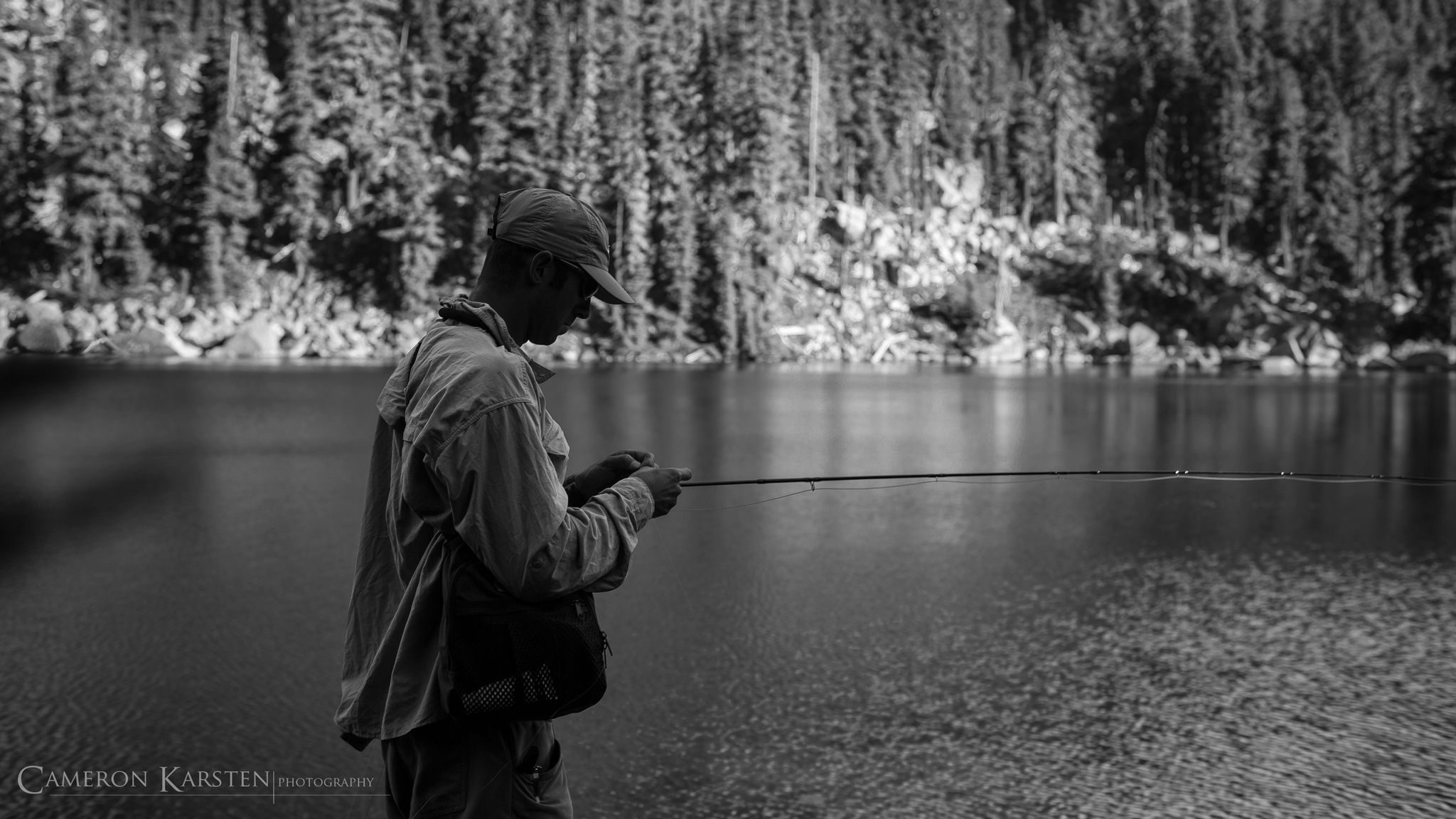
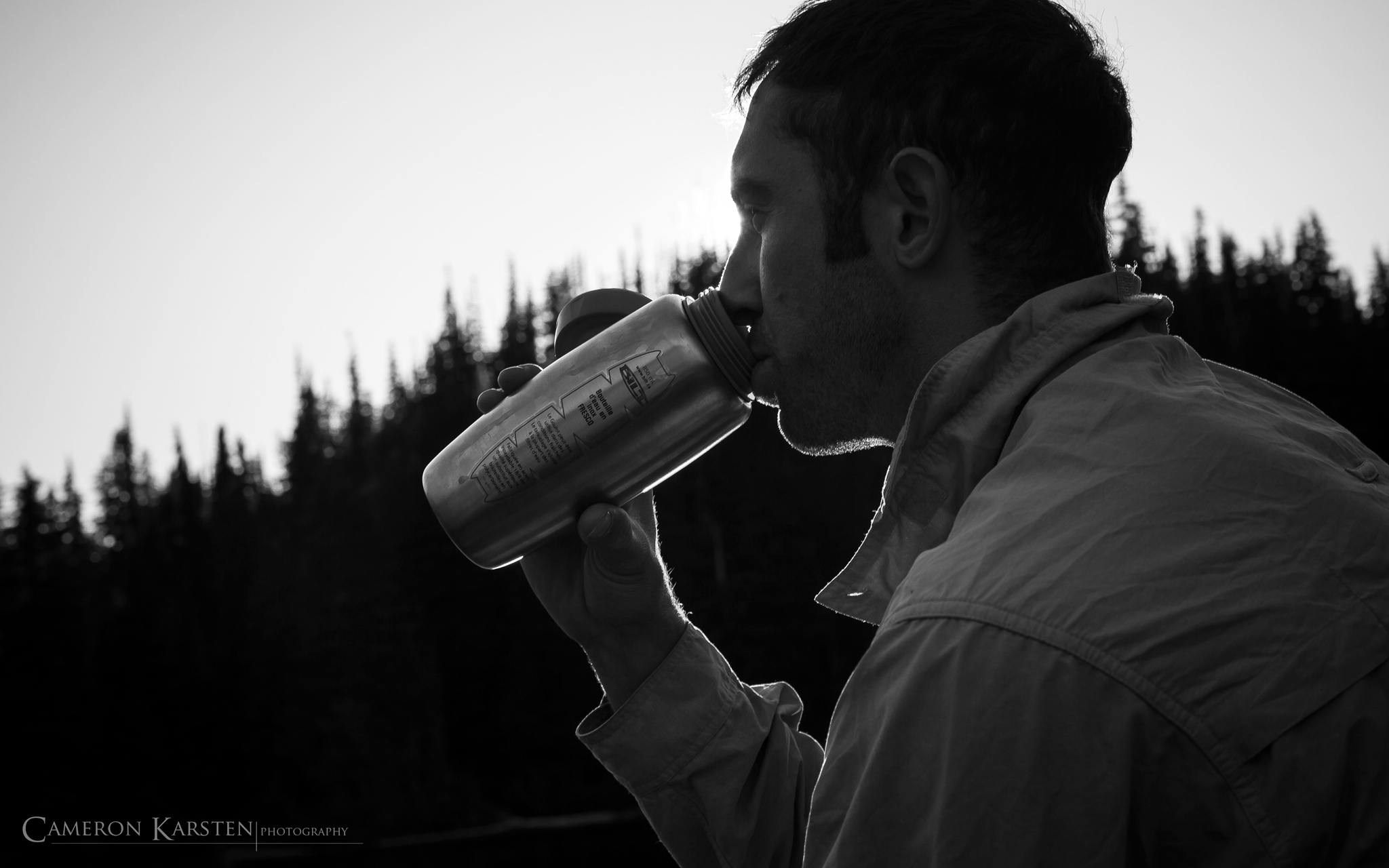
AlpineLakes2-29The Alpine Lakes Wilderness Area north of Interstate 90 in the Cascade Mountains of Washington State.  The land of 700 lakes.

AlpineLakes-41

AlpineLakes-58

AlpineLakes-160

AlpineLakes-128

AlpineLakes-470

AlpineLakes-213

AlpineLakes-169

AlpineLakes-181

AlpineLakes-295

AlpineLakes2-3

Cameron Karsten Photography