A Haitian bathes and prays in the waterfall of Saut d’Eau during the annual pilgrimage.
Haiti is a magical island with a heart of generosity and resilience. It is a nation of peoples who were sent to their new home in the iron shackles and rusted chains, having crossed the tumultuous Atlantic Ocean in the bowels of wooden hulls, from a homeland of ancestral purity. The darkest hour of humanity was the Western slave trade, taking tribes from Guinea to the New World. One of their first stops, Hispaniola (Haiti). And there, centuries later, occurred the world’s only successful slave revolt. This, among many other feats of survival, including buckling before the atrocities of successive dictatorships, earthshaking natural disasters and a hopeless material poverty wrought with the inhumane forces of international policies and internal governmental corruption, couldn’t have happened without Haitians’ spirituality, the worship of the Loas, the great Les Mysteres, from the motherland of Africa.

A man spreads his arms under the falls of Saut d’Eau.
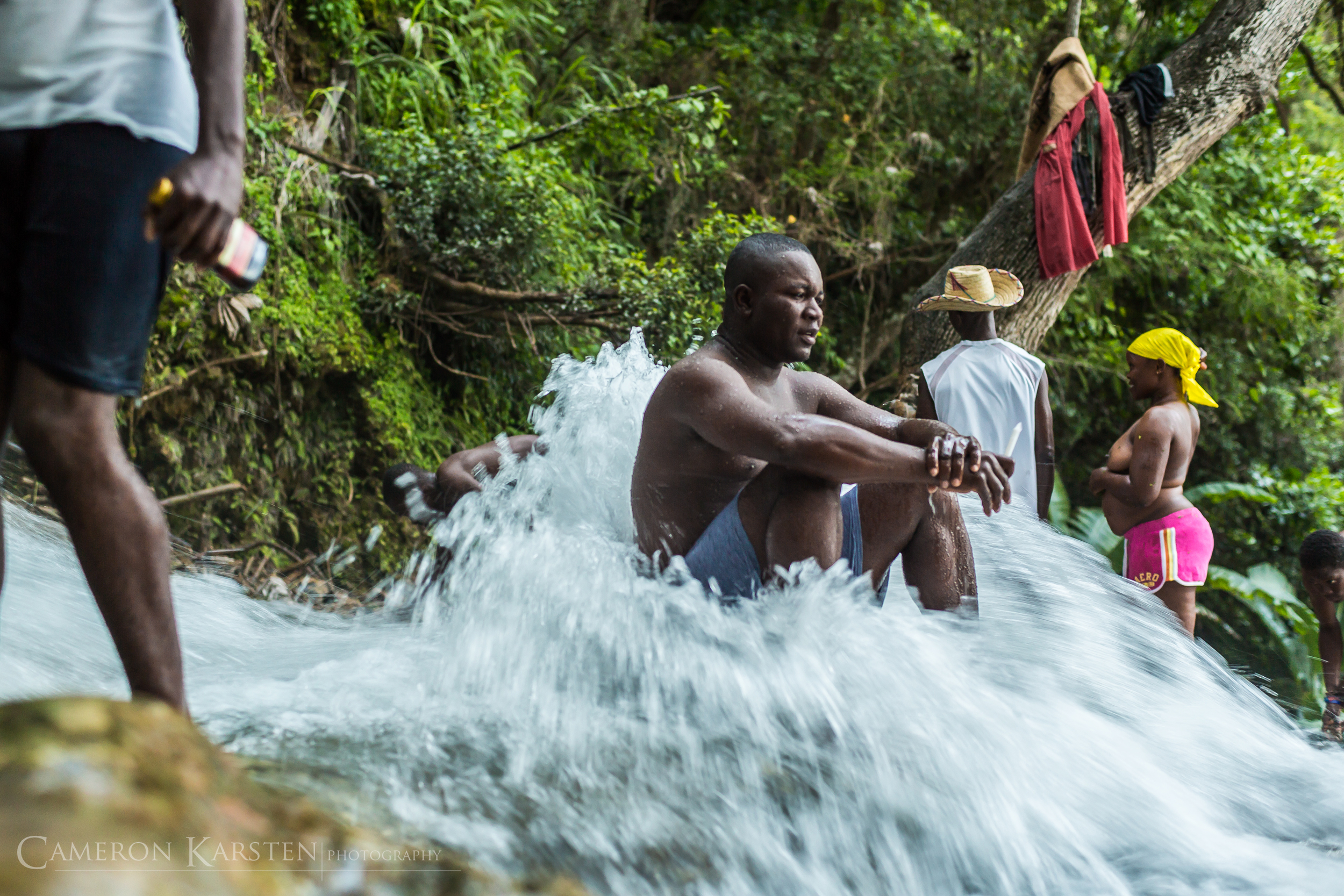
A pilgrim at Saut d’Eau sits still in the rushing waters.
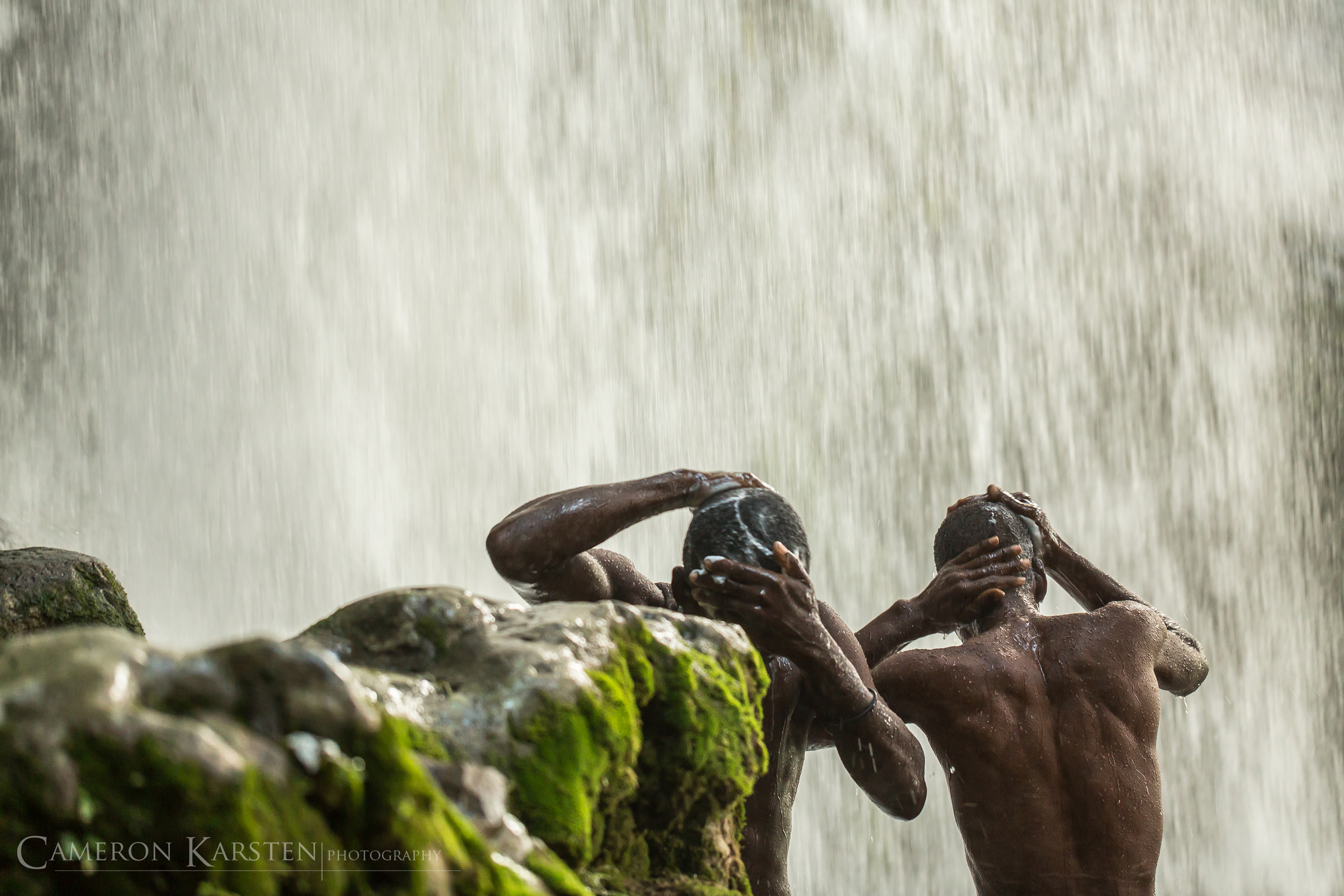
Two pilgrims bathe with soap near the falls of Saut d’Eau.

A man sells candles for pilgrims at the waterfalls of Saut d’Eau.

A man finds stillness among the throngs of pilgrims who often get completely nude to bathe in the waters.

Pilgrims gather to bathe, scrub and offer prayers to the Virgin Mary and vodou spirits Iwa Damballah (the snake) and his wife Ayido Wedo (the rainbow).

In a moment of solitude, a pilgrim enjoys the cool healing waters of Saut d’Eau.

A young man prays before the waterfalls of Saut d’Eau in the Artibonite Valley.
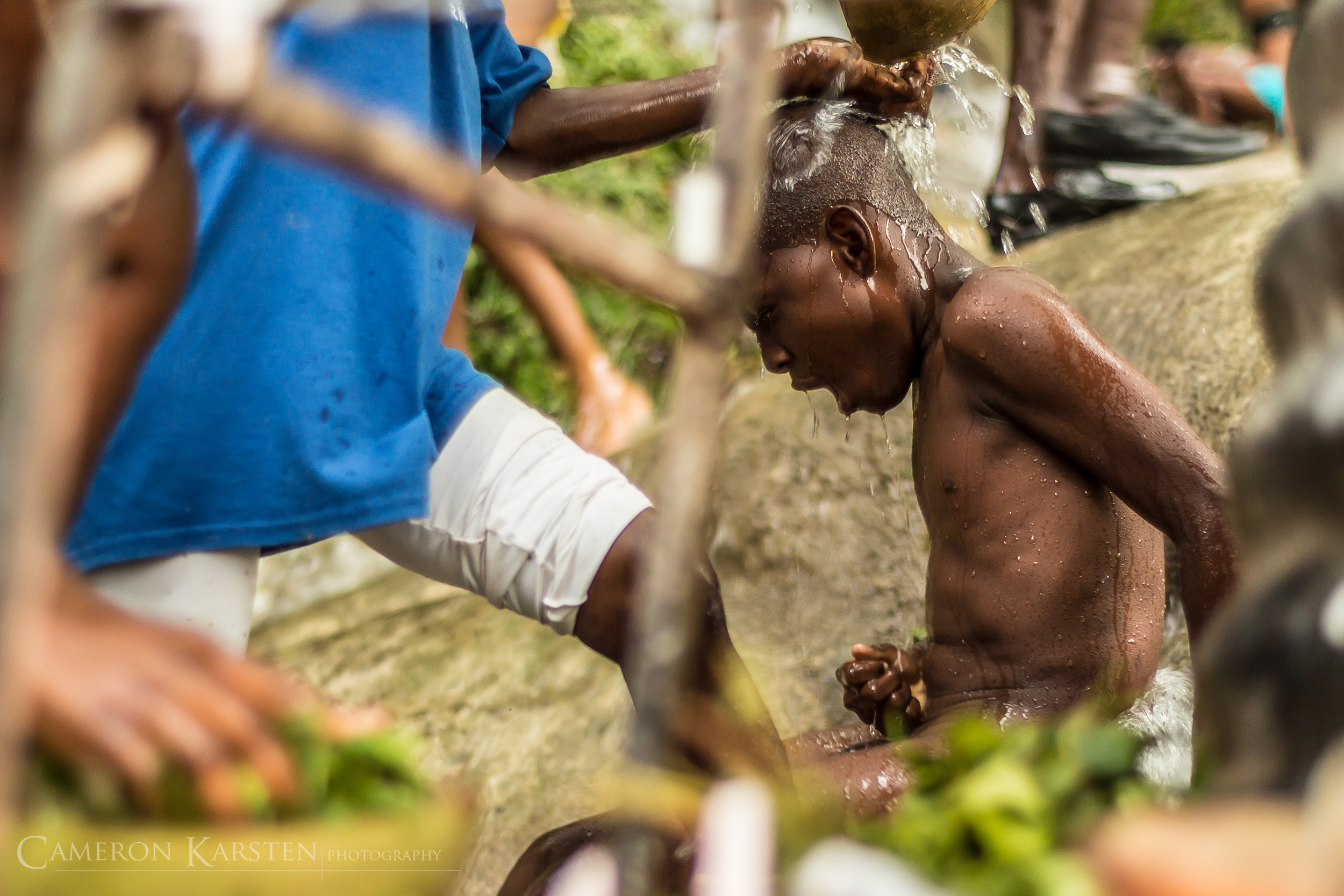
A young boy is bathed by his parents in the sacred waters of Saut d’Eau. He will also be scrubbed with a mixture of herbs including parsley and tree leaves believed to cleanse the body of sins that also bring good luck.
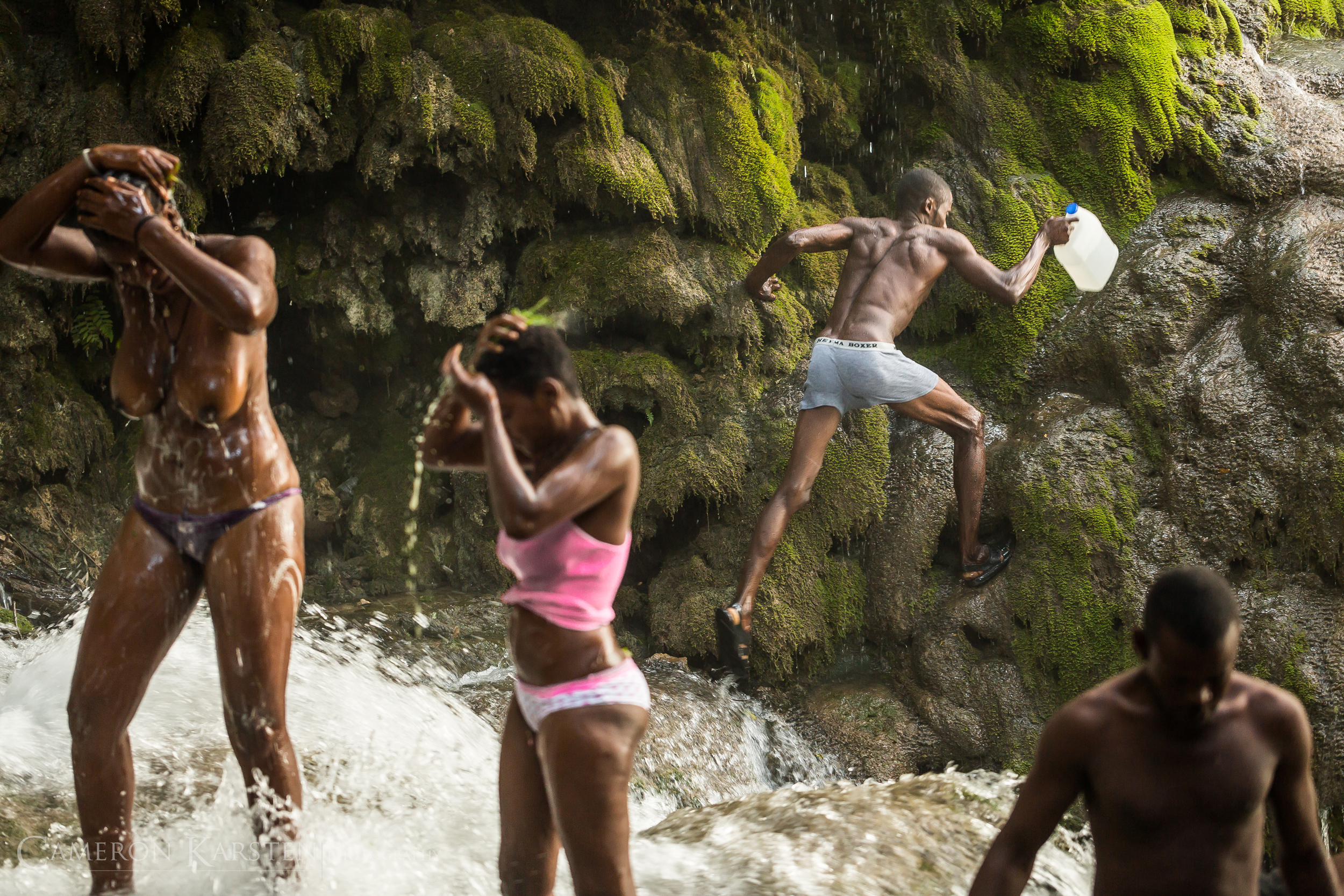
A man climbs the slick rocks to retrieve water from the waterfall to bring with him on his return home.
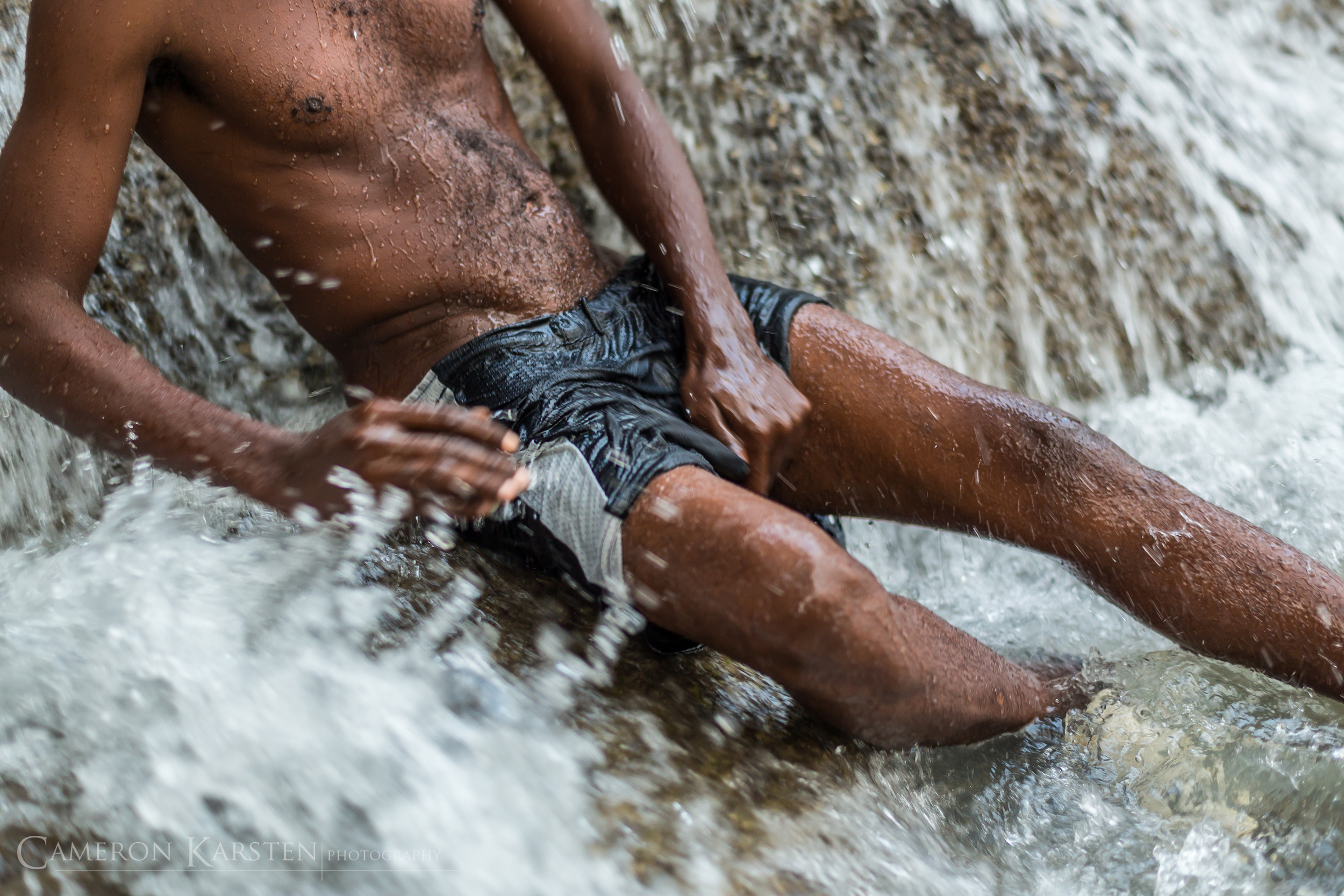
A pilgrim cleanses and scrubs himself of his sins in the waters of Saut d’Eau.
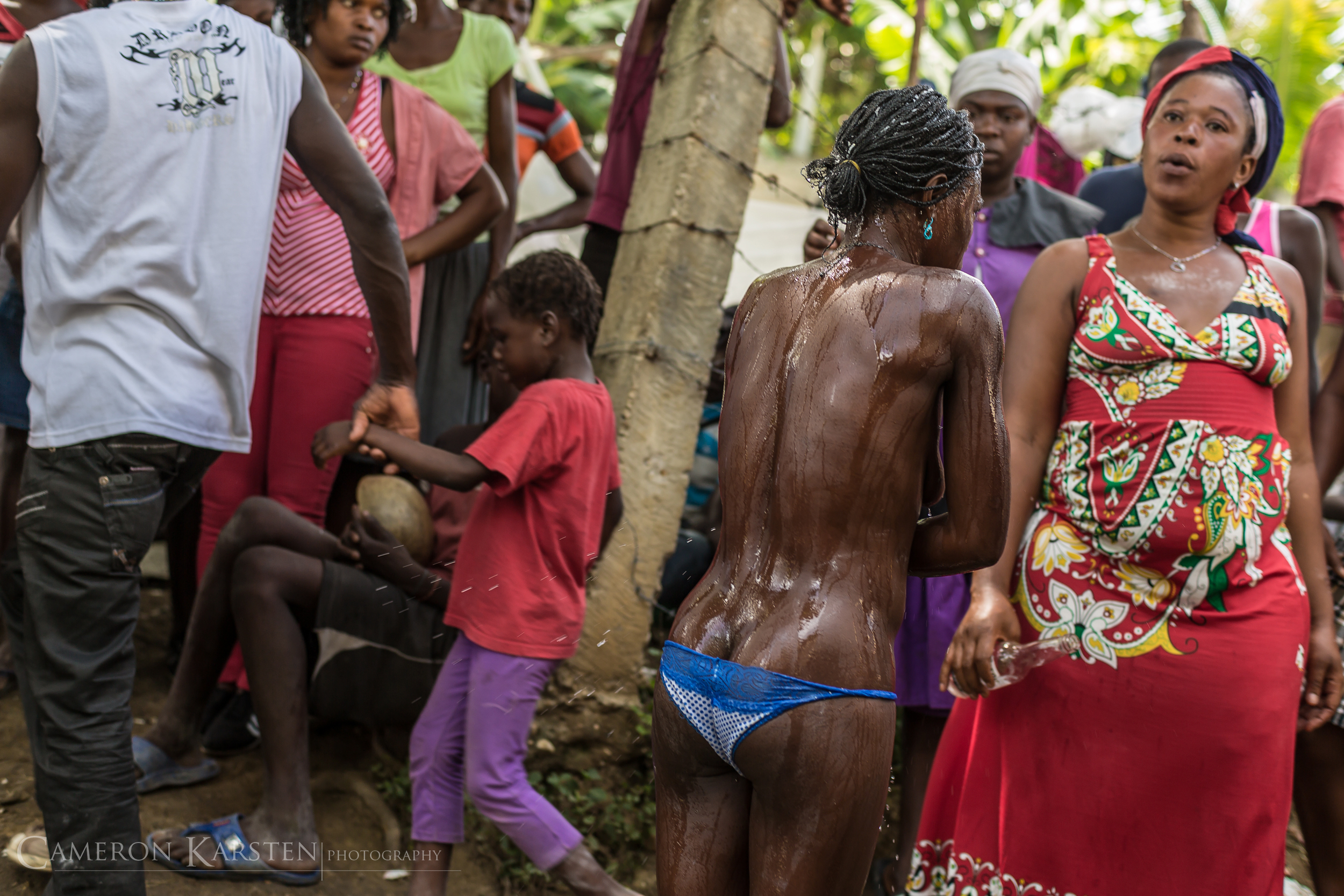
A young woman goes through a consultation with a vodou Mambo. Haitians visit Houngans or Mambos, vodou priests, in search of health, happiness and prosperity.
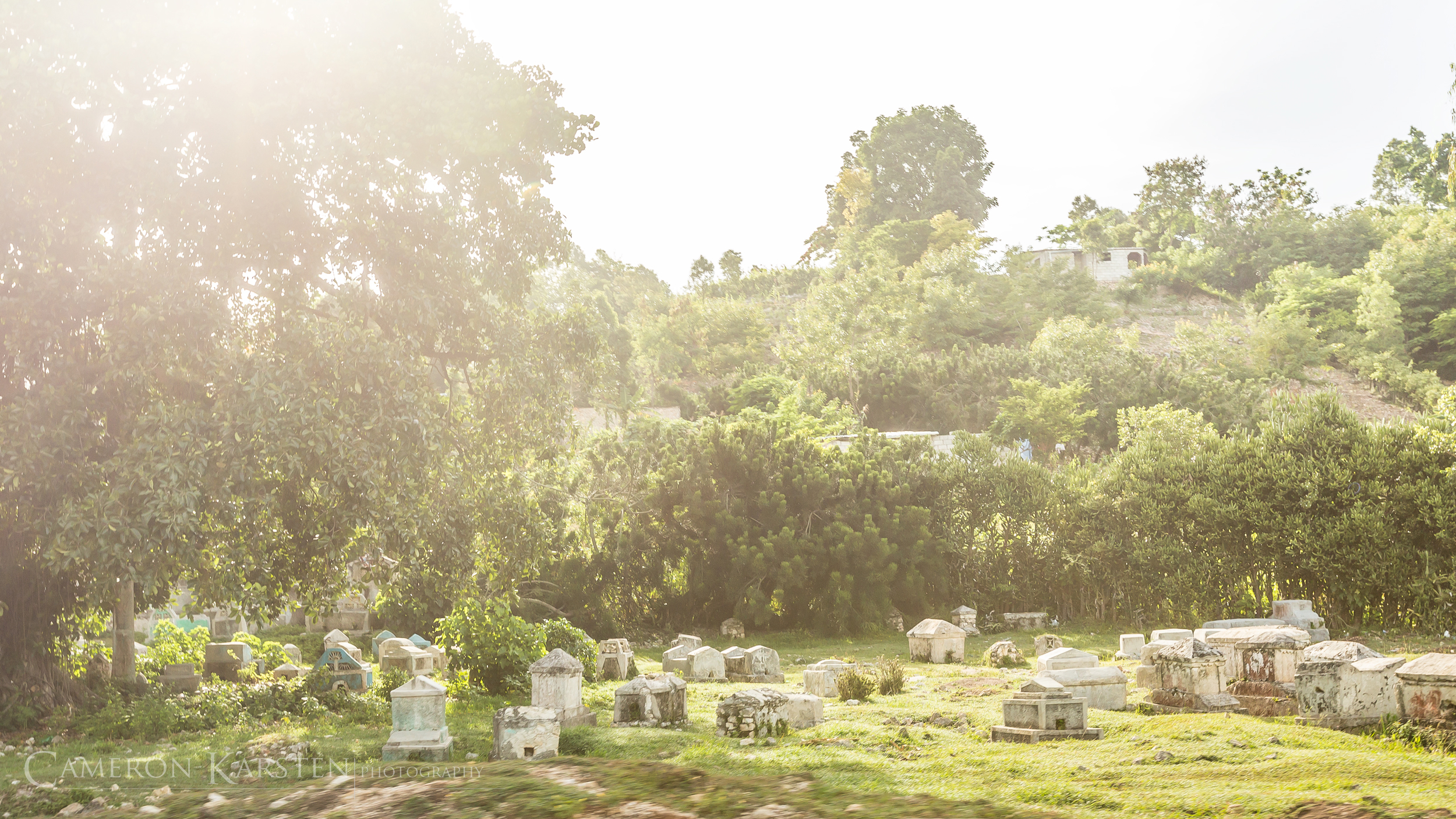
Cemeteries are both part of the Catholic and vodou traditions. For vodouisants, many of the celebrations surrounding the dead are held at cemeteries, as well as the much misconceived zombie phenomenon.

Charcoal is a huge commodity for the Haitian economy, yet as of 2006 there was only 2% of Haiti’s original forests remaining. From the city streets to the country roads, charcoal can be found in large white canvas sacks sold by the “marmit” and not by weight. A marmit is approximately the size of your average coffee can, which in Haiti is the equivalent of about $0.60 USD.

Construction vehicles and earthmovers dot the landscape from the failed efforts of international aid organizations to rebuild Haiti after the devastating 2010 earthquake. The earthquake registered a 7.0 magnitude, killing unconfirmed citizens. Estimates range widely from 100,000 to 316,000, leaving families ruined, debilitating the infrastructure and crippling an already suffering economy.

Haitians collect water and wash laundry in a dry river bed north of Port-au-Prince in the Artibonite Valley.
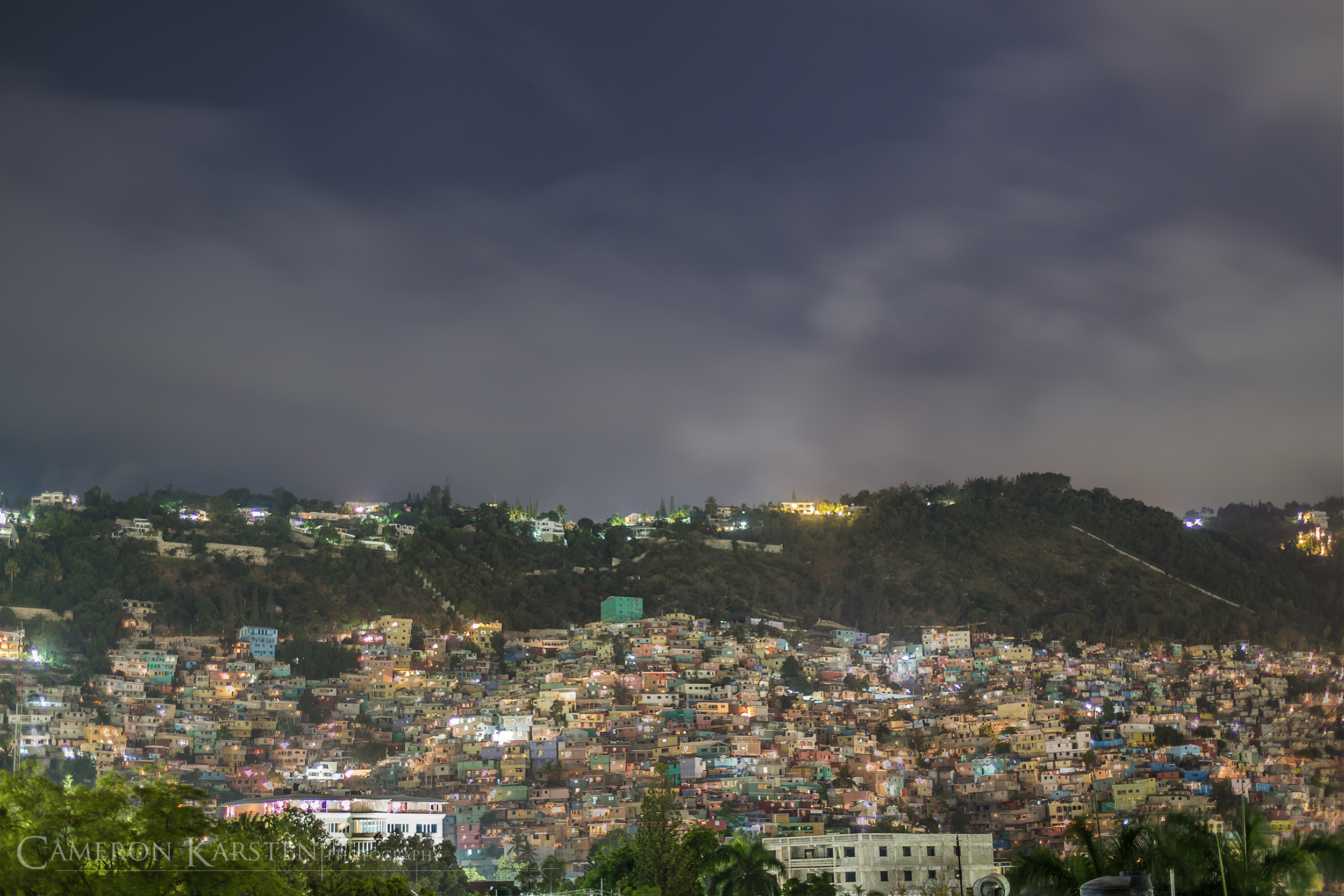
A view of the Port-au-Prince slum Jalousie, just above the affluent neighborhood of Petionville. Visible walls within the slum were painted a rainbow of colors to make the hillside more beautiful for Petionville residents.

Sanba Zao is an internationally-renowned Haitian drummer with a rife knowledge of the history of vodou drums. Each drum has a specific role and is the key to calling Les Mysteres from across the waters in Africa to the island of Hispaniola.
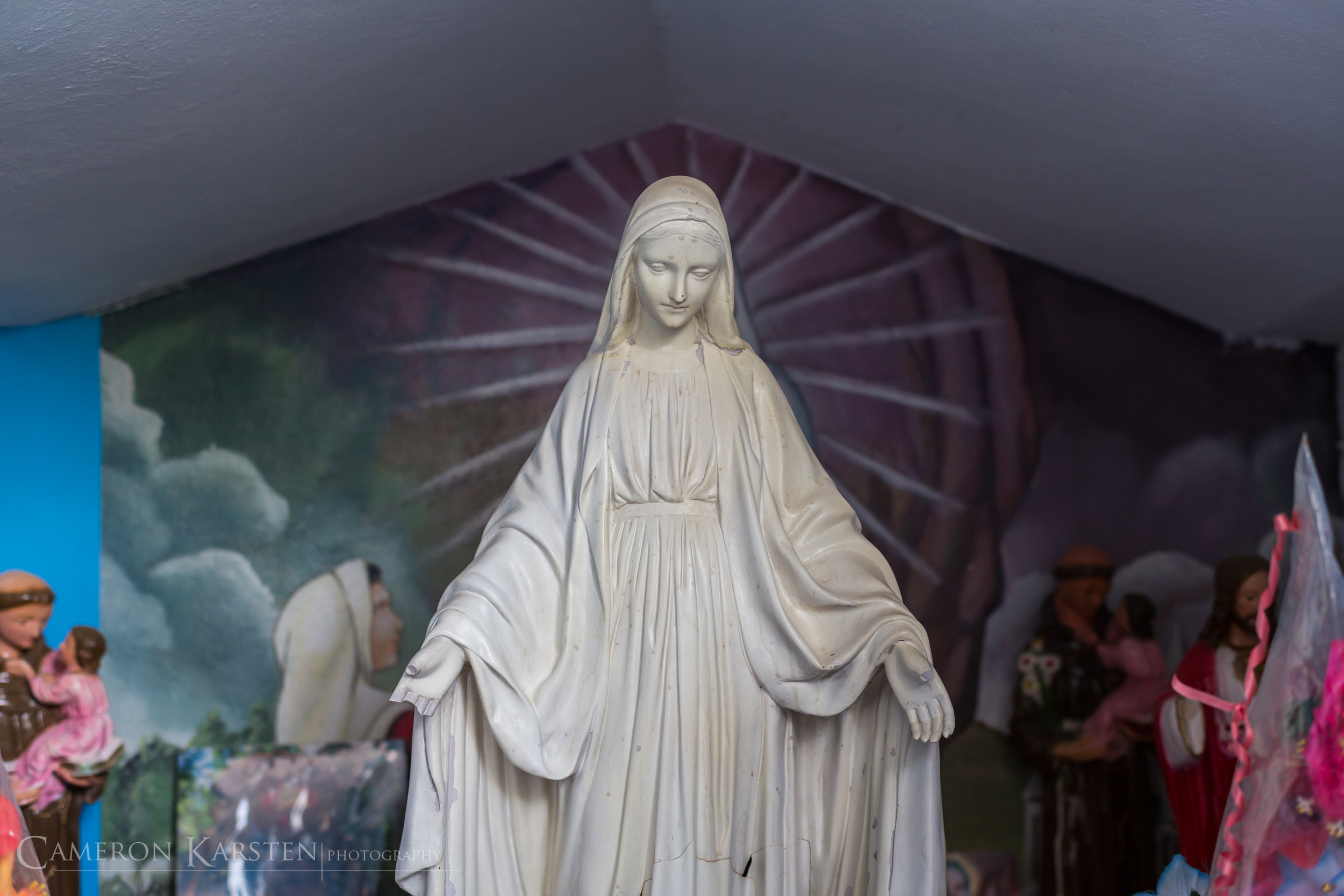
The Virgin Mary resides within an altar of a vodou temple, representing the facade Catholicism has played for the very survival of Haitian vodou.

Catholicism and Haitian vodou are syncretic religions. Catholicism acted as the facade during the era of slavery, vodouisants utilizing the religion’s idols to hide the true rituals of their African ancestors.
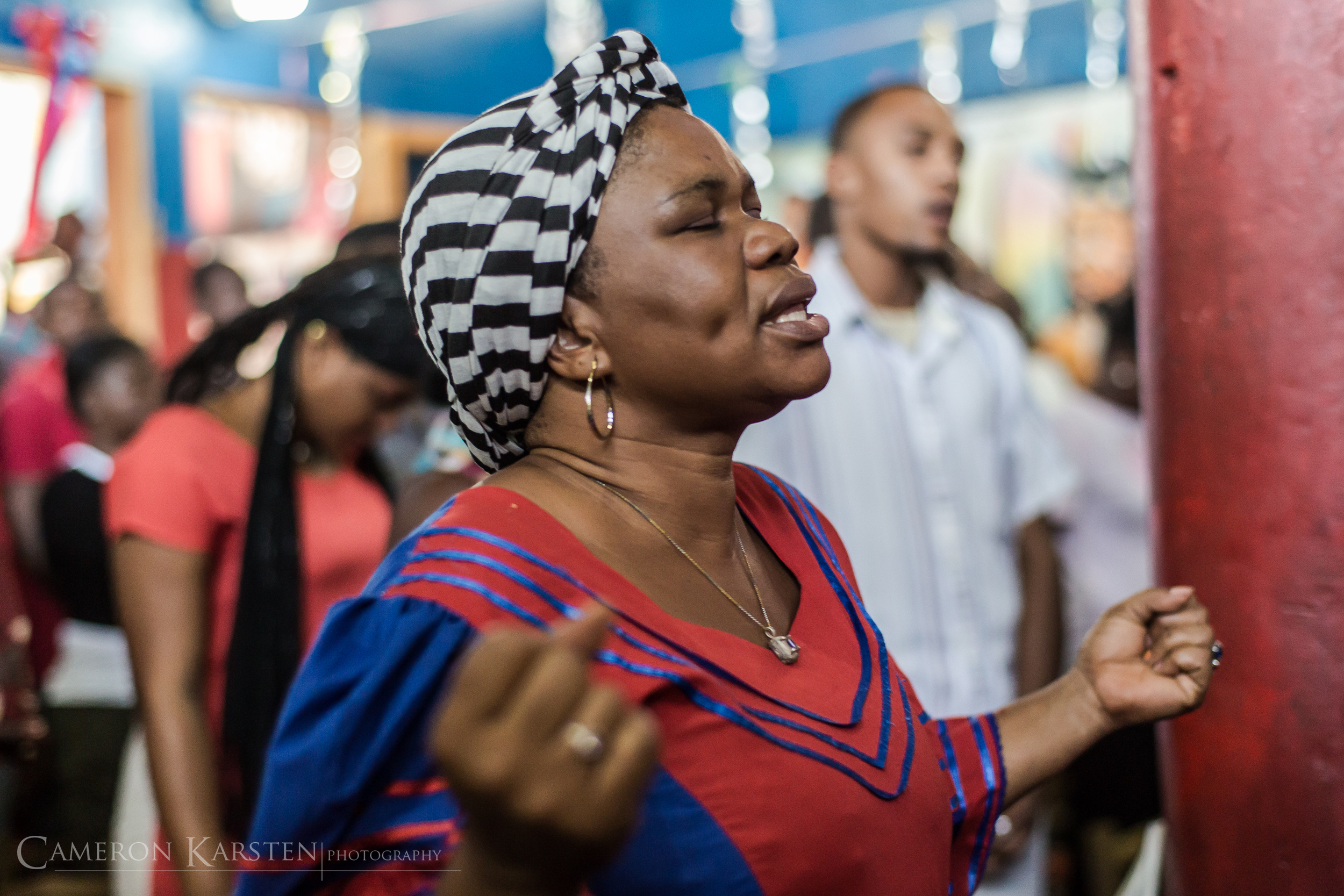
A vodouisant prepares to receive the spirit Ogue Feray, the warrior spirit whose main color is red.

The houngan Sanba Zelle excites his congregation at his hounfour in Montagne Noire outside of Port-au-Prince. Haitian vodou is as much a party for the community as it is a religious celebration. Vodouisants gather to sing and dance, shedding the hardships they face in a post-earthquake Haiti. As of 2011, 61.7% of the population lives below the poverty line.

Vodouisants pray in congregation at Montagne Noire outside Port-au-Prince.
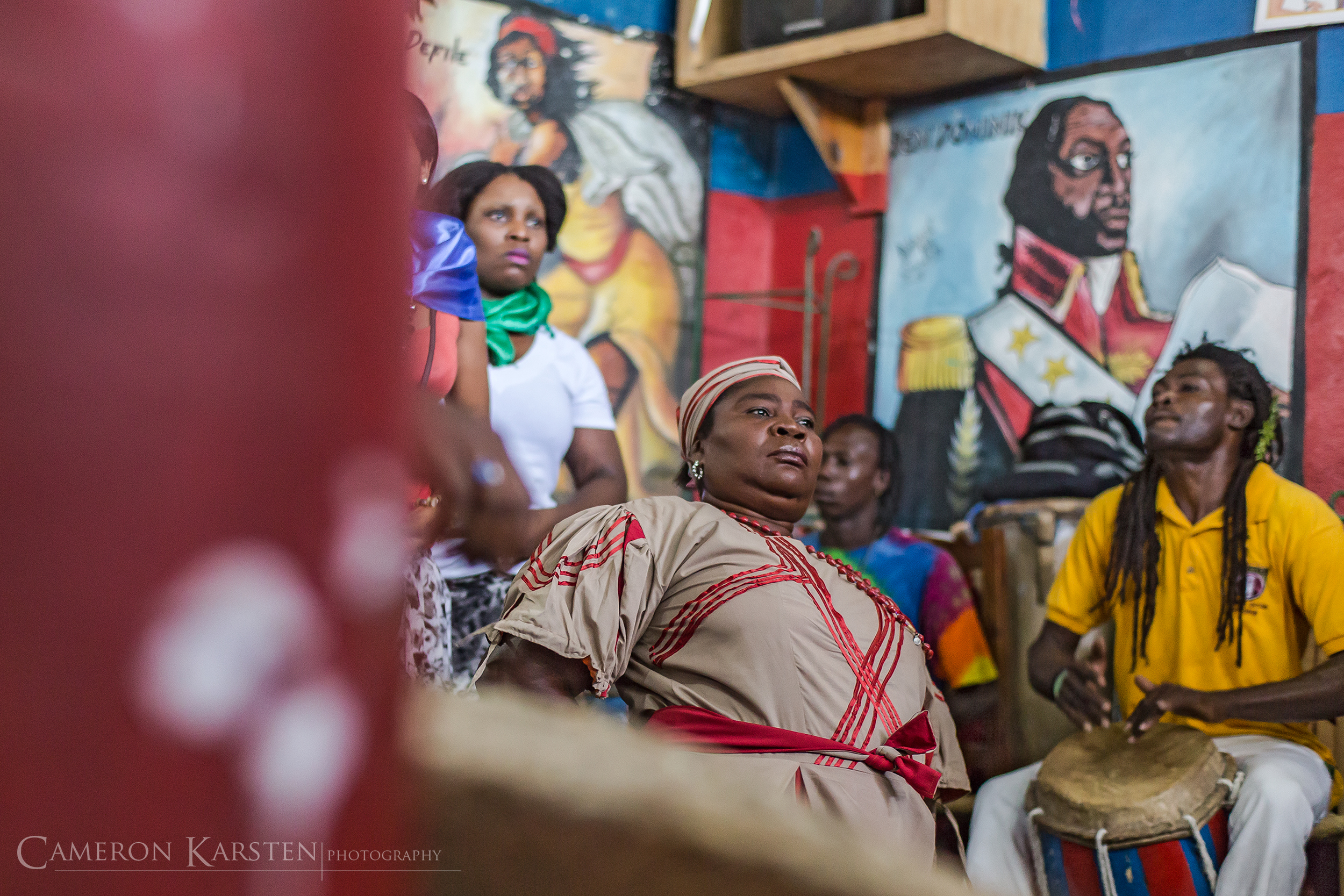
A vodouisant in attendance goes into trance as the congregation calls Les Mysteres from across the waters in Africa by the sound of the drums, the singing and pure merriment of the people. Vodou spirits are believed to have been mortals in past eras. By entering the body of a human, trance is the spirit’s way of enjoying the pleasantries of humanity once again.

A woman in trance by Ogue Feray embraces another vodouisant. When in trance, vodou spirits are looking to experience the physicality of humanity.

Two congregation members in trance embrace at a hounfour in Montagne Noire, Port-au-Prince.
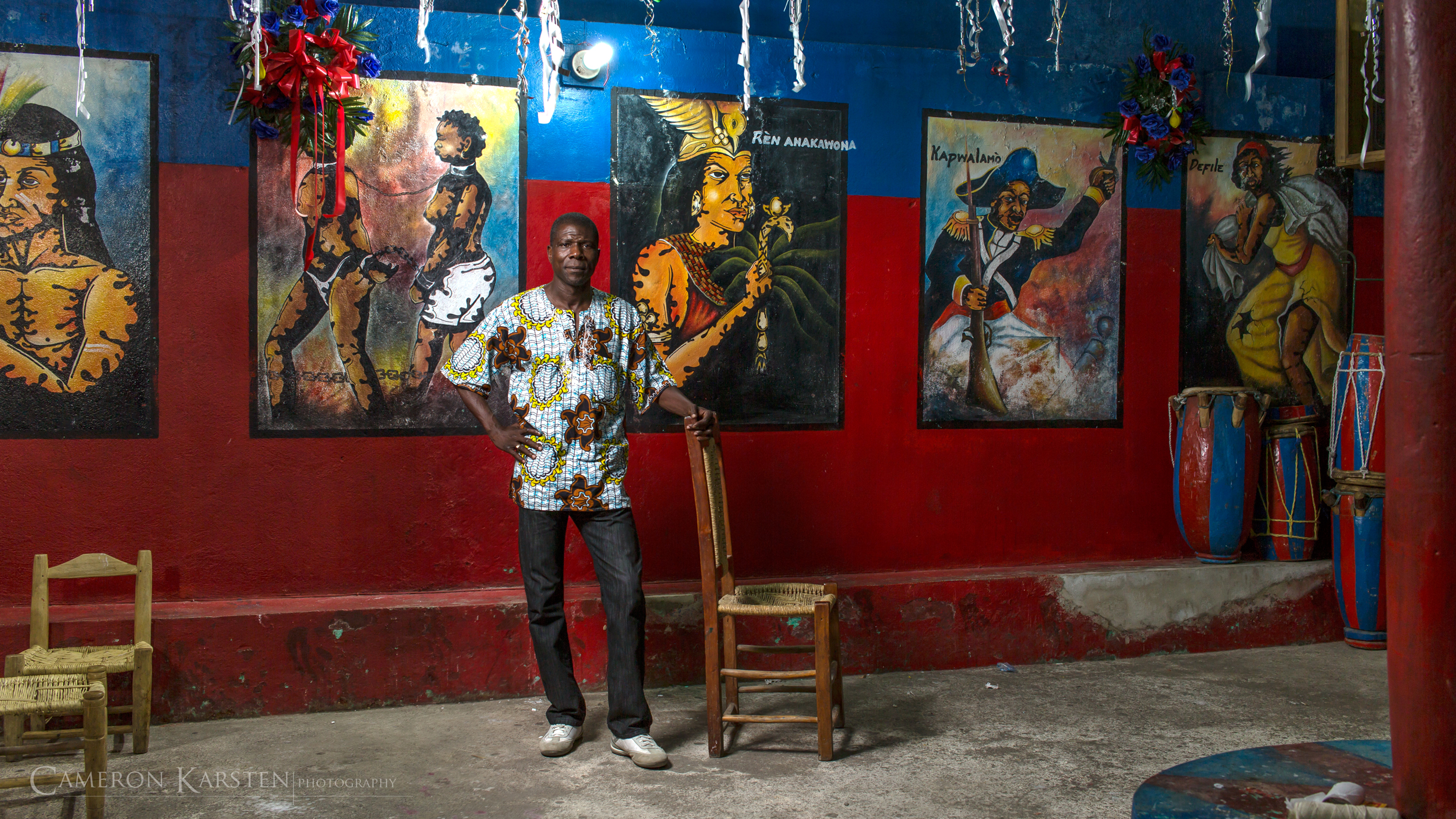
Sanba Zelle is a Houngan, or Vodou priest, leading his community of vodou practitioners in Montagne Noir outside of Port-au-Prince. As a Houngan he is a leader who contacts Les Mysteres from across the waters in Guinea (Africa), helping his people find health, happiness and prosperity through Vodou.

A sculpture by André Eugène. All of the skulls in his work are real human skulls. I asked him how he was able to get a hold of the skulls and he said, “Many things are easy to come by in Haiti. All my work is recycled. You ask for a human skull, you can easily get one.”
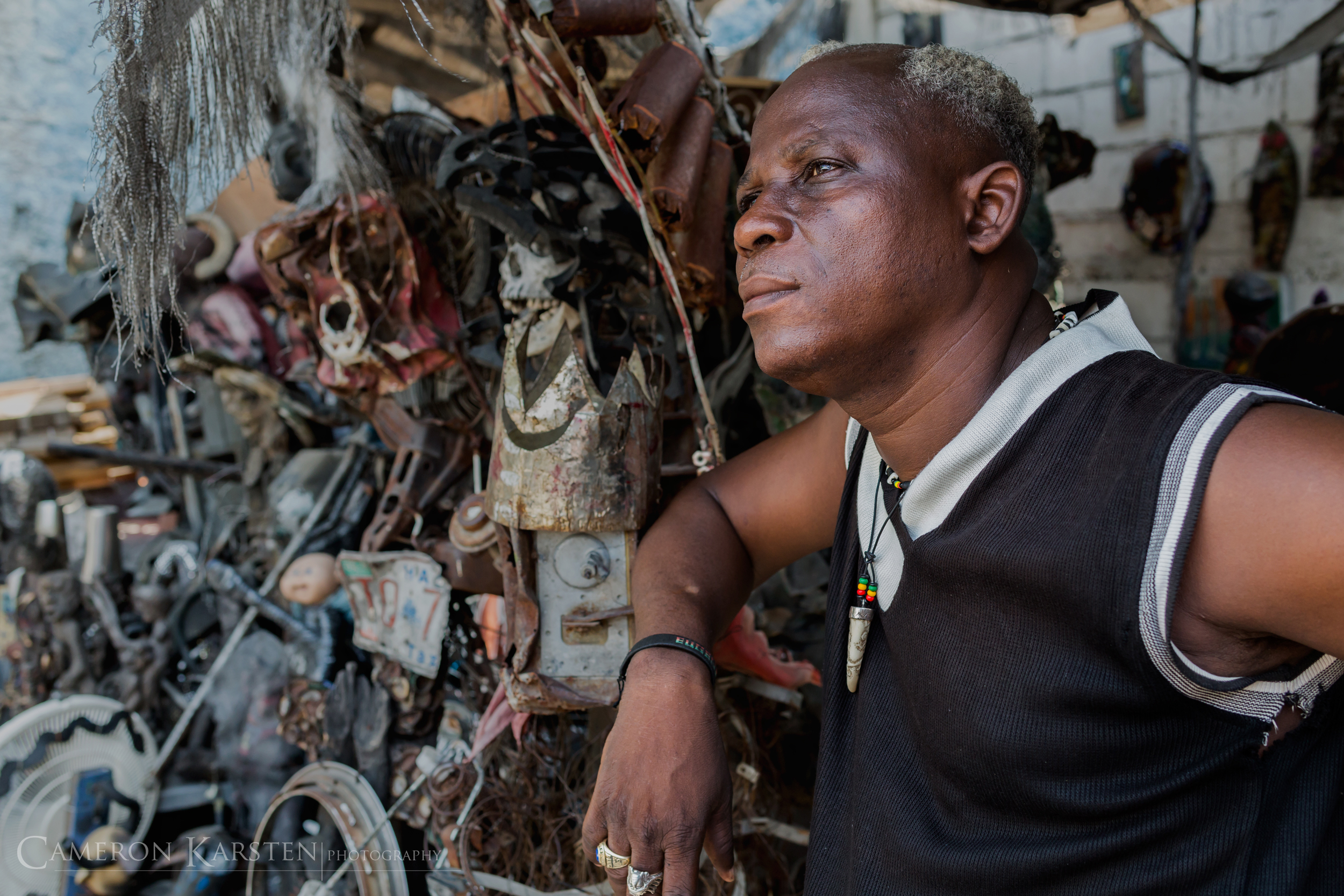
André Eugène, founder of Atis Rezistans in downtown Port-au-Prince believes that Haitian culture must be preserved, from its past to present. Vodou is a part of Haitian culture. It is said that 95% of Haitians are Christian while 100% are vodou.
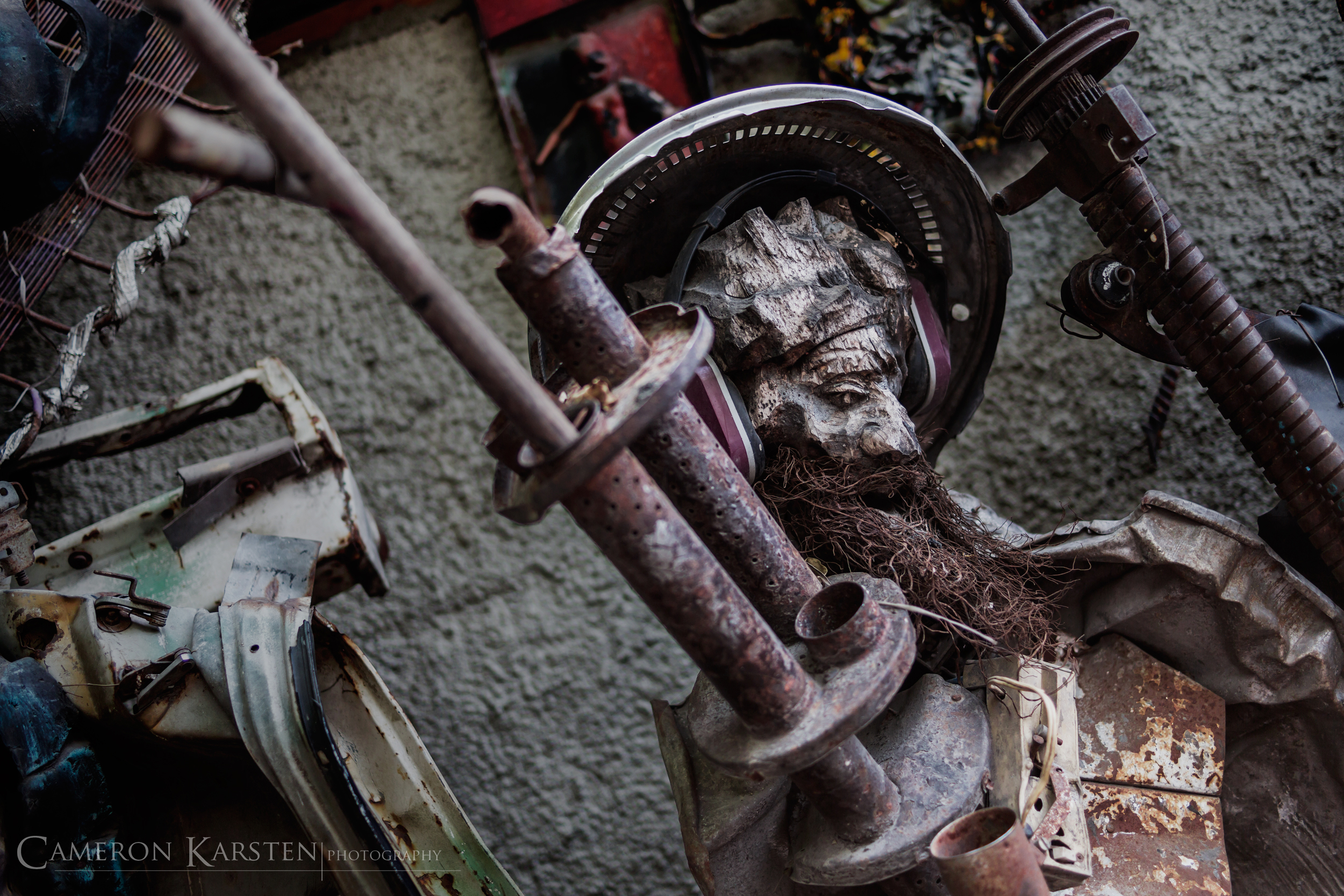
A sculpture of Osama bin Laden from recycled bits by André Eugène, founder of Atis Rezistans on Grand Rue in downtown Port-au-Prince, Haiti.
Vodou Footprints is an intercontinental multimedia project that traces this millennia-old belief system from its roots in West Africa to the shores of the New World and beyond. For most people, the word “voodoo” conjures up images of needle-pierced dolls, imbued with dark magic, made to harm unsuspecting targets. This project shatters these narrow misconceptions by documenting the truth, both positive and negative, about the clandestine practices that make up Vodou.