


























What is the What of Lamu, Kenya
May 1, 2010 by 4 Comments
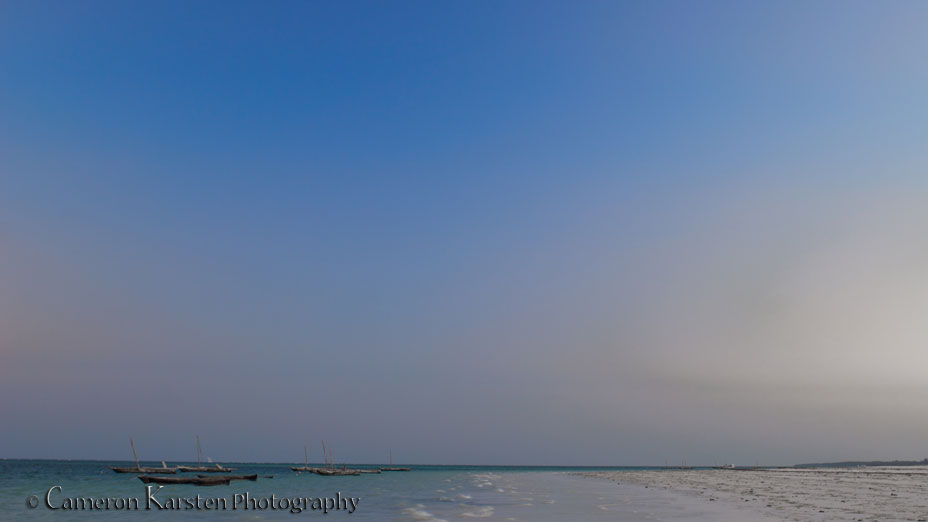
 There were stories after stories. I sat outside and listened to the man. He was panting. Sweat trickled down his black face, shimmering off the pools on his forehead. He wore a sleeveless T-shirt and baggy shorts. Both were dirty and unkempt and both stuck to his sticky skin. Atop the head and woven into his hair was a basket of woolen fabric knitted into a hat. It contained his dreadlocks; a local Rastafarian resembling Bob Marley in plump form. But this man’s name was Kito. He had come to visit his friend, a young Abdullah. Abdullah was in prison, locked in the local cell on top a hill overlooking Lamu town. And apparently, Abdullah was not looking well.
“Abdullah’s eyes are glossed over,” Kito explained. “And puss is coming from the corners. He says he wakes up every morning and cannot open the eyes because of crust.”
Pinkeye: conjunctivitis born as a viral disease from surrounding bacteria: Conjunctiva of the eye inflames; belonging to the genus Arterivirus; highly contagious.
I asked Kito what the jail cell looked like.

“It’s small, no more then this deck.” We were clustered outside the police station, in an area no larger then four feet by six.
“And there are three other prisoners with him.”
“What about beds?” Lily queried.
“No sista. No beds. No chairs. No blankets. No sinks. No nothing, except one bucket. They sleep on the concrete floor. They sit on the concrete floor. They eat off the concrete floor. And they squat over this one bucket and shit into it.” Kito paused for effect, dropping his head in abjection. “And there’s no washing of hands or body. No moving for the exercise. He doesn’t have much longer, you know? Nobody does in this place,” he concluded pointing inside the building.
Kito had been to jail… like myself. For eight months Kito was locked up in England after living there for ten years. He was married to an English woman. They had a daughter together. Then he was jailed and later deported back to the island of Lamu off the coast of northeastern Kenya. He saw his daughter whenever his ex-partner decided to visit. She was coming in one week. It had already been over a year.
“So I treat my friends as my family. They’re all I have in this place. Abdullah is my brother, you know? He is family. And my brother will not live long in this jail, nobody can. Maximum one year and then dead. You get sick and you die. Jail in Kenya is execution. Abdullah is going to die and it was not his fault.”
Abdullah was a businessman in the tourist trade of Lamu. He was a sailor and organized trips to take people to Manda Toto for snorkeling, as well as sunset sails through the mangroves on local dhow boats. On one particular trip, a group canceled the night before. Abdullah had already bought the supplies for the all-day sail. The one remaining passenger was nowhere to be found and thus showed up the morning of the scheduled departure. Abdullah explained the situation—they weren’t going. Of course, the one remaining tourist wanted his money back. But Abdullah did not have it. It was in the groceries. So the English tourist reported him to the police and the police came to arrest Abdullah. He was locked up with bail set at 2000ksh, approximately $30USD.

That was seven days ago and to this day his family is too poor for that. His friends have their families to care for. 2000ksh is a fortune in many parts of the world, in fact, in too many parts of the world.
Shortly, Solomon appeared. This was the Chief of Police for the Department of Tourism on the Island of Lamu; the man the English had dealt with, the man who arrested poor Abdullah. On this day, Lily and I arrived to report the incident that occurred the night before—robbed by an axe-wielding heroin addict who threatened my life and ran away with a $4000USD camera. In retrospect, we would be deciding the fate of another local, a man like Abdullah and Kito and police chief Solomon. But a man with a question mark on his soul of whether or not he was deserving of such a fate. That was yet to be decided.
I stepped into Solomon’s office and stood behind a counter while he and three other large bald Kenyans maneuvered into the room. Solomon was tall and lanky, skinny with a narrowing head and dark brown eyes. “So please recount the story of last night,” he requested, “with as much detail as you can remember.”
Lily and I were each drinking a jug of juice—one sweet lime and one fresh coconut. It was Monday. Two days had passed since the mugging, one day since our report to the police. We were at Bush Gardens along the waterfront of Lamu town, observing an old Swahili culture beat under the heat. The sun was high. Sweaty bodies pushed donkeys, men rode them like over-sized children, and others hauled empty oil drums in trembling carts while most stood at the jetty staring. Their clothes were faded from the sun and the lifestyle of fisherman and sailors.
It is a separate experience ambling along the waterfront of Lamu town. While walking along the boardwalk, a tourist’s amble quickly turns into something akin to a trot as hawkers and touters goad for your attention:
“Nice pants brotha!”
“Hey sista!”
“Where you go? To Shela? I take you there?”

“Jambo nice couple, you want to snorkel? Or maybe an evening mangrove sail? The sunset, you know?”
They hawk and then they wait. And then they stalk, these local fishermen and sailors of the tourist trade. We are their sole income. We must help.
After recounting the incident to Solomon and his police chiefs, we were led into further information. Lamu is a tourist economy. When economy is up, the culture thrives. When it is down, it suffers.
Since the outbreak of violence after Kenya’s 2007 election, the entire country’s economy has suffered. Few travelers care to explore the culture. Now three years later, things are looking brighter. Yet people are still desperate.
“There is a problem,” one man began telling me. He was a boat driver and gave us a ride from Shela to Lamu town. After we told him about the mugging, he gave us his sentiments and shared the deeper side of Lamu. “People inland have drug and alcohol problems. Many many use heroin. And many drink. Inland is where they have problems, and at night they come out to the beaches to do what they did to you.”
“So it happens often?” Lily asked.
“Yes, but it is better now.” We paused as the motor droned and the sea breezes cooled our skin. “But heroin is bad. Alcohol is bad. We don’t do that. I’m a native and our people of Lamu are not happy with this. My father told me it is okay to smoke the marijuana. You can think. You can work. You can live a good life. He said, ‘Smoke marijuana if you want, but stay away from everything else.’
“So brotha,” our captain said looking at me. “Smoke the marijuana and be happy.”
Solomon had said the same… about the increase of violence: “Last week two German ladies were robbed. Same place. Same time. The man came from the bush onto the beach and pulled out a knife. He took their cameras and their mobile phones and some money. But we caught him and he is here in the cell. So I think we have a good chance with this one.”
We spread the word. We told our friend Habeeb at the General Store. We told the boat captains and the hawkers and asked for their help. We told other tourists and travelers to be weary—cautious—to have eyes in the back of their heads. We told them to be smart. And what everyone told us was this:
Don’t walk at night!
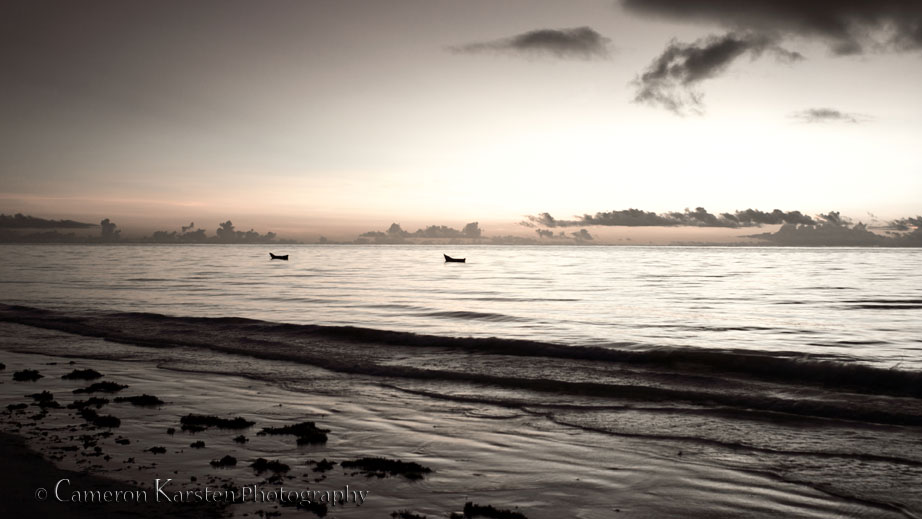
Lily and I had let our guard down. We believed we were in paradise, a land of imagination, one fueled by emotions. And we walked the beach at night under a cloudless sky littered with flittering debris of stardust and spacious chatter. We paid the price because we were on a continent called Africa. We were on a planet called Mother Earth where humanity suffers and resorts to violence against fellow brothers and sisters. In retrospect, it made no difference where we were. It could have been Mexico or Hawaii or New York. The man with the axe, strung out on heroin, walked away with my camera loaded with a full memory card. We walked away with our lives. Consider us lucky.
Throughout the remaining week, I checked in with Solomon. He wrote up an official report for insurance purposes and relayed any information. “We have leads the camera is in Mombassa.”
“Mombassa!”
“Yes,” Solomon nodded. “We think he has left the island and is in Mombassa to sell the camera. It will be difficult now, but we will keep trying.”
I told Kito about the news and he shrugged. “I’m sorry we could not help you more, but these things are hard and too often. This island is beautiful, but it is as normal as Nairobi. You know, we have more serious issues. The jail here, where Abdullah is, is full of guns, bombs and weapons. If one thing happens, this town will go up.”
“What do you mean? Why?”

“Why the guns?”
“Yeah, why is the jail full of them?”
“Last month,” Kito began, “there was a small fishing boat off the shore. They were two fishermen from Lamu and it was night. Suddenly, they saw a flare go off from another boat, so they motored to it and found a group of men. The group needed help so the two fishermen rode up. All of a sudden there were guns on them everywhere. The other boat was full of Somali pirates.”
As the crow flies, the island of Lamu is approximately 70 kilometers south of Somalia. It’s in the hotspot. The island is a dichotomy of beauty versus evil. It is pristine, yet chaotic.
Kito continued. “There is a US Navy base somewhere here. It’s hidden. Nobody knows where. When the fishermen were able to make a SMS call from their mobile, Kenyan police and US Navy swarmed the area and captured the pirates…all eleven of them. And now their guns are here, and others from earlier times.”
Pirates, drugs, violence and paradise. It all seemed to fit the adventurous package in which we were seeking. I realized Lamu was like any other place, with the good and the bad. While Lily and I were there, with the experiences we had, we offered our good energies to help the good, promote the positive. Abdullah needed help, so we approached Kito.
“We’d like to help Abdullah. How can we help?”
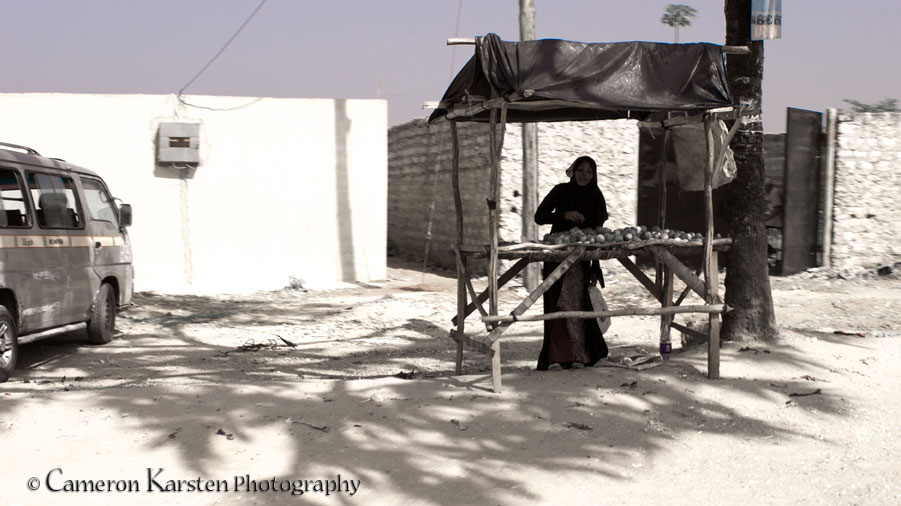
Kito smiled broadly. “He needs to get out of there now. He is sick and slowly dieing. We need 2000ksh to bring him home and then he needs medicine to heal.”
Lily and I looked into Kito’s eyes and then we analyzed the situation. We felt from our hearts and allowed our decisions to be lead from this place. Then we handed over 2500ksh, some to get Abdullah out of jail and some for his medicines.
Kito’s face lit up. His eyes became grateful. And then he disappeared, heading up the hill to the police station.
Stories of life filled our conscience. It flowered our appreciation for life and nurtured our understanding about the diversities of humanity. We saw the good and the bad, the beautiful and the ugly. We shook Abdullah’s hand and felt his happiness. We promoted our brothers Vasco de Gama and Omar with a snorkeling trip to Manda Toto. Then days later we left Lamu with its lessons. We bused back to Nairobi via Mombassa into the palace of Alison, and then onward over land and sea to the place from which we came. We were safe. We were sound. We were richer with life, culture and understanding. And then we slept, waiting for Africa to return.
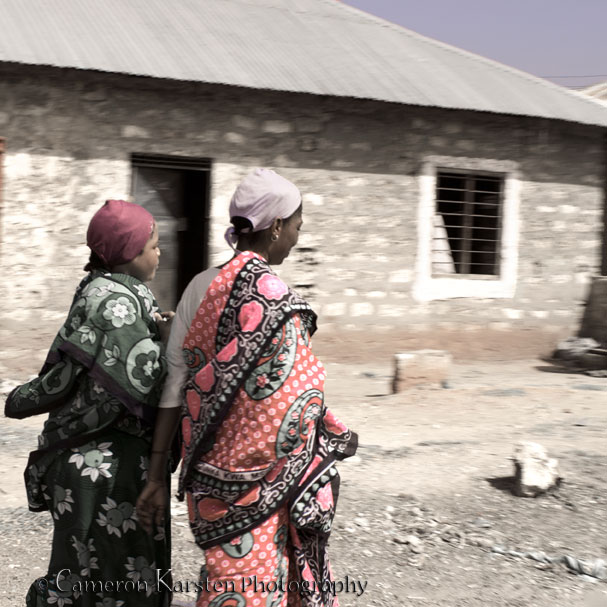
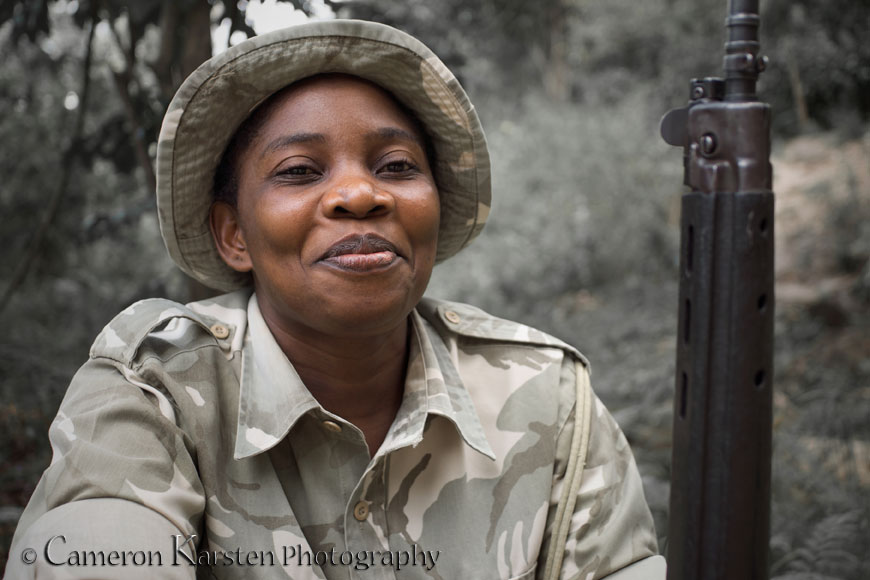
Photo of the Day: The Constable
April 26, 2010 by 1 Comment

Welcome to Wasemo in Menogelty in the Lower Omo of Ethiopia. This is the Hamar region where tradition prevails as elders meet with their guns, muscle and testosterone while work with Lori Pappas of the Bainbridge Island based nonprofit Global Team for Local Initiative.
Travel Photographer Interviews: Cameron Karsten
April 14, 2010 by Leave a Comment
Travel Photographer Interviews: Cameron Karsten by Lola Akinmade (from The Traveler’s Notebook)
In a new series on Notebook, we interview professional photographers, and discuss their different perspectives on travel photography as well as tips for taking better pictures.
Photographer Cameron Karsten is currently traveling around East Africa, documenting the work of various communities and nonprofit organizations. With a unique eye for composition and lighting, Cameron is capturing particularly soulful images. According to him, “he yearns for expansive adventure of the deepest value in order to express the tales of humanity.”
Cameron Karsten has also written a series of spiritual and health travel articles for Brave New Traveler. He left his formal classroom studies to indulge in dreams of travel at 19 years old, and has been wandering ever since.
Over the past few months, Cameron has also contributed to MatadorU’s Travel Photography Program. Matador Goods Editor Lola Akinmade and Matador contributing editor Paul Sullivan took some time out to ask Cameron a few questions:
How long have you been a professional photographer?
I’ve been practicing photography for six years. It was only two years ago I decided to convert the hobby into a passionate career.
What – or who – got your initial interest going in terms of photography?
Travel. At the age of 19 I left my comfort zone with backpack, journal and pen, and my camera. I began writing and photographing in order to share my experiences and inspire other individuals to follow their passions. Today, with diligent practice and belief, I continue to develop and evolve my skills to create the life I desire.

What were your first photographic experiments or experiences?
The first time I mindfully began photographing was on the first day I landed in Bangkok, Thailand at 19. The new culture, architecture, environment and faces sent my eyes spinning along every street. I was enthralled with the new surroundings and found every detail, from an old shirtless man to the spires of a golden temple, worth photographing.
My family and friends had to see what I was witnessing. It became a way to transport my followers into my traveling adventures and become a part of the journey.
How would you describe the work you do now? Are you involved in the commercial world also? Any stock photography?
I am continuously building and expanding my photographic styles. Currently, I work as a professional portrait, wedding, and event photographer. However, my drive is to develop into a full-time commercial, travel and editorial photographer with fingers in lifestyle and fashion. The possibilities in the industry are limitless, and these options keep me inspired as I move forward.
Which other photographers – old or contemporary – inspire you most?
Ansel Adams with his patient lighting. Ricard Avedon with his brilliant creativity and stylistic eye. Annie Leibovitz through her skill of caricatures and personalities. And Steve McCurry for his wanderlust.
You seem to have an eye for shapes and working with patterns. Is this a fair assessment?
Shapes and patterns are where my eyes are drawn to. Within my surroundings, through my lens and into my brain, I see the world as shapes creating patterns. Everywhere, there are arrangements of order built within a format of forward-movement. From whatever cause, whether my practice in meditation to my careful observations abroad or at home, I have adapted this technique as my first and foremost.
Like jumping into a stream and letting the current take you, I pick up my camera only when the moment feels right, only when that inner fuel burns and that surge of inspiration sears.

When you are approaching subjects to shoot, how do you set about it? Do you chat and explain what you’re doing? Or shoot first, ask questions later?
As mentioned above, when there’s inspiration, I shoot. When there’s none, I leave it alone and keep truckin’. Often, I leave my house, hotel, or camp without my camera.
There are many scenes, subjects and settings that are so captivating, there’s no reason to try and capture it. Then and there, I soak it in and use that moment for my inner fires.
Pick and choose selectively. Don’t shoot everything. Beauty is everywhere, all the time.
When approaching a human subject I wish to photograph, the situation varies. Sometimes I sit down and create a conversation before photographing; therefore, the image will have a deeper story in my memory and in print. Other times, I make eye contact, smile and politely ask/gesture for a photograph.
Other times, when in the zone and feeling the comfort of the atmosphere, I shoot and shoot and keep shooting, moving my feet while snapping the shutter. I go with my instincts photographing, writing, traveling, and daily living.

What’s the craziest or most inspiring encounter you’ve had in general?
Most inspiring moments are when I find myself in nature. I spent four weeks backpacking from Giri to Everest Base Camp alone, without a guide or porter. That time by myself was intense during the off-season. I met locals. I sat alone atop granite spires overlooking the Khumbu Valley. I walked through sun, wind, rain and snow. I sat with locals and heard their tales of The Yeti.
I bumped into Maoist rebels and experienced the tension of a violin string coarse thru my veins. And I drank chai with Royal Nepalese soldiers over conversation about the region’s struggles.
Those memories will live on forever.
What kit do you use / carry with you / can’t do without (camera make, lenses, flashguns etc.)?
Nikon for life. I used to carry two lenses, a 55-200mm Nikkor and a 28mm. Yet, I’ve liked the challenge of cutting out the zoom and forcing myself to get into the scene, closer and more intimate. Therefore, I’ve sold the 55-200mm and dove into the photograph with my 28mm.
Finally, what else are you working on right now and what are your ambitions for the future in terms of your photography work or anything else?
Currently, I’m finalizing a new photography website that will enable me to sell and distribute my work online to a wider audience, which can be found on PhotoShelter. This site is combined with new websites for my writing and multimedia projects. I’m off to East Africa in January 2010 for six months to document the visions and progress of various communities and nonprofit organizations through these mediums.
My ambitions are to continue creating a lifestyle of travel with photography, writing, and multimedia as an outlet to educate and bring awareness to the world about different cultures, their current issues, and how we can preserve their environments for sustainable well-being.
To see more of Cameron’s work visit his site, www.cameronkarsten.com

The Kenyan Spectrum: The Good, The Bad & The Just Alright – Part III
April 7, 2010 by 9 Comments
Paradise Lost
A conceptual image of Paradise is reality, but can only be found within the architectural framework of an idealist’s imagination. Just like Happiness and Sadness, Good and Evil—these concepts do not exist, yet are everywhere. They are undiscoverable, can’t be found, hidden from the materialistic world; though they simply wait, readily available to be experienced whenever the heart is open and the mind broad.

In The Island of Lost Maps, author Miles Harvey states:
“These days… not even the truest of true believers would dare to put Paradise on a map. Yet despite the cynicism of our age, we humans have not lost our urge to quest after that place of perfect contentment, never quite finding it but never giving up hope, sometimes drawing so near that we can almost smell the faint sweet scent of its blossoms or spy the distant glimmer of its waters” (Harvey, pg. 234).
Our paradise began with a departure for Africa, leaving the ardors of daily living. The smells of inky bills. The sounds of scratchy cell phones in spotty reception. The cluttered schedules boggling a mind of needs and necessities. What a dream. Then, their complete disappearance as paradise blossomed, thrived, and then wavered in and out of reality as we experienced the traveler’s lifestyle. But the very concept continued to flourish. We moved through life. We felt the gift of the present moment, lost in distant lands and foreign cultures. From Ethiopia to Djibouti, to Ethiopia and Kenya—three months with one backpack of amenities. The simplicities of the very basic.
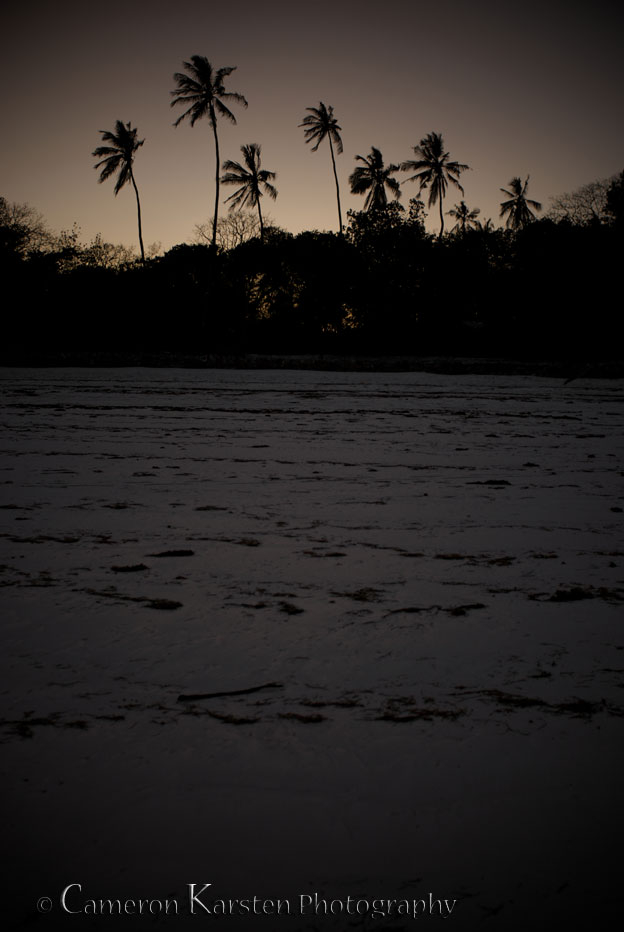
However, as suddenly as human life is extinguished, paradise can be lost. For our African journey—presently exploring the Kenyan coastline of sand, sun and sea—this slippery concept fell from the rocks and crashed into the sea. It came to an end as the same fate threatened our very own lives.
Saturday night. The beach empty. A moon neared its full capacity as the calm waters of Ras Kitau bay lapped at the shimmering sands. There was a man approaching. I watched him with a keen eye. As he neared and greeted, he grabbed my hand and drew me in. Suddenly, his weapon appeared and caught the moonlight above my head. Lily screamed.
Akamba Buses carried us from Nairobi to Mombassa, east to the shores of Kenya. From there we hired a taxi, took the ferry and continued south towards the Tanzanian border. It was dark by the time we got to Ukunda, where we turned left and headed into Diani Beach.

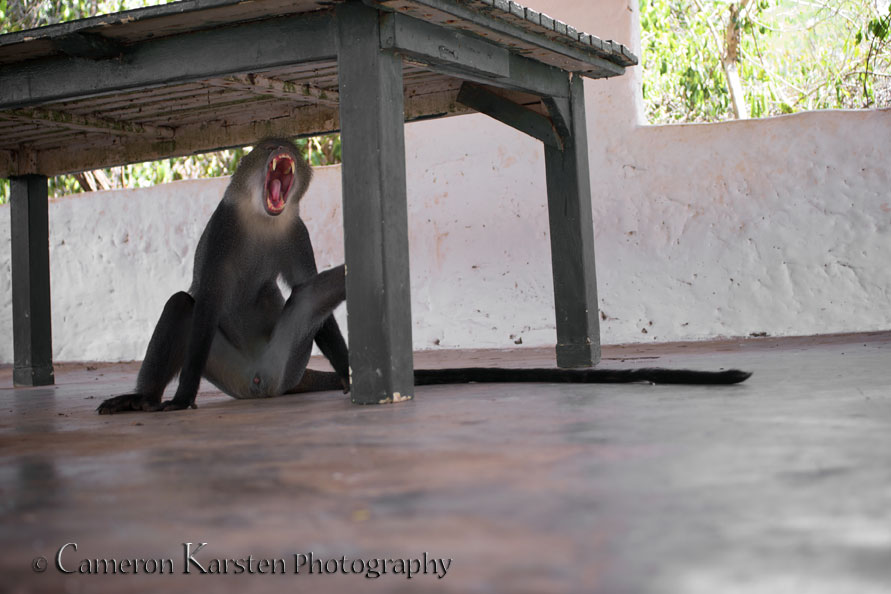
For sixteen days we found home and lived a paradise at Diani Beachalets. For 800ksh a night, Lily and I stayed in a banda, our small cottage, one without electricity, without a fan and with lots of monkeys. When it rained it leaked. And when it rained, the grasses turned green with the scents of earth filling the sea air. We did much of nothing. We read close to ten books a piece. We lounged on the beach in the sand and up on the grasses upon wooden plank chairs. We walked the beach. We swam. We met our traveling neighbors and exchanged stories. We explored the strip of Diani Beach, shopped and prepared our meals morning, afternoon and evening, fending off the marauding primates. It was rustic; that yearned for simplicity the traveler craves. And with it all, we immersed ourselves in the local culture.
“Rafiki, rafiki! Jambo!” A tall lean man slowly walked towards us. “Howz yo day, brotha?”
“Good, good. The ideal holiday.” And it was. Lily and I were sprawled on the beach under intense sunrays. Heat penetrated and sunk into our bodies, causing perspiration to spew from every pore. Every ten minutes we rose to cool in the crystal shallows of the Indian Ocean.

“Yah, brotha. This is good, the good life.” There was an awkward silence. Then he continued. “So brotha,” he started squatting next to me. “I’m a business man and wanted you to promote me.” His name was Alex, aka Coolio. He was our trusty Kenyan Beach Boy. Others exploited us, ran away with our cash. Beach Boys like The Kenyan Busta Rhymes and Simple Max offered their services, granted us trust and then never came around again. But Alex was different. He was real. I could look into his cloudy eyes and see honesty. With most you couldn’t.
“You know,” he began, “Many Beach Boys smoke heroin and look for their money. They will scam and they will run.”
“Like your friend Busta Rhymes?”

“No man, he is different.”
“Really?” Lily asked. “How could he be different? He took our 700ksh and left.”
“His family, you know. One just died of malaria.” Alex nodded his head. “Really.”
“Ohhhh,” we replied suspiciously. Yet we trusted him. We bought homemade sandals, which his mother made for us. And we bought bracelets for friends, a personalized wooden sign and a keychain pendant, along with a batch of fresh coconuts. One day, as I was stepping onto the beach, I saw him whistling to a shell.
“Alex, what the hell you doing?” I figured he was just stoned, whiling away his time.

Alex looked up. “Hermit crabs, you know, they like the whistle. When you whistle, they come out. They say hello to the whistle.” Only in paradise can you find hermit crabs dancing to a melodic whistle.
We met more Kenyan Beach Boys in other places. Vasco de Gama and Omar were brothers, partners in dhow sailing. We became closer with them then Alex as the two Kenyan sailors helped us, supported our emotions in a time of need, and showed us their seas with respect. Vasco was a local from Lamu. Omar was a local from Pate Island.

Paradise can often be confined to a generalization: Isolation. Relaxation. Serenity. Peacefulness. Even a Corona advertisement—sun, sand, turquoise waters, your lover, and (for me) a Negra Modelo with two lime wedges. Paradise varies as often as the clouds of the monsoons, and each can be described differently. Lily and I lived our paradise in Ethiopia within the metropolis of Addis Ababa to the desolate Hamer region, and on to the comforts of Nairobi towards the beaches of Diani. Then we transitioned and came away with a little less baggage and a lot more awareness.
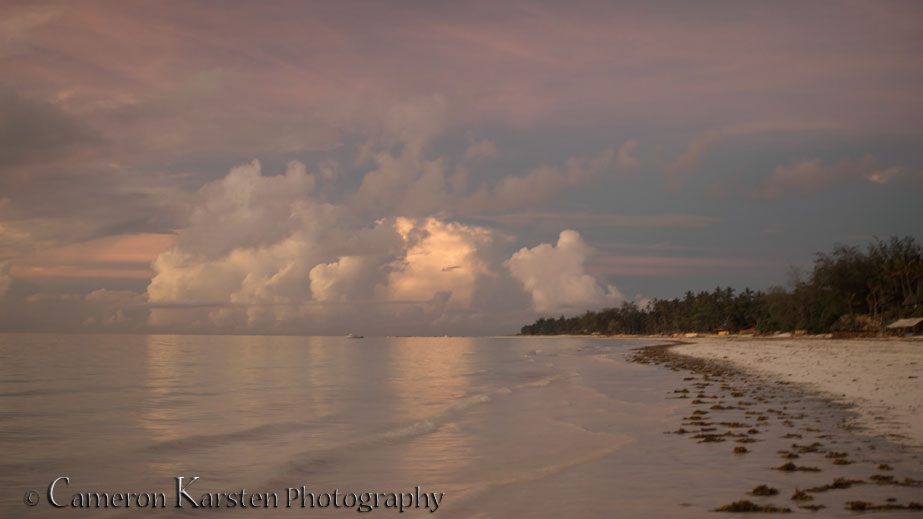
From south to north; Diani above Tanzania to Lamu below Somalia. We bused it. We ferried it. And we arrived, carried away to a beach on an island in the middle of nowhere. We expected another paradise and saw it. It was Shela Beach on Lamu Island at the Sunset Guest House. For six nights we had the top floor terraced-bedroom complete with electricity, multiple fans, a solar heated shower and refrigerator. In fact, we had the entire accommodation to ourselves, and what often felt like the entire seaside.

Lamu is a UNESCO World Heritage Site. Narrow winding alleys, exquisitely carved wooden doors lining coral pathways and the bustling Arabs with the men’s flowing white gowns and the women’s mystic black bui-buis (traditional Islamic head scarves), each sparkling in the fierce village lighting. The town is enchanting with scents of humanity harvesting, preparing and cooking spicy Swahili dishes. Mix the aromas with various loads of donkey dung, cat shat, raw prawns and decomposing red snapper, and some squashed cockroaches into the perfume and viola—a rustic seaport ripe with tradition. Only two cars exist on the island—one belonging to the hospital, the other to the police station—therefore the colony of donkeys dominate transportation, together with the fleets of dhows and long narrow motor boats.
Saturday was such a day for exploring the civilization. Lily and I bought our groceries at one of the two shops and drank a fair share of fresh juices from coconut and sweet lime to tamarind. It was late by the time we were heading back, too late. We had to cross the DMZ between Lamu town and Shela Beach, a forty-minute walk passed the jetty, along a boardwalk and onto the sandy beach. It was dark. The moon was waxing. The stars danced silently to the whispers of the sea.
As I stated, Lily and I were alone on the beach. It was approximately 7:30PM. I had on a backpack stocked with groceries and my camera was slung on the outside across my shoulder. We were close to Shela Beach, too close.
Suddenly a man neared. He approached, held out his hand in the dark and spoke, “Jambo!” I returned the gesture and in a strange manner felt him draw me nearer. As I looked into his white eyes, I felt his hands trembling over mine. He was repeating something in Swahili. He was expressing desperation, appearing possessed. Then, he pulled me closer. I tried to step back, withdraw my hand, but it was too late, too close, too dark.
The stranger was dressed in a traditional red-plaid kikoi (sarong), with a white tank top and a shirt wrapped around his head like a Sikh turban. I remember his hands being strong, his biceps pronounced. He was dark, a real dark black, and was wielding a panga, or an axe, in the local Swahili language. Suddenly, Lily screamed as the man swung the weapon above my head and moved his other hand over my throat.
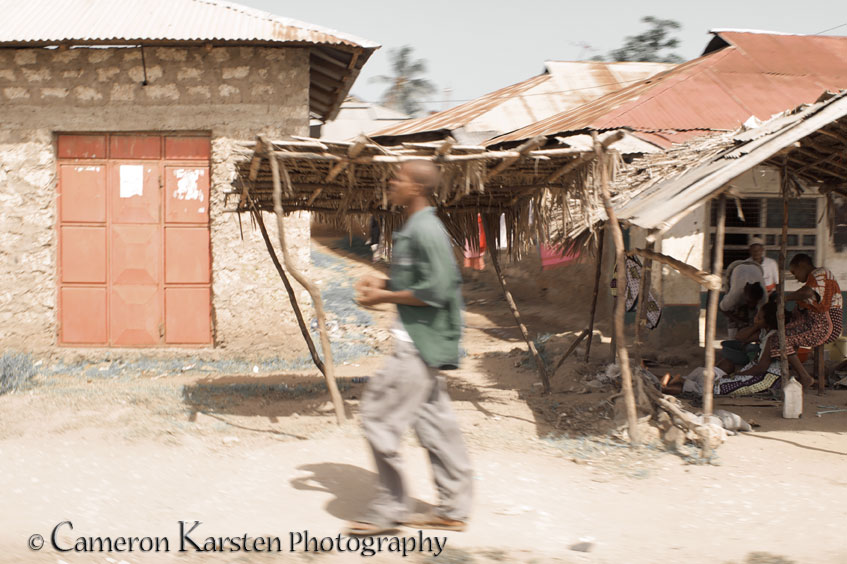
It was a blur, caught without Time, experienced on a supposed utopian island in the middle of nowhere. Lots of money flowed to the island thanks to tourism. Big hotels. Fancy restaurants. Old merchants descending from the rich Arabic economies of the 16th and 17th slave trade. And adjacent to the affluence was desperation.
With happiness there is neighboring sadness.
Inside paradise exists hell.
For when there is light there is darkness.
Lily and I were momentarily shoved into the middle of these juxtapositions, where duality persists, the truth of our humanity flickers, as well as the fragility of human life.
My image remains to this day: a man trembling, chanting, bewitched with terror, swinging an axe toward my skull, threatening my life’s blood to spill upon the wet sands of heaven. He was aiming for my head, my shoulder, my chest. And he still spoke his mantra as I deflected the attempts with one hand, struggling to escape from the grip upon my throat. Lily still screamed. She shouted. Her soul fought for comprehension through a decibel unheard of. The man was obviously thrown off by her reaction, which I hardly heard, for my world was silent, my head clear, my vision of the axe sharp in the moonlight. Suddenly, with a push, the man stumbled back and his hand slipped from my throat. The axe came down.
It was odd standing there, utterly calm and serene, conscious and at peak awareness. Lily was still screaming fifteen feet away. She was crying and began heaving. The man was standing some twenty feet away in the other direction; the axe in one hand and an object dangling from the other. I stared at him. He stared at me. Lily continued and began shouting. Then, he turned and ran. I watched him the whole way, sprinting from the beach up into the bush, until disappearing. I turned to Lily and moved towards her, wrapping my arms around her sobbing body. We turned into each other and then walked away briskly, grateful for living, for each other.
We were alive. We were in shock. Yet the man had obtained one important element of my soul. That object dangling from his grasp, which had recently slipped off my throat was my camera—a Nikon D200 carrying a 28mm Nikkor lens with a polarized filter, an 8GB RiData Memory Card with over 300 priceless photographs of Lamu and one Nikon Li-ion Battery Pack. Total value: $4000USD. I felt as though I lost a limb. I still feel the loss today—a creative eye devoid of expression, a career lacking the necessity to continue, but a life saved and another thief existing in darkness, another personal hell thriving in paradise. The duality of Mother Nature exists in the paradise experienced and remains in a paradise lost. The journey ends with a certain death; metaphorically in terms of creation and purpose, and literally among family and friends.

 Cameron Karsten's Imaginarium