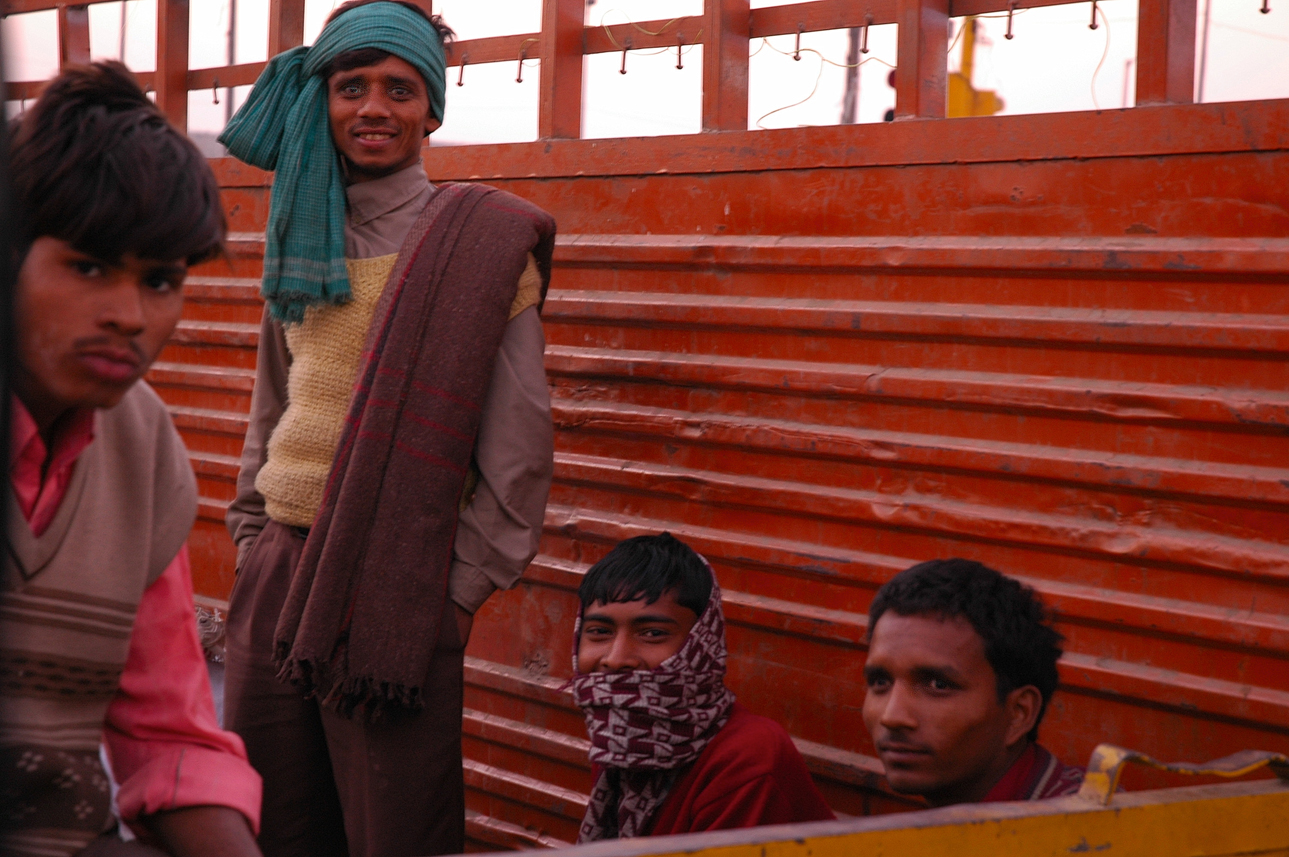
Labors of India (Location: New Delhi, India)

“Oshi, please. Uncle is waiting for us.”

I am sitting in a renovated immigration hall experiencing way too much time.

“Oshi, please!”

The lines are getting smaller, people shuffling, waiting.  A woman beside me shoos her young daughter away as she kneels on white marble, scribing black letters on an Arrival Card.

She finishes. Mother and daughter leave for an Uncle.

I’m in India; an India seemingly small compared to the first time I was arrived.  Over a year ago, I was intimidated to be in this massive democracy, a planet unto itself with flavors, scents, terrain and more diversity.  But today it appears minuscule after the other countries and cultures.

Planes unload their passengers.  Paces quicken.

On my plane, there sat a young British woman from the Gatwick area of London.  She was in India on work and explained she was part of a human resources company preparing a presentation at the University of Delhi.  The company was recruiting employees and those hired would be trained in London before returning to work at their Delhi offices.

Lines fill again.  Customs is full of Germans.  Their voices drown out over the CD skipping through the speakers.  Between the scratches, the music is something like an electronic Peruvian flute, and as time lingers, I see people moving to the rhythm.  Germans sway.  A woman in a purple sari trails her lace scarf.  It catches a breath and flutters to the melody.

As she rounds a metal pole forming the orderly maze of security, her luggage follows closely.  Suddenly, it cuts too close, rises over the aluminum base and tips over.  The music stops.

Apparently Hong Kong arrived, but I see no Chinese. If the flight exists, I’m expecting to observe pairs of backpackers and hoards of tourist groups—name tags, color-coordinated luggage plates—walking in circles.

My plan is to catch a 7:20AM train, the 2031 Shabati Express to Amritsar.  Currently, it’s 2:30AM and my desire to wander the New Delhi Railway Station at this hour is nonexistent.  So this large room suites me well.  I’ll stay until the uniformed workers decide to kick me out.

Hours later I discover the Shabati is booked.  Next available train is on the seventh—four days.  I forgo my plans; find a room and crash, sleeping for over twelve hours before checking out in the afternoon.  I head to Paharganj of New Delhi and before I’m awake I’m on a bus to McLeod Ganj.  The destination looms distant.  It will take fourteen hours.  I have no seat, only a front cabin bench beside the driver.

Sitting on top bags, my limbs quickly fall asleep as cold winter air flushes into a cracked window. One after another, the driver smokes his beedis as day turns to night.  The bus climbs into the Himalayas and behind the blaring Indian music, I can hear the roar of the engine and passengers in the back vomiting out windows.  Shortly, I join the ranks.

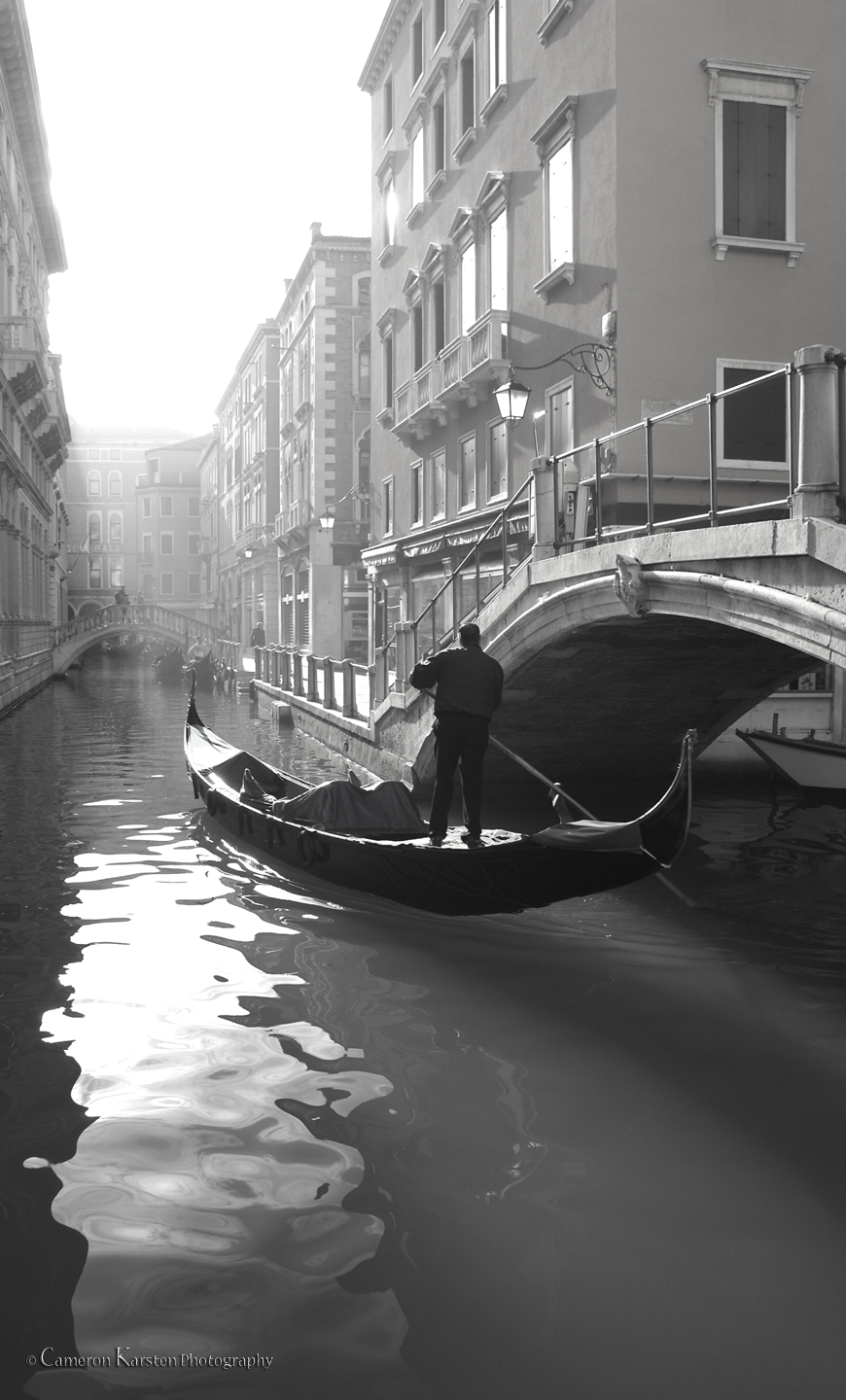
Paying for Your Mind: The Magic of Venezia (Location: Venice, Italy, Europe)

Venice.  Silence all but the jabbering tourists, grumbling water taxis and yapping dogs.  The days of Venice are mystical, a realm from an ancient water world.  Nights upon the isles are a mesmerizing mystery with foggy passages and cold stonewalls.  The gypsy coin peddlers back in Florence and Rome feel like a gossamer memory from youth.
Amidst the city, some four hundred gondolas make their rounds, kicking off enclosing walls for guidance as they pocket a romantic’s savings.  In their adept grace and good humor, the stillness of the narrow waterways off the main aquatic freeways simply adds to the hypnotic state found upon the lands of the Venetian lagoon.  Albeit, even the temporal condition of a traveler’s enthrallment comes with a price.  The fee for a few days upon The Queen of the Adriatic is priceless.

WHAT THE VENETIAN CREATURES CALL HOME

On the first evening’s arrival, a numinous fog hung onto the waters off the canal.  Wandering through the alleys, the walls and cobbles wet with dew, people shouted and echoed, their faces obscured by the condensation off their breath.  Things felt tight, empty, until the principal square of Venice opened into an expanse.  Piazza San Marco, where the 16th and 17th century walls faded into a dream as tours of pigeons and people gathered for feed and sociability.
Under the mystique of the sky, consumed by the omnipresence of these Venetian creatures, lights along the outside of the San Marco perimeters snapped into luminescence by the touch of a reclusive finger.  The crowds, under the trance of the sudden whim of magic, wailed in exasperation, and together they hummed, creating a synchronized tune amidst San Marco’s grandiosity.

Like the Doge’s command, the crowd’s choir quickly faded as Beethoven’s quintet raged with passion.  Outside a café, the classy four-piece band battled with another opposite the square.  From Mozart to Luciano Pavarotti into the classic modernity of The Sound of Music, the front ensembles in stiff tuxes fought each other for the thickest audience.  By feet, the music was free, yet under the carefree ambiance at a table in the piazza, nothing went without a charge.

EXCUSE ME, WAITER

With the appellation applied to the Adriatic city, every nook and cranny is entitled to the Queen’s throne.

At Caffé Florian, a small table draws up two tweed seats.  Settling into San Marco’s atmosphere, people watching and inhaling the thick sea air passes time as service flies away with a pigeon.  Eventually, a well-tucked and tight-fitted waiter consisting of frigidity and an empty tray appears without a gaze.  Eight euros – a glass of white wine.  Eight euros – a set of tea infused with lavender.  An hour ticks.  Nothing seems to matter but a refill.

Within Venice, twilight morphs into a yellow evening as street lamps alight like single shard from a dying sun.  The pigeons disappear, as do the clusters of families with their young throwing feed and karate-kicks.  Life appears to slow down as echoes through the street become more commonplace and mist from the November fogs settle atop shoulders.  Things feel vacant and the intimacy of a Venetian restaurant lurks between its neoclassical alleyways.

Café tabs paid, the cover charge for ambiance is no less surprising.  It’s complete with all of Venice; from the city’s Piazza San Marco with its gaudy basilica, its bell towers and their clapping ring upon each hour, to the historical empire, mystique seclusion, hordes of civilization, to the famed crafts of blown glass on the isle of Murano and the Venetian school of Renaissance paintings by the Bellinis and Vivarinis.  It’s the foggy ambiance of surrealism, whether sunny, rainy or dreary under a gray layer of high clouds.  In essence, it is Venezia and it’s worth it, including the supplemental music charge.

Looking around, the tables are full and will be for the remainder of the evening.  Therein, each person at each table pays a bill and coin of five and fifty euros just to sit and indulge in the magic of Venice.

THE BELL’S BRONZE, A HEART’S GOLD

With time’s strike upon the hour, the two bell towers ring and heads turn skyward.  The same hum radiates from the many mouths at that moment, looking up and then turning back down to smile and find the lover, the family, the friend or stranger with eyes of equal amusement.  Venice is a silent bustling paradise marooned from the cultures abroad where the Queen timelessly sings.

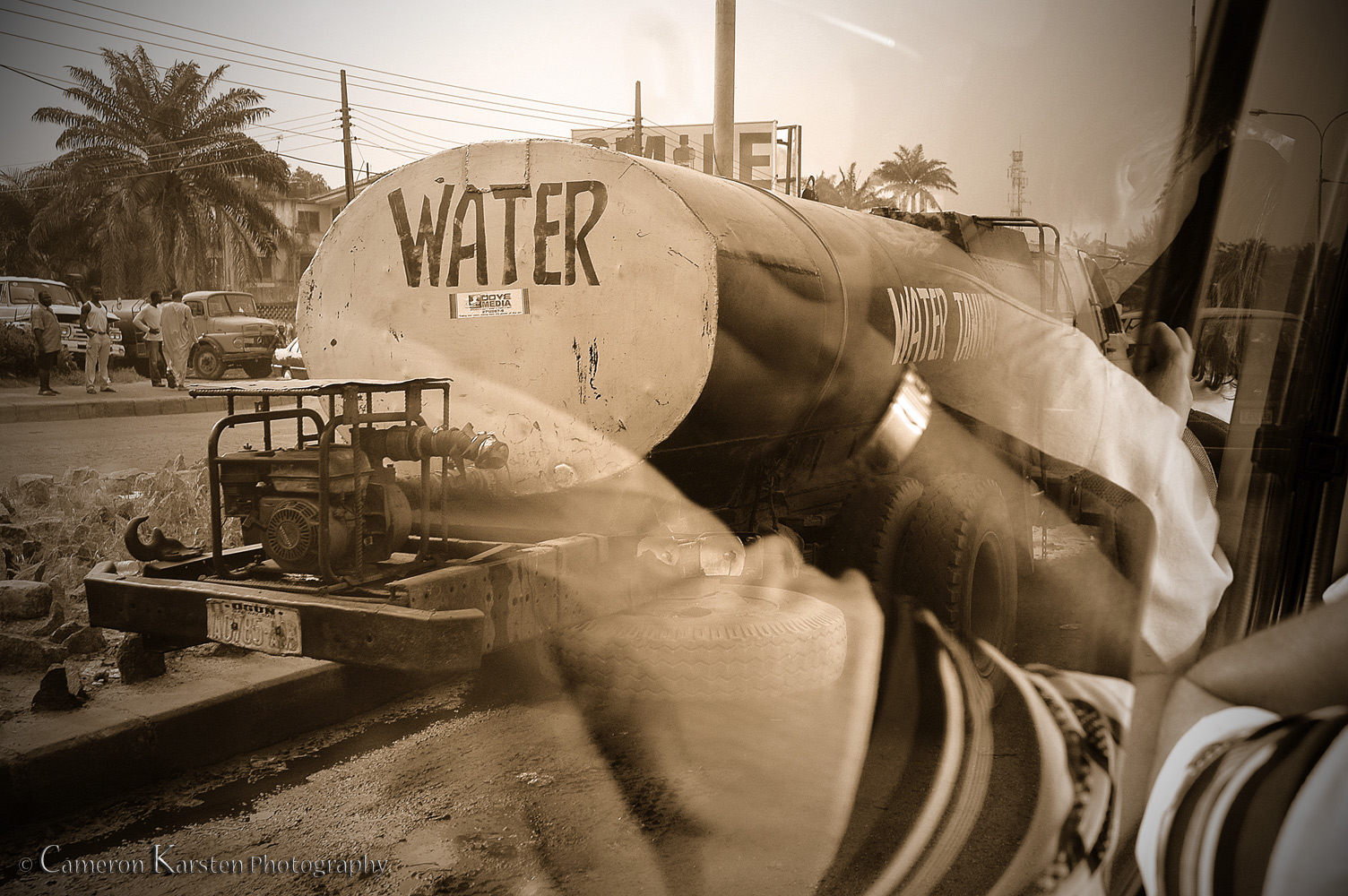
Warri-Town: In the Dark Bus (Location: Warri, Delta State, Nigeria, Africa)

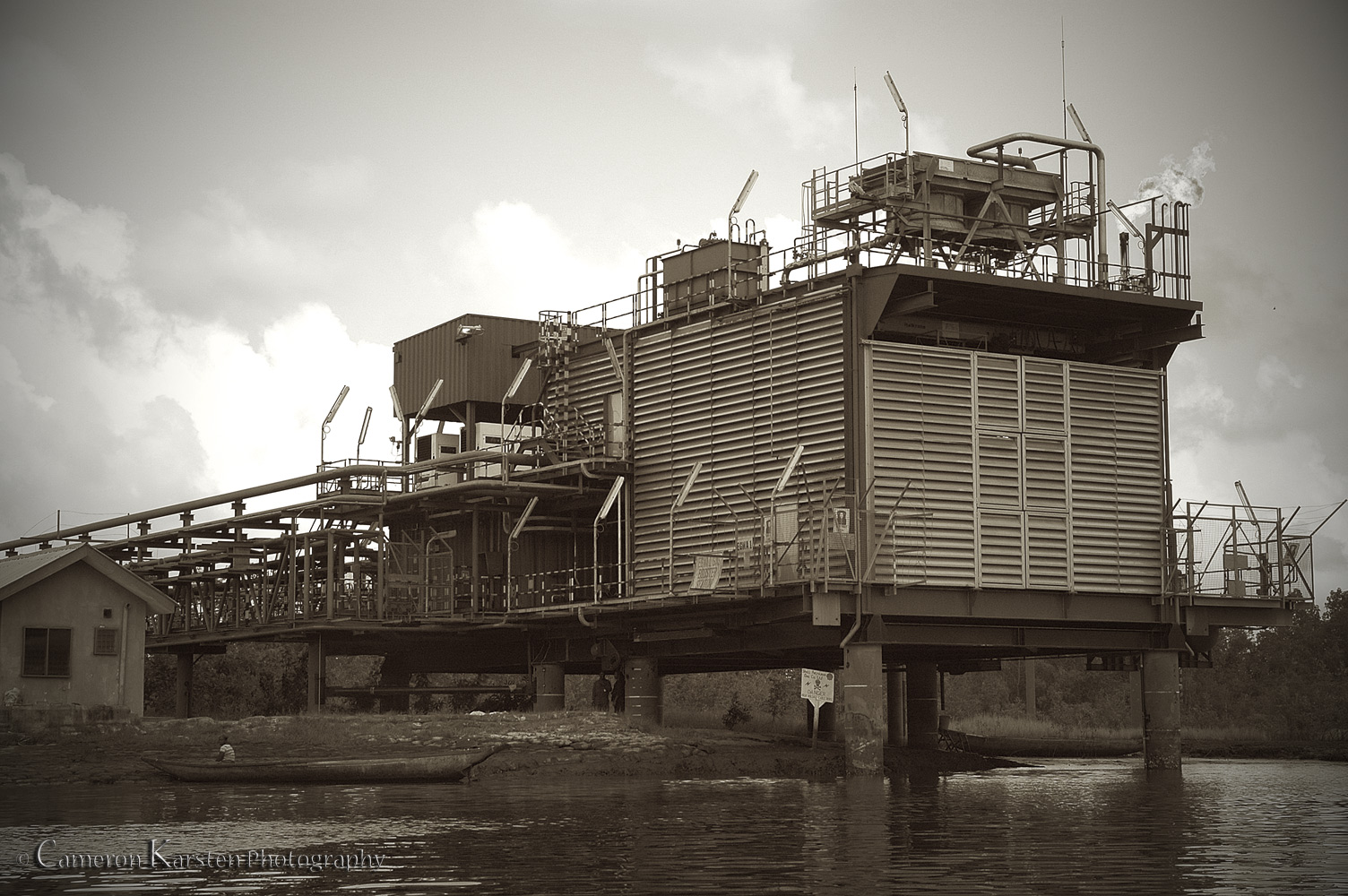
Just as it was with countries like Cambodia, India, and Nepal, Nigeria was real, it was raw, and it was dirty.  Asked why, a simplified answer spoke of how the people and their land were utterly besmeared by the hands of humanity.  Rounded up as slaves by an advancing world, sold, exploited, freed and once again colonized into a vicious cycle, it was their livelihoods and their land that received the brunt of destruction.  Today, the culprit is called oil:  The Blood of the Earth.  And a market of big leaguers stuffing their pockets with cash continues to fuel.

Twenty Seattleites found themselves in the epicenter of the Federal Republic of Nigeria where approximately 240 dialects throughout thirty-six states interacted within 357,000 square miles.  In the weeks we began familiarizing ourselves with one another and the culture pervading, each of us recognized a common bond.  We were here to experience Africa and we all came together, each independent persons with distinct perceptions, yet each harboring a unifying soul with similar intentions. Like threads in a blanket, we wove ourselves into a network of talent to design a new pattern.

Deemed grassroots diplomacy with Global Citizen Journey, we desired understanding and compassion, which emerged into a deeper awareness: People needed to know.  Our families and friends around the world.  Our neighbors and strangers back home.  Consumers and producers.  The people needed to become aware of the real Africa and the real conditions its citizens faced due to our hands.  This was our purpose, what brought us together—to become aware of our abilities as citizen diplomats, taking the reins of our life and society, and transforming them to meet their needs.

We were in Nigeria, an underdeveloped society striving for a chance, fighting to grow, sitting on a wealthy cache of resources.  We were in the Delta State about to embark on a journey down The Creeks to the village of Oporoza, where something slick and dark moved like a nighthawk.  It killed and pillaged.  It led clear minds astray and clean hands to dirt.  It was pushing Africa down.  Meet greed, the second culprit in this case, and greed and oil do not mix.

Nigeria, Nigeria, Nigeria.  I caught myself repeating this mantra beside Los Angeles-native, Eric Esplin.  We looked at one another and chanted as if in trance.  Nigeria, Nigeria, Nigeria.  Eric and I were finally there after the months of preparation and research.  I had sold my car.  Eric kissed his wife goodbye.  And we both left wanting this experience to permeate our being, infuse us with understanding that would transcribe into compassion and evolve into new lifestyles.  Together, along with a few others, we decided to act on our inhibitions and venture into the masses of Warri-town.

Warri was a significant metropolis of Nigeria’s Christian south.  It went by Warri-town, Wassi, the Oil City of Humanity, Wild West of Africa—and the atmosphere was riddled with the sense of something new, something alive.  Our select group tasted this and felt the need for adventure.  From the plush marble walls of the Wellington Hotel, we left behind its automatic doors and the gated entrance to meet the world of Nigeria’s booming oil town.  And after traveling from Lagos to Benin City, meeting up with twenty new Nigerian delegates, and together moving further along the road, it became just that: Warri in the Dark.

It was what all advisors warned against, including our own leaders and delegates (some of them from the city itself). The traffic, the madness, the exodus of humanity returning home with the 6PM closure of shops and subsequent seven o’clock road-ban of motorcycles due to recent unrest.  The jam was a river of creosote-stained logs, spinning in a whirlpool of rusted industry.

But what intrigued us the most was the sheen of the skin, its black gloss.  It cast a mellow glare like hot candle wax, while headlights from oncoming traffic reflected like sandblasted glass through the rising dust.  Men’s bald heads, their lanky necks and broad, ram-boned shoulders; women in color, rainbows of woven crystal magnified in the haze-ridden beams of night traffic: These two aspects of male/female clashed before slamming into one another with a meager quality of production and care, prosperity and concern.  Their heat infused in the mass of ground movement and mixed within the airborne ether of the African atmosphere.

Again, it was dark—a thick black held in a global container of humidity.  There were few stars, only faint specks seen burning through the dank layers above, and as we crossed the Danger Zone our Nigerian delegate, Nicholas Ijabor, announced,  “In the mid ’90s, even at the turn of the century, this was a battlefield.”

We nodded.  We stared.  White eyes blinking without sound.  There was nothing but black and that brown night beyond the bus’ thin glass.  Our bubble felt small, insignificant.

“This junction is the line,” Nicky continued, “the line of property both Ijaw and Itsekiri battled for.”  His talk was smooth, stirring our fears with his ease of localism.

I know what we were all thinking just then.  First, the reality of being in Nigeria.  I heard that chant in my head.  I looked across at Eric.  He felt it.  It was in his heart:  Nigeria, Nigeria, Nigeria.  In a peculiar way, we were all familiarized by now, but at the same time, we knew we never would be.  We were Americans in Africa.  We came from a culture that exploited their livelihoods and raped their lands.  At that moment, we were taking their oil, paying the multinationals to supply our economy, which gave the people little in return.  This was not our land.  It was not our oil.  It never was and it never will be.  We turned a blind eye as people died, wars raged and violence within a suppressed people’s revolution prevailed.  Oil was spilling across humanity.

Secondly, the US State Department recently released a statement on its website specifically advising travelers not to enter the Delta State.  This surfaced immediately.  Our minds spun with the cars, mottos, lorries, and people outside.  The bubble became smaller.

The feelings, the facts—our rationality—compiled.  As I sat in my seat the bus trundled thru traffic.  I came to a third carriage of thought.  The Security General had reported to our delegation his own personal concern: Do not travel outside Lagos, Africa’s 2nd largest city, without a trunk-full of AK-47s and a MOP squad for escort.

Suddenly, there was space for reflection.  The churning seas parted and we saw the Security General as a professional with words; sentences used by professionals for those very professional reasons.  That was what he was there to do. Cogs and bolts greased, the mind’s moving machine continued, traveling with the rest of Warri as a ship across calming waters.

Now a fourth and final respect reared: our own leaders, one by the name Joel Bisina—a local of Warri-town—warned of the adverse potentials after nightfall.  Looking out the windows again, blinking, and making sure what we saw was real, we wondered whether our bus with its government plates was a paradox.  We were white, rich in most eyes, with the world at our fingertips.  And we were traveling through their existence, at the opposite end of the spectrum, through the blackest of nights.  A deep brown of raw earth permeated my vision and there was only that steady darkness within my mind and within those who stared at our bus’ identification.

Being white in Africa, I seemed to relate with what was white.  Therefore, the only visibility I could perceive from our air-conditioned vehicle was the eyes and teeth of our fellow humans.  They were a clear, clean reflection that caught the glare of passing headlights.  They reflected back like moonlight on a pond, soothing us, reminding us of the perceptions we perceived and the choices we made.  Our minds reflected an external landscape.  Our environment mirrored that of our internal framework.  Everywhere was an oily darkness that stuck to the skin, but there were those eyes, those teeth—the inner brilliance of the light of the soul.  My eyes adjusted, my mind reorganized, and what I saw was the reality of an oasis amidst a midnight dust storm.

Our eyes remained wide, our thoughts pondered the “adverse potentials” as we crossed the Danger Zone, and we played nervous finger games among ourselves while the bus surged through any opportunity for space.  Then we crawled out, smelled the air and broke the bubble.  The eyes and teeth were filled with the light of many smiles as colors absolved.  This was Warri, the West African oil boomtown we sought.  This was our level of desire, arriving for awareness, breaking down fears and moving forward to change.  We were freely caught in this chant—Nigeria, Nigeria, Nigeria—where the oil suddenly ceased importance, where money did not matter, and what only existed was humanity and the planet we thrived upon.  I had an opportunity.  He had that opportunity.  She had the opportunity.  It was their land and their lifestyle.  But it was our connection as humans that united us within that African night.

Woodblock Seasons, Sweet Gum Prints

Woodblock printing is either a small-scale process or a large-range endeavor. Contributor Cameron Karsten explores the process and the result through artist Tracy Lang’s eye for detail and love of the end result.

via Woodblock Seasons, Sweet Gum Prints.

Distinguished Guests: The Age of the Oil Drill (Location: Lagos, Nigeria, Africa)

Certainly out of our league.  When we entered the building, there was an air of leaving the world behind and indulging in the high-status frequency of world economics and infrastructure.  I passed a sign, or more a mural embedded within a wall like thick corrosive sludge in the shore’s seagrass.  It was iridescent, out of place, colorful within the drab building of white walls, symmetric hallways, and black electronics blinking, beeping, interrupting and heeding.   It stated:

Integral to everything we do is a commitment to valuing the uniqueness of the individual, harnessing the strengths of a diverse work force, and respecting and learning from the communities in which we operate.  As we succeed, so too should our partners in Nigeria, Kazakhstan, Venezuela, and other countries around the world.

Hmm.

I gave some thought worth pause.

My camera was in hand.  I snapped a photo.  A security guard approached.

“You take no photo.  No.  No photo.”  His head shook.  It was black as night.  It was black.  It was beautiful.

I pointed playing dumb, “This?”

“No photo.”

Too late.

Here we were, average citizens, turned global, now becoming diplomats.  We were inside the headquarters of Chevron Nigeria Limited.  We came for a meeting with the senior managerial staff to probe, to understand, and of course, to “respect and learn from the communities in which we were operating.”  We were twenty Americans about to sit down in a boardroom with the decision makers of Chevron’s involvement within Nigeria.  We left this exact country behind as we found ourselves within leather- and cotton-cushioned seats in a room outfitted with top-of-the-line conferencing technology.  Where was Nigeria?

“You are citizen diplomats in the inner sanctum of Chevron!” Susan shouted in a belligerence of excitement.

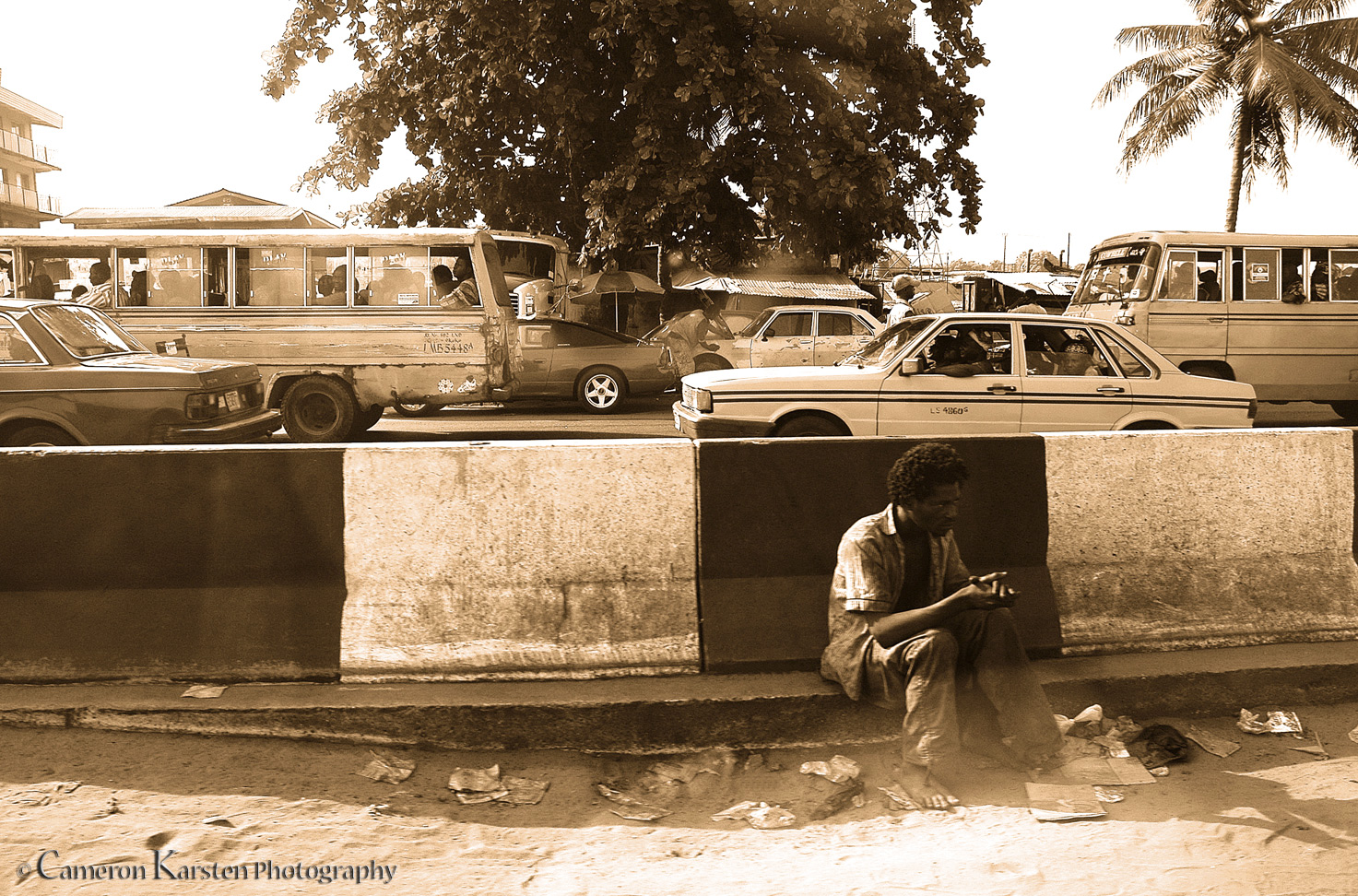
As we waited, prepared, and sat in anticipation, our penmanship doodled in quick fury.  It jittered with the unknown that was about to arrive.  What would we say?  What would happen?  What would come about with this meeting, and how could we all benefit from it, especially the people of the Niger Delta?  Together, we felt like we were a world apart from the streets of Nigeria in which we had just left.  The madness, the horns, the heat, the people and the bodies—crammed crushed beaten—the charred metals of slashing motors and their bikes.  It was a pure black ebony traffic jam on our way through the streets of the once-capital—Lagos. With an estimated population somewhere between 10 and 15.5 million people, making it the second largest city in Africa (Cairo being number one), we drove across town with the hoards of traffic in slow crawl.  Buses, vans, sleek black Mercedes with chrome wheels and tinted windows, along with clunking heaps of metal, motto-bikes and foot-traffic allowing time to pass slowly.  People moved in all directions, against all civil rules in what often looked like a rumble of rusted parts held together by bolts and the people themselves.  And despite the exodus of everyday Lagos, we reached our meeting with the precision of planning after the hours of simply crossing town, staring out the windows at the revolutions of Africa’s intensity.  Here we were, within white walls, within silence, putting back on the layers we had been stripped of as a stern, stubborn vent hissed a chilled air over our heads.  We had only spent one night and one morning in the country, and now we were gone.  We were in the corporate country of Nigeria; a Wonderland entirely different.

I sat back.  My leather chair responded; bounced, squished, squeaked, and reclined like a rocket launch.  The air filtered.  It hummed.  Mr. Denji Hastrup and Mr. Simon Winchester entered.

There were short introductions, which seemed wholly fruitless in the scope of their ripening money tree.  Hands were extended as we greeted the senior management of Chevron Nigeria Ltd., and our attentions spanned, as did the tailored wealth of their headquarter lawns.  Susan spoke with a leader’s determinacy; “We’re not tourists, we’re delegates.  We’re here to learn and bridge all sides.  We hope with our presences, with loving hearts and open minds, we can create more trust.”  She paused.  “We’re really here to listen.”

Listening.  This was Susan Partnow’s thing, as well as the other facilitators of The Compassionate Listening Project around the world.  And this was a part of our journey.  How else to learn, but listen?

Alright, indeed there is experience, but within the act and art of experience, you listen.  This is the essence.  Within experience, you don’t just listen with the ears, catching sounds, but you listen with it all.  Your body listens to the environment.  It feels the senses.  It absorbs them with the input they receive.  It immerses itself within the energy of the atmosphere.  It sucks from it—a nectar, the bee.  The body and the experience, when in a union of totality, are one.  They compliment each other.  They feed from one another.  And in order to accomplish this awareness, the body listens.

The Compassionate Listening Project, in an esoteric perspective, is this bodily listening.  It is an awareness of your body to that which is before you—whether a person communicating, whether more than one, or whether the environment you are within—to best understand it and open up to the potential for growth and healing, if necessary.  Deeper, you reach the level of the heart and soul, where your love innately resides; waiting, stirring, believing.  In its patience, your love lingers for your own initiative to release and fill others.

“We’re really here to listen.”  Susan’s phrase extended to a whole source of purpose.  As I sat there, I could see it written and pasted on a refrigerator, one of those magnets of wise sayings and quotes:

We’re really here

to listen

-Susan Partnow

I could look at it as a spiritual meaning.  We’re here to hear—to hear the inner voice of our guidance to direct us to the most beneficial, most safe, most loving home upon this planet where we could operate from the source of love and peace where this precise guidance emerges.  We’re here to listen to one another—something called respect, which could solve any and all problems, each catastrophic war and each domestic dispute among family, friends and strangers.  We’re here to listen.

As Susan spoke of our project within the Niger Delta, Denji and Simon indeed listened, but they often checked their watches, flipping their wrists, or allowed their eyes to wander round the room’s walls as if marveling at the technological masterpieces in which they had at their fingertips.  “Damn we’re good,” the eyes spoke.

The two execs were businessmen and this was the air within that hissing, humming, chilling boardroom.  They spoke to us with diligence and professionalism.

“It is not practically possible to have a full understanding of the complexity of the Niger Delta.  It is a region of tribes and peoples each with a distinct history and kinship to one another.  And for us to operate within it, we face daily trials dealing with the tribes who compete and survive based on their own and their neighbors’ performance.  There is jealousy and often hostility involved.  It is a very, very complex situation we have.  Once you know the problem, it is only half solved.”

We knew what Mr. Denji was speaking of.  We had had our history lessons of the region.  We were aware of the violence, the suffering, between the peoples of the Delta, and we were also aware of the turning of a blind eye in which companies such as Chevron, Shell, ConocoPhillips and Exxon ignored, even instigated.

But it was never all bad, that is…their participation and operations.  Back in the late ‘90s, Chevron funded the construction and operation of a hospital near a platform called Escravos, but relied on the Delta government to supply the doctors from the nearby industrial port of Warri.  This was the high point with the local ethnic peoples.  It was a time when relative stability settled over and under the oil-rich region and both multinationals and locals sought to work with one another.  Many projects such as these flourished.  Or maybe the word flourished used here is a little to ostentatious.  How ‘bout developed?  On top of the Delta’s development in the oil industry and its exportation and sales, the communities within and surrounding the oil platforms developed from the broad opportunities for employment.  Relatively speaking, most were happy, or that was the feeling within those communities reaping the benefits off their own land, as it should be.

This was the high point.  The two separate worlds, one of developed business fueling the rest of the world and one of primitive African fisherpersons, working with one another and both coming out on top—or so most thought.

The hospital near Escravos was up and running.  Local people had medicine.  Pregnant women had a source where they could be cared for, supported, and children could have the chance for survival with modern vaccines when they faced the struggle against disease and virus strains.  Working with one another.  Both coming out on top—or so we assume.

In 1999, the hospital, the drugs, the whole project burnt to the ground.  It was charred, seared, a place of modernity and community within the raw world of Africa’s tribes.  A local group, apparently due to the inter-conflicts between tribes, torched it, leading one to ask, “Was jealousy involved?”  “Why did they get a hospital and not us?”  “My water’s spoiled, as is theirs:  What do we get?”

Chevron returned and helped to rebuild the community’s hospital, one open to all peoples of the region, but the region is big, taking hours, maybe days to cover through the narrow alleyways of water in what is called The Creeks.  So others were not pleased.  They wanted theirs.  It burnt down again in 2003.

Simon looked around at us.  He wanted us to know the complexity.  He wanted us to know the frustration they all face within the business when the people help fuel this adversity of fairness and just responsibility.  “We have to find stability in the region.  It does not make sense to throw money where it will not benefit the people, where it will not care for the children and those who are ill.”

So the leaders at Chevron Nigeria Ltd. developed a new model for sustainable development within the communities, for the communities.  They would fund representatives from each community to create and develop the communications necessary.  It would be termed Regional Council Development, or RCD.  Within this board, representatives would meet and discuss funding options to get input and educate the locals about the prospects for development.  Likewise, a priority among responsible business management is the transparency of the company and its operations.  Therefore, RCD would discuss the costs of the project to create an open and indistinct development.  Simon put the mustard behind the bread; “When we know the cost of a project, when we know the cost of a gift, we are less likely to destroy it so quickly.”

RCD incorporates four basic principles:

  1. Participate with partnership
  2. Transparency and accountability
  3. Community empowerment and sustainable development
  4. Conflict resolution

With the first principle, Simon reiterated the success between partnerships when each member is involved and active in the developing process.  Open communication is key, involving as many perspectives with those present.  In regards to transparency and accountability, if the information and knowledge is not clear, it advocates the spread of rumors from a third party source.  When each participant and community individual is aware of the operation and aware of the contribution to operation, those opposing it in any way are less likely to react in retaliation since all honesty among the other participating member is open and on the board.

As I was listening, I was thinking: Smart man, right?.

And the third point Mr. Simon Winchester highlighted was on empowerment.  We all know empowerment; its strength, its force, its lifting qualities to make one believe and be believed.  Empower the people, Simon emphasized.  “Unleash their potential to develop community in order to create sustainability and stability.  If Chevron leaves, the project and creation will continue in the hands of its successors.”  I was beginning to see Simon as the next Zig Ziglar of the corporate world.

Empowerment is complete power shift.  It is a giving of power, or the potential for realization of power, back to someone.  But was that power ever taken?

Power is in one’s own beholding.  If one has power, conviction, belief, it is only taken from one if that person allows it to be.  Power is yours to keep, and it always is yours.  No one can ever take it; it is only yours to give.  And in the frame of empowerment, empowering people, especially the tribes of the Delta, would be allowing them the opportunity to reclaim their strength and participate in the development of their own land—something they have never had in this emerging world of business.  The new process, according to Simon, would involve the action of both woman and child—another foreign concept in the eyes of village elders.  This is the transparency process of RCD.

Our eyes were open; our ears receptacles from abroad in a world of distinguished differences.  But we listened through each capable orifices of reception.  We learned.

“This is community engagement 101,” Denji finished.  “And always be on alert.”  That last remark jumped out from the bush, and I wondered its relevance to the new model, but he summed up his feelings, whether business to business, or just straight person to person—an equal plane.  “You’re a bridge to us.  You’re a bridge to them.”

As we left the room, we all had the opportunity to ask more questions in a casual, wondering, cocktail-party ambiance.  I chose to wonder and be an observer.

My thoughts burrowed deep within a conscious questioning with every other diplomat, searching for an understanding of the issues facing the oil-rich region of the Niger Delta.  We heard Chevron’s proposed programs in order to meet the local’s needs, needs that have been ignored, trampled and despoiled among the multinational corporations’ greed for revenue and demand.  Yes, their words were professional, understood to be addressing a group of twenty philanthropic workers.  They were shakers of hands, and we met theirs, grateful for the time allotted to us humble seekers.  I wandered and approached a wall near the south exit and stood before a large plastic poster inscribed with the Codes of Conduct.  How professional.

Chevron

Nigeria/Mid-Africa SBU

Operational Excellence

Safe, Reliable, Efficient and Environmentally Sound Operations

Do it safely or not at all

There is always time to do it right

Tenets of Operation

Always—

  • Operate within design or environmental limits.
  • Operate in a safe and controlled condition.
  • Ensure safety devices are in place and functioning.
  • Follow safe work practices and procedures.
  • Meet or exceed customer’s requirements.
  • Maintain integrity of dedicated systems.
  • Comply with all applicable rules and regulations.
  • Address abnormal conditions.
  • Follow written procedures for high risk or unusual situations.
  • Involve the right people in decisions that affect procedures and equipment.

Achieving World-Class Performance Through

Organizational Capability

Out the security borders and beyond the gated walls.  Out back into Nigeria, with Africa’s most populous nation at hand.

What is the What of Lamu, Kenya

There were stories after stories.  I sat outside and listened to the man.  He was panting.  Sweat trickled down his black face, shimmering off the pools on his forehead.  He wore a sleeveless T-shirt and baggy shorts.  Both were dirty and unkempt and both stuck to his sticky skin.  Atop the head and woven into his hair was a basket of woolen fabric knitted into a hat.  It contained his dreadlocks; a local Rastafarian resembling Bob Marley in plump form.  But this man’s name was Kito.  He had come to visit his friend, a young Abdullah.  Abdullah was in prison, locked in the local cell on top a hill overlooking Lamu town.  And apparently, Abdullah was not looking well.

“Abdullah’s eyes are glossed over,” Kito explained.  “And puss is coming from the corners.  He says he wakes up every morning and cannot open the eyes because of crust.”

Pinkeye: conjunctivitis born as a viral disease from surrounding bacteria:  Conjunctiva of the eye inflames; belonging to the genus Arterivirus; highly contagious.

I asked Kito what the jail cell looked like.

“It’s small, no more then this deck.”  We were clustered outside the police station, in an area no larger then four feet by six.

“And there are three other prisoners with him.”

“What about beds?” Lily queried.

“No sista.  No beds.  No chairs.  No blankets.  No sinks.  No nothing, except one bucket.  They sleep on the concrete floor.  They sit on the concrete floor.  They eat off the concrete floor.  And they squat over this one bucket and shit into it.”  Kito paused for effect, dropping his head in abjection.  “And there’s no washing of hands or body.  No moving for the exercise.  He doesn’t have much longer, you know?  Nobody does in this place,” he concluded pointing inside the building.

Kito had been to jail… like myself.  For eight months Kito was locked up in England after living there for ten years.  He was married to an English woman.  They had a daughter together.  Then he was jailed and later deported back to the island of Lamu off the coast of northeastern Kenya.  He saw his daughter whenever his ex-partner decided to visit.  She was coming in one week.  It had already been over a year.

“So I treat my friends as my family.  They’re all I have in this place.  Abdullah is my brother, you know?  He is family.  And my brother will not live long in this jail, nobody can.  Maximum one year and then dead.  You get sick and you die.  Jail in Kenya is execution.  Abdullah is going to die and it was not his fault.”

Abdullah was a businessman in the tourist trade of Lamu.  He was a sailor and organized trips to take people to Manda Toto for snorkeling, as well as sunset sails through the mangroves on local dhow boats.  On one particular trip, a group canceled the night before.  Abdullah had already bought the supplies for the all-day sail.  The one remaining passenger was nowhere to be found and thus showed up the morning of the scheduled departure.  Abdullah explained the situation—they weren’t going.  Of course, the one remaining tourist wanted his money back.  But Abdullah did not have it.  It was in the groceries.  So the English tourist reported him to the police and the police came to arrest Abdullah.  He was locked up with bail set at 2000ksh, approximately $30USD.

That was seven days ago and to this day his family is too poor for that.  His friends have their families to care for.  2000ksh is a fortune in many parts of the world, in fact, in too many parts of the world.

Shortly, Solomon appeared.  This was the Chief of Police for the Department of Tourism on the Island of Lamu; the man the English had dealt with, the man who arrested poor Abdullah.  On this day, Lily and I arrived to report the incident that occurred the night before—robbed by an axe-wielding heroin addict who threatened my life and ran away with a $4000USD camera.  In retrospect, we would be deciding the fate of another local, a man like Abdullah and Kito and police chief Solomon.  But a man with a question mark on his soul of whether or not he was deserving of such a fate.  That was yet to be decided.

I stepped into Solomon’s office and stood behind a counter while he and three other large bald Kenyans maneuvered into the room.  Solomon was tall and lanky, skinny with a narrowing head and dark brown eyes.  “So please recount the story of last night,” he requested, “with as much detail as you can remember.”

And so I began.

Lily and I were each drinking a jug of juice—one sweet lime and one fresh coconut.  It was Monday.  Two days had passed since the mugging, one day since our report to the police.  We were at Bush Gardens along the waterfront of Lamu town, observing an old Swahili culture beat under the heat.  The sun was high.  Sweaty bodies pushed donkeys, men rode them like over-sized children, and others hauled empty oil drums in trembling carts while most stood at the jetty staring.  Their clothes were faded from the sun and the lifestyle of fisherman and sailors.

It is a separate experience ambling along the waterfront of Lamu town.  While walking along the boardwalk, a tourist’s amble quickly turns into something akin to a trot as hawkers and touters goad for your attention:

“Nice pants brotha!”

“Hey sista!”

“Where you go?  To Shela?  I take you there?”

“Jambo nice couple, you want to snorkel?  Or maybe an evening mangrove sail?  The sunset, you know?”

They hawk and then they wait.  And then they stalk, these local fishermen and sailors of the tourist trade.  We are their sole income.  We must help.

After recounting the incident to Solomon and his police chiefs, we were led into further information.  Lamu is a tourist economy.  When economy is up, the culture thrives.  When it is down, it suffers.

Since the outbreak of violence after Kenya’s 2007 election, the entire country’s economy has suffered.  Few travelers care to explore the culture.  Now three years later, things are looking brighter.  Yet people are still desperate.

“There is a problem,” one man began telling me.  He was a boat driver and gave us a ride from Shela to Lamu town.  After we told him about the mugging, he gave us his sentiments and shared the deeper side of Lamu.  “People inland have drug and alcohol problems.  Many many use heroin.  And many drink.  Inland is where they have problems, and at night they come out to the beaches to do what they did to you.”

“So it happens often?” Lily asked.

“Yes, but it is better now.”  We paused as the motor droned and the sea breezes cooled our skin.  “But heroin is bad.  Alcohol is bad.  We don’t do that.  I’m a native and our people of Lamu are not happy with this.  My father told me it is okay to smoke the marijuana.  You can think.  You can work.  You can live a good life.  He said, ‘Smoke marijuana if you want, but stay away from everything else.’

“So brotha,” our captain said looking at me.  “Smoke the marijuana and be happy.”

Solomon had said the same… about the increase of violence:  “Last week two German ladies were robbed.  Same place.  Same time.  The man came from the bush onto the beach and pulled out a knife.  He took their cameras and their mobile phones and some money.  But we caught him and he is here in the cell.  So I think we have a good chance with this one.”
We spread the word.  We told our friend Habeeb at the General Store.  We told the boat captains and the hawkers and asked for their help.  We told other tourists and travelers to be weary—cautious—to have eyes in the back of their heads.  We told them to be smart.  And what everyone told us was this:

Don’t walk at night!

Lily and I had let our guard down.  We believed we were in paradise, a land of imagination, one fueled by emotions.  And we walked the beach at night under a cloudless sky littered with flittering debris of stardust and spacious chatter.  We paid the price because we were on a continent called Africa.  We were on a planet called Mother Earth where humanity suffers and resorts to violence against fellow brothers and sisters.  In retrospect, it made no difference where we were.  It could have been Mexico or Hawaii or New York.  The man with the axe, strung out on heroin, walked away with my camera loaded with a full memory card.  We walked away with our lives.  Consider us lucky.

Throughout the remaining week, I checked in with Solomon.  He wrote up an official report for insurance purposes and relayed any information.  “We have leads the camera is in Mombassa.”

“Mombassa!”

“Yes,” Solomon nodded.  “We think he has left the island and is in Mombassa to sell the camera.  It will be difficult now, but we will keep trying.”

I told Kito about the news and he shrugged.  “I’m sorry we could not help you more, but these things are hard and too often.  This island is beautiful, but it is as normal as Nairobi.  You know, we have more serious issues.  The jail here, where Abdullah is, is full of guns, bombs and weapons.  If one thing happens, this town will go up.”

“What do you mean?  Why?”

“Why the guns?”

“Yeah, why is the jail full of them?”

“Last month,” Kito began, “there was a small fishing boat off the shore.  They were two fishermen from Lamu and it was night.  Suddenly, they saw a flare go off from another boat, so they motored to it and found a group of men.  The group needed help so the two fishermen rode up.  All of a sudden there were guns on them everywhere.  The other boat was full of Somali pirates.”

As the crow flies, the island of Lamu is approximately 70 kilometers south of Somalia.  It’s in the hotspot.  The island is a dichotomy of beauty versus evil.  It is pristine, yet chaotic.

Kito continued.  “There is a US Navy base somewhere here.  It’s hidden.  Nobody knows where.  When the fishermen were able to make a SMS call from their mobile, Kenyan police and US Navy swarmed the area and captured the pirates…all eleven of them.  And now their guns are here, and others from earlier times.”

Pirates, drugs, violence and paradise.  It all seemed to fit the adventurous package in which we were seeking.  I realized Lamu was like any other place, with the good and the bad.  While Lily and I were there, with the experiences we had, we offered our good energies to help the good, promote the positive.  Abdullah needed help, so we approached Kito.

“We’d like to help Abdullah.  How can we help?”

Kito smiled broadly.  “He needs to get out of there now.  He is sick and slowly dieing.  We need 2000ksh to bring him home and then he needs medicine to heal.”

Lily and I looked into Kito’s eyes and then we analyzed the situation.  We felt from our hearts and allowed our decisions to be lead from this place.  Then we handed over 2500ksh, some to get Abdullah out of jail and some for his medicines.

Kito’s face lit up.  His eyes became grateful.  And then he disappeared, heading up the hill to the police station.

Stories of life filled our conscience.  It flowered our appreciation for life and nurtured our understanding about the diversities of humanity.  We saw the good and the bad, the beautiful and the ugly.  We shook Abdullah’s hand and felt his happiness.  We promoted our brothers Vasco de Gama and Omar with a snorkeling trip to Manda Toto.  Then days later we left Lamu with its lessons.  We bused back to Nairobi via Mombassa into the palace of Alison, and then onward over land and sea to the place from which we came.  We were safe.  We were sound.  We were richer with life, culture and understanding.  And then we slept, waiting for Africa to return.

The Kenyan Spectrum: The Good, The Bad & The Just Alright – Part III

Paradise Lost

A conceptual image of Paradise is reality, but can only be found within the architectural framework of an idealist’s imagination.  Just like Happiness and Sadness, Good and Evil—these concepts do not exist, yet are everywhere.  They are undiscoverable, can’t be found, hidden from the materialistic world; though they simply wait, readily available to be experienced whenever the heart is open and the mind broad.

In The Island of Lost Maps, author Miles Harvey states:

“These days… not even the truest of true believers would dare to put Paradise on a map.  Yet despite the cynicism of our age, we humans have not lost our urge to quest after that place of perfect contentment, never quite finding it but never giving up hope, sometimes drawing so near that we can almost smell the faint sweet scent of its blossoms or spy the distant glimmer of its waters” (Harvey, pg. 234).

Our paradise began with a departure for Africa, leaving the ardors of daily living.  The smells of inky bills.  The sounds of scratchy cell phones in spotty reception.  The cluttered schedules boggling a mind of needs and necessities.  What a dream.  Then, their complete disappearance as paradise blossomed, thrived, and then wavered in and out of reality as we experienced the traveler’s lifestyle.  But the very concept continued to flourish.  We moved through life.  We felt the gift of the present moment, lost in distant lands and foreign cultures.  From Ethiopia to Djibouti, to Ethiopia and Kenya—three months with one backpack of amenities.  The simplicities of the very basic.

However, as suddenly as human life is extinguished, paradise can be lost.  For our African journey—presently exploring the Kenyan coastline of sand, sun and sea—this slippery concept fell from the rocks and crashed into the sea.  It came to an end as the same fate threatened our very own lives.

Saturday night.  The beach empty.  A moon neared its full capacity as the calm waters of Ras Kitau bay lapped at the shimmering sands.  There was a man approaching.  I watched him with a keen eye.  As he neared and greeted, he grabbed my hand and drew me in.  Suddenly, his weapon appeared and caught the moonlight above my head.  Lily screamed.

Akamba Buses carried us from Nairobi to Mombassa, east to the shores of Kenya.  From there we hired a taxi, took the ferry and continued south towards the Tanzanian border.  It was dark by the time we got to Ukunda, where we turned left and headed into Diani Beach.

For sixteen days we found home and lived a paradise at Diani Beachalets.  For 800ksh a night, Lily and I stayed in a banda, our small cottage, one without electricity, without a fan and with lots of monkeys.  When it rained it leaked.  And when it rained, the grasses turned green with the scents of earth filling the sea air.  We did much of nothing.  We read close to ten books a piece.  We lounged on the beach in the sand and up on the grasses upon wooden plank chairs.  We walked the beach.  We swam.  We met our traveling neighbors and exchanged stories.  We explored the strip of Diani Beach, shopped and prepared our meals morning, afternoon and evening, fending off the marauding primates.  It was rustic; that yearned for simplicity the traveler craves.  And with it all, we immersed ourselves in the local culture.

“Rafiki, rafiki! Jambo!”  A tall lean man slowly walked towards us.  “Howz yo day, brotha?”

“Good, good.  The ideal holiday.”  And it was.  Lily and I were sprawled on the beach under intense sunrays.  Heat penetrated and sunk into our bodies, causing perspiration to spew from every pore.  Every ten minutes we rose to cool in the crystal shallows of the Indian Ocean.

“Yah, brotha.  This is good, the good life.”  There was an awkward silence.  Then he continued.  “So brotha,” he started squatting next to me.  “I’m a business man and wanted you to promote me.”  His name was Alex, aka Coolio.  He was our trusty Kenyan Beach Boy.  Others exploited us, ran away with our cash.  Beach Boys like The Kenyan Busta Rhymes and Simple Max offered their services, granted us trust and then never came around again.  But Alex was different.  He was real.  I could look into his cloudy eyes and see honesty.  With most you couldn’t.

“You know,” he began, “Many Beach Boys smoke heroin and look for their money.  They will scam and they will run.”

“Like your friend Busta Rhymes?”

“No man, he is different.”

“Really?” Lily asked.  “How could he be different?  He took our 700ksh and left.”

“His family, you know.  One just died of malaria.” Alex nodded his head.  “Really.”

“Ohhhh,” we replied suspiciously.  Yet we trusted him.  We bought homemade sandals, which his mother made for us.  And we bought bracelets for friends, a personalized wooden sign and a keychain pendant, along with a batch of fresh coconuts.  One day, as I was stepping onto the beach, I saw him whistling to a shell.

“Alex, what the hell you doing?”  I figured he was just stoned, whiling away his time.

Alex looked up.  “Hermit crabs, you know, they like the whistle.  When you whistle, they come out.  They say hello to the whistle.”  Only in paradise can you find hermit crabs dancing to a melodic whistle.

We met more Kenyan Beach Boys in other places.  Vasco de Gama and Omar were brothers, partners in dhow sailing.  We became closer with them then Alex as the two Kenyan sailors helped us, supported our emotions in a time of need, and showed us their seas with respect.  Vasco was a local from Lamu.  Omar was a local from Pate Island.

Paradise can often be confined to a generalization:  Isolation.  Relaxation.  Serenity.  Peacefulness.  Even a Corona advertisement—sun, sand, turquoise waters, your lover, and (for me) a Negra Modelo with two lime wedges.  Paradise varies as often as the clouds of the monsoons, and each can be described differently.  Lily and I lived our paradise in Ethiopia within the metropolis of Addis Ababa to the desolate Hamer region, and on to the comforts of Nairobi towards the beaches of Diani.  Then we transitioned and came away with a little less baggage and a lot more awareness.

From south to north; Diani above Tanzania to Lamu below Somalia.  We bused it.  We ferried it.  And we arrived, carried away to a beach on an island in the middle of nowhere.  We expected another paradise and saw it.  It was Shela Beach on Lamu Island at the Sunset Guest House.  For six nights we had the top floor terraced-bedroom complete with electricity, multiple fans, a solar heated shower and refrigerator.  In fact, we had the entire accommodation to ourselves, and what often felt like the entire seaside.

Lamu is a UNESCO World Heritage Site.  Narrow winding alleys, exquisitely carved wooden doors lining coral pathways and the bustling Arabs with the men’s flowing white gowns and the women’s mystic black bui-buis (traditional Islamic head scarves), each sparkling in the fierce village lighting.  The town is enchanting with scents of humanity harvesting, preparing and cooking spicy Swahili dishes.  Mix the aromas with various loads of donkey dung, cat shat, raw prawns and decomposing red snapper, and some squashed cockroaches into the perfume and viola—a rustic seaport ripe with tradition.  Only two cars exist on the island—one belonging to the hospital, the other to the police station—therefore the colony of donkeys dominate transportation, together with the fleets of dhows and long narrow motor boats.

Saturday was such a day for exploring the civilization.  Lily and I bought our groceries at one of the two shops and drank a fair share of fresh juices from coconut and sweet lime to tamarind.  It was late by the time we were heading back, too late.  We had to cross the DMZ between Lamu town and Shela Beach, a forty-minute walk passed the jetty, along a boardwalk and onto the sandy beach.  It was dark.  The moon was waxing.  The stars danced silently to the whispers of the sea.

As I stated, Lily and I were alone on the beach.  It was approximately 7:30PM.  I had on a backpack stocked with groceries and my camera was slung on the outside across my shoulder.  We were close to Shela Beach, too close.

Suddenly a man neared.  He approached, held out his hand in the dark and spoke, “Jambo!”  I returned the gesture and in a strange manner felt him draw me nearer.  As I looked into his white eyes, I felt his hands trembling over mine.  He was repeating something in Swahili.  He was expressing desperation, appearing possessed.  Then, he pulled me closer.  I tried to step back, withdraw my hand, but it was too late, too close, too dark.

The stranger was dressed in a traditional red-plaid kikoi (sarong), with a white tank top and a shirt wrapped around his head like a Sikh turban.  I remember his hands being strong, his biceps pronounced.  He was dark, a real dark black, and was wielding a panga, or an axe, in the local Swahili language.  Suddenly, Lily screamed as the man swung the weapon above my head and moved his other hand over my throat.

It was a blur, caught without Time, experienced on a supposed utopian island in the middle of nowhere.  Lots of money flowed to the island thanks to tourism.  Big hotels.  Fancy restaurants.  Old merchants descending from the rich Arabic economies of the 16th and 17th slave trade.  And adjacent to the affluence was desperation.

With happiness there is neighboring sadness.

Inside paradise exists hell.

For when there is light there is darkness.

Lily and I were momentarily shoved into the middle of these juxtapositions, where duality persists, the truth of our humanity flickers, as well as the fragility of human life.

My image remains to this day: a man trembling, chanting, bewitched with terror, swinging an axe toward my skull, threatening my life’s blood to spill upon the wet sands of heaven.  He was aiming for my head, my shoulder, my chest.  And he still spoke his mantra as I deflected the attempts with one hand, struggling to escape from the grip upon my throat.  Lily still screamed.  She shouted.  Her soul fought for comprehension through a decibel  unheard of.  The man was obviously thrown off by her reaction, which I hardly heard, for my world was silent, my head clear, my vision of the axe sharp in the moonlight.  Suddenly, with a push, the man stumbled back and his hand slipped from my throat.  The axe came down.

It was odd standing there, utterly calm and serene, conscious and at peak awareness.  Lily was still screaming fifteen feet away.  She was crying and began heaving.  The man was standing some twenty feet away in the other direction; the axe in one hand and an object dangling from the other.  I stared at him.  He stared at me.  Lily continued and began shouting.  Then, he turned and ran.  I watched him the whole way, sprinting from the beach up into the bush, until disappearing.  I turned to Lily and moved towards her, wrapping my arms around her sobbing body.  We turned into each other and then walked away briskly, grateful for living, for each other.

We were alive.  We were in shock.  Yet the man had obtained one important element of my soul.  That object dangling from his grasp, which had recently slipped off my throat was my camera—a Nikon D200 carrying a 28mm Nikkor lens with a polarized filter, an 8GB RiData Memory Card with over 300 priceless photographs of Lamu and one Nikon Li-ion Battery Pack.  Total value: $4000USD.  I felt as though I lost a limb.  I still feel the loss today—a creative eye devoid of expression, a career lacking the necessity to continue, but a life saved and another thief existing in darkness, another personal hell thriving in paradise.  The duality of Mother Nature exists in the paradise experienced and remains in a paradise lost.  The journey ends with a certain death; metaphorically in terms of creation and purpose, and literally among family and friends.

The Kenyan Spectrum: The Good, The Bad, & The Just Alright – Part II

Ecstatic Elephants & Horny Rhinos

Like a mystical revelation of sorts, a dreamland where things are real and others phantasmal, there was relief.  It had been three days of torment—physical, mental, and hardly spiritual—traveling overland atop a lorry truck from Ethiopia to Nairobi.  Three days of early mornings, tortuous afternoons, and sultry nights underneath holey mosquito nets.

Lily and I approached the Westland suburb of Nairobi, dazed by time and filth.  As we arrived in taxi, the avenues grew emerald, denser with thick brush and high boughs.  Trees were lush.  They harbored blossoms of radiant oranges and opulent reds.  It was as if we were driving down a boardwalk in Savannah, Georgia; huge homes covered in gray shade, ungodly in comparison to the neighboring slums.  We continued and drove into the heart of gated properties, lavish arbors, and personal security booths before coming to Loresho, into one of those secured communities, and up a driveway where a guard smiled Welcome.

Now, as a virgin to the masses of Nairobi, swollen with the preconceived perceptions of a city littered with crime—my image was bleak, miserable, possibly even suicidal.  But as a traveler, I figured it was worth a stop to decide for myself.  I’ve been buffed into further partiality.

There was a maid.  She was Kenyan.  I mean she was black.  Her name was Penina.

Penina cleaned the house, scrubbed the toilets, made our beds, washed the dishes, and scoured the stains off our clothes.  She was beautiful, kind, soft-spoken.  Penina was gentle.  Next, there were our guards (plural).  Together, they divvied up the 24 hour-seven day shift; and at each arrival or departure they would swing open the gate, wave hello as we passed, and congenially walk the door back to its original position.

Then there was a refrigerator.  There was a shower with hot water.  There was a polished porcelain can (two in fact!), which we sat on, thus relishing that unforgettable feeling of hot buttcheeks to cold seat.  And there was beer.  Tusker, Pilsner, Guinness.  Crates of bottles all to our helping.  Mystical.

At this point, I reached a conclusion: there is nothing like having family or friends, however far removed, living in a foreign land.  Albeit, Allyson was not present on the afternoon of our arrival.  She was working at an international school as a math and science teacher for the children of diplomats, bureaucrats, FBI agents and the like.  It was a good job.  And it showed.  Being Lily’s cousin—half-removed, fully removed, third, fourth or one-hundredth (I didn’t mind)—an image of Allyson appeared in my mind as we first settled in her home.  It was a statue of Jesus, the one found atop a church’s roofline or above an alter.  He was standing above me; his hands spread wide, palms up, with white robes flowing to the ground.  The face was Allyson’s and in her alluring posture she spoke thus: Come my brothers and sisters.  Come hither and bathe in me waters, indulge in thee kosher pickles of mine.  They are fuller and sweet, likened to my beer.  I shall care for you.  And I accepted.

Thursday afternoon and all of Friday, Lily and I lounged indoors, made sandwiches and ate, caressed our clean skin, read books, popped frosty 500ml bottles of Tusker, and in thirty-six hours feasted our eyes upon the entire first season of Lost.  Ecstasy indulged.

But of course we were active.  We did not let Penina do all the work.  We folded our laundry, flushed the toilets, and did our dishes.  And as the weekend dawned, we even stepped outdoors with Allyson to merge into that feared Nairobian society.

A city constructed by the advent of the East Africa railway, Nairobi boomed when the capital of the British Protectorate relocated from Mombassa in 1901.  There, the government made camp beside a stream known by the Maasai as Cold Water, or Uaso Nairobi.  On what was once swampland, wealth quickly flowed into the growing city via train, inviting humanity while slowly eradicating the roving lions and wildebeests.

“Nairobi is relatively safe,” Allyson informed us as we drove through the jam of city cars.  “It’s only downtown after dark when there can be trouble.  There are no apartments or homes for locals, only tourist hotels.”

Lily and I weren’t following.

Allyson continued.  “It’s a trap, attracting criminals to a city in the dark that’s scattered with cash-toting tourists.  If there were locals living in apartments or affordable housing, an ordinary society of ordinary citizens would exist.  But when businesses close for the day and workers return home to the outskirts of the city, there remains the tourist at hotels, restaurants and bars mixing with the locals who join, along with the many creepers hiding in shadows.”

We nodded and watched the vendors with newspapers, magazines, maps and cheap sunglasses scurry between traffic.  Our first stop of the day would be the Nairobi National Park just outside the city.  We wheedled thru cars, beat the circles’ red lights and surpassed the traffic cops in Allyson’s rattling Isuzu Trooper.  Shortly, we entered the Park’s gates.  We were on safari.

Odd to be minutes away from the city with pulsing pollution and hordes of humanity moving in all sorts of means.  Calloused barefeet, bicycles carrying a six-foot stack of plastic crates, human mules lugging wooden carts of furniture, 150cc motorcycles spitting noise, graphic matatus, righteous buses and lumbering lorry trucks swerving; and then to emerge in a sanctuary where wildlife bounded freely.  Home to masses of birds, the world’s largest concentration of rhinos, along with lions, cheetahs, leopards, buffalo, antelope, ostriches, warthogs, and more—the Park’s fence remains agape, allowing the nomadic herds to move in and out between the great Rift Valley.  But with a constant supply of water even in the dry season, the Nairobi National Park is plentiful.

As we pulled in with the Trooper, a giant family of monkeys sprawled across the road.  They groomed one another, picked their own butts and others, and gave chase in the trees’ limbs above.  They looked at us with imploring eyes, then turned back to their present occupations, ignoring our similarities and differences as if we were twin species.

Our car rested on the side of the road for ten minutes as we observed.  I could not help but feel their likeness, as if they were communicating their emotions thru eyes, cries and gestures.  And not to digress into a thesis on evolution, but the link between their posture, their movements and actions with that of our own was hard to deny.  They were a hillbilly family of over-simplified humans, minds focused on the rudimentary, yet filled with the baser instincts of survival.  However, we evolved and moved on.

We saw the rhinos and giraffes, the buffalo and ostrich, the massive birds in aplenty, along with gazelles and antelopes, and the twitching ear of a lazy male lion asleep in tall grass.  All the while we were in our own vehicle, cracking cans of Redds and wrenching back bottlecaps of Tusker with a bag of spicy Chev between our laps.  The monkey-man’s safari, but it was perfect for what it was.

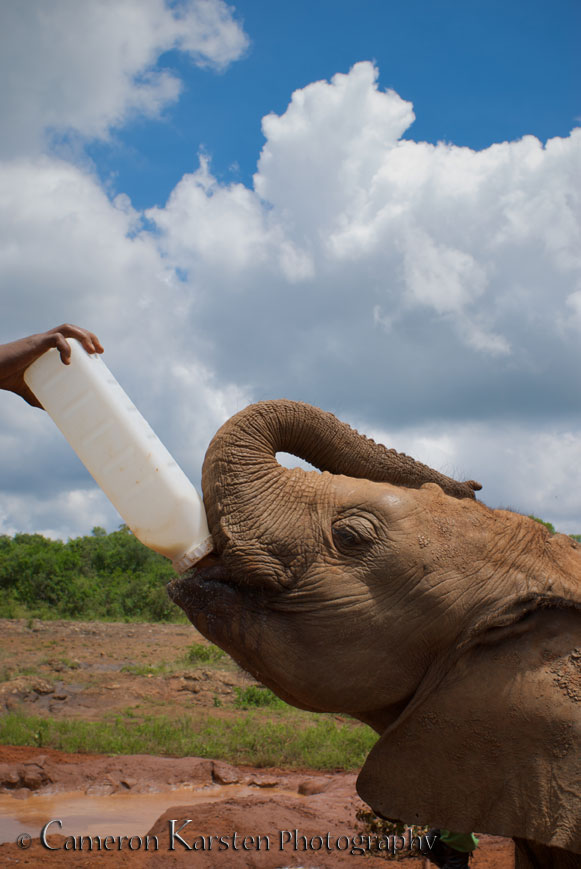
The following day consisted of elephant orphans at the David Sheldrick Wildlife Trust and a visit to the Langatta Giraffe Centre where we handfed Rothschild’s giraffes on their blue tongues of sandpaper.

Four days and five nights rest, relaxation, over-indulgence on grub and booze, and a laid-back sense of exploration.  We did much of nothing and much of everything in Nairobi, where for the first time on our three-month journey we felt the shine of holiday.  We could do whatever we wanted.  We could go anywhere and hold zero responsibility of when to return.  We were on vacation, and before we took this party to the Kenyan coast, we spent our final day exploring the downtown sector on foot.

Beneath tall buildings, well-manicured Kenyans along a network of avenues and highways intermixed with Lily and me.  We wandered Nairobi.  We tucked into shops and offices.  We ate and drank a selection of international cuisine.  And we ran the brunt of our errands, securing timetables and scheduling departures.  We entered Uhuru Park (Freedom Park), which commemorates Kenya’s 1963 independence and we sat in the shades, silent, witnessing.  We spoke casually with locals, asking the time or requesting directions.  We found the Internet and connected with family.  We did what any backpacker, traveler or tourist would do—the Nothing and the Everything.  Nairobi was fanciful: a mixture of reality and hedonism.  It’s a culture I will return to any day.

Early Tuesday morning we left, catching a bus to Mombassa for the coastal sunshine.  Yet, with paradise comes hell—with light there shall be darkness—and far from the saintly shelter of Allyson’s home, Lily and I were exposed.  We would be lucky to walk away with our lives.

To be continued…


The Kenyan Spectrum: The Good, The Bad, & The Just Alright – Part I

The Ethiopian/Kenyan Overland

Kenya came with a crush and departed with deep rejuvenation.  To extrapolate, my fiancée Lily Brewis and I entered the East African country along its northern limits.  The day prior was spent rumbling along the nonexistent infrastructure of Ethiopia’s southern roadways before arriving to the border-town of nowhere-Moyale.  We checked into a dump, ate, drank and passed out to the smells of our squat toilet, which emitted fumes of someone else’s noxious bile.  Then we rose, left disgustedly, stamped our departure passes, strolled across into Kenya, more stamps, pens and papers—then KABLAAM! We were in Kenya surrounded by tall, beefy, tall, lanky, short and muscular, drunk and squeamish Kenyan men.  Inside the country for all but thirty minutes and already witness to two fistfights and a handful of aggressive arguments breaching the borders of hostility.  This is the furthest north, another nowhere-land, the Moyale side of Kenya, and we had 1200 kilometers of terrain before reaching the comforts of Nairobi.

“You need truck, so I give you 2500 schillings to Nairobi.”

A tall bald Kenyan was approaching us.  In fact, Kenyans of all sizes and proportions encircled, drawing tighter.

“No, not Nairobi.  Marsabit,” I announced.

“Okay,” he said.  “Hakuna matata.”

And there it was.  The first of many, numerous, overplayed, overused, most obnoxious little phrases carrying little-to-no meaning due to its prevalence.  Hakuna Matata—the No Problem of Swahili made infamous by Disney’s The Lion King and the hotshot Kenyan Beach Boys with their red eyes and slurred English.  “Hakuna matata,” the bald man repeated.  “I give you two seats atop for 1000ksh each.”

“500 each,” Lily rebuked (1000 Kenyan schillings is equal to approximately $15USD).

The man and his lot would not have it.  We moved on.

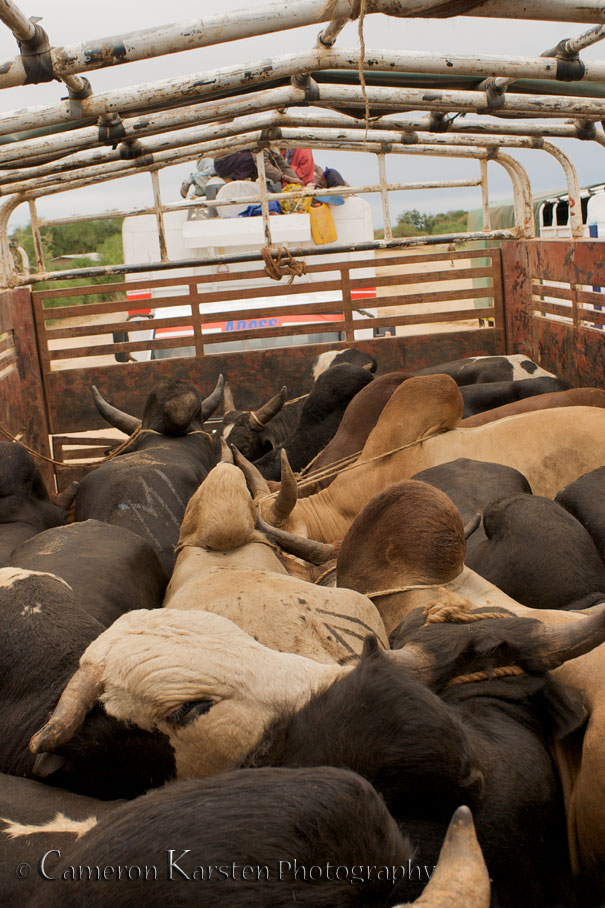
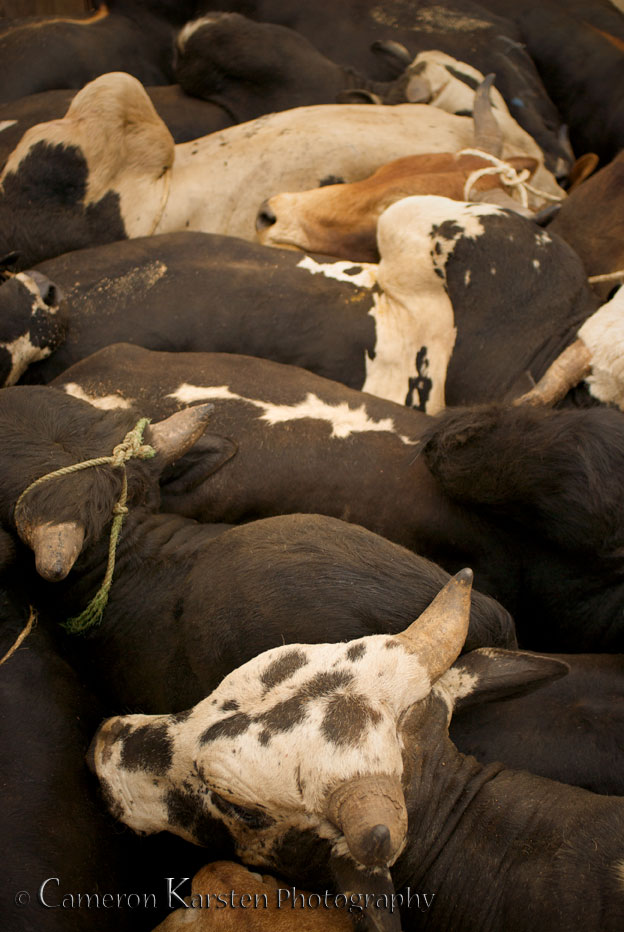
Sure enough, we were soon on our way, headed south to the next nowhere-town of Marsabit.  And we had a view for 500ksh each, which included fresh air, sunshine, rain, wind and a grid full of bugs.  Let me draw you a better picture:  1000ksh total bought us our two seats atop a lorry truck, which consisted of clasping a cylindrical metal tube that was part of a skeletal frame enclosing a truckbed loaded with one dozen 600 pound disgruntled bulls.  These beasts mingled below us like drunken Midwestern poker players, mavericks as aggressive as the Kenyans of the border, heaving their horny heads into the meaty sides of their counterparts, cramming for space as they pissed and shat themselves for the 3-day trek to Nairobi.

Appalling?  Unnerving?  Thrill-seeking?

Yes.  Yes.  And yes.

And the first leg lasted ten hours.  Six hundred minutes seated on thin metal piping thru the roughest, most untamed dirt roads of the Dida Gulgalu Desert.  Translation: it means Desert of Rocks, which includes the barren pathway we traveled that ran through its heart.  Simply, the road was wretched.

Somewhere in the journey, one of the bulls fainted and fell to the floor.  Other bulls stepped on it, trampled it and stumbled while we rumbled.  Eventually, the caretaker riding with the meager fare atop noticed, jumped down into the fray and reached his hand into the creature’s mouth.  His hand and forearm sunk in up to the elbow, where in he grimaced, twisting and turning his limb as if arm-wrestling a maniacal tongue.  As we watched the spectacle with alarm, I imagined what the tongue looked like.  It was a deep crimson red, the color of blood as sinewy gobs of phlegm and puss dripped off its sides.  Large suction-cup pores spit hot liquids like miniature volcanoes, fending off the foreign hand with bursts of flame.  The tongue hissed and slithered under its grip.

My nightmare was shattered, or merely altered, when the caretaker dislodged his arm from the bull’s throat to reveal a twelve-inch worm as black as death.  It was enormous and repulsive.  I looked at Lily in reproach.  She winced.  And together we turned to our neighbor.  His name was Hussein.  Our expressions said everything.

“It is a parasite.  Coming from water.  It grows until killing the cattle.”

There was a long pause.

“This one,” he continued, pointing at the bull now on its feet, “Almost died.”

The caretaker then crushed the worm in his hands, obliterating the monster into oblivion.  Actually, that’s a fabrication.  He threw it into in the dry brush where a passing raven would spot it and ravenously pick it apart.

Marsabit.  We were overjoyed, more so than any cakewalk winner at your local fair.  Lily and I climbed off, unloaded our backpacks, turned from the beasts in the truckbed and those seated in the cabin, and walked away.  Next, we checked into the JeyJey Centre for accommodation and looked into the mirror.

“Mirror, mirror on the wall…”

Appalling, unnerving, thrill-seeking?

Our faces appeared like we were from the coalmines, emerging after a twelve-hour shift some two miles beneath the Earth’s surface.  In fact, we were pasted with coal because two hours into the trip, our driver felt the urge to pickup some 80lbs of charcoal, which became strapped directly behind us.  Thus, with wind the black powder swirled around into the air and covered our bodies.  Then add a heaping tablespoon of sun, a kilo of dust and a few barrels of rain for effect.  We were gruesome.  I’ve never been so dirty, nor in love with a woman that looked like a brute in for hard labor.

And this was day one out of three.  The following consisted of the same, this time on a lorry loaded with goats that looked comparatively feeble, along with the recipe of wind, sun, rain and grit in the form of dirt and more insects.

Day Two—ten hours later we reached Isiolo.

Day Three—we entered East Leigh, the northeastern district of Nairobi.  Shortly, we stepped into ecstasy.

To be continued…

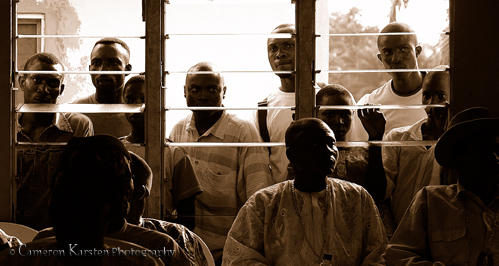
B&W Photo Essay: Faces of Djibouti, Africa