



Exploration with Culture
Last night I met a gentleman who works at a nuclear submarine base. He’s been stationed in Bremerton for the past two years. I inquired why? Because his nuclear vessel ran out of its nuclear fuel, and it takes three years to make more: Two years to make it, one year to refuel the sub (while being continuously guarded by high-security personnel).
This strikes me as odd, dangerous, reckless, and another example of our country’s staple ingredient to its industrial military complex.
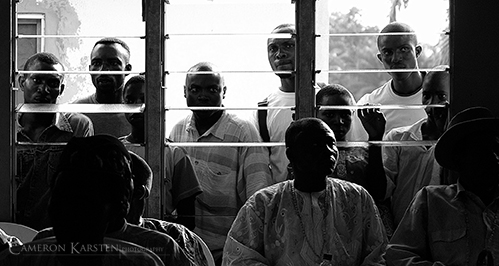
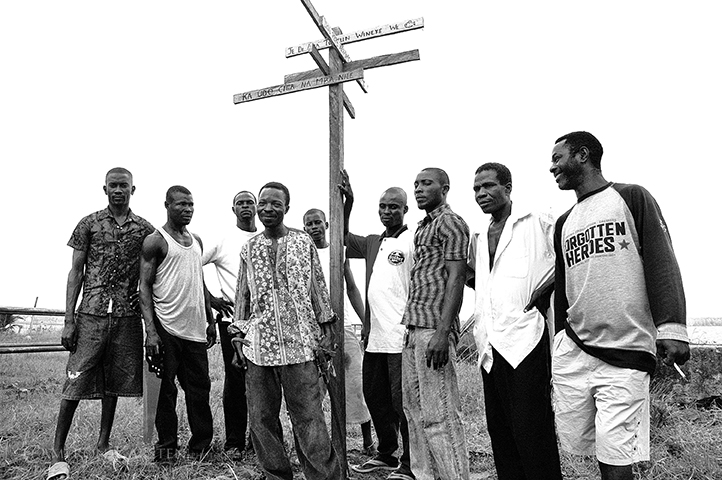
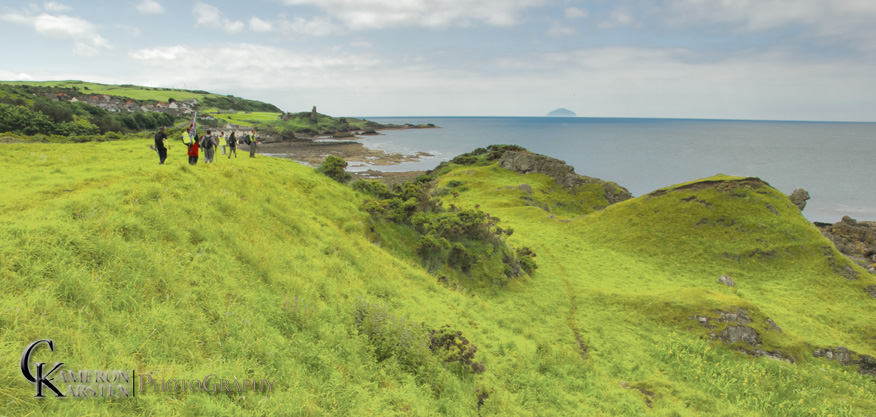
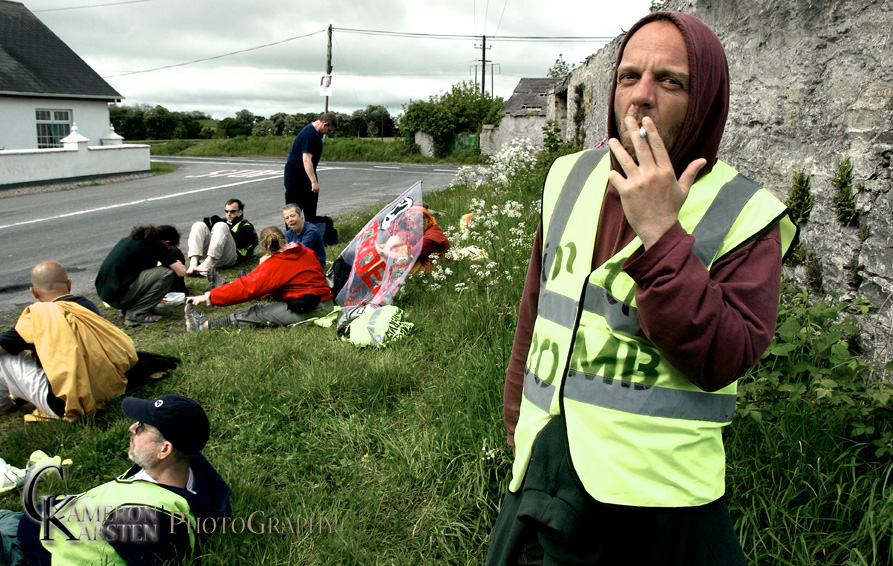
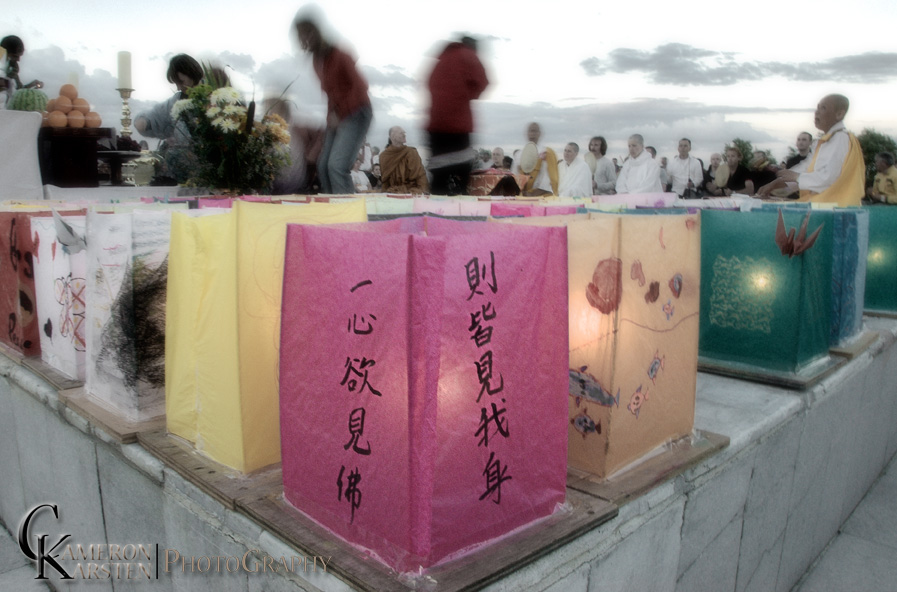
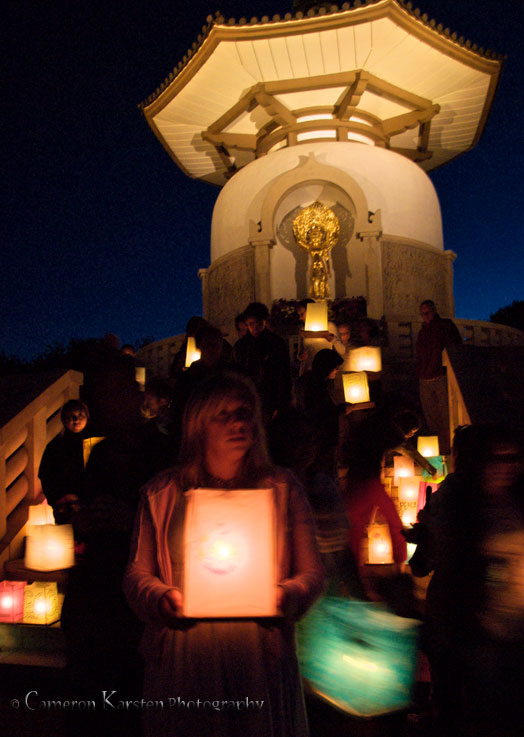
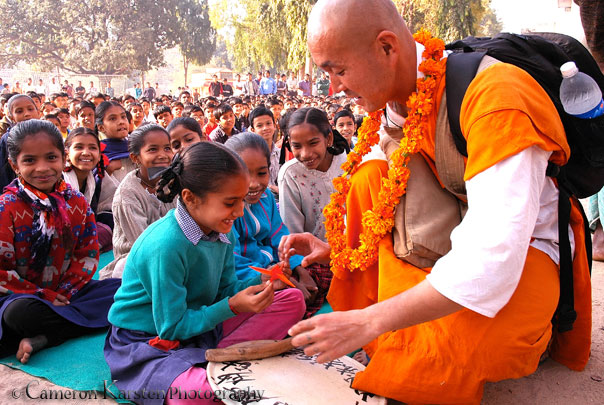
The following photography essay was captured a few years ago during a three-month peace walk from Dublin, Ireland to London, England calling for a nuclear-free civilization.










I rose from the television, my evening’s indulgence, and walked through the crystal glare to the kitchen.
Flicking on the lights, I reached the pantry, opened its doors and pulled down two contents: a can of Equal Exchange Organic Hot Cocoa and a plastic bag of Western Family Marshmallows—jumbo-sized.
Outside, a layer of clouds blocked the night sky and a sheet of rain piddled on the patio. As the teakettle came to a boil, I turned down the gas flame and filled my mug.
 The powdered chocolate and white puffs of sugar stirred, and the marshmallows dissolved into sweet perfection. I wondered: is true sustainability possible?
A Sickness At The Root
Back in the TV room, I continued watching the documentary Wal-Mart: The High Cost of Low Price. Directed by Robert Greenwald, the film captures the stories of employees and those affected across the United States.
It’s a story of American capitalism gone askew. Like David versus Goliath, the mega-store behemoth slams into a community and entices families with its cheap plastic products. We hear from an employed mother forced to seek government-assisted healthcare to raise her children, and a family-owned hardware store crushed by the neighboring Wal-Mart superstructure.
The movie recalled my recent journey to Mazatlan, Mexico and the newly razed soils of tradition to accommodate the acres of asphalt and high ceilings of cheap Wal-Mart goods. Not only has the corporation captured the minds and bodies of Americans, but now it extends across Mexico, Europe, and countless other countries.
Wal-Mart imports an outrageous amount of overseas products. On November 29, 2004, Jiang Jingjing of China Daily reported, “The world’s largest retailer, Wal-Mart Stores Inc., says its inventory of stock produced in China is expected to hit US$18 billion this year, keeping the annual growth rate of over 20 per cent consistent over two years.”
That’s an estimated $18 billion pumped out of sweatshop factories employing the young, naïve women, men and children living in poor provinces. According to Global Exchange, Wal-Mart employs 400,000 workers abroad.
It’s everywhere. At the beginning of this year, just 15.59 miles from my doorstep, a Wal-Mart Supercenter opened its doors on January 31, 2007 in Poulsbo, WA. Its 203,000 sq. ft. store provides 525 new jobs in 36 departments that remain open to customers 24 hours a day, seven days a week.
What’s more amazing, apart from the $35,000 donated to local organizations through its Good Works community involvement program, is the fact that twelve miles down the road is another Wal-Mart Supercenter in Silverdale.
The Accomplice In The Mirror
 As always, my cocoa was delicious. Let it be known hot cocoa without marshmallows is not the same.
Continuing with the film, I felt a pang of guilt. Here I was, drinking organic hot cocoa fairly traded through the worldwide network of small farmers and co-ops, yet I topped the sustainability with gigantic, jumbo-puffed, falsified sugar marshmallows.
No, the marshmallows were not organic, fairly traded, or manufactured with conscious decisions. They were packed, shipped, stacked and stored for months. They were not sustainable; the plastic bag unsalvageable—America’s weak recycling programs will not help this time.
The movie ended. I went to the kitchen sink and washed my brown, sugar-stained mug. I opened the pantry and perused its contents. I took note of the products: most were organic, purchased in bulk. They were stored in containers able for reuse or recycling.
They were fresh and limited; only the necessities and few luxuries, not piled with the excesses of your average soccer-crazed Mom in an over-zealous fear of Judgment Day. But still…those marshmallows.
Despite my reassurance about the impact I was making on the world, I felt I needed to do more (or less). This yearning carries me into each and every experience. It’s one of caring—for the world, for our family of brothers and sisters.
It’s a desire to look forward into the future and make sure we have preserved the beauty of the land and its resources for generations to come.
What more can I do? What more can we do to better our minds and lifestyles? And what more can we do to make a difference in the way economies run so economic tyrants like Wal-Mart return to their more modest roots.
Sam Walton, Wal-Mart’s founder, once said, “You can’t create a team spirit when the situation is so one-sided, when management gets so much and workers get so little of the pie.” I wonder if today’s CEO Lee Scott remembers his words?
The Karmic Consequences
In Mexico, I overheard a woman who had been traveling to Mazatlán for twenty-five years. She was grateful for the new Wal-Mart and Sam’s Club. Now just a mere five-minute pulmonia ride, she buys all her groceries as if she were back home. “We arrive. We shop at Sam’s Club.”
I found myself that night in the heart of Old Mazatlán, wandering the Centro Historic in Mercado Pino Suárez. This was Mexico.
The large market holds vendors offering traditional foods of homebrewed recipes to clothing and appliances. It felt real. It was a culture supporting its people. It was their livelihood mingling among their rich traditions of agriculture, textiles and cooking.
Purchase Made
Back home, the US continues to expand and dominate other regions from the Latin world, to China, India and Bangladesh, to Europe and beyond.
 There are those among us who condemn this expansion, who believe in a higher standard, not of income or consumption, but something that far surpasses the physical world. We’ve come to recognize Mother Earth’s life. If some don’t take notice, it’s bound to fall into hands more omniscient.
On March 15, 2007 the Wal-Mart of Poulsbo saw a glimpse resistance. The Seattle Times reported a suspicious fire that broke out in the women’s undergarment department causing one million dollars of damage. Nobody was injured and officials are looking into suspected arson.

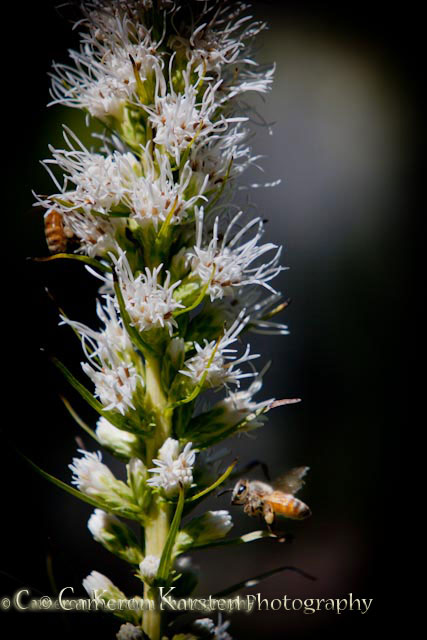
Tireless in their pursuit, worker bees of the honeybee colony collect pollen during the summer season from sunrise to sundown. The pollen is stored within sacks on their rear legs, and once full, the honeybee returns to the hive where she stashes it into cells made of wax. With time, the pollen metamorphoses into honey and is kept for winter’s surplus.

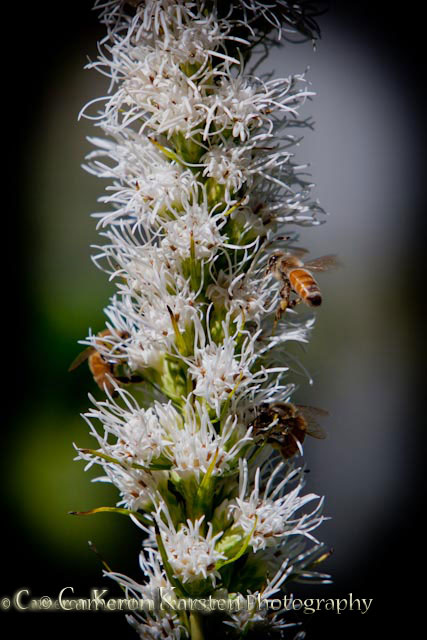
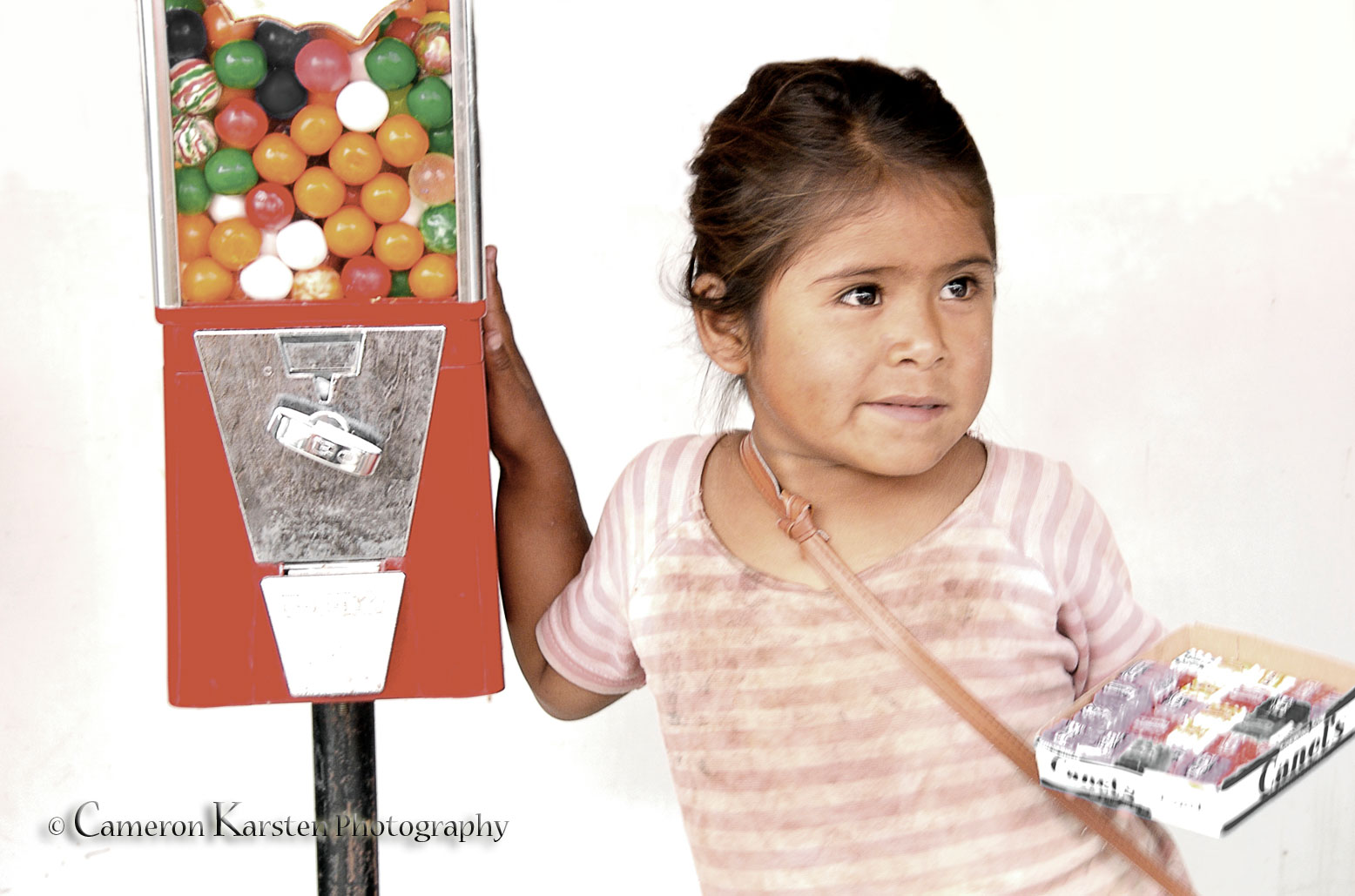
In a city engulfed by corporations and Americana, the essence of true culture is always changing.
Mazatlán, Mexico. It conjures a precision of memories. For many years my family met once a year to live, laugh, eat and drink, recounting memories beneath the Mexican sun.
We lounged like the afternoon’s iguanas, strolled and swam like leaves in the fall, shopped the Zona Dorada with red eyes, rode horses through the waves and parasailed as if we were birds. For once a year, The Inn at Mazatlán became our home for two weeks, where we relished in relaxation as a family conglomerate stuck together by the sticky juices of squeezed limes and empty Margarita mixes.
But every once in a while, certain members would miss the reunion and due to my direction in various travels, I was one who often missed these annual Mexican fiestas. After three consecutive absences, I was looking forward to the next year’s, which reintroduced me to a culture buried within the memories of youth.
As I sat in the back of a taxi outside General Rafael Buelna International Airport, located seventeen miles south of downtown Mazatlán, heat and dust drew in through the open windows and swirled around my head. It smelled hot. It smelled tropical. I thought I caught a scent of a distant sea as a faded CD hanging from the rearview mirror flashed in my eyes. On one side of the disc, Mother Mary gave me a reserved glance before rotating out of view.
An Unrecognizable Return
I watched out the window: a beloved Mexico and its culture, passing high-walled penitentiaries, catching drafts of burning trash and the odd pile of rubber.
The land was sparse to the city, impoverished with corrugated roofs and sheds, wiry fences enclosing pigs and cattle while chickens roamed freely. Then, broken by an obtrusive power, gorging the expanse of the countryside, were paved lots of multinational corporations. They found their way into a culture as Mexico fell to the global faces of Wal-Mart and Home Depot.
 Noise and debris, rising dust-clouds of eternal heat, rapturous signals, stoplights and padded feet across cracked asphalt. Then the next race of unholy exhaust pipes flooded the streets.
I breathed in, and as tin and brick and corrugation turned to unfinished concrete harboring spikes of rebar, the city-center approached.
A culture, historic in its patternless flow of work, family and tradition. Mix in nutritious rice, beans, corn tortillas and a few cooling cervezas. And then birth the working-class as a mother interlinks her arms throughout five children before dodging traffic, and los federales rolling in their crisp black ’06 GMC pickup trucks and waxy Ford Mustangs, circling fat signs and stripped lands with their sweating asphalt and gymnasiums of cheap simplicities.
My heart skipped a beat at their infiltration. But as I drew another inhale and observed the life surrounding, I continued witnessing a thriving Mexico. The dust tickled my throat. I coughed.
How unburdened can a culture remain? I was about to find out.
Arrival at the Inn
The Inn dressed as usual. Elegant in contrast with the streets beyond its whitewashed walls. A new tower touched the sky with 215 luxury rooms crowned with one three-bedroom ten-person penthouse. Larger pools. Fully functional waterfalls. Yoga classes in the morning and increased prajna after a night of drinks, chips, salsa and guacamole.
There were painting classes, weekly Bingo for the crowds accompanying time-shares in Branson, Missouri, as well as Mexican piñata fiestas for the kin Wednesday nights at seven. With a restaurant on premise, The Inn was a self-sufficient community of lounge-chair tortillas here for a deep-fry.
I searched a meat menu for a vegetarian plate.
Culture? I ask:
¿La cultura? ¿ Dónde está la cultura?
Indeed, it wasn’t to be found within the walls of the large resorts and hotels fabricated for the broadening American and Canadian tourists, unless, say, you worked your Spanish with the maids and gardeners.
But outside, in the heat and noise, Mexico awaited.
Mazatlán Idol
One evening the family piled into two pulmonias (a crazed golf-cartesque taxi blaring an ungodly noise of music ranging from YMCA to CCR’s Bad Moon Rising). We drove north to La Costa Marinara.
 Inside the seafood restaurant, I scanned for something traditional, simple, clean. I came up empty. Drink, talk, laughs of the previous evening, and then to eating. After our meal, the American music toned down and the DJ slapped on a record of classic Mexican rhythms.
Suddenly, as if transformed into Mexico’s next “American Idol,” a waiter stepped onto the patio platform with microphone in hand. He held it tight, not in nervousness, but passion.
With reverence, he sung his heart out, swooning the customers in love song. One local, loaded with two of his buddies at a game table of empty beer bottles, joined and grumbled to the melody. I cringed.
“Tom Jones!” my sister exclaimed. Reborn and alive, south of the border in Mazatlán.
In all the years we had been coming to this restaurant by the sea, we never saw the bills paid and tables emptied as quickly as they had that night.
Visit From the Country
Señor Jones was not the only performance. Directly afterwards, six blonde children dressed as Midwestern cowboys appeared.
Between the ages of five and fifteen years, they appeared out of place from the average Mexican; not only the pressed red-squared collared shirts, jeans and boots, with chaps, bandannas and dresses, but also their faces.
These six little children seemed to have come off the beaches of Santa Cruz with tanned white skin and sandy hair. Let alone, it was nearing ten o’clock on a school night.
The DJ queued the music. Georgia-born Alan Jackson, in thick accent, rolled with Chattahoochee. In practiced timing, they kicked their boots’ heels in square dance. Suddenly, I was transported on a stagecoach time machine to a backwoods Montana bar.
An American woman, apparently from a similar locale, clapped in dramatized exuberance. “I love this song! Love it!” I didn’t dare look over, but from the far corner of my eye I spotted her Margarita bowl near bottom.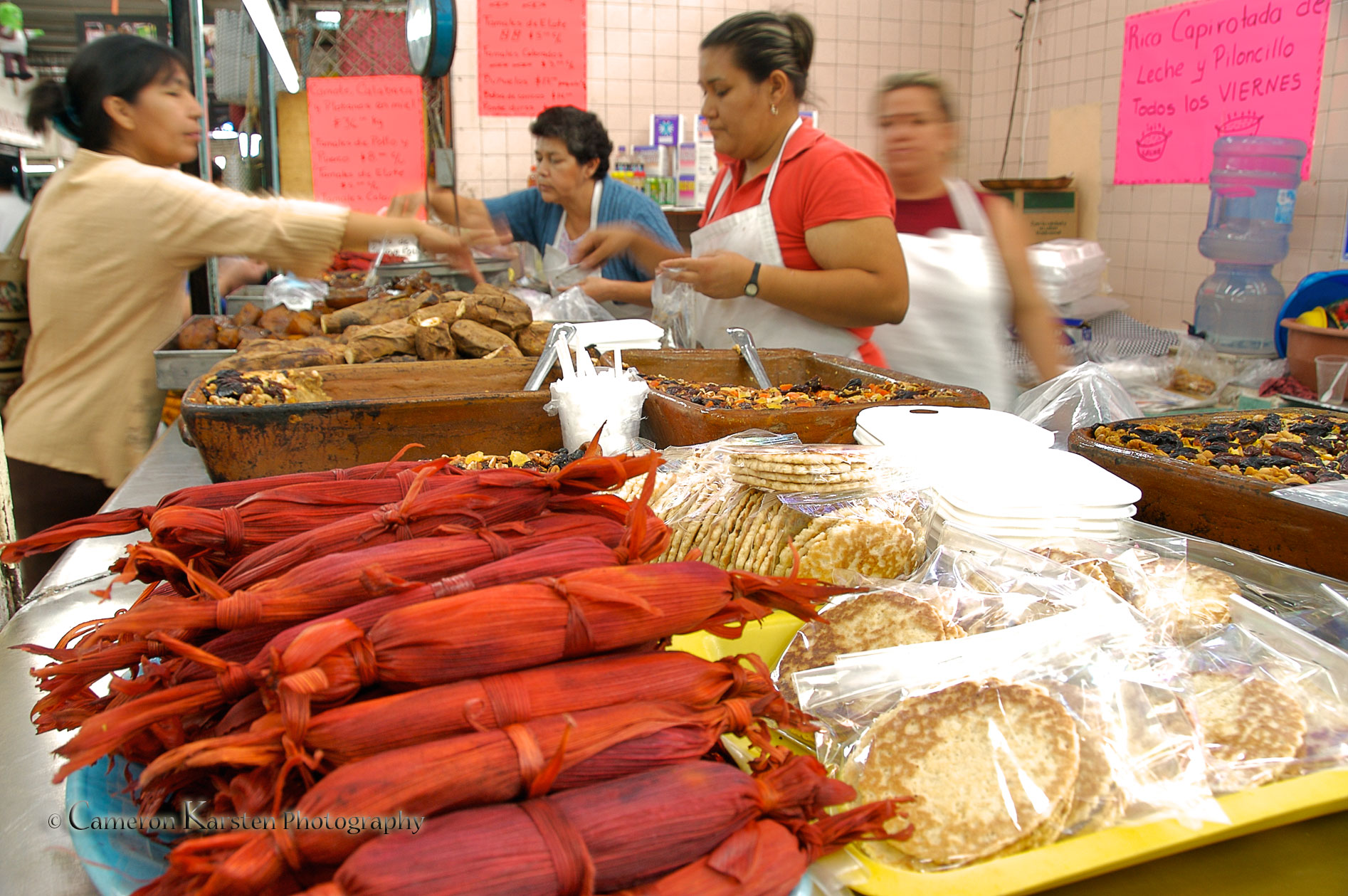
Signaling the end of the dance, the youngest three removed their plastic cowboy hats and bowed, before turning them upside down and requesting alms from each table.
Old Streets, Same Bathrooms
I walked back to The Inn that evening with my uncle on the main Avenue Cameron Sabalo. We passed Japanese restaurants, American burger joints, tapas of Spain, and I thought of the real Mexican dishes in los pueblos y montañas: the simple rice and beans of the Latin world.
The previous day, my mother recalled the sole brilliance of the establishment known in more languages as simply: McDonalds.
“At least we can rely on a clean bathroom no matter where we might find ourselves in the world.”
Yes, Home Sweet Mickey D’s, along with other chains, soon to include Dairy Queen, Domino’s Pizza, Subway, Wal-Mart and Home Depot.
Culture. Mazatlán. The input of the West’s power, yet out on the streets, there was Mexico at its finest.
Yesterday’s Today
 Blocks are now splashed with the primary colors of the restaurants’ and consumer stores’ façades, but the dust still rises, trash still burns, with the Chevy trucks and the workers down in the shades, mothers sprinting across traffic with young flailing and babies wailing.
Things and their monsters. They let loose to dilute the beauty of this original culture. Yet cervezas y guacamole, no matter how diluted, still reinvigorate the Mexican culture of memory to the old and young.
Culture is life. Life is change. Change is Culture.
It is the beauty of the world, no matter how desperate, no matter how congested and overflowing, omnipresent like a McDo, in Mexico, India, China, France or across the street from your Ace Hardware chain.

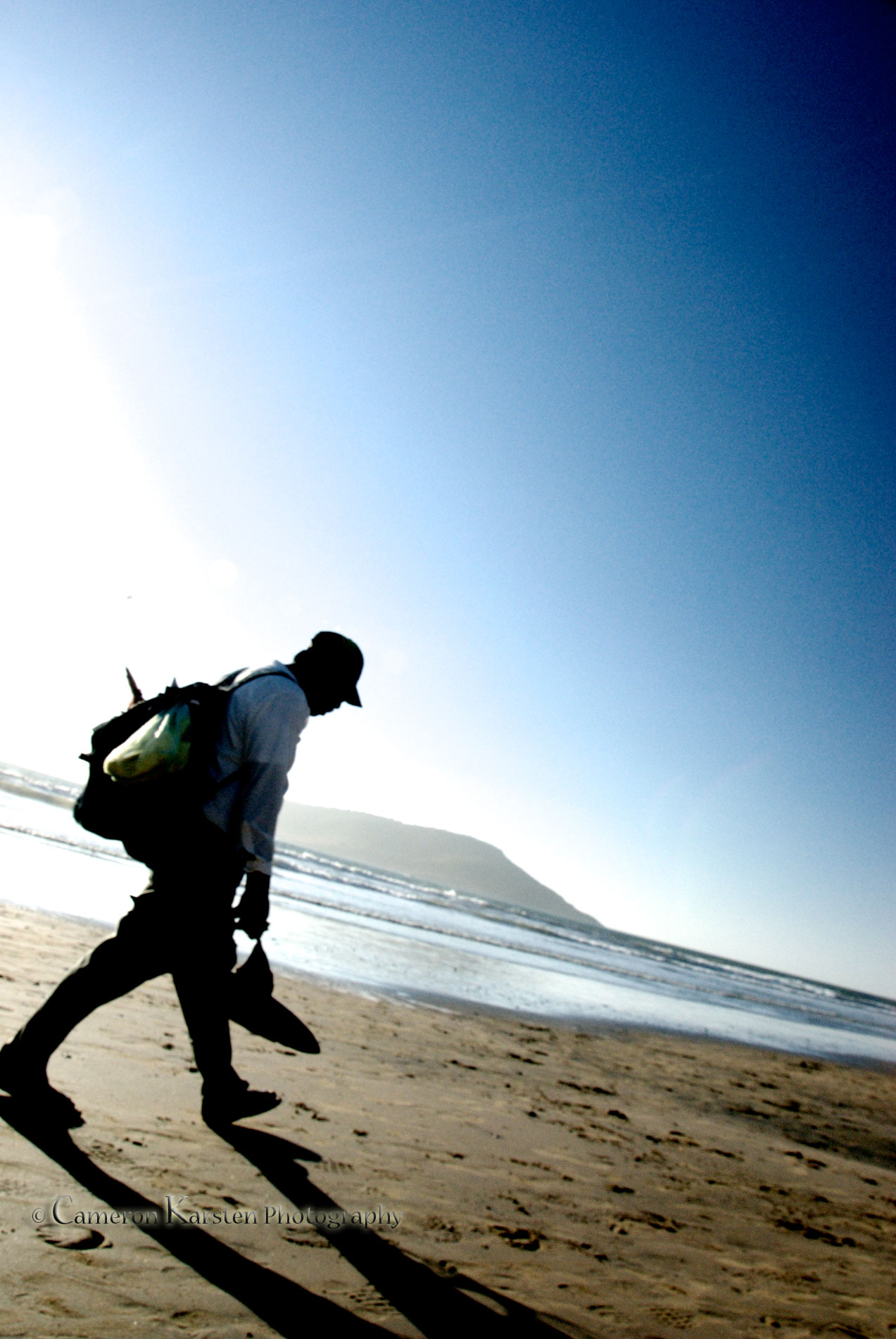

Like a roasted pepper, you’re done: well cooked, charred on the outside, burnt and spent. But on the inside, hidden within the veil of life’s fire-burner, you’re soft and ready. Anticipating for more.
However, it doesn’t come all that easy. After the months, weeks, or maybe only the days of travel, you return home to the accustomed life once left behind, and there, piled with new baggage you were ready to unpack, you find yourself overloaded with a new beginning.
 And despite how many times you attempt to escape from this, seeking the bliss of freedom discovered upon the open road, mixed within the world’s vast cultures—leaving, returning, leaving, returning—you are met face to face time again with this long winding road home. It stares at you. It tempts you.
Upon returning, afflictive emotions once erased resurface (hint: they never leave!). In order to take this road, you know you must begin the new journey with your new bags; keep on traveling, keep on truckin’ to peel away your surface layers to reach that core initially sought.
You must emerge from the cultures of the ancient times of open-air fires with stone, brick and mortar to reveal the modern complexity of steal and chrome. The time allotted is the progress made, and until then the core will not be exposed. Instead, the fires will continue to char, and char, and char returning you back to the start of that winding path, through and through. Call it culture hopping.
And You Are?
Whether Africa, Asia, Southeast Asia, Europe, South America, North America, or some distant cardinal tropic marooned from the flanks of one’s accustomed culture, the traveler is an explorer in the miasmic layers, colors and spices of the world’s cultures. To have that desire for taste, for preparation and creative roast is to obtain the initial interest of discovering a lifestyle other than one’s own.
It is a yearning for experience, for knowledge, for an accumulation of wealth that can never be bought, taught or sought in books: It’s the potential growth of the soul that comes with willingness, dedication and an awareness given the time and space to be sown in the soils of one’s consciousness.
Through the journey beyond, an epic tale of letting go and allowing the fires to char on their own accord, experience becomes wisdom. It becomes that seed enriched with appreciation for life, a life involving a continued exploration of man, woman, Nature and their intriguing interwoven dynamics. Alone, this path cultivates and further roasts one’s seed of awareness allowing the pepper to blossom and the fires cook.
For such a traveler, life is the essential ingredient. Within mind, body and soul there contains essential components only fed when the traveler throws oneself into this very unknown. This is where life revolves.
Certain characters are necessary for the traveler to embark and take upon these fires when ready: Such one loves the unknown.
He or she loves taking this upon destiny like a parasite caught in flesh. It is a necessity, a fertilizer sucked from the deepest soils, where the senses abide to the farthest root tips; stretching, distending, growing further and reaching for that appreciation of life, its beauty and the diversity which flourishes. These cultures of humanity define the sustenance of life, and without their firsthand experience there would be no worth to the traveler in the life surrounding.
 And so, with a firm grip upon an adventurous nature, a character ready and willing to let it all go for something without any future at all, the traveler within me tossed this mind, body and soul into the deep soils of the earth. Seed planted, sustenance fed—my pepper of various layers, colors and spices began to sprout. The fire was already provided. I began my culture hopping.
Cultures Revealed, The Culture Transformed
I went abroad, explored the cultures of islands, of development and riches, of poverty and those stricken with the despair of unjust treatment to their basic human rights. I went abroad and found turmoil in the markets, unlike my hometown grocer’s well stocked and aligned isles. I was ingrained within these new markets like a spider in a neighbor’s web, weaving my thread with theirs, calm and observant with the people of Africa, Asia, south-north-east-west and beyond. I spun more, throwing an innocuous trust within my surroundings.
Further, I found isolated pockets of forest, tropical with malarial mosquitoes and monkeys. I saw fauna and flora of the imagination, and I let my own wander to color my thoughts with its fragrance.
Things filled my senses. Life invaded me. From one culture to the next, I let go, stepping deeper into the unknown. And I let go once more.
Literally it all consumed me, and as the small seed, a sponge underneath the flowing faucet, I soaked in it. I was free. I was the traveler. I absorbed this flow—people, thoughts, situations and circumstances, foreign politics, cuisines and their palates, lifestyles and manners. They became a part of who I was, and who I sought to become.
From one individual to the next, from village to village, city to city, via bicycle, rickshaw, tuk-tuk, taxi, bus, train, boat—or by foot—I was culture hopping. I was experiencing this life I knew and never knew. It was withdrawn from within me where I allowed an awareness to manifest the road ahead. And on every step, the journey started anew as the flames were fueled, the fires turning hotter.
Eventually, I was done.
The pepper: blackened, charred, burnt on the outside. Work was now necessary to peel away the layers, and so the traveler returned home to the culture left behind. There, after faced with one phenomenon to the next, culture hopping at its finest (the pepper well-done, the spider entombed within, a sponge oozing the sustenance of life), explorations changed courses and routes led homeward to the familiar lifestyle. But through each interlope and interchange of culture there was that reunion affected by this so-called hopping.
It was a reemergence with the traveler’s old self, bags ready to unpack before discovering there were still more bags to be carried.
Still Traveling
 Often it’s unexpected, meeting this thing left behind which is now present; all around you, within family and friends and customs and routines. It is the traveler of the past; the traveler before the traveler was ever a “traveler”. In essence it is the mind, body and soul in which everyone knew and everything expected despite the change.
Returning from Southeast Asia to southern California, my confidence and belief within my own self and the direction I was heading hit a steel-plated wall. All happiness faded.
But now, unexpected, the new traveler facing the old traveler before the traveler was ever a traveler becomes paralyzed. He or she is overwhelmed with the past culture amounting to that of the new various cultures adopted. Known collectively as “culture shock”, there is no turning back.
The old sages comment, “Easy is the choice to begin or not, but once begun, better finish.”
And like a dish of foie gras to a vegetarian consciousness, like a Russian bath for the Hawaiian local, culture shock throws you into a chasm where the lights are dimmed to view only the faintest silhouettes ahead. There is nothing left behind. You must continue and accept a responsibility, for this very shock is the effect of your culture hopping. It stuns, saddens—and more significantly—paralyzes the senses and any feeling of centeredness.
Questions arise again, afflictive emotions stir as remorse composes a symphony of disgust, despair and pain before the next layer of pepper is charred. There’s never the chance of having the opportunity to live the life of its soft sweet flesh. This is the case of reemergence into Western society.
Returning from Southeast Asia to southern California, my confidence and belief within my own self and the direction I was heading hit that wall. Happiness gone. Despair arisen. Confusion ahead. What I remember most having returned from the months abroad was entering that Ralph’s “superstore” on Colorado Boulevard in Pasadena.
Culture shock as loaves of bagged bread—signed, sealed and delivered—shook with a consumerism’s shopping rage. It was like an exemplified spree; carts with gargantuan mouths, open and wired to the teeth. They could be stuffed full, occupying up to ten bags if willed. There were meats, animals to be more specific, which now took the form of slice after slice, shank and steak and thigh and breast—or why not whole? My eyes witnessed the abundant glory to what a Newari family in the Nepalese Himalayas might perceive: I’m in heaven!
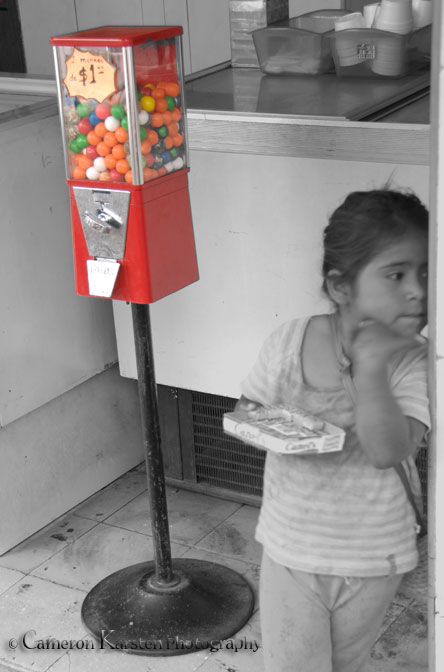
No. To me, having experienced the impoverished of India, Africa and Asia—as well as the freeway underpasses of California’s forgotten homeless; having walked the mountains and beaches where a family was considered lucky if a porter succeeded in bringing what they requested, this mass production of animals, genetically modified fruits and vegetables, and aisles upon aisles of sugared dumplings called Ding-Dongs hit my lower abdomen with an iron cudgel.
Cheeses and yogurts fermented beyond their expiration date. Fizzing bottles of Coca-Cola and Dew blew their tops. Bottles of water became dirty.
What happened to the market? To morality? What happened with globalization and to our care for others’ well-being?
 No, I concluded, there was never a moral concern for life. And there never will be. What the hell am I doing here? I was culture shocked.
A Welcome Home
It’s the most difficult stretch of the journey; to return home to family and friends, to routine—to life as you once knew it—and apply successfully all the lessons of travel. People look at you as they did in the past, but you say, you stand up for yourself: No, I’ve changed.
The world revolves.
You see the news. You have the luxuries you once forgot and indeed took advantage of in the past. Daily life causes its stresses. Anger, confusion, and all the other emotions come to greet you with a slap in the face, smiling like they’ve never done before. Even those plates of food adorning your dining table are a blessing, but no one else seems to see.
Likewise, you yourself begin to struggle. In your silent prayers you return your conscience back to the center and thank the sustenance before you and your family. You thank the Universe for this life compared to others witnessed far away, an observance you’re beginning to forget.
As with most, the first return and its adaptation is the hardest. You cope with it, you deal with it and you hopefully take in the lessons for your growth. The second and third become easier due to experience, and with the appropriate placement of the lessons recalled, your life, whether traveling or at “home” in your own culture, becomes a continued journey of culture hopping.
You are the traveler and you feed this, caring for yourself with the practice of your experiences from the places you’ve been. It is your new culture in which you live and grow from. But how do you get passed the initial return, and the second and the third?
Over my travels, an unknown quote to an unreligious individual has reminded me of strength and courage: “God comforts the disturbed and disturbs the comfortable.” It is a message shouting there is always more growth to be had. Once you think you’ve reached the top, you’ve actually hit bottom.
Greeted with the eruption of past habits and routines, I have taken the journey of reentering the life I left behind as a whole new opportunity to evolve further to that infinite goal. And what keeps me sane throughout the process is the remembrance of the journey passed and how it’s still in its entirety churning within me.
Therefore, I’m brought to the present, the internal traveler awoken within to become the traveler of the present moment no matter what road I might be on. I see family and friends; they might mistake me for someone of the past.
Sure, I’m still that person, but now I’m him, which includes this new traveler.
 I see shelves of abundance in a culture appearing oblivious to the rest of humanity’s infirmities and I become grateful to have that awareness of the resources in my life, their precious blessings, and how most persons round the globe might not have such a luxury as the basic necessity of shelter to plates to eat upon, or surviving family and a network of friends.
I remember how I used to take things for granted, including as a boy that dumpling of sugar, the so-called Ding-Dong. Hence, there is no need to despise it, but better yet be appreciative of the options and leave it for others who might harbor interest. And I’m grateful for the world’s diversity and the cultures out there to be explored.
Though what remains most important, disregarding the adventure of external discovery, is the magnitude of a continued internal exploration. It is an application of one’s new understanding and belief into mainstream life that keeps this cyclone of the Self gyrating.
Barriers discovered, analyzed and then toppled; passed through to advance further into the conscious Self.
Each step hosts the opportunity for growth—mentally, emotionally and spiritually—and with the continued practice of one’s lifestyle within the new surroundings of home, obstacles of daily living no longer appear as they once did. Instead they take the form of that flame, licking the edges of skin to provide a tool to peel away the outer layers to reach its deepest core. That fire is of love and peace, as is the core—as is the practice, the people and places—as are those once termed “obstacles”.
And So, To Hopping
Today, there is more of Asia, West Africa, Europe and more Central America, including my own culture, within me.
As a traveler with a continuous yearning for growth through an experience of culture hopping, and a lessening culture shock, I have come to peer through a cleared perception, recognizing the differences and similarities of each land and its people. I have come to accept these cultural barriers as a part of this physical world, established in total for our growth. Beyond these barriers, they dissolve and I perceive a life with the oneness of all peoples. My heart opens as I remind myself and take recognition. Happiness returns.
Yes, I’m still traveling.
Life keeps churning, and as a morsel within the stew—that spice—as a bubble in a boiling pot, I have only so long before I leave and transform, before I am eaten by my own creation.
In order to fill this duty with its finest, in order to allow the fires to masterfully complete its roast, a strive to dig deeper attains progress. It is the act of reaffirming the underlying connection between people and their cultures. It is the subtle continued establishment within the mind that they—we—have founded this very life and that we are here together to share it. Through this realization, carrying for myself and reawakening from sleep each fleeting moment, the afflictive emotions associated with the road and the return into daily life subsides.
A roasted pepper, charred skin peeled, I am now ready to continue with the ingredients of this infinite stew of culture, traveling deeper into the feast of life. Culture hopping is my vehicle of choice.





















 Cameron Karsten's Imaginarium