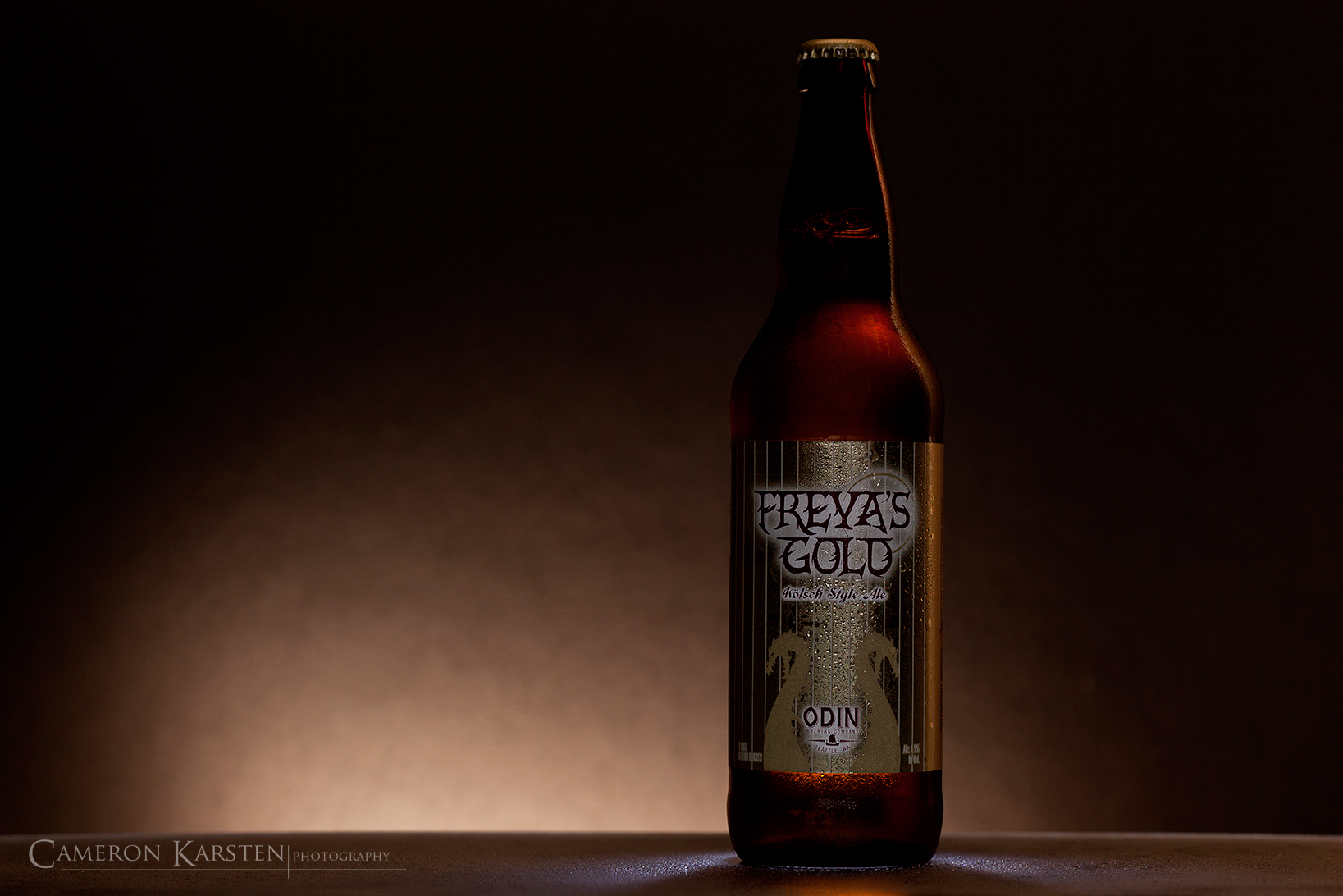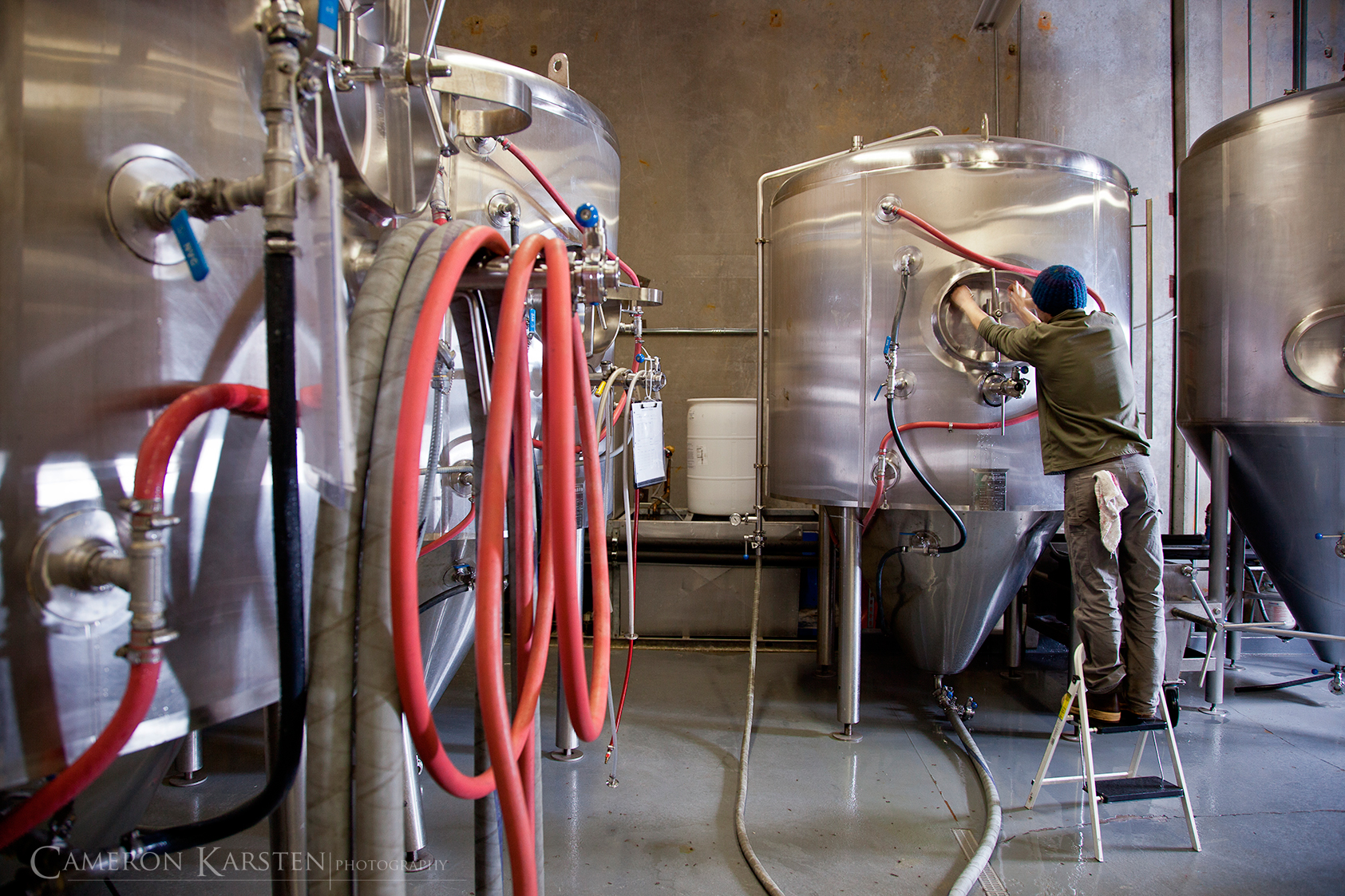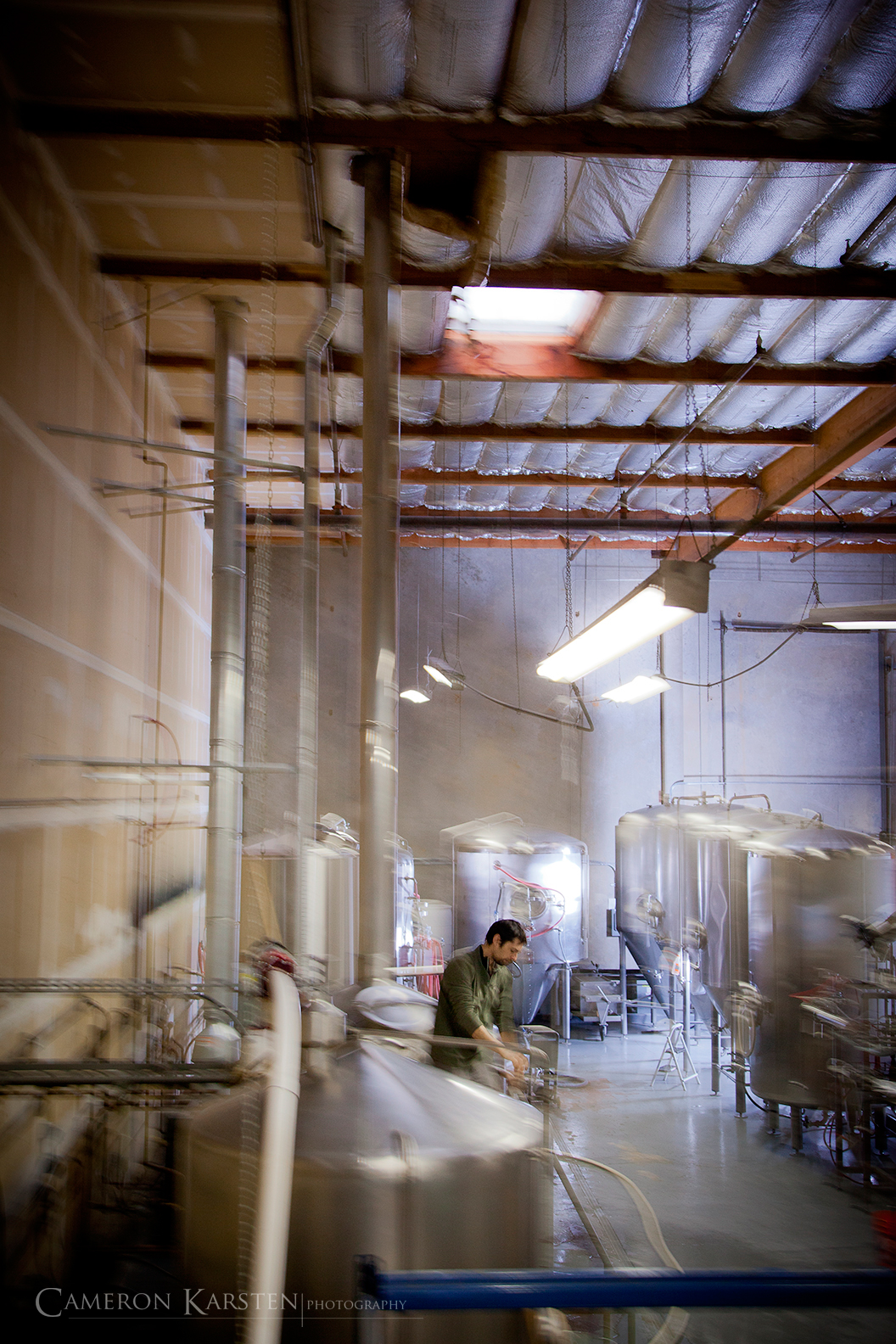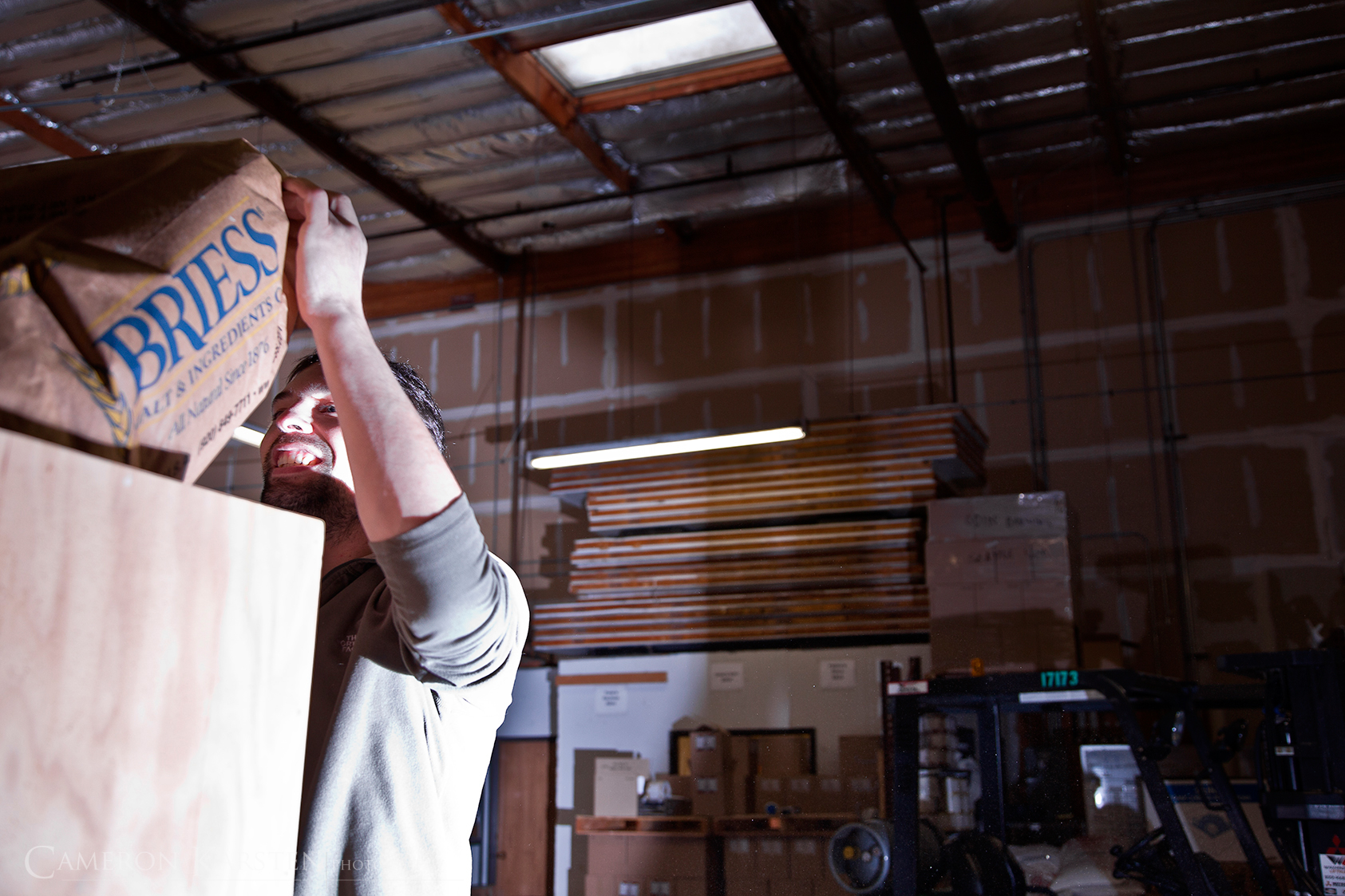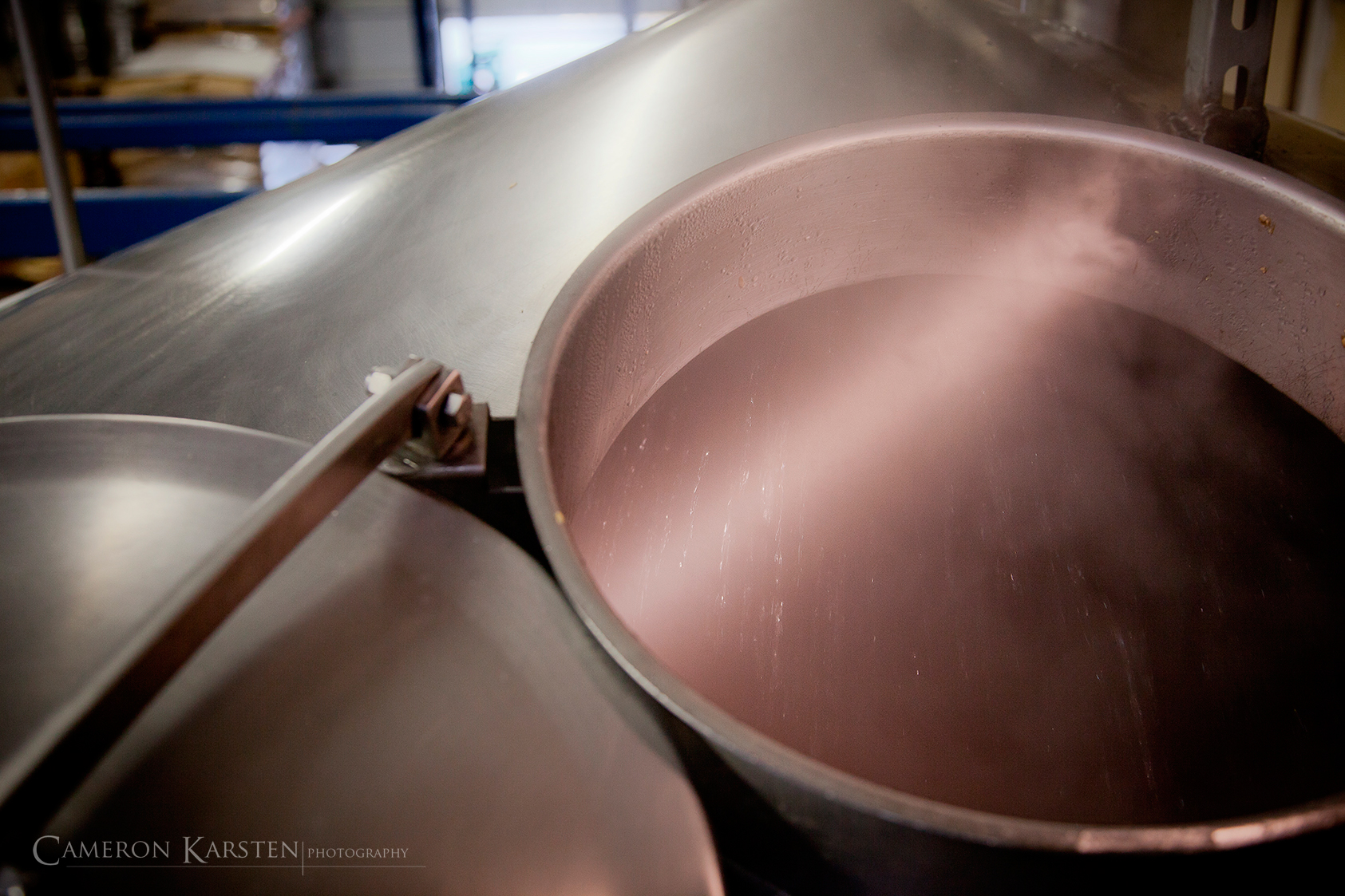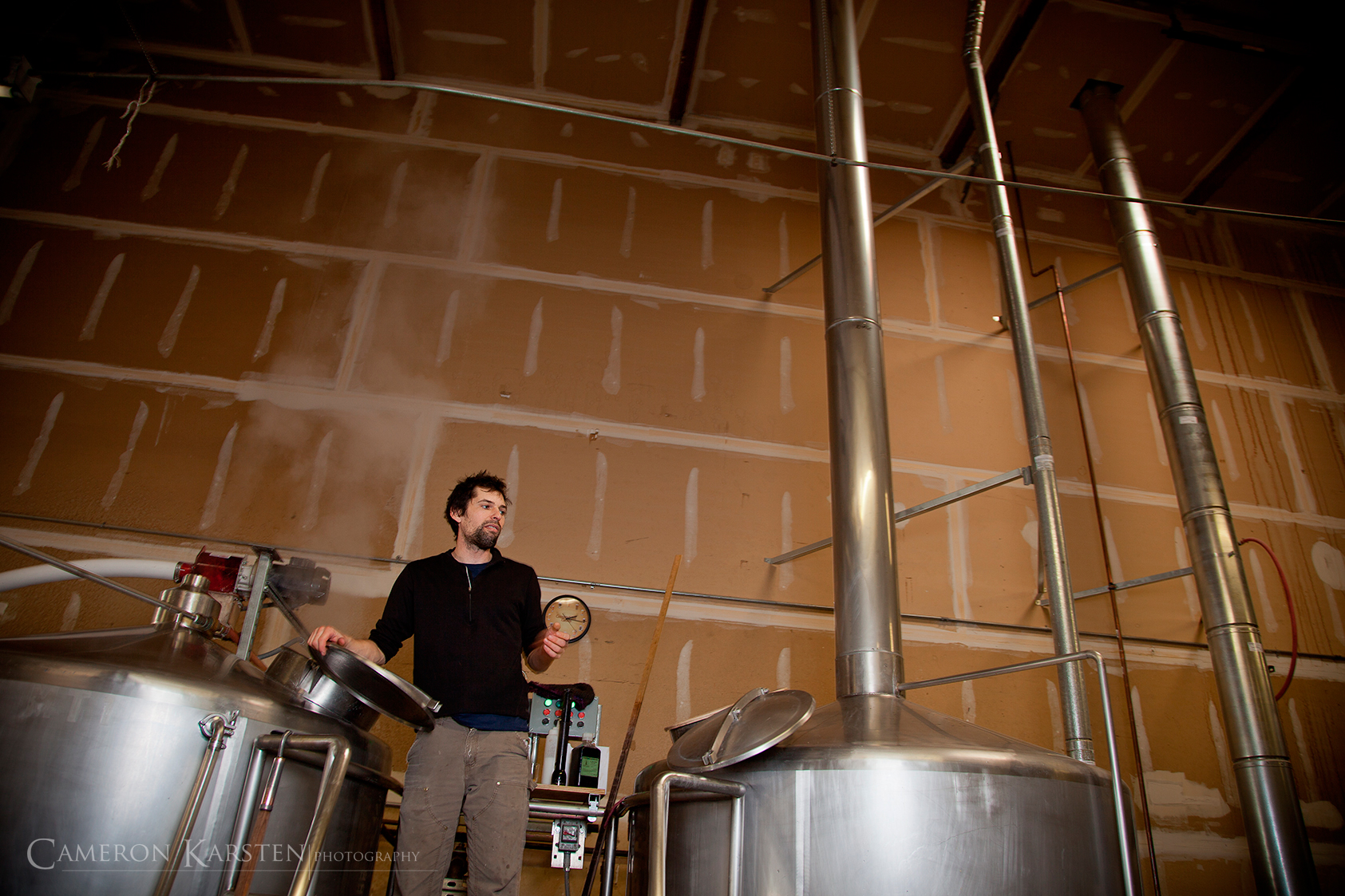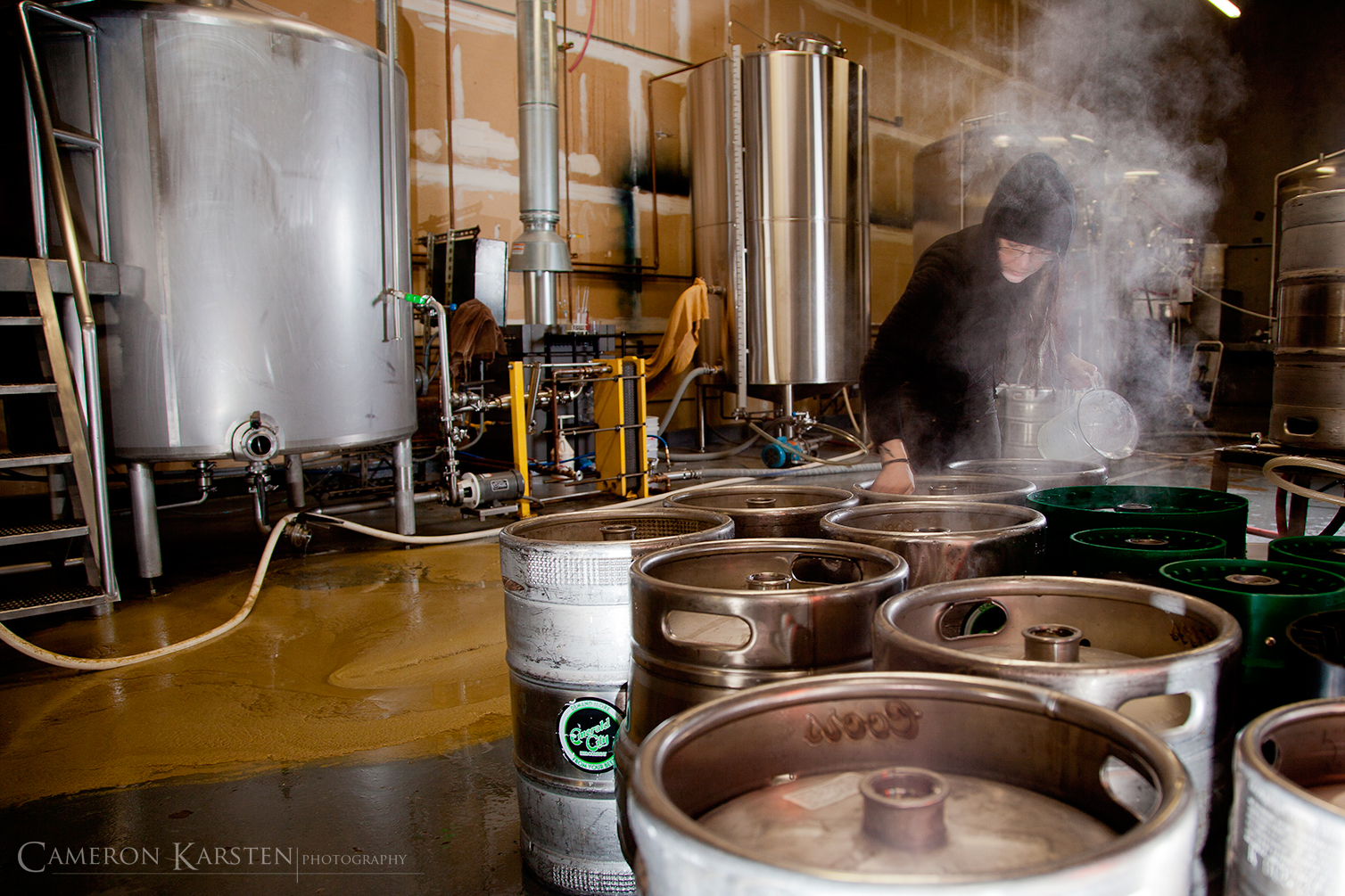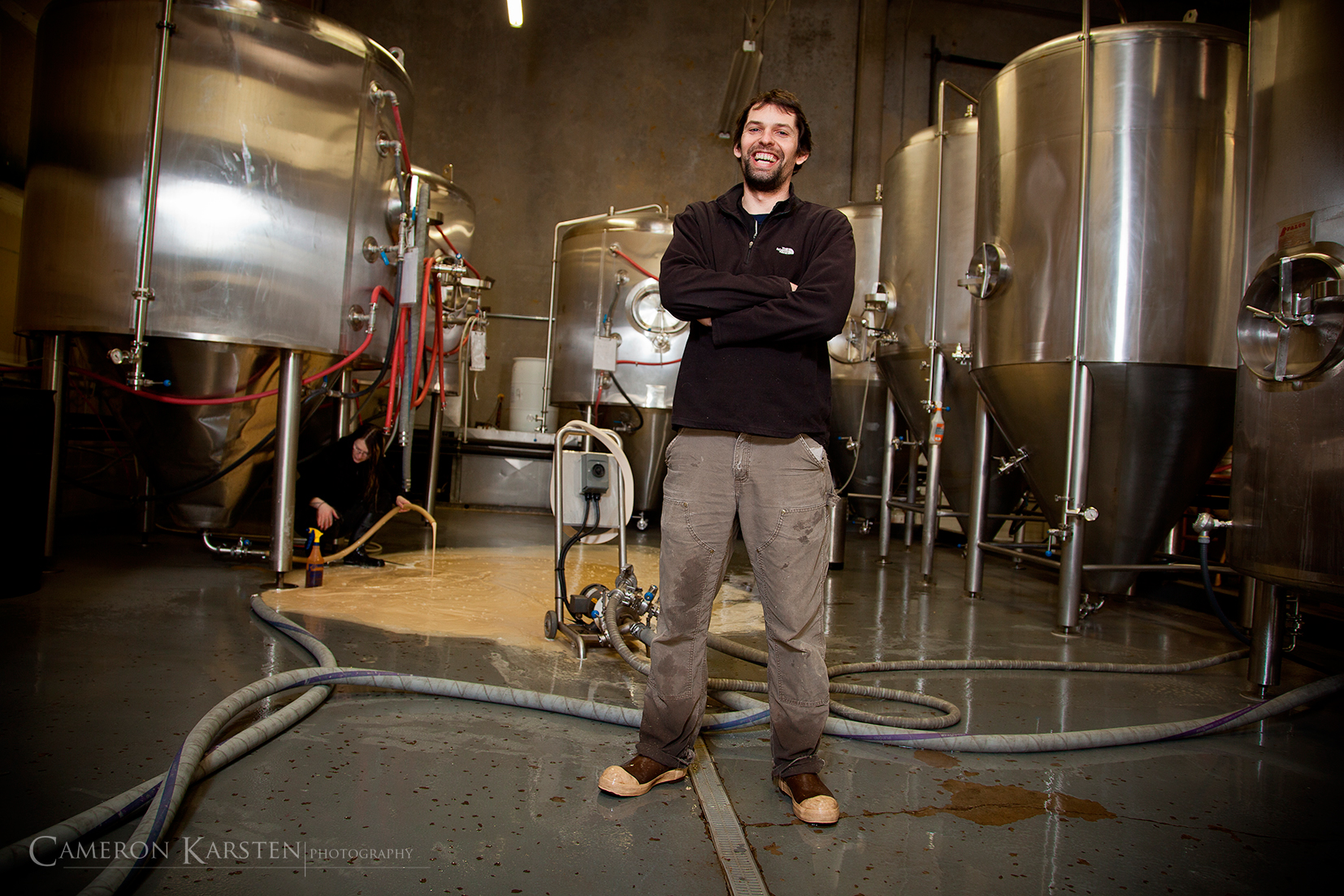
Photo Essay: Odin Brewery (Seattle, Wa) Pt. I

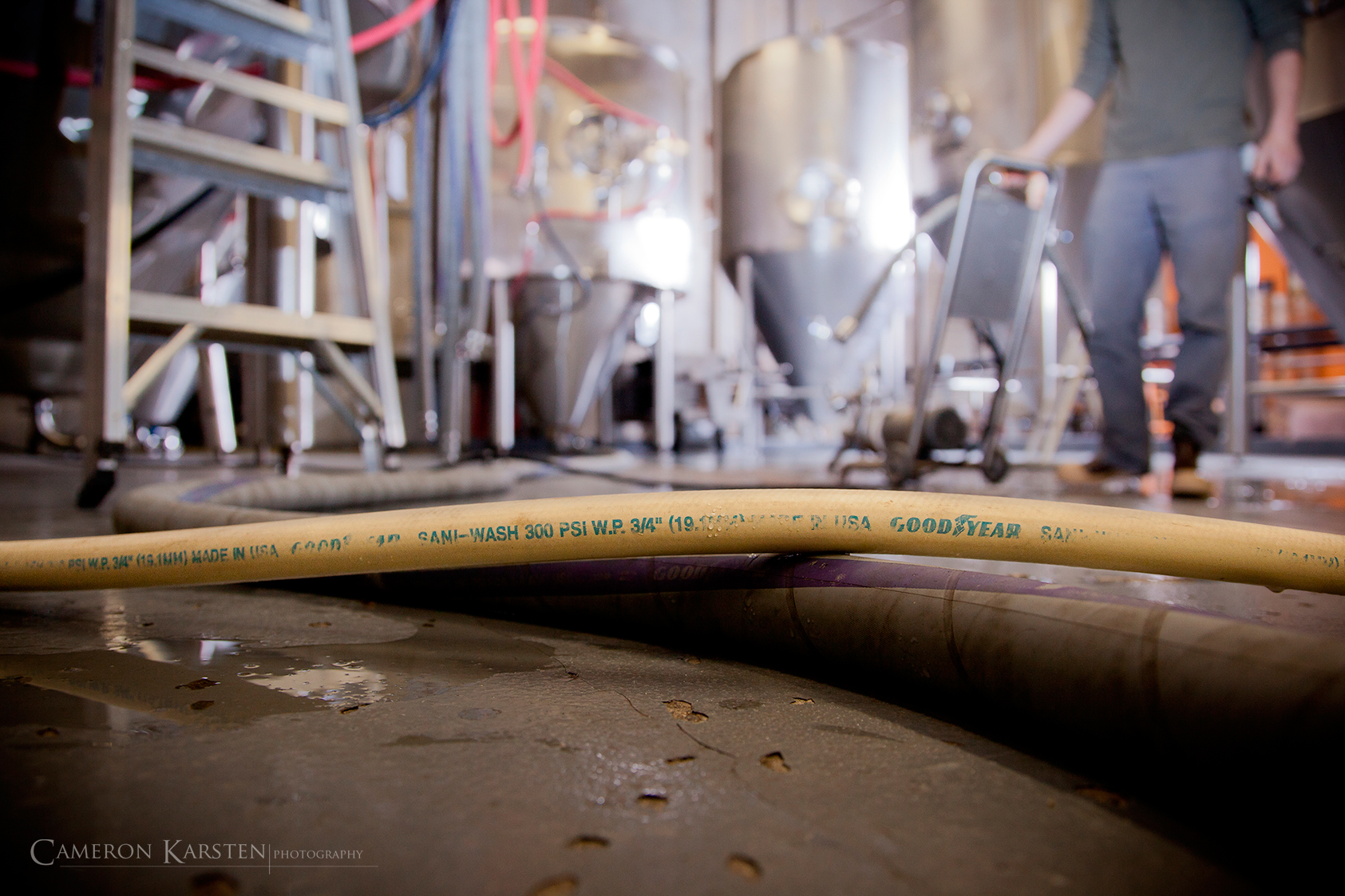
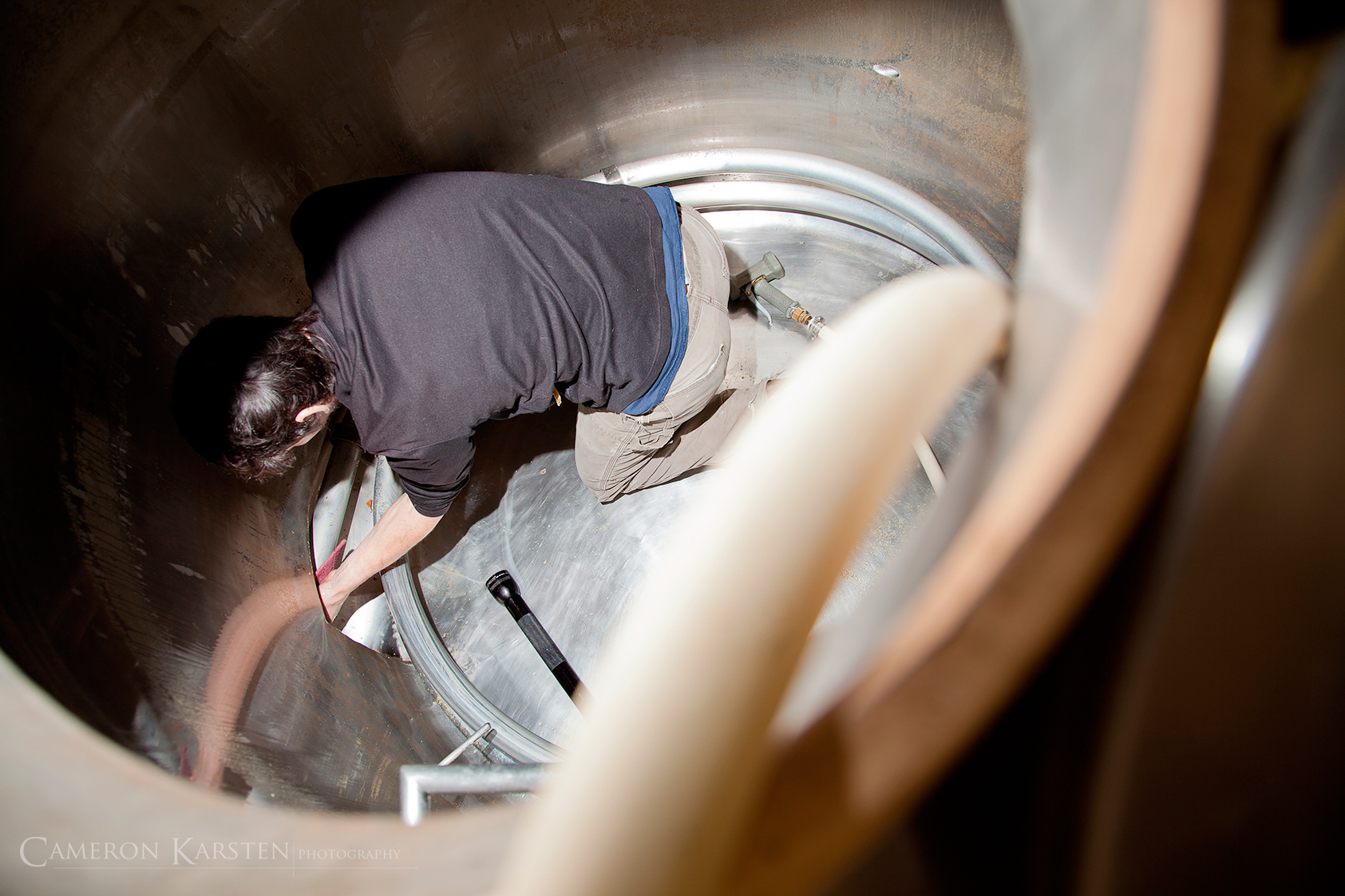
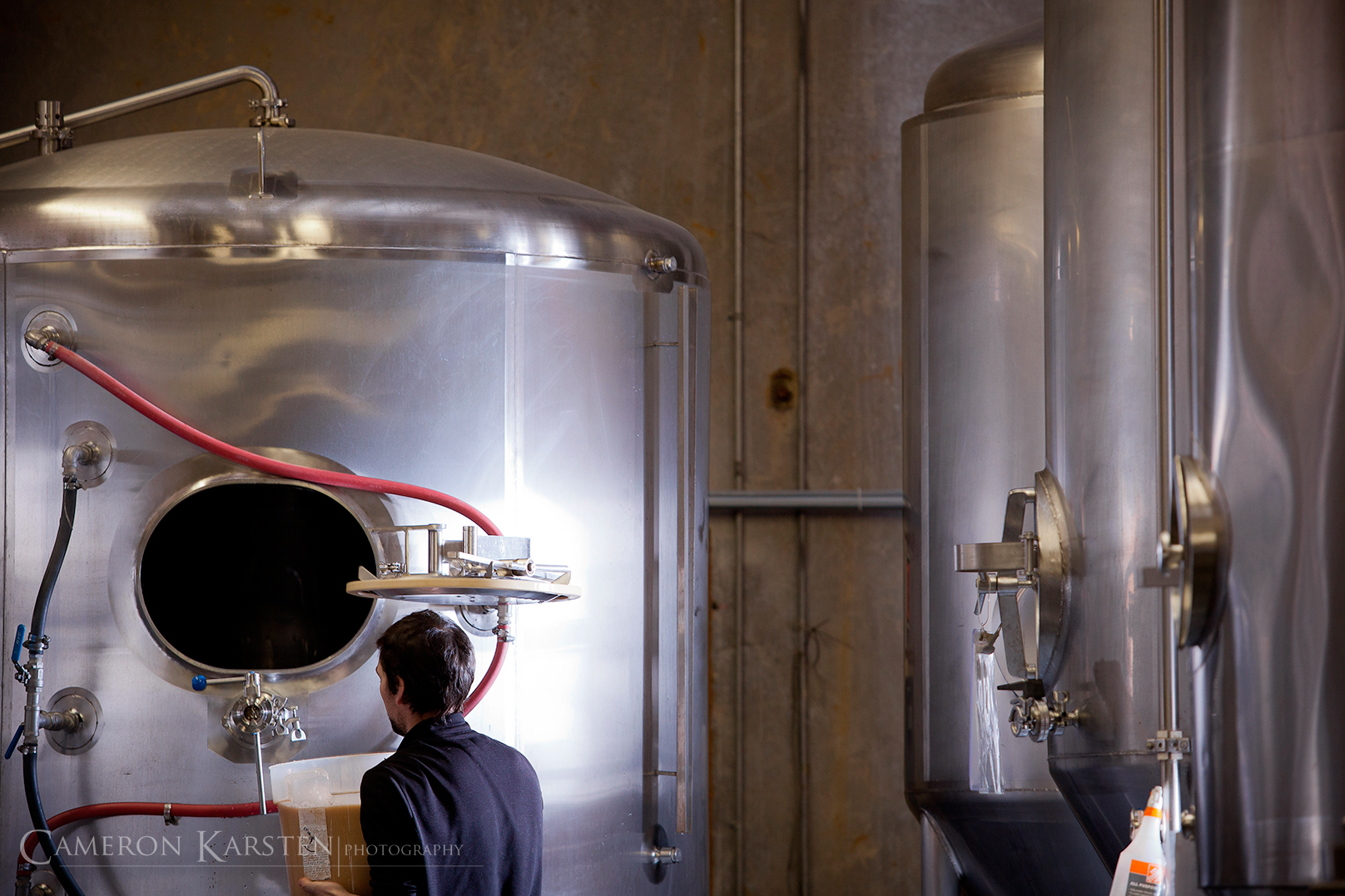
A brewer is a chef. It takes knowledge of your ingredients and skills with your equipment to create a fabulous feast. Same goes for beer brewing. You must know your tools, your ingredients, and the science behind their reactions and interactions. Nick Heppenstall, head brewer of Odin Brewery in Seattle, Washington has perfected this science into a tasty art-form of craftsman beers.

With a background in biochemistry, Nick heads up the recipes for all beers coming out of Odin Brewery. His mission is to brew a beer that pairs perfectly with the right kinds of food, and to do this, the beer must have the right density levels of water to sugars, a balanced pH level of acids, and a comfortable temperature with the right carbonation.

“Consistency is my first priority. I believe in keeping things simple. If I can do something simple and good, it’s easier for me to make it better.”

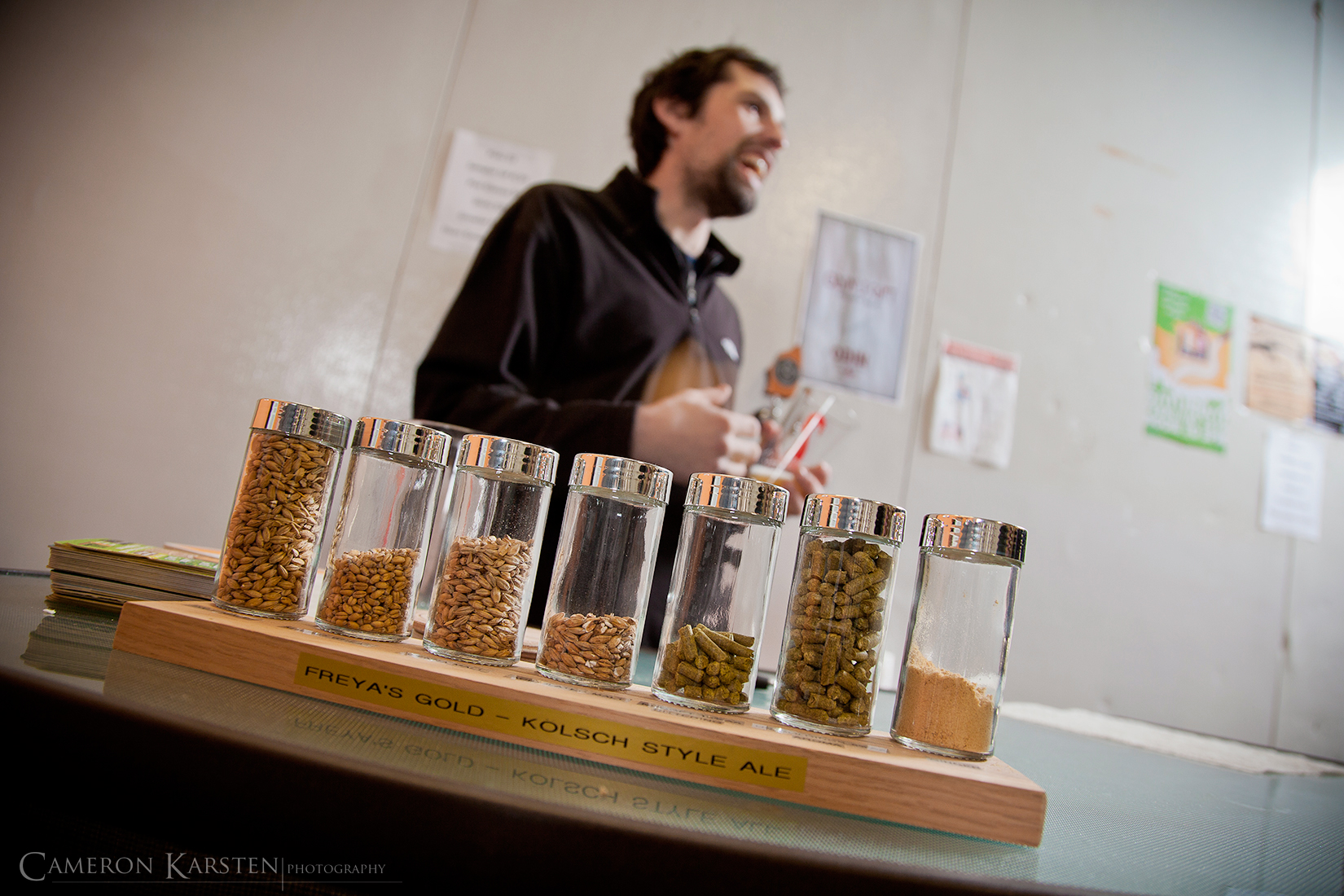
Water, grains and the essential hop flowers are key ingredients to crafting a fine brew; three ingredients combined into a myriad of concoctions to intensify certain aspects of flavor.  Next add nutmeg, orange peel, extra sugar, or a compound called amylase to discover sweet palettes, higher alcohol percentage or a drier taste.

“My experience in microbiology has been absolutely valuable to my understanding of brewing beer. Anyone who want’s to brew good beer should study microbiology.”

“Beer Fest is a great movie, but I prefer Strange Brew!”

Photo Essay: Hair by Firefly (Bainbridge Island, Wa)

I had the pleasure to receive a call from past clients at Hair by Firefly, Bronwyn and Todd Baylor of Bainbridge Island, Wa.  Together, with LK styling and Alexandra Jeanne Lorenz modeling, we created some stunning images that reflect their style and skill as artists.

Photo of the Day: Beer’s Essential Ingredients

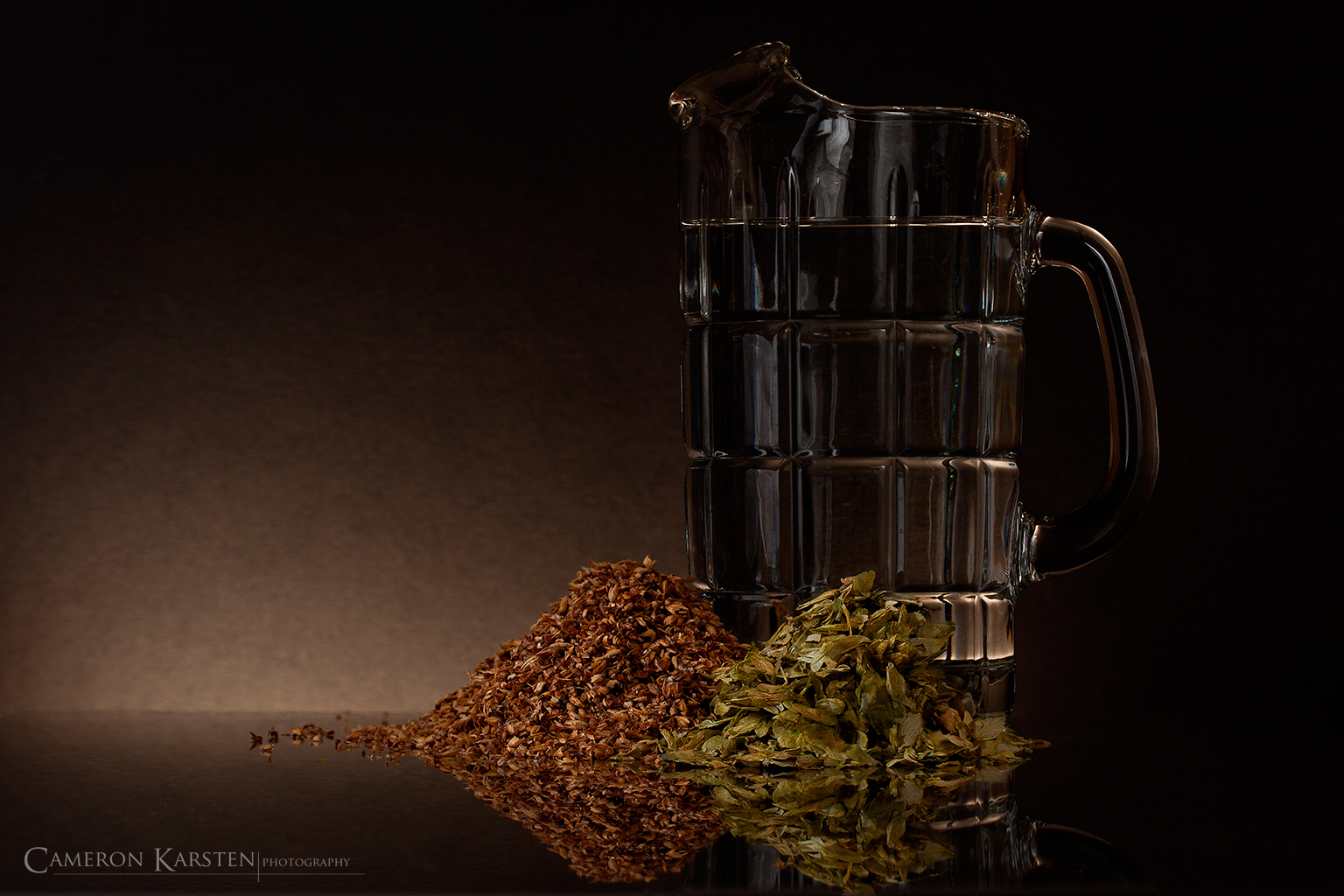
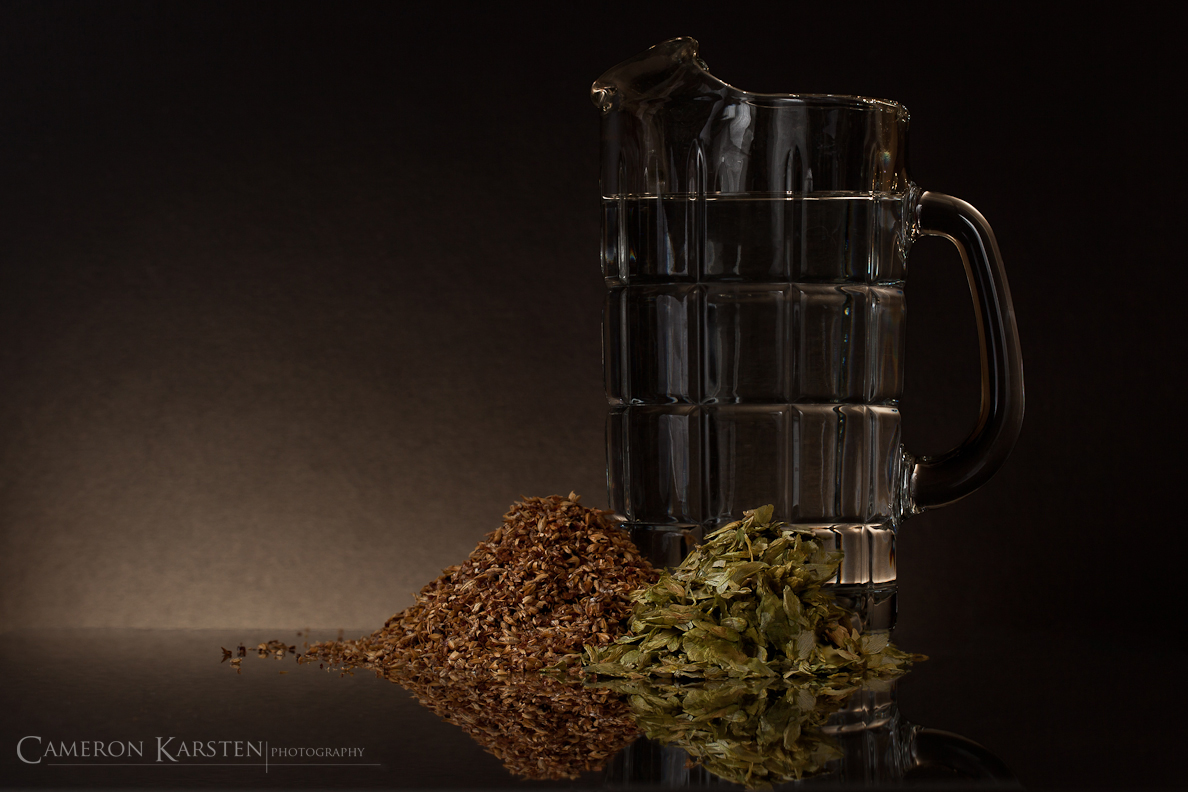
Water, cracked grain and hops flowers from the hop vine.  Three essential ingredients make the base of any beer.  Add yeast and time, and your alcoholic beverage is ready.

For this shot I used the exact same lighting set up as the previous entry, but took two exposures for the final.  One for critical focus on the dried hops and cracked grain, and another for the water pitcher.  In PS5 I combine the two images with layers and masks for the final cut.

Location: Cameron Karsten Studios, Bainbridge Island, WA

Camera/Lens Specifics: Canon 5D Mark II with Canon EF 100mm f/2.8L IS USM Macro Lens

100mm, 1/5 sec at f/10, ISO 100, tripod mount.

Post: Adobe LR3 & PS5

Photo Essay: Midnight With Light

Cameron Karsten Photography offers a professional photography service that draws excellence into any industry, specialized to make any business, family and event shine in the light of infinite creativity. Contact Cameron Karsten for photography services in senior portraits, weddings, commercial, travel and fine art photography.  Extended services included fine art printing, matted and framed.  cameron.karsten@gmail.com/206.605.9663

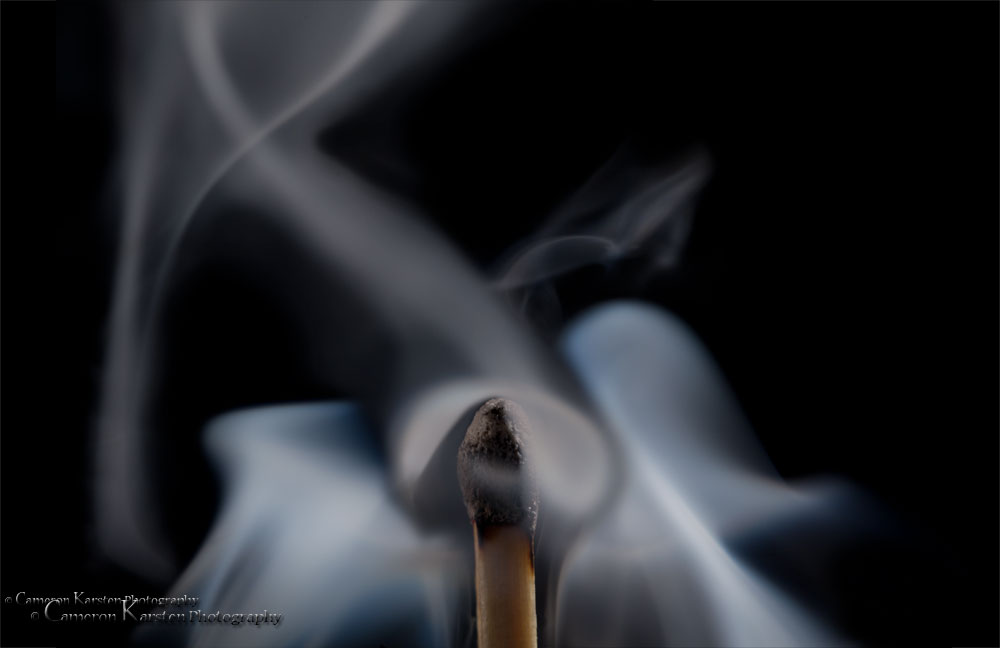
Photo of the Day: Playin’ Wit Fire

Matches go up, and matches go out.  Playing with fire.  Which one is your favorite?

Location: SCCA Studios, Seattle, Wa

Camera/Lens Specifics: Canon 5D Mark II with Canon EF 100mm f/2.8 L Macro IS USM

100mm, 1/60 sec at f/8, ISO 200.

Post:  Adobe LR3 & Photoshop CS5

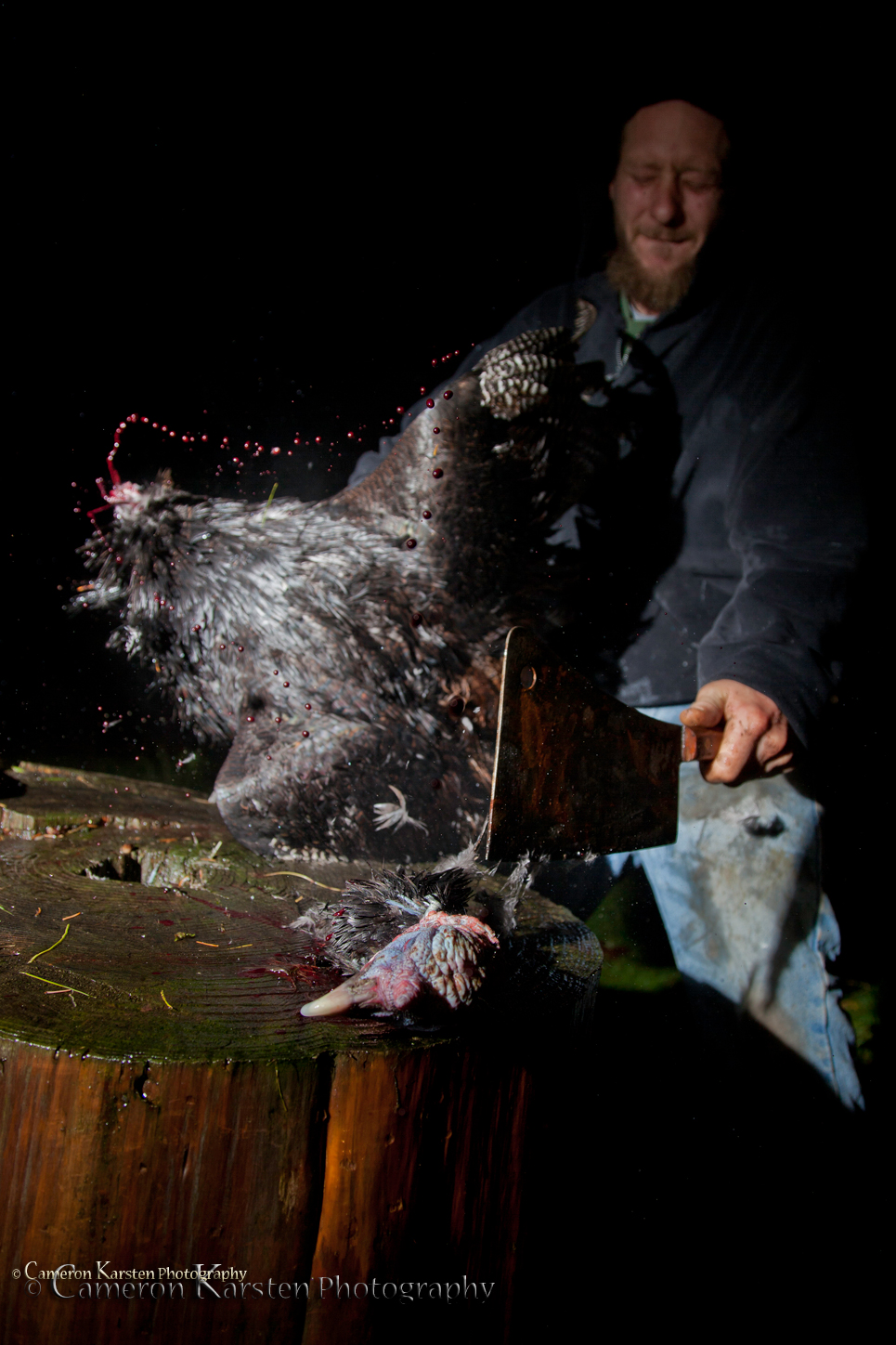
Photo of the Day: Turkey Trot

Thanksgiving preparations.  An evening of slaughtering organically raised, homegrown and home-cared avians including turkeys, ducks and chickens.

Location: Bainbridge Island, Wa

Camera/Lens Specifics: Canon 5D Mark II with Canon EF 24-105mm f/4 L IS USM

24mm, 1/100 sec at f/4.5, ISO 100.

Post:  Adobe LR3 & Photoshop CS5

Photo of the Day: Halo’d

Location: SCCA Studios, Seattle, Wa

Camera/Lens Specifics: Canon 5D Mark II with Canon EF 100mm f/2.8 L Macro IS USM

100mm, 1/60 sec at f/8, ISO 200.

Post:  Adobe LR3 & Photoshop CS5

Photo of the Day: Smokin’ Angel

Location: SCCA Studios, Seattle, Wa

Camera/Lens Specifics: Canon 5D Mark II with Canon EF 100mm f/2.8 L Macro IS USM

100mm, 1/80 sec at f/8, ISO 200.

Post:  Adobe LR3 & Photoshop CS5

The Karmic Consequences of Wal-Mart (Location: Bainbridge Island, Washington)

I rose from the television, my evening’s indulgence, and walked through the crystal glare to the kitchen.

Flicking on the lights, I reached the pantry, opened its doors and pulled down two contents: a can of Equal Exchange Organic Hot Cocoa and a plastic bag of Western Family Marshmallows—jumbo-sized.

Outside, a layer of clouds blocked the night sky and a sheet of rain piddled on the patio.  As the teakettle came to a boil, I turned down the gas flame and filled my mug.

The powdered chocolate and white puffs of sugar stirred, and the marshmallows dissolved into sweet perfection.  I wondered: is true sustainability possible?

A Sickness At The Root

Back in the TV room, I continued watching the documentary Wal-Mart: The High Cost of Low Price.  Directed by Robert Greenwald, the film captures the stories of employees and those affected across the United States.

It’s a story of American capitalism gone askew.  Like David versus Goliath, the mega-store behemoth slams into a community and entices families with its cheap plastic products.  We hear from an employed mother forced to seek government-assisted healthcare to raise her children, and a family-owned hardware store crushed by the neighboring Wal-Mart superstructure.

The movie recalled my recent journey to Mazatlan, Mexico and the newly razed soils of tradition to accommodate the acres of asphalt and high ceilings of cheap Wal-Mart goods.  Not only has the corporation captured the minds and bodies of Americans, but now it extends across Mexico, Europe, and countless other countries.

Wal-Mart imports an outrageous amount of overseas products.  On November 29, 2004, Jiang Jingjing of China Daily reported, “The world’s largest retailer, Wal-Mart Stores Inc., says its inventory of stock produced in China is expected to hit US$18 billion this year, keeping the annual growth rate of over 20 per cent consistent over two years.”

That’s an estimated $18 billion pumped out of sweatshop factories employing the young, naïve women, men and children living in poor provinces.  According to Global Exchange, Wal-Mart employs 400,000 workers abroad.

It’s everywhere.  At the beginning of this year, just 15.59 miles from my doorstep, a Wal-Mart Supercenter opened its doors on January 31, 2007 in Poulsbo, WA.  Its 203,000 sq. ft. store provides 525 new jobs in 36 departments that remain open to customers 24 hours a day, seven days a week.

What’s more amazing, apart from the $35,000 donated to local organizations through its Good Works community involvement program, is the fact that twelve miles down the road is another Wal-Mart Supercenter in Silverdale.

The Accomplice In The Mirror

As always, my cocoa was delicious.  Let it be known hot cocoa without marshmallows is not the same.

Continuing with the film, I felt a pang of guilt.  Here I was, drinking organic hot cocoa fairly traded through the worldwide network of small farmers and co-ops, yet I topped the sustainability with gigantic, jumbo-puffed, falsified sugar marshmallows.

No, the marshmallows were not organic, fairly traded, or manufactured with conscious decisions.  They were packed, shipped, stacked and stored for months.  They were not sustainable; the plastic bag unsalvageable—America’s weak recycling programs will not help this time.

The movie ended.  I went to the kitchen sink and washed my brown, sugar-stained mug.  I opened the pantry and perused its contents.  I took note of the products: most were organic, purchased in bulk.  They were stored in containers able for reuse or recycling.

They were fresh and limited; only the necessities and few luxuries, not piled with the excesses of your average soccer-crazed Mom in an over-zealous fear of Judgment Day.  But still…those marshmallows.

Despite my reassurance about the impact I was making on the world, I felt I needed to do more (or less).  This yearning carries me into each and every experience.  It’s one of caring—for the world, for our family of brothers and sisters.

It’s a desire to look forward into the future and make sure we have preserved the beauty of the land and its resources for generations to come.

What more can I do?  What more can we do to better our minds and lifestyles?  And what more can we do to make a difference in the way economies run so economic tyrants like Wal-Mart return to their more modest roots.

Sam Walton, Wal-Mart’s founder, once said, “You can’t create a team spirit when the situation is so one-sided, when management gets so much and workers get so little of the pie.”  I wonder if today’s CEO Lee Scott remembers his words?

The Karmic Consequences

In Mexico, I overheard a woman who had been traveling to Mazatlán for twenty-five years.  She was grateful for the new Wal-Mart and Sam’s Club.  Now just a mere five-minute pulmonia ride, she buys all her groceries as if she were back home.  “We arrive. We shop at Sam’s Club.”
I found myself that night in the heart of Old Mazatlán, wandering the Centro Historic in Mercado Pino Suárez.  This was Mexico.

The large market holds vendors offering traditional foods of homebrewed recipes to clothing and appliances.  It felt real.  It was a culture supporting its people.  It was their livelihood mingling among their rich traditions of agriculture, textiles and cooking.

Purchase Made

Back home, the US continues to expand and dominate other regions from the Latin world, to China, India and Bangladesh, to Europe and beyond.

There are those among us who condemn this expansion, who believe in a higher standard, not of income or consumption, but something that far surpasses the physical world.  We’ve come to recognize Mother Earth’s life.  If some don’t take notice, it’s bound to fall into hands more omniscient.

On March 15, 2007 the Wal-Mart of Poulsbo saw a glimpse resistance.  The Seattle Times reported a suspicious fire that broke out in the women’s undergarment department causing one million dollars of damage.  Nobody was injured and officials are looking into suspected arson.

Seattle Central Creative Academy: Photography Assignment (One Light Product Shot)

In the next assignment at Seattle Central Creative Academy, I had to create a product shot using only one tungsten source light.  With a white screen as backdrop and Desisti directly behind and overhead, I used a couple C-stands and arms to hold a wooden honey stick in place.  To camera right was a golden reflector.  To camera left a silver reflective cloth.  And overhead I covered myself and the honey stick in another screen clothe to create a tent.  Once the focus and lighting was perfected, I dipped the stick into a jar of honey and began snapping.  After roughly 1000 frames, with different focal planes and lighting arrangements, I stuck with this one.  Next, I brought in a friend to sit underneath the honey stick to pretend to catch the dripping honey.  The final image was a composite of the two created in Photoshop CS5.

Reflections: Next time I would have used more reflectors to bounce the golden light back to the honey, and I would have used a female model with red lipstick, instead the male model who was available.  Also, upon further reflection, the proportions are off with the lips too small against the large honey stick.  Otherwise, I enjoy the honeycomb lighting and the effect the shot creates.

Location: SCCA Studio, Seattle, WA

Camera/Lens Specifics: Canon 5D Mark II with Canon EF 100mm f/2.8 L Macro IS USM

100mm, 1/8 sec at f/8, ISO 100, tripod mount, trigger fired.

Post: Adobe LR3 & Photoshop CS5