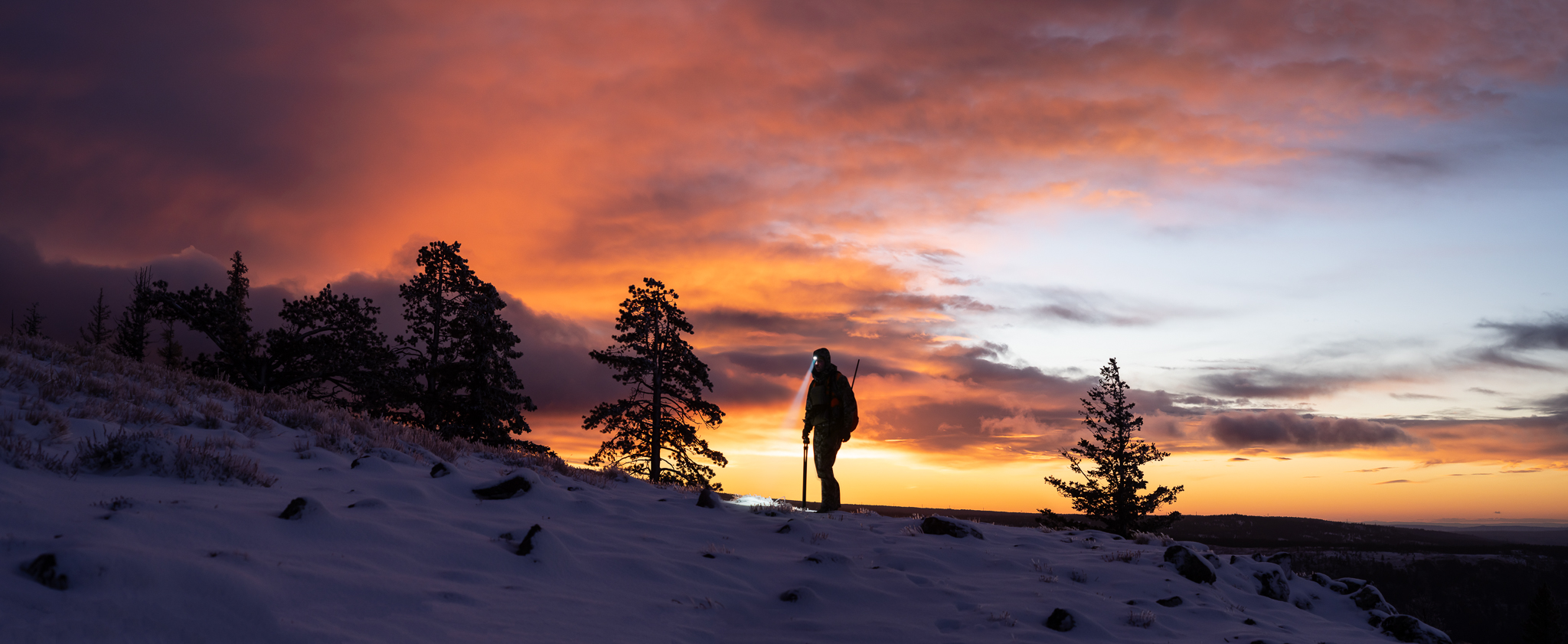
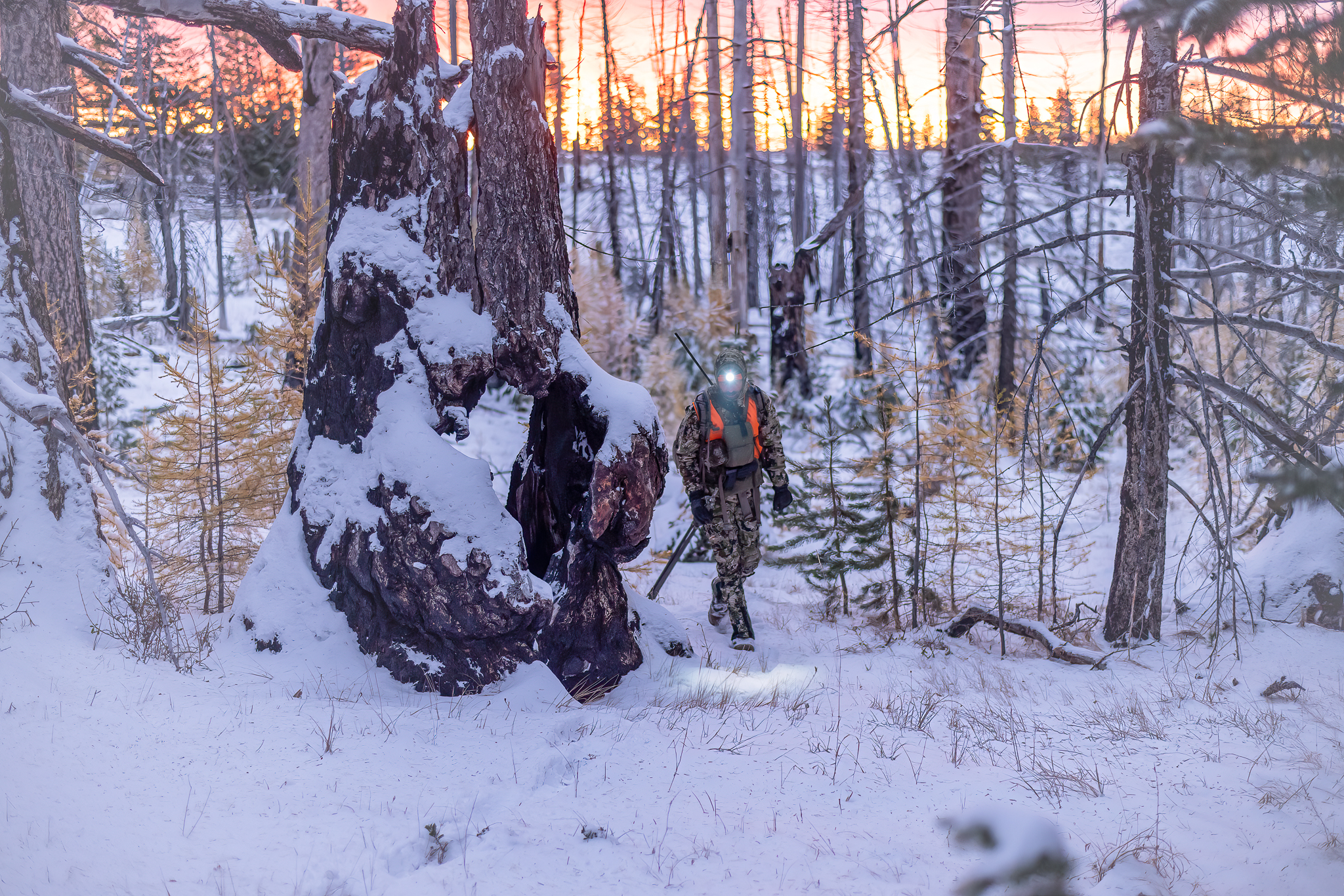
On the first clear morning, the dark atmosphere freezes. I’m guessing it is 6AM. And in the northern mountains, it is not yet winter as told by the calendar year. But this ethereal environment already reads cold, driving deeper with Mother Earth’s immemorial hand of time. She’s waving at us in this wintertide moment when I suddenly stop to look away from her, and up into the night sky I find that array of stars, unpolluted and rich, far off in an endless view. With my neck craned, I see zero clouds blocking the scene, just snowcapped mountains on the very edges of my peripheral view. And yet somehow the beam of my headlamp illuminates something falling around me. Above and everywhere I look there is a fine dust. It glistens and sparkles like billions of priceless diamonds. The atmosphere is deeply frozen. Sky is clear. A breeze pushes around an imperceptible and now perceptible degree of moisture. And yet within this mystical experience it is snowing – the finest of snow – across the landscape. It is then I realize I have never felt so close to the stars.
Day 3 of 5, or maybe Day 4 of 6. I am in the mountains with three colleagues who are hunting elk. For a couple of years my friend Daniel has asked me to join him to document the experience, and months prior I finely agreed. Now we are on our way to the morning’s location overlooking a long valley. There we will sit and wait in twilight. He will wait for elk, while I will wait for the sun to rise to warm my body.
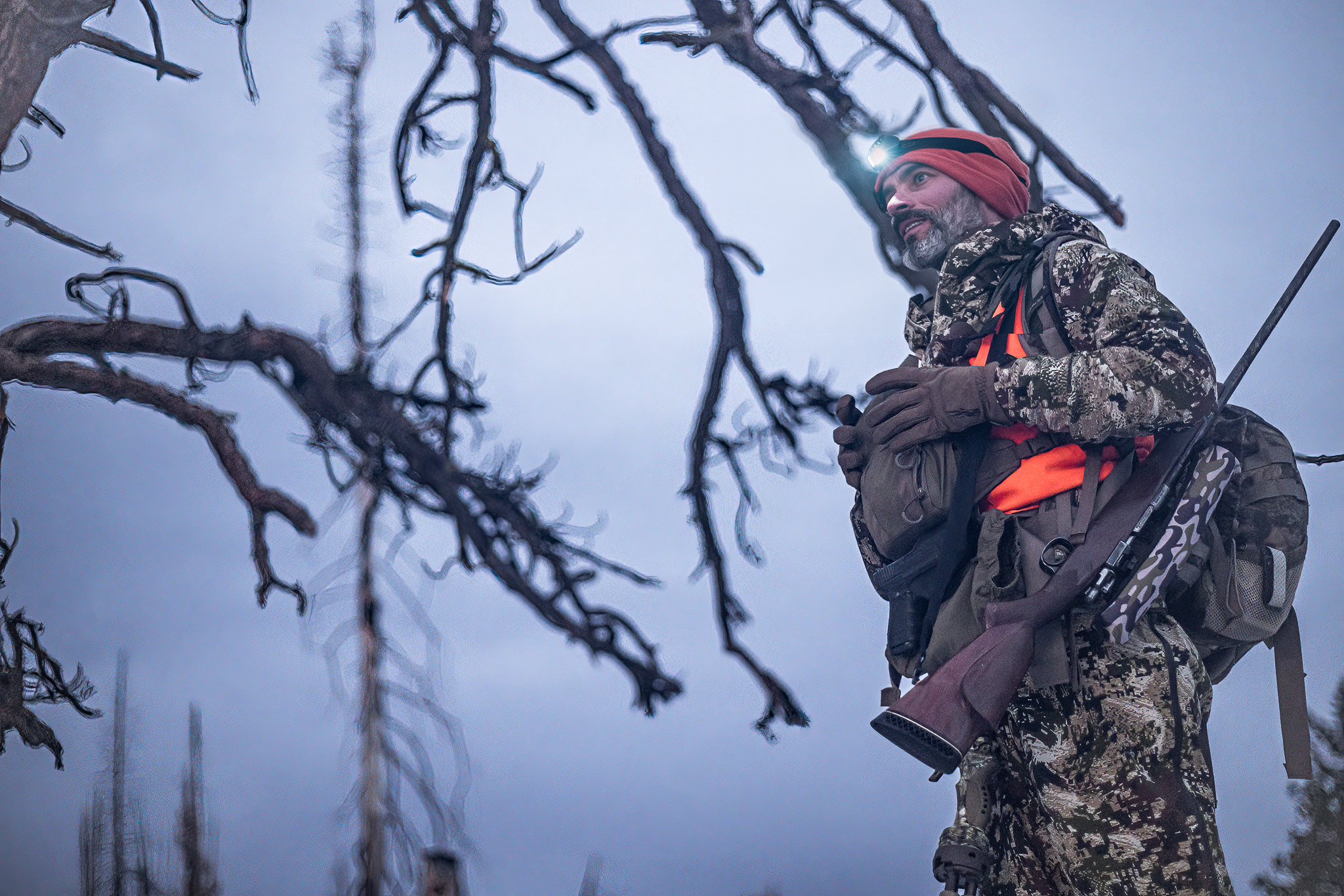
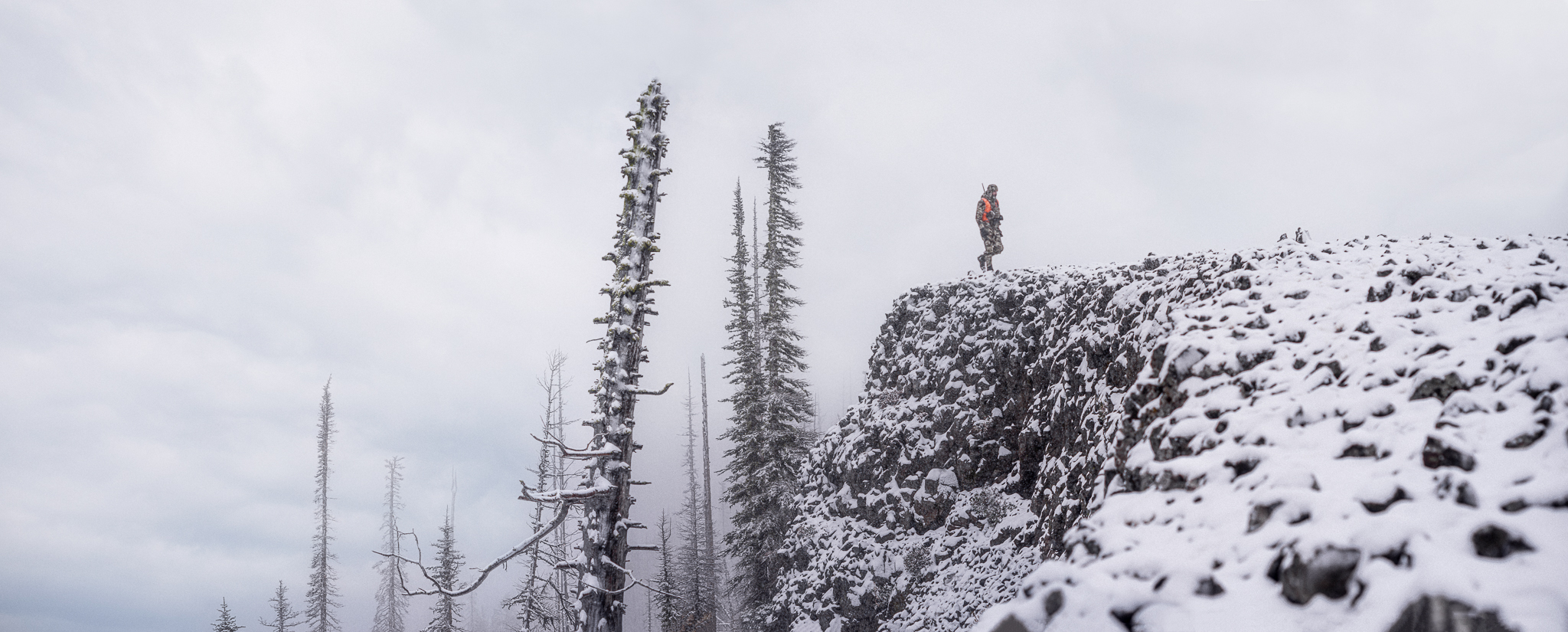
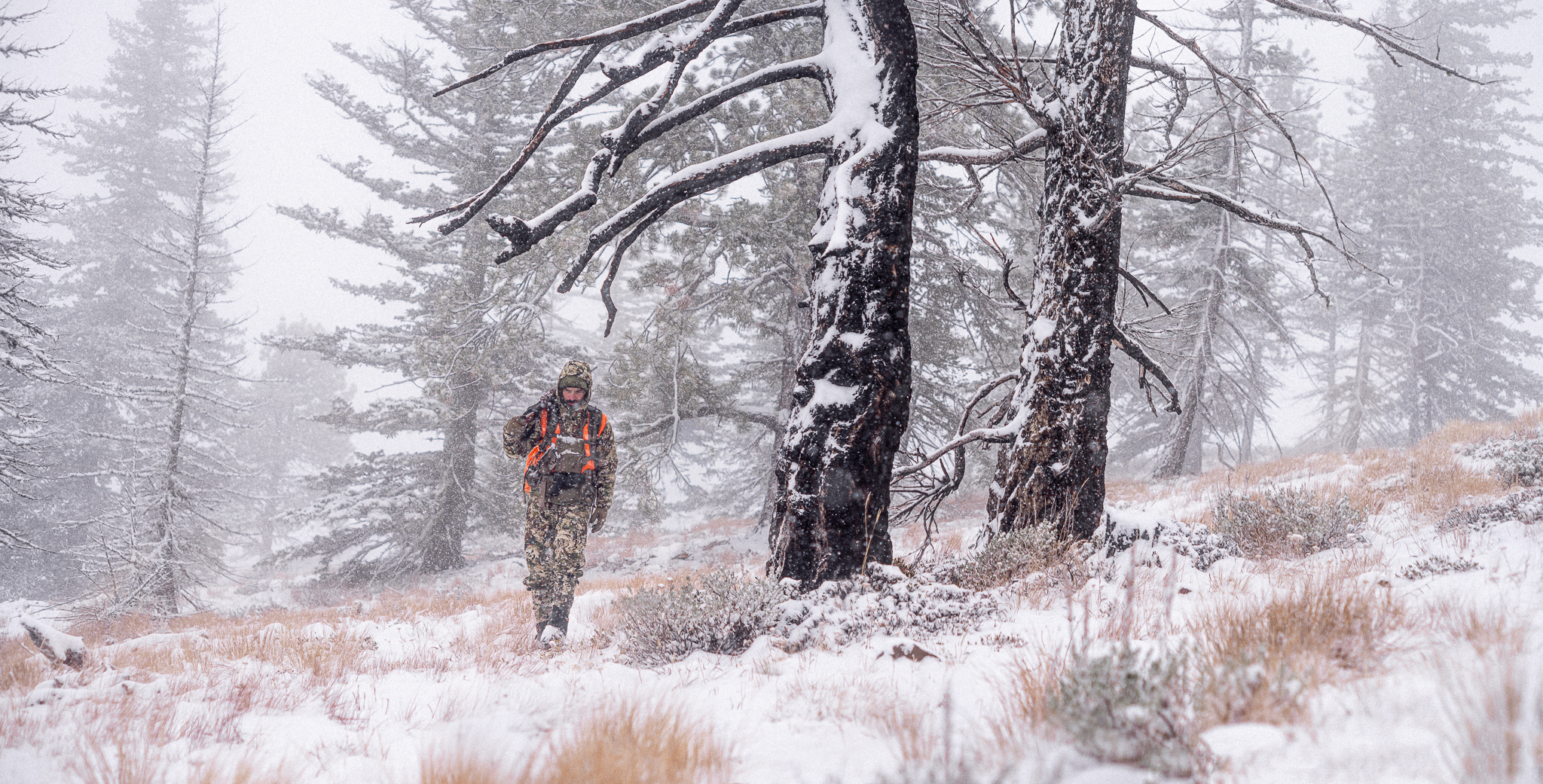
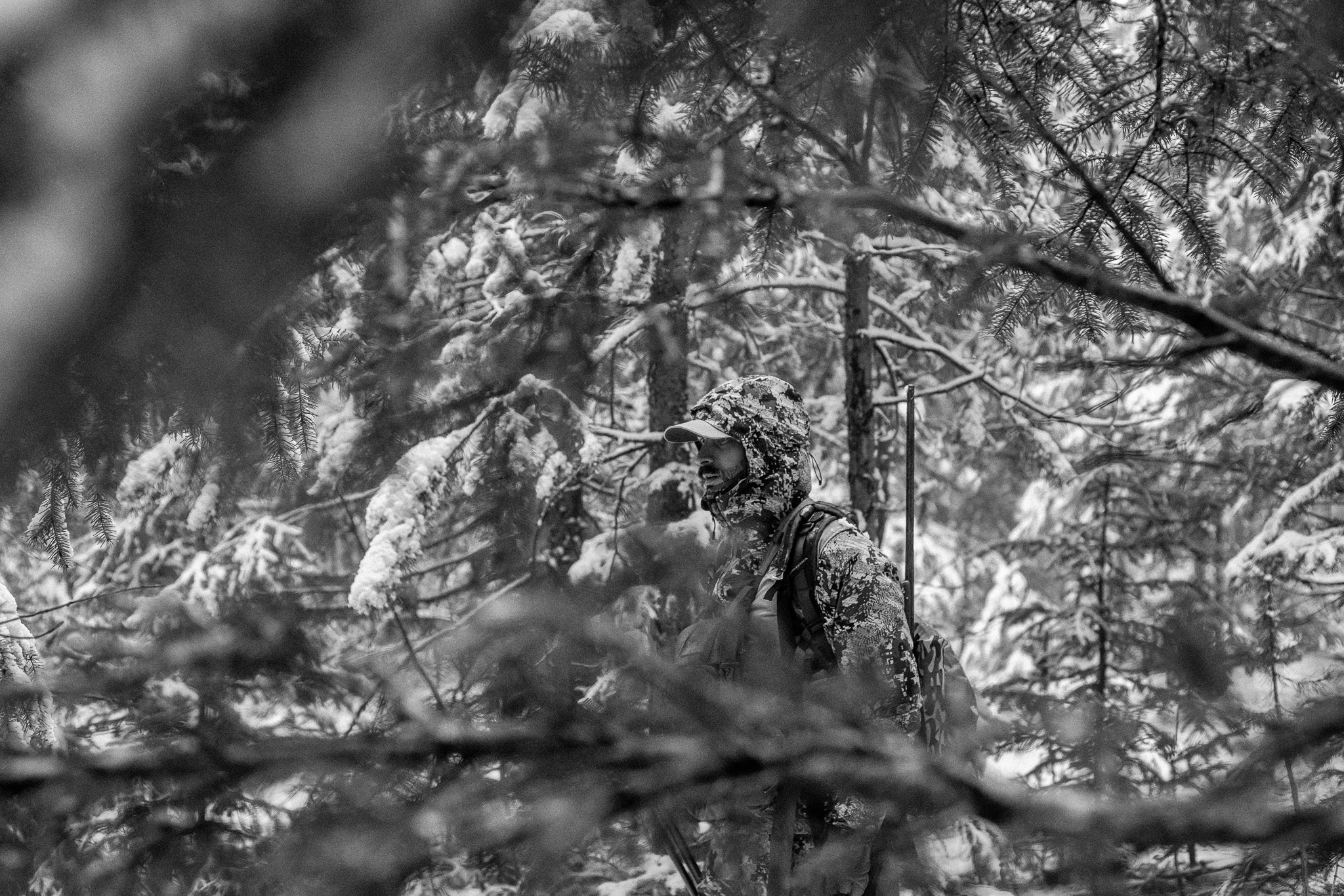
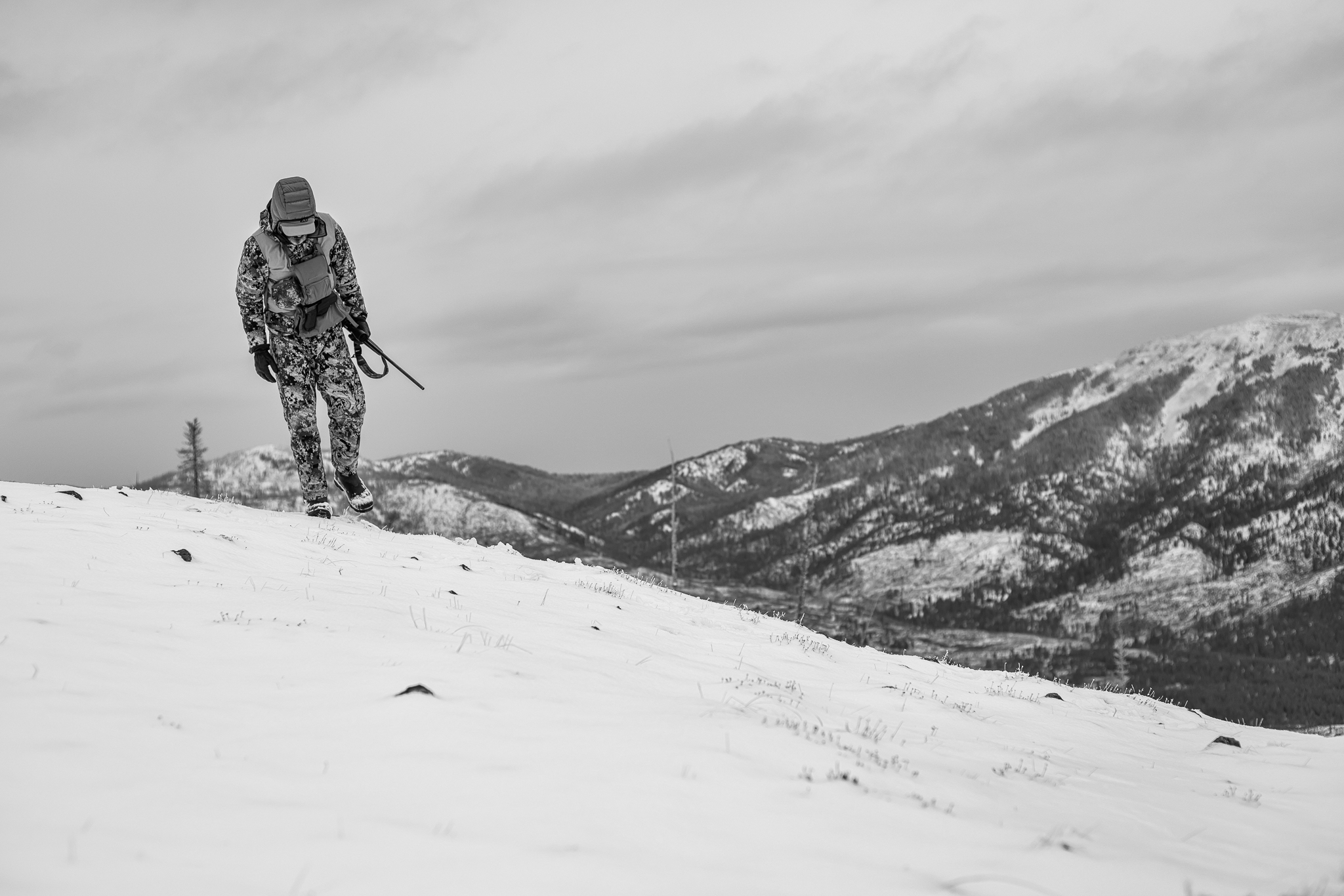
I get colder the longer I stare up at the sky, watching a cavas of diamonds painted high in the ceiling, becoming enamored by the crystal sheets descending all around me, wherever the light beam glances. Up ahead, the team still walks, single file, spaced apart by 20 feet or more. All I see of them are silhouettes, cast by the light of their headlamps watching the passing snow at their feet. The three of them shoulder rifles and each a small pack with an extra layer of warmth, provisions for the day, maybe a knife or two, binoculars, cigarettes and joints or whatever, and water.
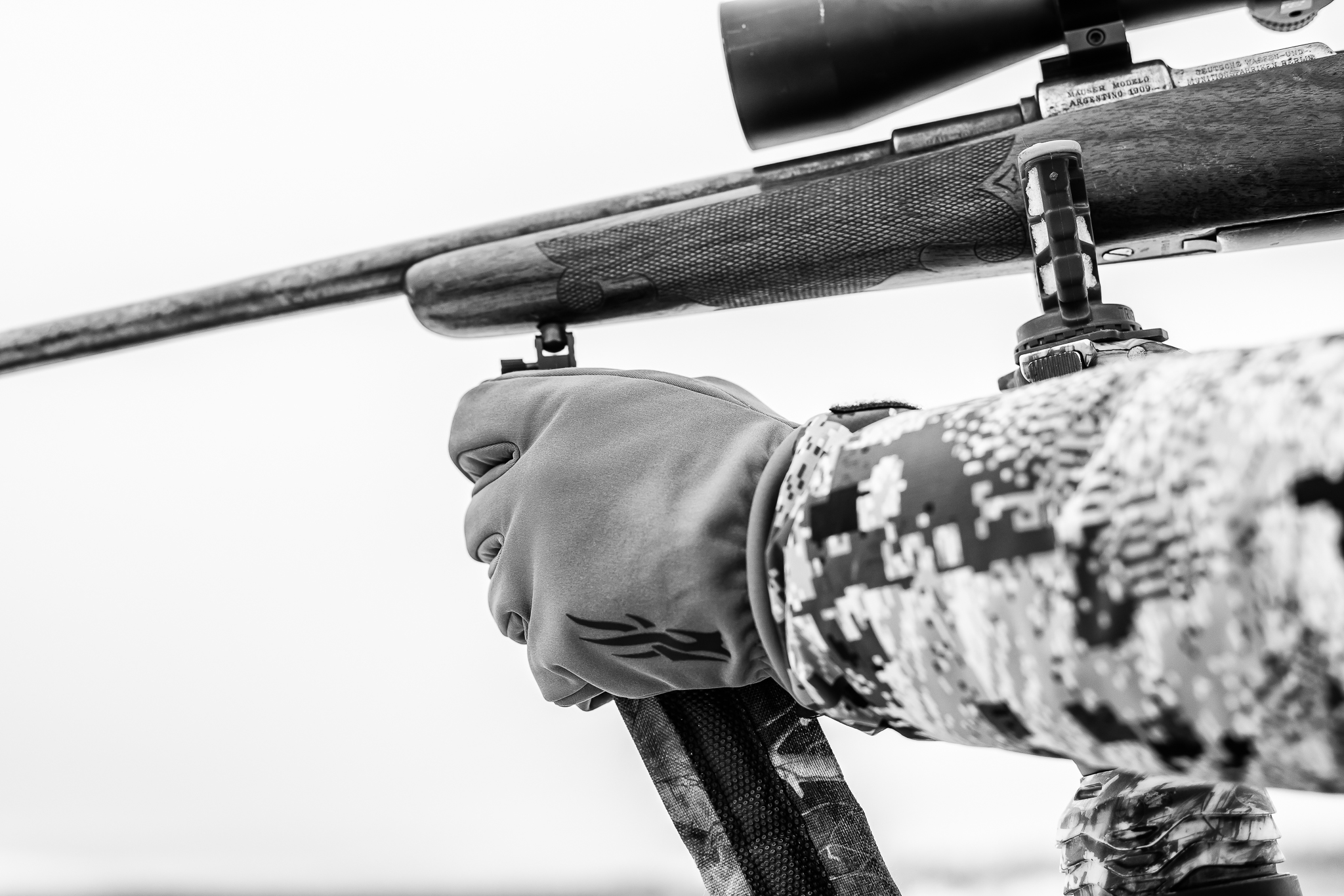
My rifle is my camera, slung over my shoulder. On my back I carry an arsenal of tools to capture the story; prime lenses, a motion camera, another photo camera, extra batteries, and a drone. I have little room for food and much else. However, in my pants pocket is a flask, and switching between my hands is a gimbal system for the motion cam to steady the shot. A small plastic tarp covers its electrical components from the water and wind, from those silent diamonds. I switch the gimbal from one hand to the other before continuing onwards, staring at the snow before me, carefully aligning to the path of least resistance led by my colleagues.
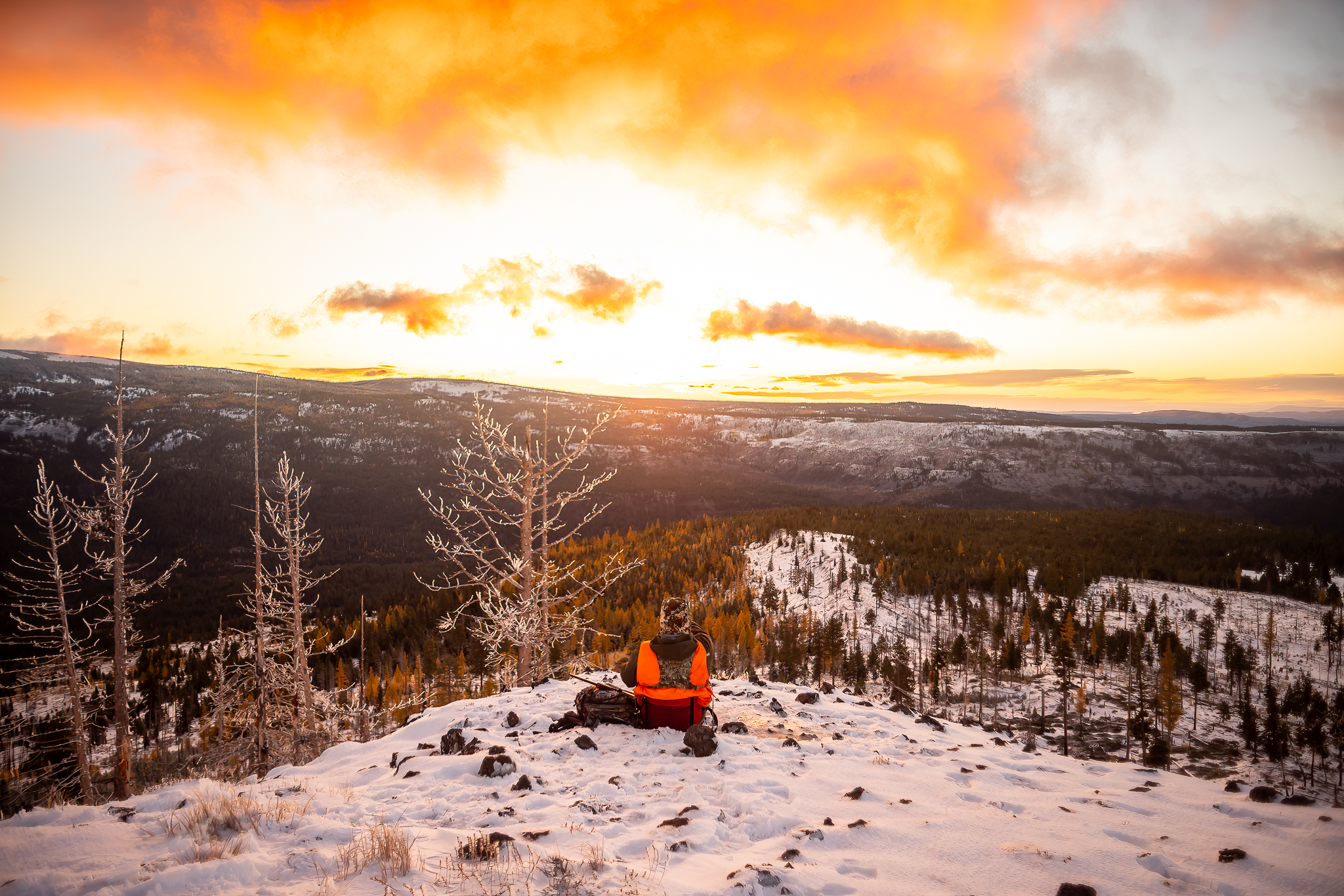
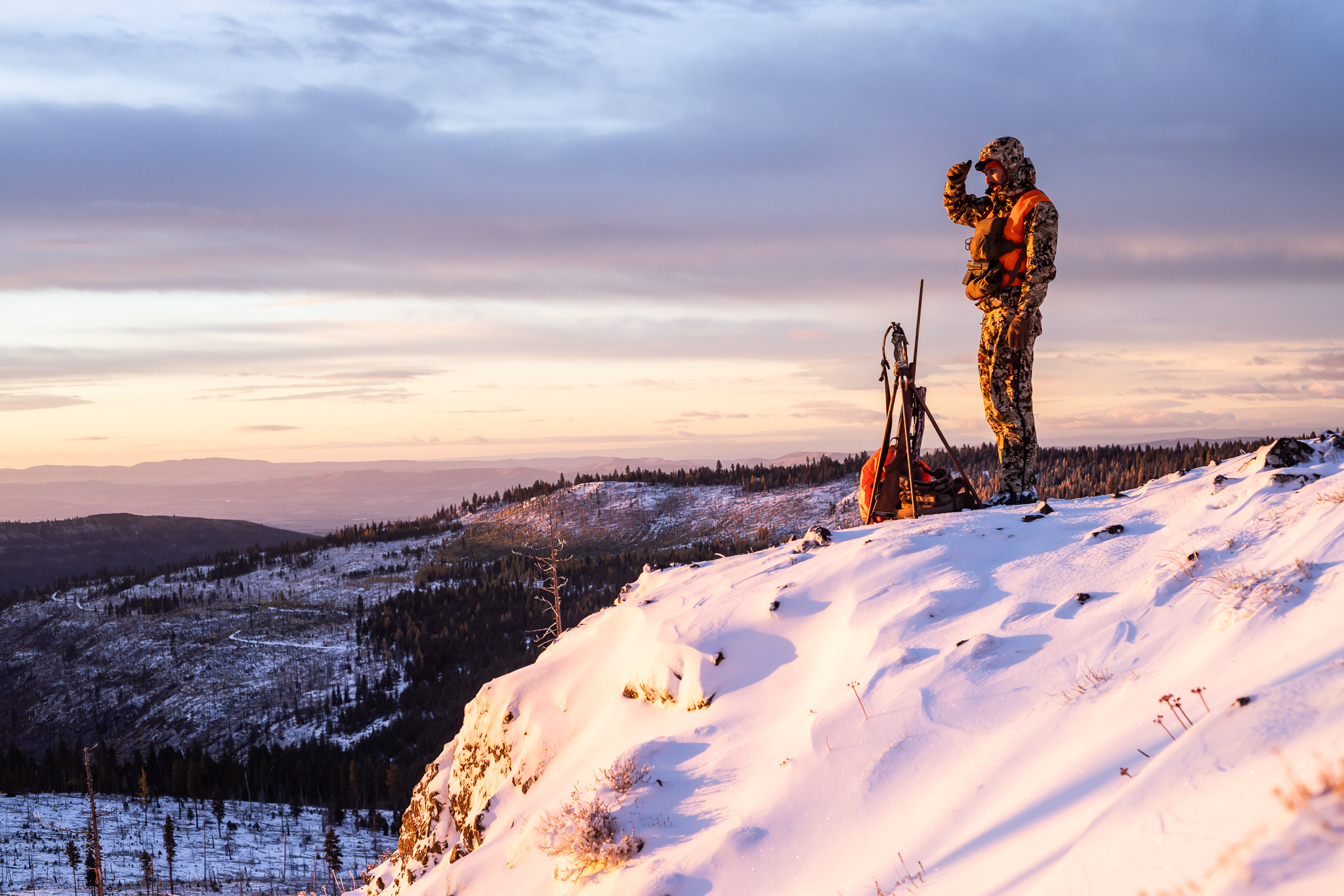
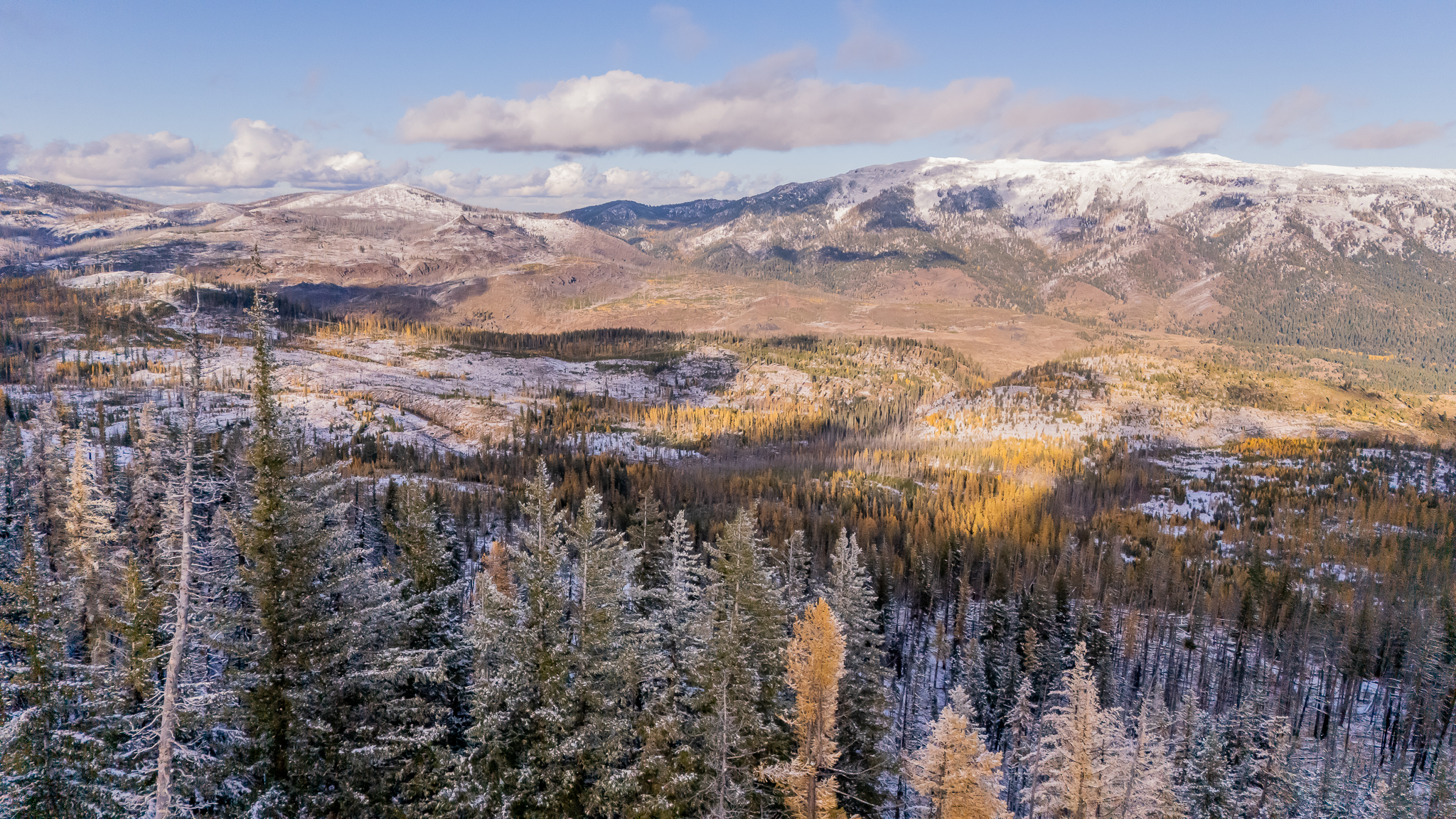
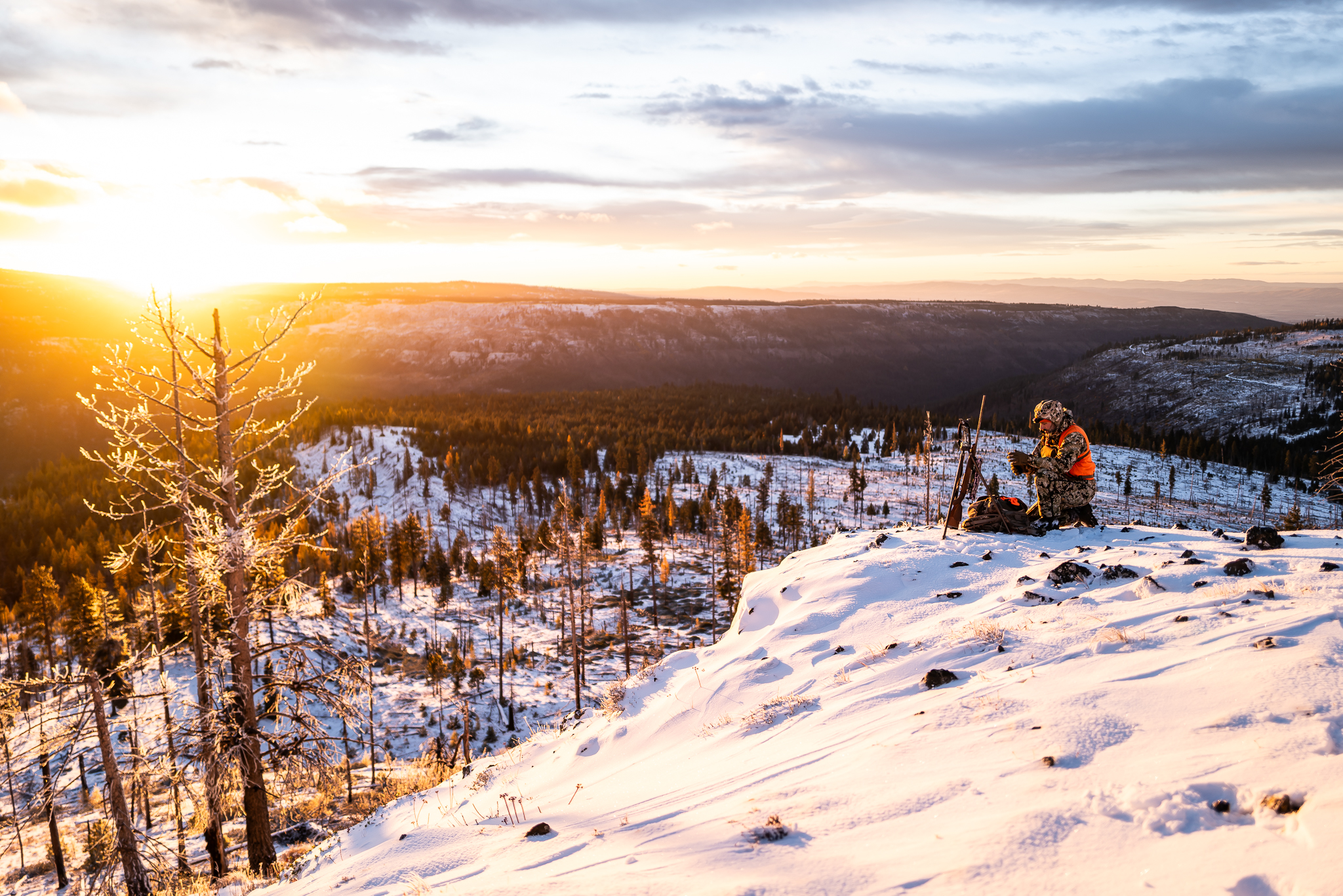
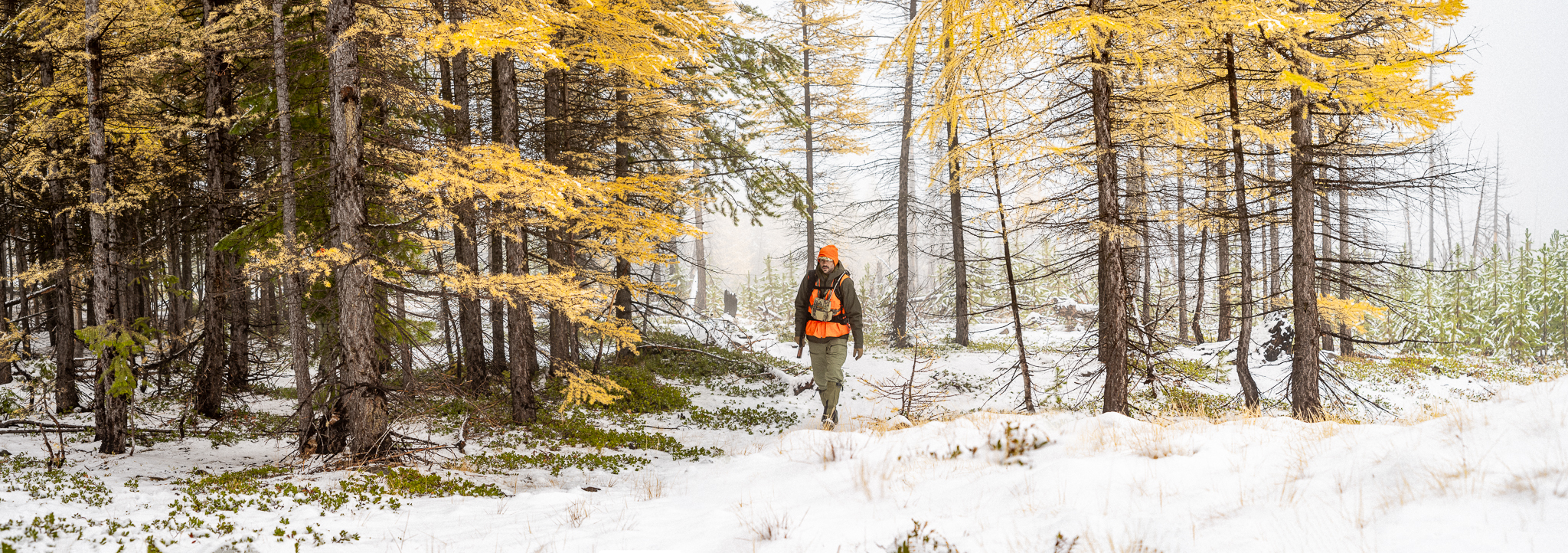
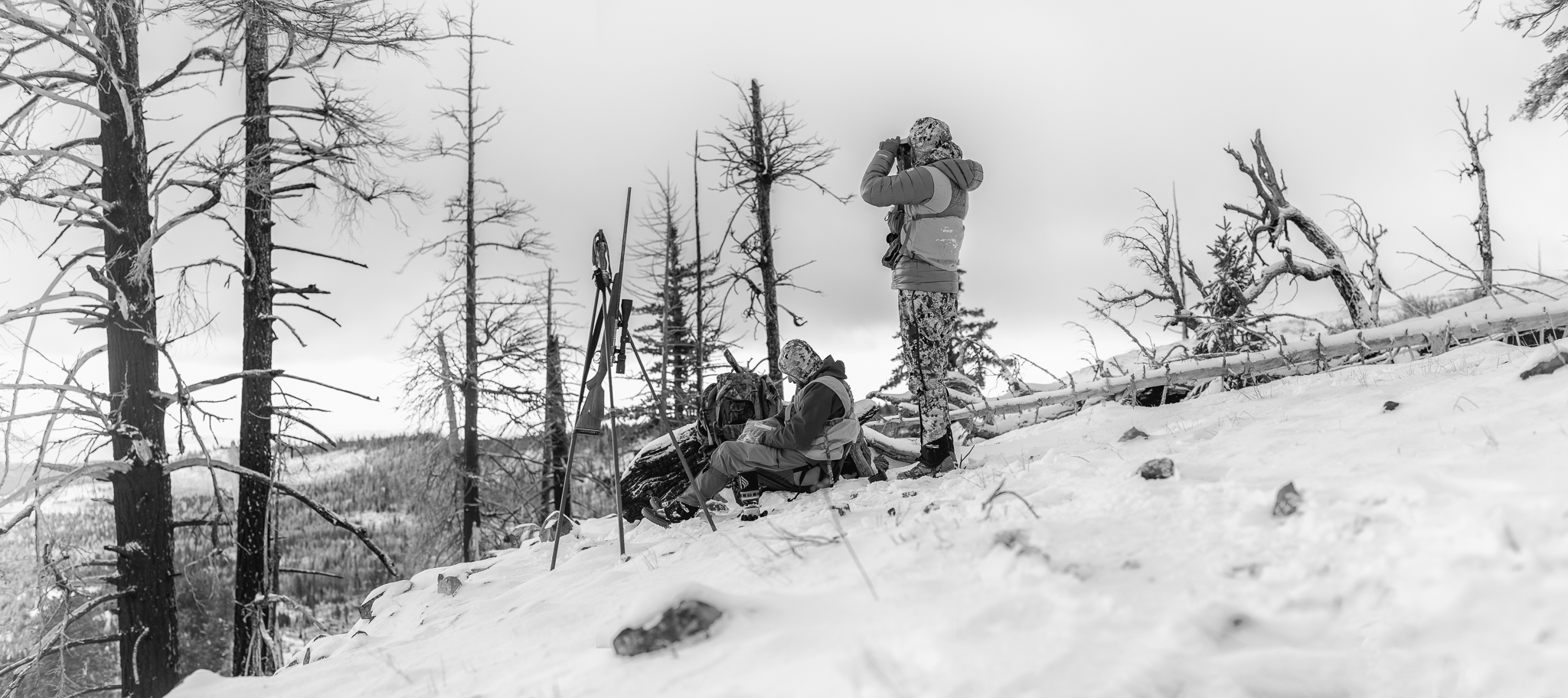
We reach our spot before sunrise, and quickly darkness becomes light. I sit with him having parted ways with our two other companions, each at their own respective hunting spots. Here we will wait for hours, silently witnessing the landscape awaken in dazzling colors from deep purples and blues and vibrant oranges, patient for Cervus canadenis to emerge from the yellowing larch forests below. As we sit and watch, our minds compose of the many different thoughts found in isolation. We are removed from the human world. Its cacophony lying a region away, days behind us. The innate responsibility of hunting takes over, while our camp awaits miles to the west, with fire, with food. Only the synthetics of modernity in the form of sleeping bags and garments take us from this prehistoric consciousness. No Internet or cellphone coverage. No tools but our two feet and our two hands. Within the weather and the quiet of nature we look for Her movements and the sounds of their language.
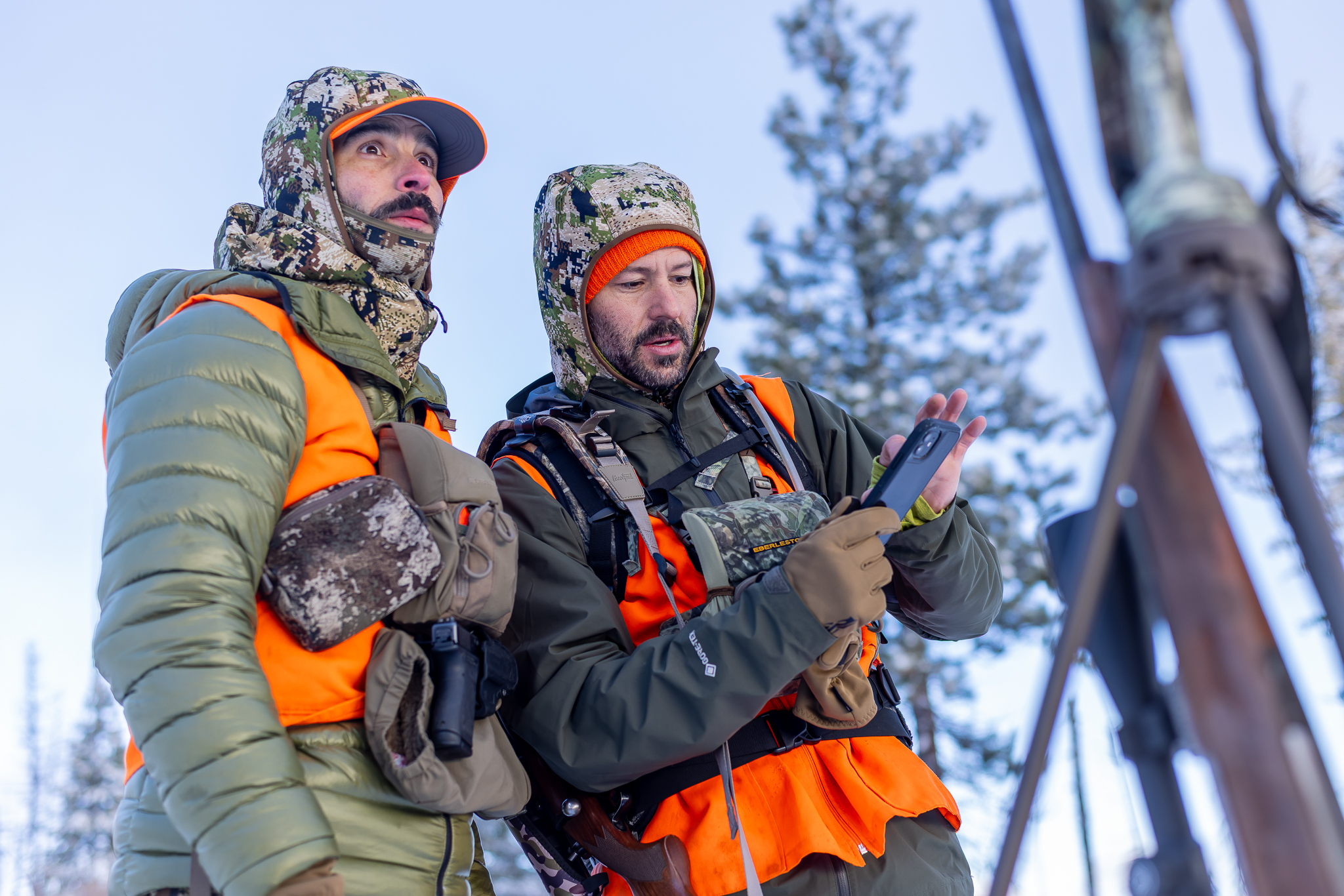
Daniel points off into the distance. He pulls his binoculars to his face. Five hundred yards away there is a clearing in the forest, and like mini stick figurines we suddenly see action. A herd of elk. First there is a handful, but over time about fifty appear, imperceptible within the flora but miraculously magician-like within the small white clearing. To us, Daniel notes, they are too far for a shot. But his hope is there are other hunters like ourselves, further in the valley who might be on the move, searching, trudging through the snow. This human disturbance, with luck, might push the elk our direction, close enough to provide Daniel a shot, that is if they don’t smell us first.
As we watch their slow amiable gate move from one patch of evergreen into another grove dotted with yellow larch trees, Daniel whispers his favorite part of the elk. It’s the backstrap, the most tender and flavorful cut running along the outside of the spine from the shoulder to the hip. With the remaining meat, he’d prepare chorizo and elk burger, freezing the game to feed his family and friends over the course of the year. But first he had to put one in his crosshairs, his first one. This is Daniel’s fifth year elk hunting, while his father Juan, an older man born in Spain who emigrated to the United States with his wife Linda and young family, has been hunting within this valley for thirty or so years. Only a handful of times has his father been successful downing an elk, but it is the hunt that draws them all back, the removal from modern society, and the return to a primal existence for at least a few days out of the year.
I whisper back to Daniel, “What happens if you shoot an elk say down there,” pointing down the embankment. “Say it’s on that hill in the valley below?”
“My dad and I have a signal we’ll make so we’ll all recognize one of us made a kill. From wherever the kill lies, we’ll gut and skin the elk and over the course of the day or following day, then hauling the meat back to camp, including the head and antlers.”
From where we were, camp was an approximate seventy-five minute hike, in the snow, with gear and weather. And between the three of them, four if I include myself, a large bull elk would easily take multiple trips to get back to camp. But the elk don’t come. Any hunters below don’t rustle them out of their protection and up towards us. But we take joy in watching them from afar, relaxed in their environment but constantly aware of the risks within the wilderness. They know nothing other.
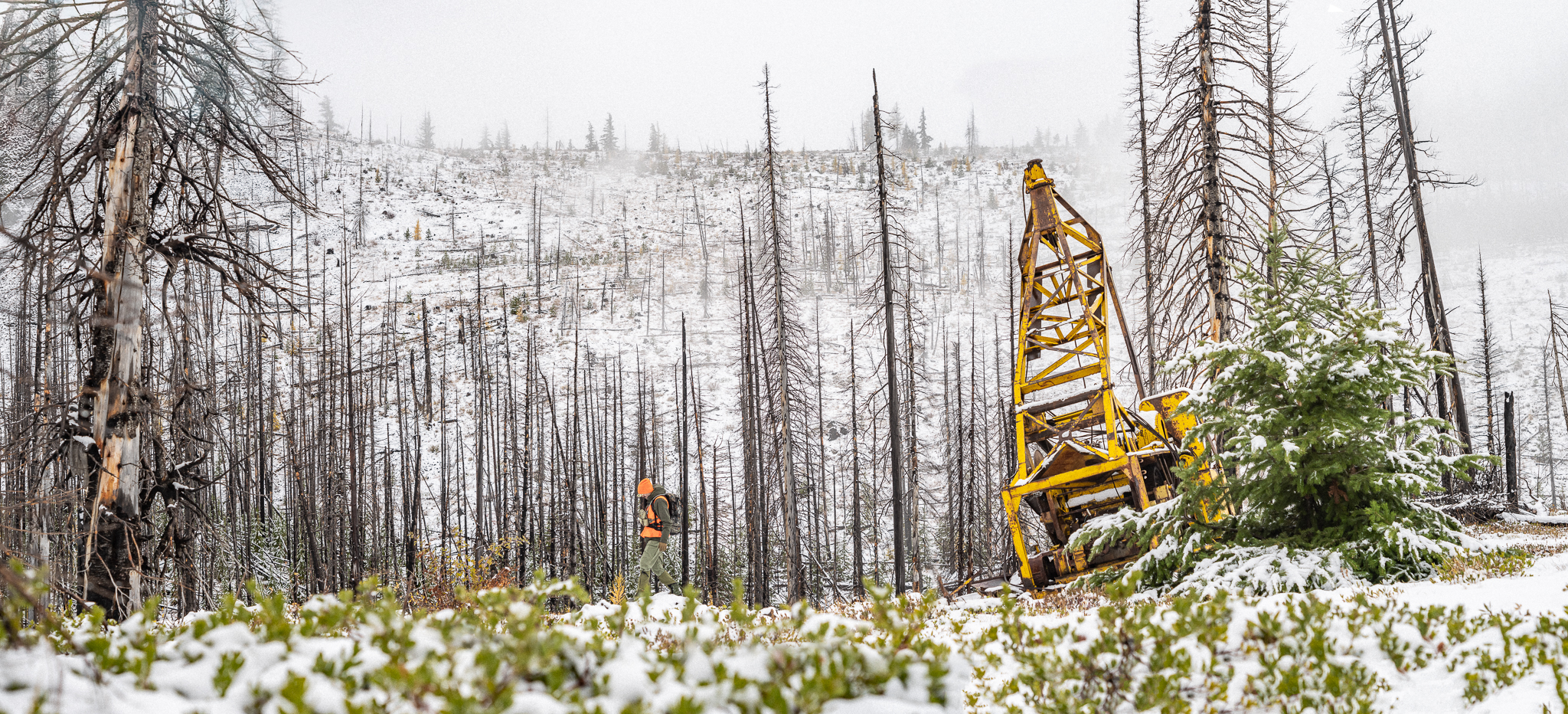
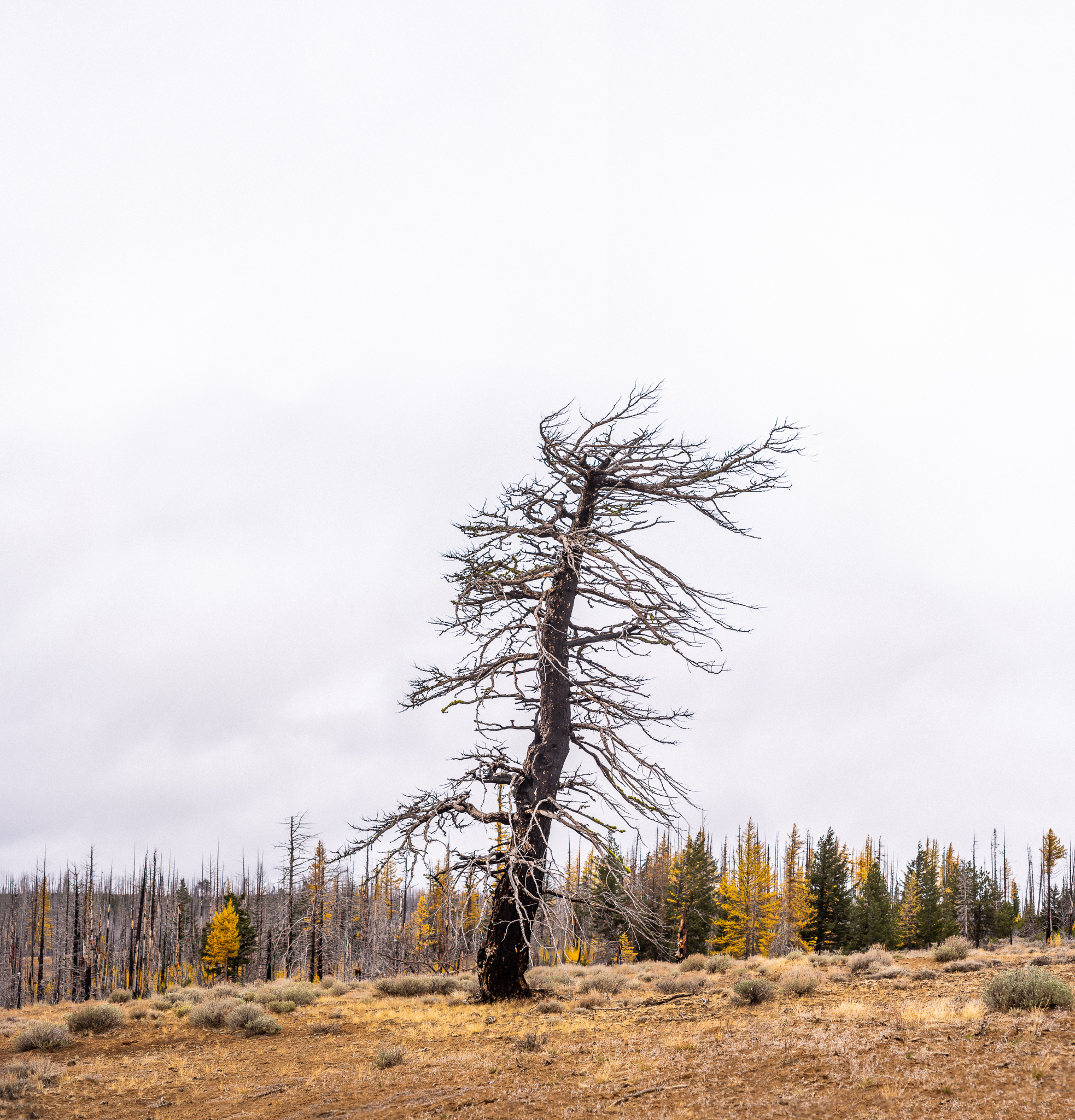
Eventually the sun is higher but the cold threatens furthermore, so we stand, stretch and load up. There are multiple modes of elk hunting, and we witnessed them. Juan prefers to stay in one spot, waiting as quiet as a mouse, for that happenstance of a herd crossing. He’ll wait all day if he has too, eight hours maybe, maybe more. We spotted other hunters doing the same. They rode in from camp on horseback, tied them up to a tree at a distance, and sat like Buddhas in camo. But Daniel’s methodology is slightly different; sit then move. Sit then move. Both style of hunting needs one another, because the sitters wait, and the movers help flush the elk. One’s yin to the other’s yang. I preferred the hybrid role of Daniel’s liking, and that is what we did, explore the hills and valleys, the streams and thickets of woods. We spotted owls, old mining equipment, and frightened deer. Crows cawed at our approach and hung high in the air, their echos ringing for what seemed like eternity.
And each night we returned, wild with anticipation of a cold beer and stories to tell – all the things we saw and didn’t see – and the feelings and thoughts had while exploring a wintry woodland, as if we had it all to ourselves. But it was elk season, and others were out there, unseeing, but most likely watching our experimental activities. And we feasted. Pallae with meat and shrimp. Tacos and burritos. Fresh pasta and marinara. And whiskey. And each night the winds returned and the snow pounded the tent. That one sunrise was all we were gifted as winter made Herself welcome.
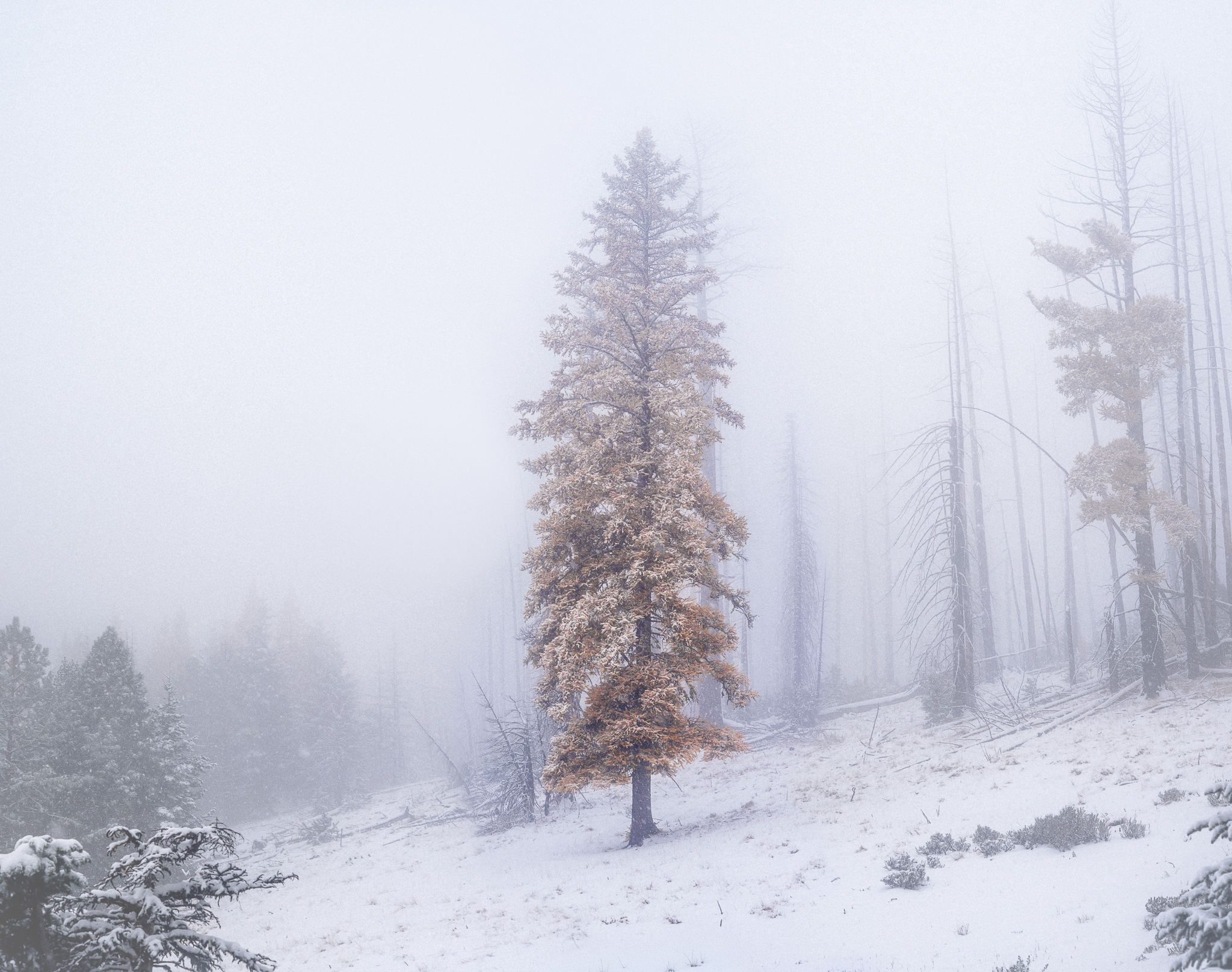
The great naturalist, conservationist, writer, explorer and all-around observer John Muir put it succinctly when we witness nature at its core, whether out in the eastern mountains as gray northern clouds roll over the terrain bringing a fresh sheet of frozen rain, to the symbiosis of all things breathing within the sweaty tropics of Earth’s rainforests: “When we try to pick out anything by itself we find it is bound fast by a thousand invisible cords that cannot be broken, to everything in the universe.”
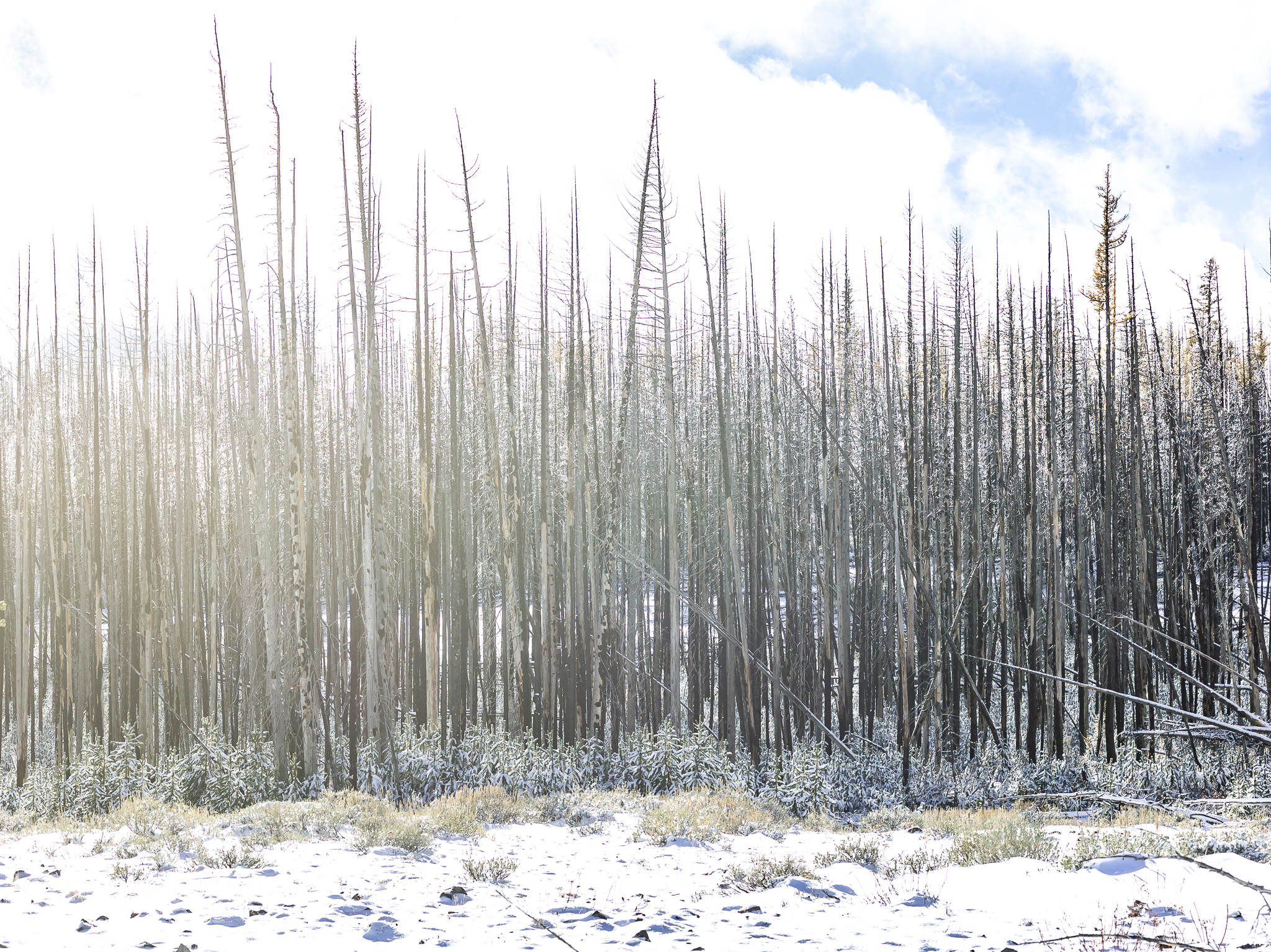
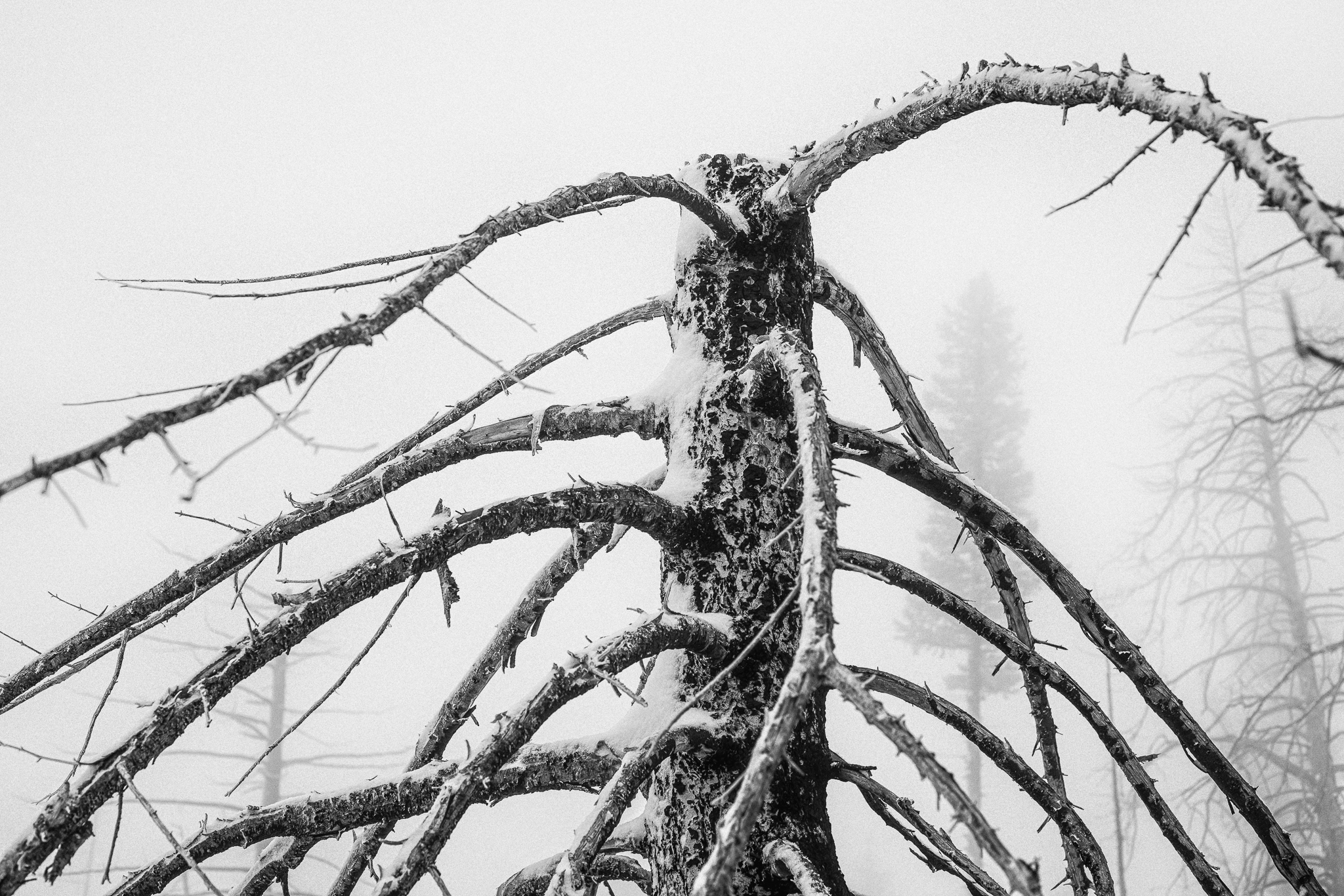
Time in nature, a nature as uninterrupted by human intervention as possible, is priceless. It is a reset to a truer existence as well as a break from the monotony of modern civilization. Looking back at the experience of days and nights on the mountainside, enduring weather and fatigue and often all-out boredom of sitting, watching, waiting in absolute silence… was as magical as being showered by a billion soundless diamonds. It is a time to withdraw into one’s Self and focus on one goal – to survive – but also to hunt for the basics food (albeit for me to capture it all as authentically and as richly as possible). And right now, still snow covered and winterized, that valley persists effortlessly; the elk hidden within the yellowing larches, the crows drifting across drafts of wind that whistle through kaleidoscopes of bare branches, while the northern clouds will soon be shifting, arriving dryer, lighter from a more southernly direction. And the hand of time will continue, as it has, undeterred by anything in its rotation, but waiting to see what we will do to the place we call home.
Watch the motion piece below:
For more, please visit www.CameronKarsten.com & www.The-Subconscious.com


 Cameron Karsten's Imaginarium
Leave a comment