Would You Like Culture With That? (Location: Mazatlán, Mexico)

In a city engulfed by corporations and Americana, the essence of true culture is always changing.

Mazatlán, Mexico.  It conjures a precision of memories.  For many years my family met once a year to live, laugh, eat and drink, recounting memories beneath the Mexican sun.

We lounged like the afternoon’s iguanas, strolled and swam like leaves in the fall, shopped the Zona Dorada with red eyes, rode horses through the waves and parasailed as if we were birds.  For once a year, The Inn at Mazatlán became our home for two weeks, where we relished in relaxation as a family conglomerate stuck together by the sticky juices of squeezed limes and empty Margarita mixes.

But every once in a while, certain members would miss the reunion and due to my direction in various travels, I was one who often missed these annual Mexican fiestas.  After three consecutive absences, I was looking forward to the next year’s, which reintroduced me to a culture buried within the memories of youth.

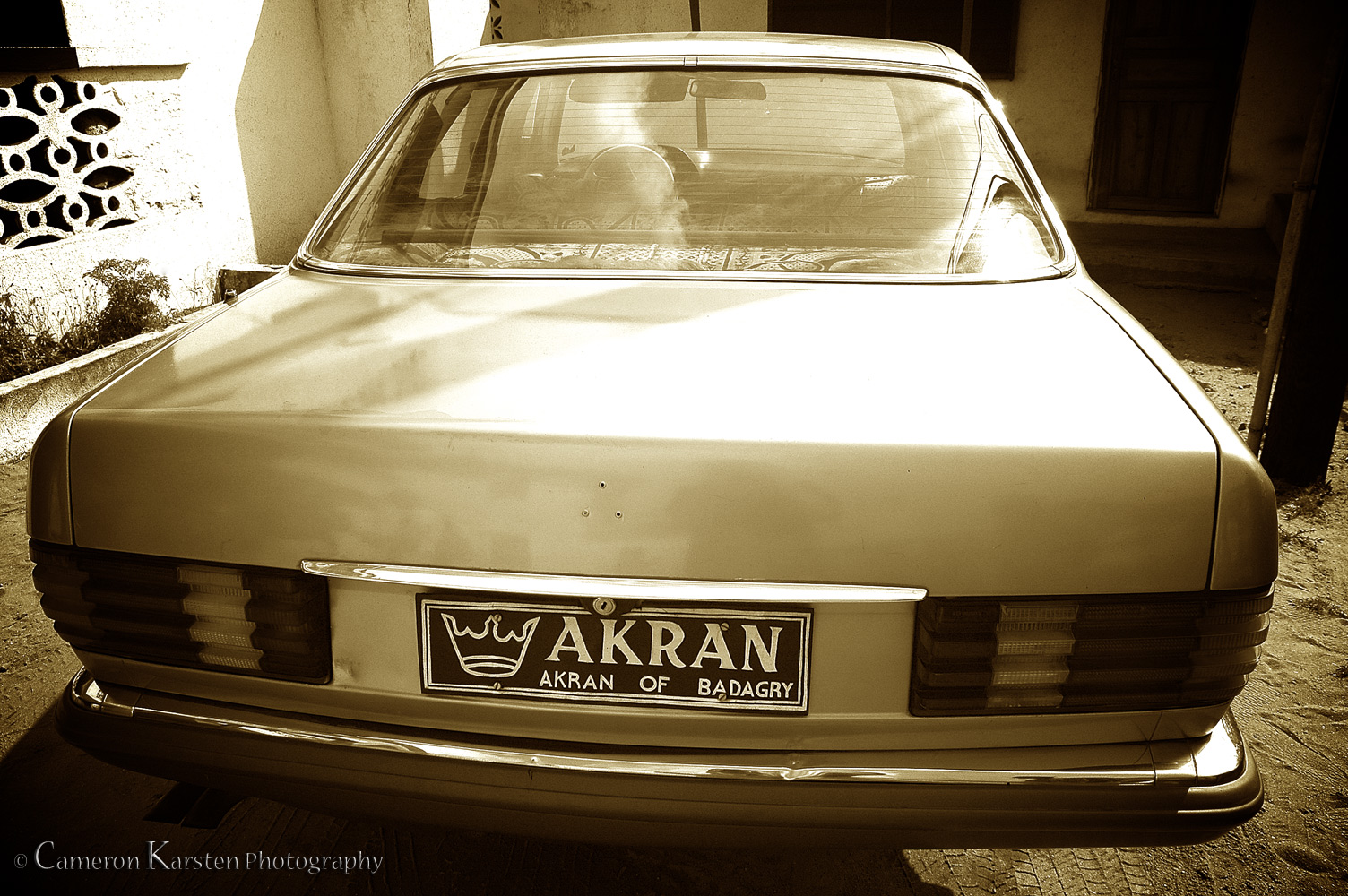
As I sat in the back of a taxi outside General Rafael Buelna International Airport, located seventeen miles south of downtown Mazatlán, heat and dust drew in through the open windows and swirled around my head.  It smelled hot.  It smelled tropical.  I thought I caught a scent of a distant sea as a faded CD hanging from the rearview mirror flashed in my eyes.  On one side of the disc, Mother Mary gave me a reserved glance before rotating out of view.

An Unrecognizable Return

I watched out the window: a beloved Mexico and its culture, passing high-walled penitentiaries, catching drafts of burning trash and the odd pile of rubber.

The land was sparse to the city, impoverished with corrugated roofs and sheds, wiry fences enclosing pigs and cattle while chickens roamed freely.  Then, broken by an obtrusive power, gorging the expanse of the countryside, were paved lots of multinational corporations.  They found their way into a culture as Mexico fell to the global faces of Wal-Mart and Home Depot.

Noise and debris, rising dust-clouds of eternal heat, rapturous signals, stoplights and padded feet across cracked asphalt. Then the next race of unholy exhaust pipes flooded the streets.

I breathed in, and as tin and brick and corrugation turned to unfinished concrete harboring spikes of rebar, the city-center approached.

A culture, historic in its patternless flow of work, family and tradition.  Mix in nutritious rice, beans, corn tortillas and a few cooling cervezas.  And then birth the working-class as a mother interlinks her arms throughout five children before dodging traffic, and los federales rolling in their crisp black ’06 GMC pickup trucks and waxy Ford Mustangs, circling fat signs and stripped lands with their sweating asphalt and gymnasiums of cheap simplicities.

My heart skipped a beat at their infiltration.  But as I drew another inhale and observed the life surrounding, I continued witnessing a thriving Mexico.  The dust tickled my throat.  I coughed.

How unburdened can a culture remain?  I was about to find out.

Arrival at the Inn

The Inn dressed as usual.  Elegant in contrast with the streets beyond its whitewashed walls.  A new tower touched the sky with 215 luxury rooms crowned with one three-bedroom ten-person penthouse.   Larger pools.  Fully functional waterfalls.  Yoga classes in the morning and increased prajna after a night of drinks, chips, salsa and guacamole.

There were painting classes, weekly Bingo for the crowds accompanying time-shares in Branson, Missouri, as well as Mexican piñata fiestas for the kin Wednesday nights at seven.  With a restaurant on premise, The Inn was a self-sufficient community of lounge-chair tortillas here for a deep-fry.

I searched a meat menu for a vegetarian plate.

Culture? I ask:

¿La cultura? ¿ Dónde está la cultura?

Indeed, it wasn’t to be found within the walls of the large resorts and hotels fabricated for the broadening American and Canadian tourists, unless, say, you worked your Spanish with the maids and gardeners.

But outside, in the heat and noise, Mexico awaited.

Mazatlán Idol

One evening the family piled into two pulmonias (a crazed golf-cartesque taxi blaring an ungodly noise of music ranging from YMCA to CCR’s Bad Moon Rising). We drove north to La Costa Marinara.

Inside the seafood restaurant, I scanned for something traditional, simple, clean.  I came up empty.  Drink, talk, laughs of the previous evening, and then to eating.  After our meal, the American music toned down and the DJ slapped on a record of classic Mexican rhythms.

Suddenly, as if transformed into Mexico’s next “American Idol,” a waiter stepped onto the patio platform with microphone in hand.  He held it tight, not in nervousness, but passion.

With reverence, he sung his heart out, swooning the customers in love song.  One local, loaded with two of his buddies at a game table of empty beer bottles, joined and grumbled to the melody.  I cringed.

“Tom Jones!” my sister exclaimed.  Reborn and alive, south of the border in Mazatlán.

In all the years we had been coming to this restaurant by the sea, we never saw the bills paid and tables emptied as quickly as they had that night.

Visit From the Country

Señor Jones was not the only performance.  Directly afterwards, six blonde children dressed as Midwestern cowboys appeared.

Between the ages of five and fifteen years, they appeared out of place from the average Mexican; not only the pressed red-squared collared shirts, jeans and boots, with chaps, bandannas and dresses, but also their faces.

These six little children seemed to have come off the beaches of Santa Cruz with tanned white skin and sandy hair.  Let alone, it was nearing ten o’clock on a school night.

The DJ queued the music.  Georgia-born Alan Jackson, in thick accent, rolled with Chattahoochee.  In practiced timing, they kicked their boots’ heels in square dance.  Suddenly, I was transported on a stagecoach time machine to a backwoods Montana bar.

An American woman, apparently from a similar locale, clapped in dramatized exuberance.  “I love this song!  Love it!”  I didn’t dare look over, but from the far corner of my eye I spotted her Margarita bowl near bottom.
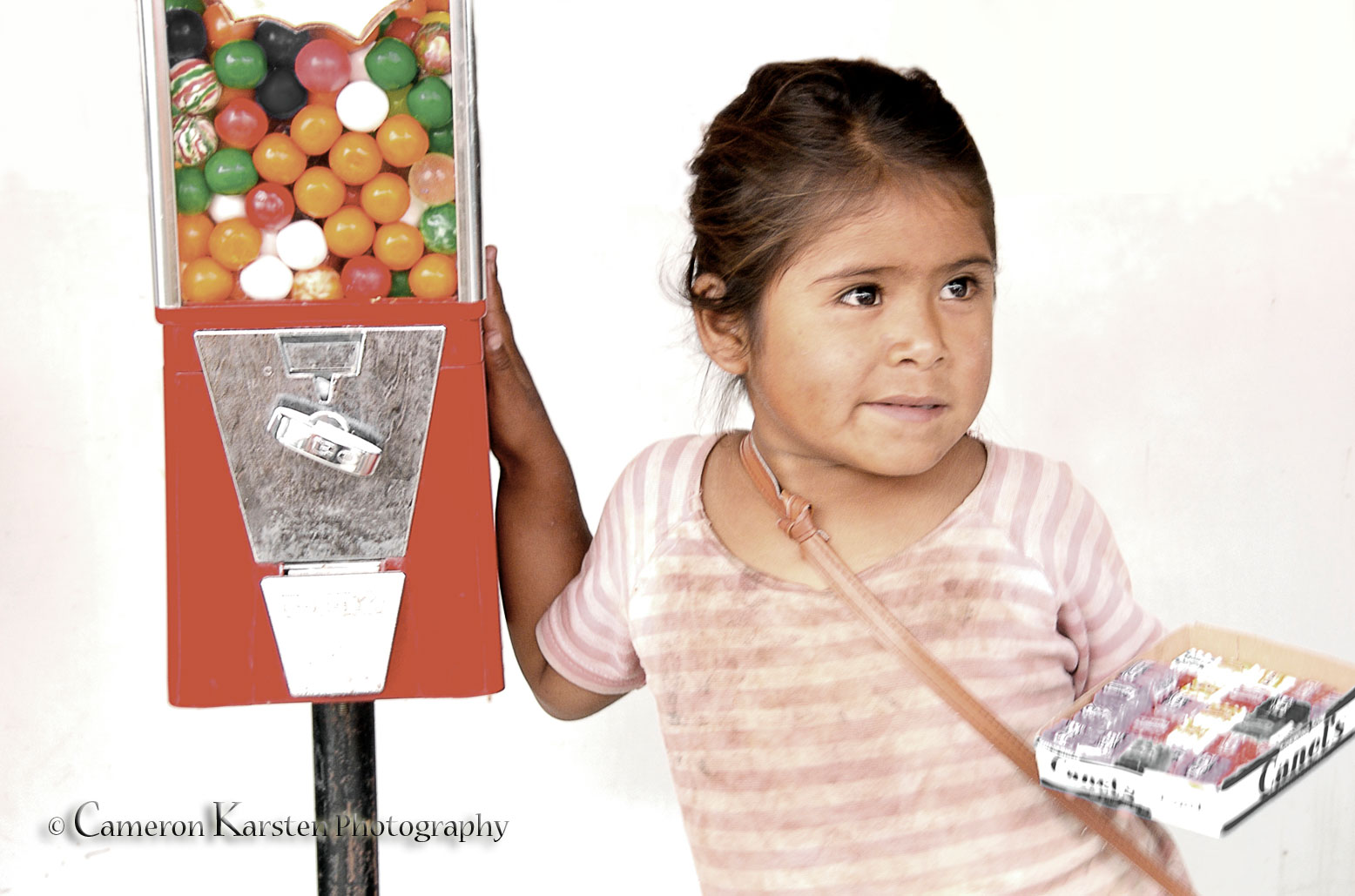
Signaling the end of the dance, the youngest three removed their plastic cowboy hats and bowed, before turning them upside down and requesting alms from each table.

Old Streets, Same Bathrooms

I walked back to The Inn that evening with my uncle on the main Avenue Cameron Sabalo.  We passed Japanese restaurants, American burger joints, tapas of Spain, and I thought of the real Mexican dishes in los pueblos y montañas: the simple rice and beans of the Latin world.

The previous day, my mother recalled the sole brilliance of the establishment known in more languages as simply: McDonalds.

“At least we can rely on a clean bathroom no matter where we might find ourselves in the world.”

Yes, Home Sweet Mickey D’s, along with other chains, soon to include Dairy Queen, Domino’s Pizza, Subway, Wal-Mart and Home Depot.

Culture.  Mazatlán.  The input of the West’s power, yet out on the streets, there was Mexico at its finest.

Yesterday’s Today

Blocks are now splashed with the primary colors of the restaurants’ and consumer stores’ façades, but the dust still rises, trash still burns, with the Chevy trucks and the workers down in the shades, mothers sprinting across traffic with young flailing and babies wailing.

Things and their monsters.  They let loose to dilute the beauty of this original culture. Yet cervezas y guacamole, no matter how diluted, still reinvigorate the Mexican culture of memory to the old and young.

Culture is life.  Life is change.  Change is Culture.

It is the beauty of the world, no matter how desperate, no matter how congested and overflowing, omnipresent like a McDo, in Mexico, India, China, France or across the street from your Ace Hardware chain.

Uncovering Your Inspiration in the Present Moment (Location: Global)

I’m traveling.  I’m in the middle of nowhere, say the Indian countryside in the heat of the monsoon.

I’m soaked, damp, wet, sticking with my own fluids and gritty under a haze-laden sun.  Or maybe I’m in Nepal, trekking alone within the Himalayas.  A snowstorm descends upon me and I’m instantly lost, wandering from the trail by the blinding white winds.

This is the present moment.  This is the only situation that exists.

You’re in it, alone or accompanied, and it’s what you’re experiencing.  Whatever the circumstances might be, you have access to inspiration, you have the key to its discovery.

What do you need?  You need nothing.  You are the experience and the experiencer.  But inevitably your energy is zapped, and life suddenly teeters on a ledge.  One side leaning towards life and the other down into an unfathomable abyss.  You’re not ready for the latter, so you breathe.

This is your inspiration.

The root of the word inspiration originates from Latin: inspiration(n-).  The noun forms from its verb inspirare, which has two meanings:

First, it is that imaginary force of mental stimulation luring toward the potentials of illimitable creativity.  Second, inspiration is simply the drawing in of the breath.  In other words: to inhale and fill the lungs with air.

Breath is the key to life.  With each observed inhale, our awareness is renewed and deepened.  We honor the present moment and whatever situation we find ourselves in.  Equipped with breath and awareness, the fundamentals of our internal search are created and the tools for life and inspiration are in our hands.

Every morning we rise from our beds, glide upon our weighted feet, with the potential to pursue further, harder, deeper and with more conviction into each day’s possibilities.

This force of mental stimulation is inspiration – as real as your own skin and as impermanent as your own bitten nails.  It is the drive toward maximum creativity into that which you live for and that which you thrive upon.

But then suddenly it’s gone.

Drained, we find ourselves rummaging our own streets and into the debris in our pockets, wondering how we accidentally threw this force out the window.

If we grasp it too hard, if we claim it as ours and only ours, a slap in the face will remind us that inspiration is a fine balance.  When we have something in our possession and then lose it, we realize its importance, how necessary it was to carry and sustain us among our life’s journey.

Without inspiration, we come to believe we’re lost, stuck in the swamp of mind’s banality.

Suddenly, we realized we stopped breathing.

There comes a soft ticking to our ears.  It’s gentle, peaceful amidst the cacophony, subtly resounding within our body.  The blood feels it.  Our heart vibrates as the arteries contract and dilate.  Within our observance, the awareness returns to the source of this heart’s beat and we’re breathing once more.

Our breath, the awareness.  Hello present moment.

No map is good or bad.  There isn’t one out there with the capability of leading us to how we uncover our own inspiration.  But here’s one to chew on:

You’re at the center of your being; breathing, living, recognizing the moment in your life directly before you.  It’s a piece of art.  It’s nature and the solemn mountains in your backyard.  It’s the smile on your child’s face and the beauty within the pages of your tattered book.

Whatever it is, wherever you are, your present moment is the inspiration, and as you watch your breath and become aware of its life-giving force, the pumping of the heart stimulates the mind.

By letting go of everything else but the present moment, creativity is at your fingertips.

While embarking on a new business idea, a new relationship, or exploring the damp, dank corners of India, these are the experiences that force you to stop and touch your inspiration: inhale and live.

The mind is the pick, the heart the hammer, and they chisel as one, directing your will into the vastness of creativity that lies within your soul.  The hammer and the pick—these are yours to explore and discover.

The Art of Spiritual Travel (Location: Your Soul)

You’re at home.  Priorities, concerns, handling of money and dealing with the collection of physical accoutrements placed before you.  You observe life, you fall into it, and then suddenly one day a choice presents itself.

You feel a desire to leave everything: your work, your friends, your life behind.  It is the inevitable moment of choice: shall you choose the same rigorous routine, or a whole new dream, unknown and only imagined.

Which will you push aside?

There was the time in my life when the choice arose.  I remember it specifically: I could have shrugged my shoulders and assumed that playing the role of a “normal” life is what I had been selected to play; or I could have instead dropped everything and disregarded the responsibilities that beckoned me into a deepening well of apathy.

I regarded the two choices (go with it or change it) with all my senses, and then I threw them aside.  I decided to follow the choice presenting the illimitable possibilities within this world.

I listened to my heart and soul and disregarded the insignificant.  I dreamed of travel.  I yearned for the freedom of exploration.  My heart and soul whispered of tales abroad among a new life of transformation.

It was simple.

I packed the few possessions I thought I needed and left with a flexible ticket to the Orient.

There, I realized I didn’t need anything I had first suspected, and so I emptied my sack of all the perceived necessities and placed myself in the hands of my new environment.

With my mind lightened and my worries about necessities eased, my awareness expanded off the pack upon my shoulders to my surroundings.  This observance immediately came full circle, returning me to an original recognition of the potential that rested within.

Suddenly, traveling became an immersion into inner experience.

My lifestyle transformed from the ordinary railway line of dead-ahead tracks that began with my birth — to that of something entirely different.

Prior to my traveling transition, I longed to see as far ahead into the future as possible.  From as early as I can remember to as recent as the present day, society told me what to do, where to go and what to aspire towards.

I was assured through this dependence that the highest education and the most respected career would bring me happiness.  The future was what I needed: that was where my happiness lied, and subsequently, would forever be.  I sincerely believed it.

But then my lifestyle became an inner journey.

I no longer strained to peer into a remote future, but stopped far short and inhaled.  I breathed in the present moment and realized that in this very slice of existence—right before me, existing nowhere else—happiness prevailed.

Travel, and the immersion into an inner experience, begets more and more—and more—travel.  It’s not an addiction.  Nor is it a habit of escapism.  It is a transformation of lifestyles.  True travel is a place of opening yourself to the processes of inner journeying.

It is laying down the arms of ordinary life and undertaking a new style wholly involving oneself and the world abroad.  It is a return to the recognition of who you are, where you came from and where you’re going within the mass of global evolution.

I was traveling and this was my dream.  With this simple decision to follow my heart, I reclaimed my own destiny.  Without it I was not myself, and with it I could do anything.

My life became a spiritual journey.

Culture Hopping: Life is the Essential Ingredient (Location: Planet Earth)

Like a roasted pepper, you’re done: well cooked, charred on the outside, burnt and spent. But on the inside, hidden within the veil of life’s fire-burner, you’re soft and ready.  Anticipating for more.

However, it doesn’t come all that easy.  After the months, weeks, or maybe only the days of travel, you return home to the accustomed life once left behind, and there, piled with new baggage you were ready to unpack, you find yourself overloaded with a new beginning.

And despite how many times you attempt to escape from this, seeking the bliss of freedom discovered upon the open road, mixed within the world’s vast cultures—leaving, returning, leaving, returning—you are met face to face time again with this long winding road home.  It stares at you.  It tempts you.

Upon returning, afflictive emotions once erased resurface (hint: they never leave!).  In order to take this road, you know you must begin the new journey with your new bags; keep on traveling, keep on truckin’ to peel away your surface layers to reach that core initially sought.

You must emerge from the cultures of the ancient times of open-air fires with stone, brick and mortar to reveal the modern complexity of steal and chrome.  The time allotted is the progress made, and until then the core will not be exposed.  Instead, the fires will continue to char, and char, and char returning you back to the start of that winding path, through and through.  Call it culture hopping.

And You Are?

Whether Africa, Asia, Southeast Asia, Europe, South America, North America, or some distant cardinal tropic marooned from the flanks of one’s accustomed culture, the traveler is an explorer in the miasmic layers, colors and spices of the world’s cultures.  To have that desire for taste, for preparation and creative roast is to obtain the initial interest of discovering a lifestyle other than one’s own.

It is a yearning for experience, for knowledge, for an accumulation of wealth that can never be bought, taught or sought in books:  It’s the potential growth of the soul that comes with willingness, dedication and an awareness given the time and space to be sown in the soils of one’s consciousness.

Through the journey beyond, an epic tale of letting go and allowing the fires to char on their own accord, experience becomes wisdom.  It becomes that seed enriched with appreciation for life, a life involving a continued exploration of man, woman, Nature and their intriguing interwoven dynamics.  Alone, this path cultivates and further roasts one’s seed of awareness allowing the pepper to blossom and the fires cook.

For such a traveler, life is the essential ingredient.  Within mind, body and soul there contains essential components only fed when the traveler throws oneself into this very unknown.  This is where life revolves.

Certain characters are necessary for the traveler to embark and take upon these fires when ready:  Such one loves the unknown.

He or she loves taking this upon destiny like a parasite caught in flesh.  It is a necessity, a fertilizer sucked from the deepest soils, where the senses abide to the farthest root tips; stretching, distending, growing further and reaching for that appreciation of life, its beauty and the diversity which flourishes.  These cultures of humanity define the sustenance of life, and without their firsthand experience there would be no worth to the traveler in the life surrounding.

And so, with a firm grip upon an adventurous nature, a character ready and willing to let it all go for something without any future at all, the traveler within me tossed this mind, body and soul into the deep soils of the earth.  Seed planted, sustenance fed—my pepper of various layers, colors and spices began to sprout.  The fire was already provided.  I began my culture hopping.

Cultures Revealed, The Culture Transformed

I went abroad, explored the cultures of islands, of development and riches, of poverty and those stricken with the despair of unjust treatment to their basic human rights.  I went abroad and found turmoil in the markets, unlike my hometown grocer’s well stocked and aligned isles.  I was ingrained within these new markets like a spider in a neighbor’s web, weaving my thread with theirs, calm and observant with the people of Africa, Asia, south-north-east-west and beyond.  I spun more, throwing an innocuous trust within my surroundings.

Further, I found isolated pockets of forest, tropical with malarial mosquitoes and monkeys.   I saw fauna and flora of the imagination, and I let my own wander to color my thoughts with its fragrance.

Things filled my senses.  Life invaded me.  From one culture to the next, I let go, stepping deeper into the unknown.  And I let go once more.

Literally it all consumed me, and as the small seed, a sponge underneath the flowing faucet, I soaked in it.  I was free.  I was the traveler.  I absorbed this flow—people, thoughts, situations and circumstances, foreign politics, cuisines and their palates, lifestyles and manners.  They became a part of who I was, and who I sought to become.

From one individual to the next, from village to village, city to city, via bicycle, rickshaw, tuk-tuk, taxi, bus, train, boat—or by foot—I was culture hopping.  I was experiencing this life I knew and never knew.  It was withdrawn from within me where I allowed an awareness to manifest the road ahead.  And on every step, the journey started anew as the flames were fueled, the fires turning hotter.

Eventually, I was done.

The pepper: blackened, charred, burnt on the outside.  Work was now necessary to peel away the layers, and so the traveler returned home to the culture left behind.  There, after faced with one phenomenon to the next, culture hopping at its finest (the pepper well-done, the spider entombed within, a sponge oozing the sustenance of life), explorations changed courses and routes led homeward to the familiar lifestyle.  But through each interlope and interchange of culture there was that reunion affected by this so-called hopping.

It was a reemergence with the traveler’s old self, bags ready to unpack before discovering there were still more bags to be carried.

Still Traveling

Often it’s unexpected, meeting this thing left behind which is now present; all around you, within family and friends and customs and routines.  It is the traveler of the past; the traveler before the traveler was ever a “traveler”.  In essence it is the mind, body and soul in which everyone knew and everything expected despite the change.

Returning from Southeast Asia to southern California, my confidence and belief within my own self and the direction I was heading hit a steel-plated wall.  All happiness faded.

But now, unexpected, the new traveler facing the old traveler before the traveler was ever a traveler becomes paralyzed.  He or she is overwhelmed with the past culture amounting to that of the new various cultures adopted.  Known collectively as “culture shock”, there is no turning back.

The old sages comment, “Easy is the choice to begin or not, but once begun, better finish.”

And like a dish of foie gras to a vegetarian consciousness, like a Russian bath for the Hawaiian local, culture shock throws you into a chasm where the lights are dimmed to view only the faintest silhouettes ahead.  There is nothing left behind.  You must continue and accept a responsibility, for this very shock is the effect of your culture hopping.  It stuns, saddens—and more significantly—paralyzes the senses and any feeling of centeredness.

Questions arise again, afflictive emotions stir as remorse composes a symphony of disgust, despair and pain before the next layer of pepper is charred.  There’s never the chance of having the opportunity to live the life of its soft sweet flesh.  This is the case of reemergence into Western society.

Returning from Southeast Asia to southern California, my confidence and belief within my own self and the direction I was heading hit that wall.  Happiness gone.  Despair arisen.  Confusion ahead.   What I remember most having returned from the months abroad was entering that Ralph’s “superstore” on Colorado Boulevard in Pasadena.

Culture shock as loaves of bagged bread—signed, sealed and delivered—shook with a consumerism’s shopping rage.  It was like an exemplified spree; carts with gargantuan mouths, open and wired to the teeth.  They could be stuffed full, occupying up to ten bags if willed.  There were meats, animals to be more specific, which now took the form of slice after slice, shank and steak and thigh and breast—or why not whole? My eyes witnessed the abundant glory to what a Newari family in the Nepalese Himalayas might perceive:  I’m in heaven!

No.  To me, having experienced the impoverished of India, Africa and Asia—as well as the freeway underpasses of California’s forgotten homeless; having walked the mountains and beaches where a family was considered lucky if a porter succeeded in bringing what they requested, this mass production of animals, genetically modified fruits and vegetables, and aisles upon aisles of sugared dumplings called Ding-Dongs hit my lower abdomen with an iron cudgel.

Cheeses and yogurts fermented beyond their expiration date.  Fizzing bottles of Coca-Cola and Dew blew their tops.  Bottles of water became dirty.

What happened to the market?  To morality?  What happened with globalization and to our care for others’ well-being?

No, I concluded, there was never a moral concern for life.  And there never will be.  What the hell am I doing here? I was culture shocked.

A Welcome Home

It’s the most difficult stretch of the journey; to return home to family and friends, to routine—to life as you once knew it—and apply successfully all the lessons of travel.  People look at you as they did in the past, but you say, you stand up for yourself:  No, I’ve changed.

The world revolves.

You see the news.  You have the luxuries you once forgot and indeed took advantage of in the past.  Daily life causes its stresses.  Anger, confusion, and all the other emotions come to greet you with a slap in the face, smiling like they’ve never done before.  Even those plates of food adorning your dining table are a blessing, but no one else seems to see.

Likewise, you yourself begin to struggle.  In your silent prayers you return your conscience back to the center and thank the sustenance before you and your family.  You thank the Universe for this life compared to others witnessed far away, an observance you’re beginning to forget.

As with most, the first return and its adaptation is the hardest.  You cope with it, you deal with it and you hopefully take in the lessons for your growth.  The second and third become easier due to experience, and with the appropriate placement of the lessons recalled, your life, whether traveling or at “home” in your own culture, becomes a continued journey of culture hopping.

You are the traveler and you feed this, caring for yourself with the practice of your experiences from the places you’ve been.  It is your new culture in which you live and grow from.  But how do you get passed the initial return, and the second and the third?

Over my travels, an unknown quote to an unreligious individual has reminded me of strength and courage: “God comforts the disturbed and disturbs the comfortable.”  It is a message shouting there is always more growth to be had.  Once you think you’ve reached the top, you’ve actually hit bottom.

Greeted with the eruption of past habits and routines, I have taken the journey of reentering the life I left behind as a whole new opportunity to evolve further to that infinite goal.  And what keeps me sane throughout the process is the remembrance of the journey passed and how it’s still in its entirety churning within me.

Therefore, I’m brought to the present, the internal traveler awoken within to become the traveler of the present moment no matter what road I might be on.  I see family and friends; they might mistake me for someone of the past.

Sure, I’m still that person, but now I’m him, which includes this new traveler.

I see shelves of abundance in a culture appearing oblivious to the rest of humanity’s infirmities and I become grateful to have that awareness of the resources in my life, their precious blessings, and how most persons round the globe might not have such a luxury as the basic necessity of shelter to plates to eat upon, or surviving family and a network of friends.

I remember how I used to take things for granted, including as a boy that dumpling of sugar, the so-called Ding-Dong.  Hence, there is no need to despise it, but better yet be appreciative of the options and leave it for others who might harbor interest.  And I’m grateful for the world’s diversity and the cultures out there to be explored.

Though what remains most important, disregarding the adventure of external discovery, is the magnitude of a continued internal exploration.  It is an application of one’s new understanding and belief into mainstream life that keeps this cyclone of the Self gyrating.

Barriers discovered, analyzed and then toppled; passed through to advance further into the conscious Self.

Each step hosts the opportunity for growth—mentally, emotionally and spiritually—and with the continued practice of one’s lifestyle within the new surroundings of home, obstacles of daily living no longer appear as they once did.  Instead they take the form of that flame, licking the edges of skin to provide a tool to peel away the outer layers to reach its deepest core.  That fire is of love and peace, as is the core—as is the practice, the people and places—as are those once termed “obstacles”.

And So, To Hopping

Today, there is more of Asia, West Africa, Europe and more Central America, including my own culture, within me.

As a traveler with a continuous yearning for growth through an experience of culture hopping, and a lessening culture shock, I have come to peer through a cleared perception, recognizing the differences and similarities of each land and its people.  I have come to accept these cultural barriers as a part of this physical world, established in total for our growth.  Beyond these barriers, they dissolve and I perceive a life with the oneness of all peoples.  My heart opens as I remind myself and take recognition.  Happiness returns.

Yes, I’m still traveling.

Life keeps churning, and as a morsel within the stew—that spice—as a bubble in a boiling pot, I have only so long before I leave and transform, before I am eaten by my own creation.

In order to fill this duty with its finest, in order to allow the fires to masterfully complete its roast, a strive to dig deeper attains progress.  It is the act of reaffirming the underlying connection between people and their cultures.  It is the subtle continued establishment within the mind that they—we—have founded this very life and that we are here together to share it.  Through this realization, carrying for myself and reawakening from sleep each fleeting moment, the afflictive emotions associated with the road and the return into daily life subsides.

A roasted pepper, charred skin peeled, I am now ready to continue with the ingredients of this infinite stew of culture, traveling deeper into the feast of life.  Culture hopping is my vehicle of choice.

Labors of India (Location: New Delhi, India)

“Oshi, please. Uncle is waiting for us.”

I am sitting in a renovated immigration hall experiencing way too much time.

“Oshi, please!”

The lines are getting smaller, people shuffling, waiting.  A woman beside me shoos her young daughter away as she kneels on white marble, scribing black letters on an Arrival Card.

She finishes. Mother and daughter leave for an Uncle.

I’m in India; an India seemingly small compared to the first time I was arrived.  Over a year ago, I was intimidated to be in this massive democracy, a planet unto itself with flavors, scents, terrain and more diversity.  But today it appears minuscule after the other countries and cultures.

Planes unload their passengers.  Paces quicken.

On my plane, there sat a young British woman from the Gatwick area of London.  She was in India on work and explained she was part of a human resources company preparing a presentation at the University of Delhi.  The company was recruiting employees and those hired would be trained in London before returning to work at their Delhi offices.

Lines fill again.  Customs is full of Germans.  Their voices drown out over the CD skipping through the speakers.  Between the scratches, the music is something like an electronic Peruvian flute, and as time lingers, I see people moving to the rhythm.  Germans sway.  A woman in a purple sari trails her lace scarf.  It catches a breath and flutters to the melody.

As she rounds a metal pole forming the orderly maze of security, her luggage follows closely.  Suddenly, it cuts too close, rises over the aluminum base and tips over.  The music stops.

Apparently Hong Kong arrived, but I see no Chinese. If the flight exists, I’m expecting to observe pairs of backpackers and hoards of tourist groups—name tags, color-coordinated luggage plates—walking in circles.

My plan is to catch a 7:20AM train, the 2031 Shabati Express to Amritsar.  Currently, it’s 2:30AM and my desire to wander the New Delhi Railway Station at this hour is nonexistent.  So this large room suites me well.  I’ll stay until the uniformed workers decide to kick me out.

Hours later I discover the Shabati is booked.  Next available train is on the seventh—four days.  I forgo my plans; find a room and crash, sleeping for over twelve hours before checking out in the afternoon.  I head to Paharganj of New Delhi and before I’m awake I’m on a bus to McLeod Ganj.  The destination looms distant.  It will take fourteen hours.  I have no seat, only a front cabin bench beside the driver.

Sitting on top bags, my limbs quickly fall asleep as cold winter air flushes into a cracked window. One after another, the driver smokes his beedis as day turns to night.  The bus climbs into the Himalayas and behind the blaring Indian music, I can hear the roar of the engine and passengers in the back vomiting out windows.  Shortly, I join the ranks.

Paying for Your Mind: The Magic of Venezia (Location: Venice, Italy, Europe)

Venice.  Silence all but the jabbering tourists, grumbling water taxis and yapping dogs.  The days of Venice are mystical, a realm from an ancient water world.  Nights upon the isles are a mesmerizing mystery with foggy passages and cold stonewalls.  The gypsy coin peddlers back in Florence and Rome feel like a gossamer memory from youth.

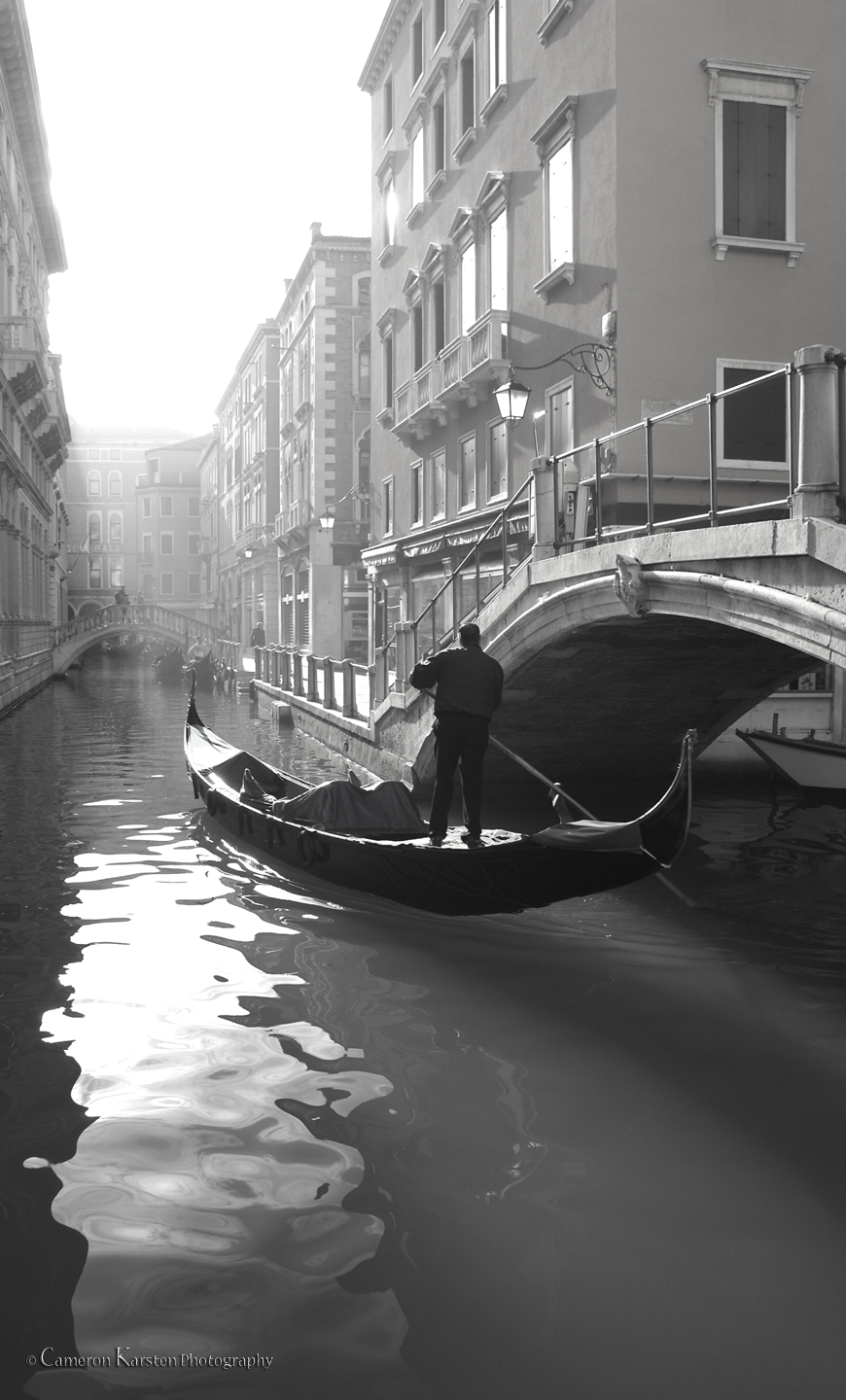
Amidst the city, some four hundred gondolas make their rounds, kicking off enclosing walls for guidance as they pocket a romantic’s savings.  In their adept grace and good humor, the stillness of the narrow waterways off the main aquatic freeways simply adds to the hypnotic state found upon the lands of the Venetian lagoon.  Albeit, even the temporal condition of a traveler’s enthrallment comes with a price.  The fee for a few days upon The Queen of the Adriatic is priceless.

WHAT THE VENETIAN CREATURES CALL HOME

On the first evening’s arrival, a numinous fog hung onto the waters off the canal.  Wandering through the alleys, the walls and cobbles wet with dew, people shouted and echoed, their faces obscured by the condensation off their breath.  Things felt tight, empty, until the principal square of Venice opened into an expanse.  Piazza San Marco, where the 16th and 17th century walls faded into a dream as tours of pigeons and people gathered for feed and sociability.

Under the mystique of the sky, consumed by the omnipresence of these Venetian creatures, lights along the outside of the San Marco perimeters snapped into luminescence by the touch of a reclusive finger.  The crowds, under the trance of the sudden whim of magic, wailed in exasperation, and together they hummed, creating a synchronized tune amidst San Marco’s grandiosity.

Like the Doge’s command, the crowd’s choir quickly faded as Beethoven’s quintet raged with passion.  Outside a café, the classy four-piece band battled with another opposite the square.  From Mozart to Luciano Pavarotti into the classic modernity of The Sound of Music, the front ensembles in stiff tuxes fought each other for the thickest audience.  By feet, the music was free, yet under the carefree ambiance at a table in the piazza, nothing went without a charge.

EXCUSE ME, WAITER

With the appellation applied to the Adriatic city, every nook and cranny is entitled to the Queen’s throne.

At Caffé Florian, a small table draws up two tweed seats.  Settling into San Marco’s atmosphere, people watching and inhaling the thick sea air passes time as service flies away with a pigeon.  Eventually, a well-tucked and tight-fitted waiter consisting of frigidity and an empty tray appears without a gaze.  Eight euros – a glass of white wine.  Eight euros – a set of tea infused with lavender.  An hour ticks.  Nothing seems to matter but a refill.

Within Venice, twilight morphs into a yellow evening as street lamps alight like single shard from a dying sun.  The pigeons disappear, as do the clusters of families with their young throwing feed and karate-kicks.  Life appears to slow down as echoes through the street become more commonplace and mist from the November fogs settle atop shoulders.  Things feel vacant and the intimacy of a Venetian restaurant lurks between its neoclassical alleyways.

Café tabs paid, the cover charge for ambiance is no less surprising.  It’s complete with all of Venice; from the city’s Piazza San Marco with its gaudy basilica, its bell towers and their clapping ring upon each hour, to the historical empire, mystique seclusion, hordes of civilization, to the famed crafts of blown glass on the isle of Murano and the Venetian school of Renaissance paintings by the Bellinis and Vivarinis.  It’s the foggy ambiance of surrealism, whether sunny, rainy or dreary under a gray layer of high clouds.  In essence, it is Venezia and it’s worth it, including the supplemental music charge.

Looking around, the tables are full and will be for the remainder of the evening.  Therein, each person at each table pays a bill and coin of five and fifty euros just to sit and indulge in the magic of Venice.

THE BELL’S BRONZE, A HEART’S GOLD

With time’s strike upon the hour, the two bell towers ring and heads turn skyward.  The same hum radiates from the many mouths at that moment, looking up and then turning back down to smile and find the lover, the family, the friend or stranger with eyes of equal amusement.  Venice is a silent bustling paradise marooned from the cultures abroad where the Queen timelessly sings.

Warri-Town: In the Dark Bus (Location: Warri, Delta State, Nigeria, Africa)

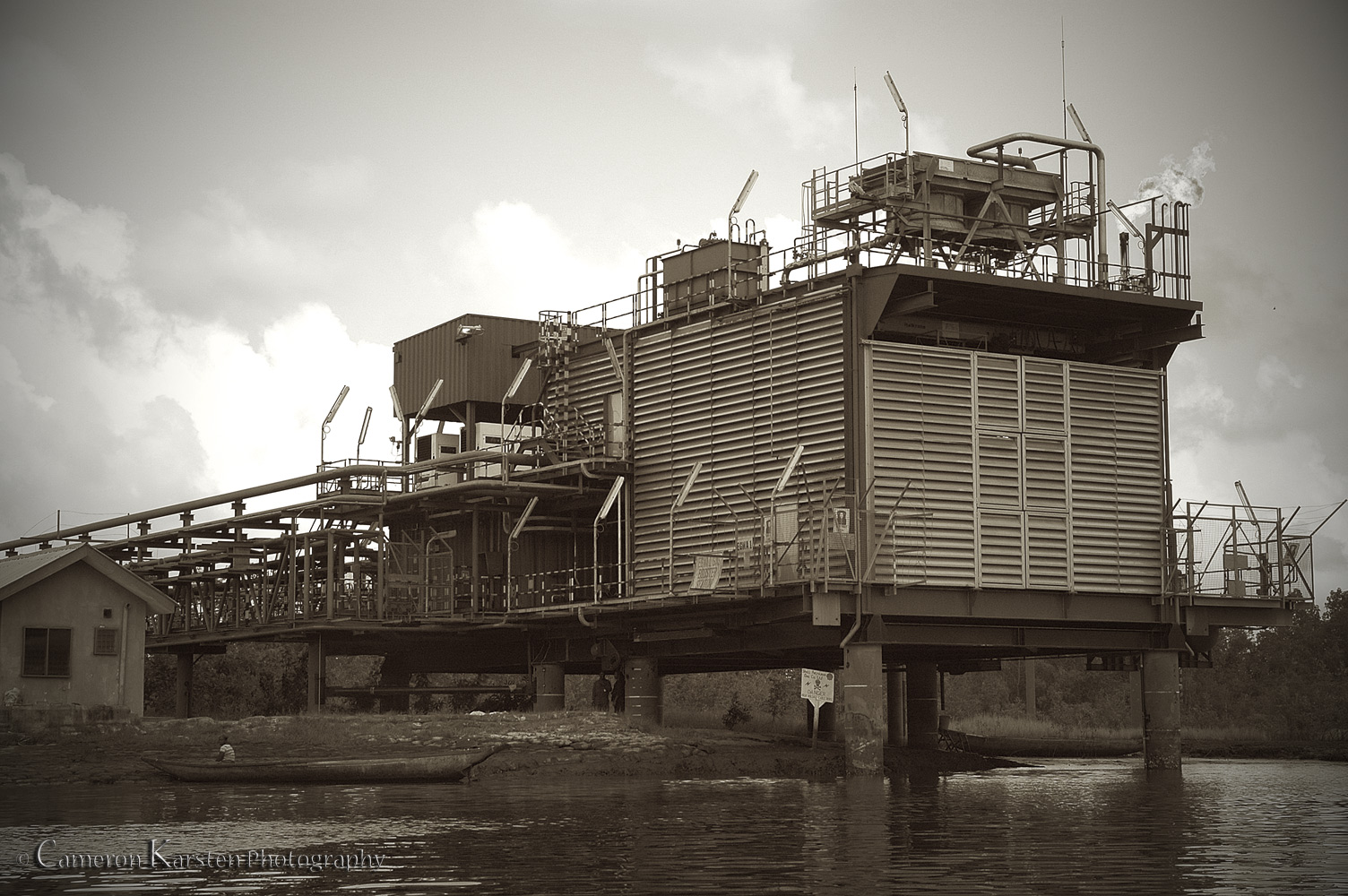
Just as it was with countries like Cambodia, India, and Nepal, Nigeria was real, it was raw, and it was dirty.  Asked why, a simplified answer spoke of how the people and their land were utterly besmeared by the hands of humanity.  Rounded up as slaves by an advancing world, sold, exploited, freed and once again colonized into a vicious cycle, it was their livelihoods and their land that received the brunt of destruction.  Today, the culprit is called oil:  The Blood of the Earth.  And a market of big leaguers stuffing their pockets with cash continues to fuel.

Twenty Seattleites found themselves in the epicenter of the Federal Republic of Nigeria where approximately 240 dialects throughout thirty-six states interacted within 357,000 square miles.  In the weeks we began familiarizing ourselves with one another and the culture pervading, each of us recognized a common bond.  We were here to experience Africa and we all came together, each independent persons with distinct perceptions, yet each harboring a unifying soul with similar intentions. Like threads in a blanket, we wove ourselves into a network of talent to design a new pattern.

Deemed grassroots diplomacy with Global Citizen Journey, we desired understanding and compassion, which emerged into a deeper awareness: People needed to know.  Our families and friends around the world.  Our neighbors and strangers back home.  Consumers and producers.  The people needed to become aware of the real Africa and the real conditions its citizens faced due to our hands.  This was our purpose, what brought us together—to become aware of our abilities as citizen diplomats, taking the reins of our life and society, and transforming them to meet their needs.

We were in Nigeria, an underdeveloped society striving for a chance, fighting to grow, sitting on a wealthy cache of resources.  We were in the Delta State about to embark on a journey down The Creeks to the village of Oporoza, where something slick and dark moved like a nighthawk.  It killed and pillaged.  It led clear minds astray and clean hands to dirt.  It was pushing Africa down.  Meet greed, the second culprit in this case, and greed and oil do not mix.

Nigeria, Nigeria, Nigeria.  I caught myself repeating this mantra beside Los Angeles-native, Eric Esplin.  We looked at one another and chanted as if in trance.  Nigeria, Nigeria, Nigeria.  Eric and I were finally there after the months of preparation and research.  I had sold my car.  Eric kissed his wife goodbye.  And we both left wanting this experience to permeate our being, infuse us with understanding that would transcribe into compassion and evolve into new lifestyles.  Together, along with a few others, we decided to act on our inhibitions and venture into the masses of Warri-town.
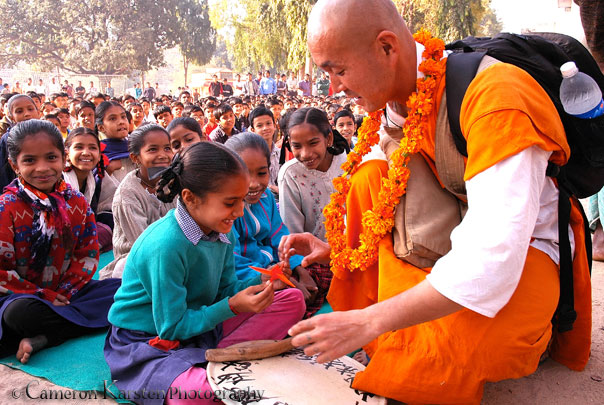
Warri was a significant metropolis of Nigeria’s Christian south.  It went by Warri-town, Wassi, the Oil City of Humanity, Wild West of Africa—and the atmosphere was riddled with the sense of something new, something alive.  Our select group tasted this and felt the need for adventure.  From the plush marble walls of the Wellington Hotel, we left behind its automatic doors and the gated entrance to meet the world of Nigeria’s booming oil town.  And after traveling from Lagos to Benin City, meeting up with twenty new Nigerian delegates, and together moving further along the road, it became just that: Warri in the Dark.
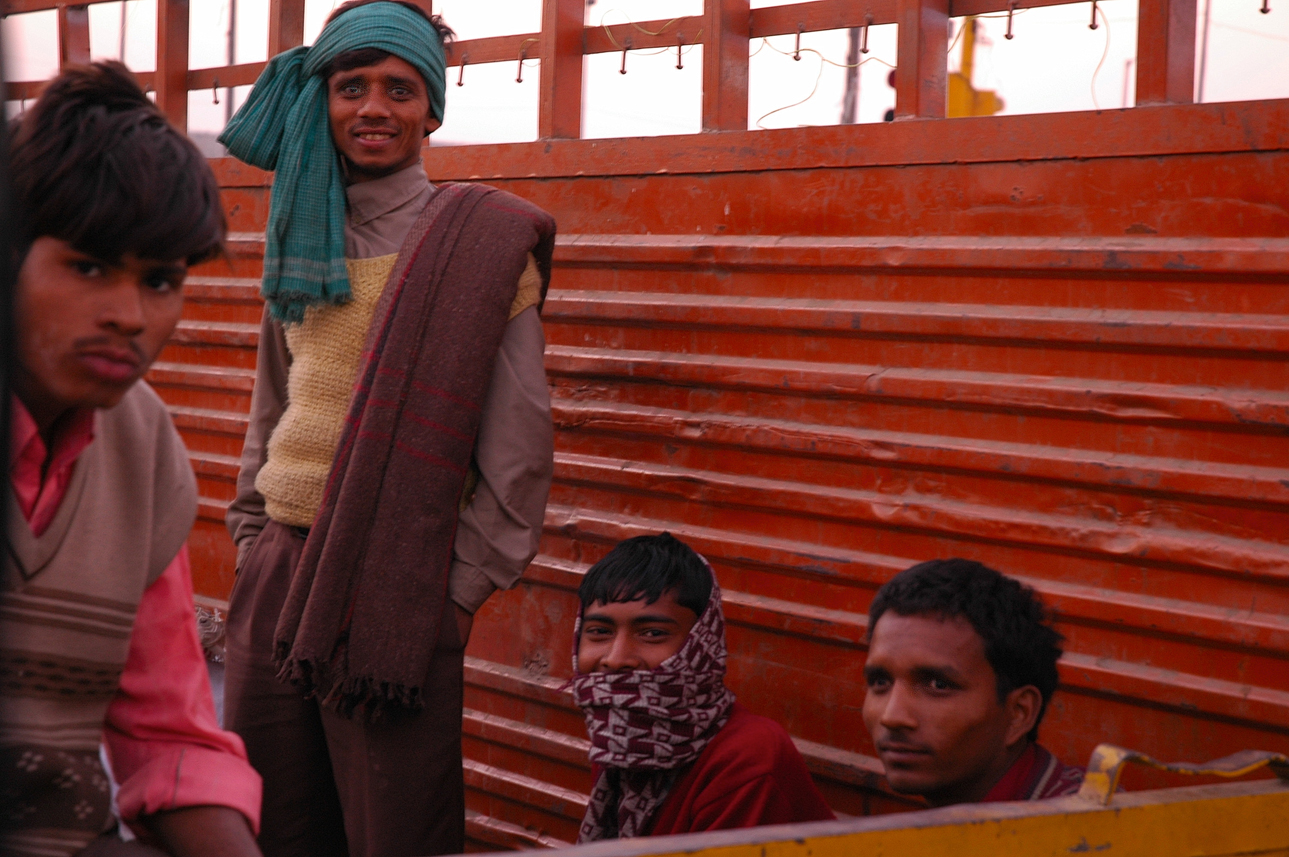
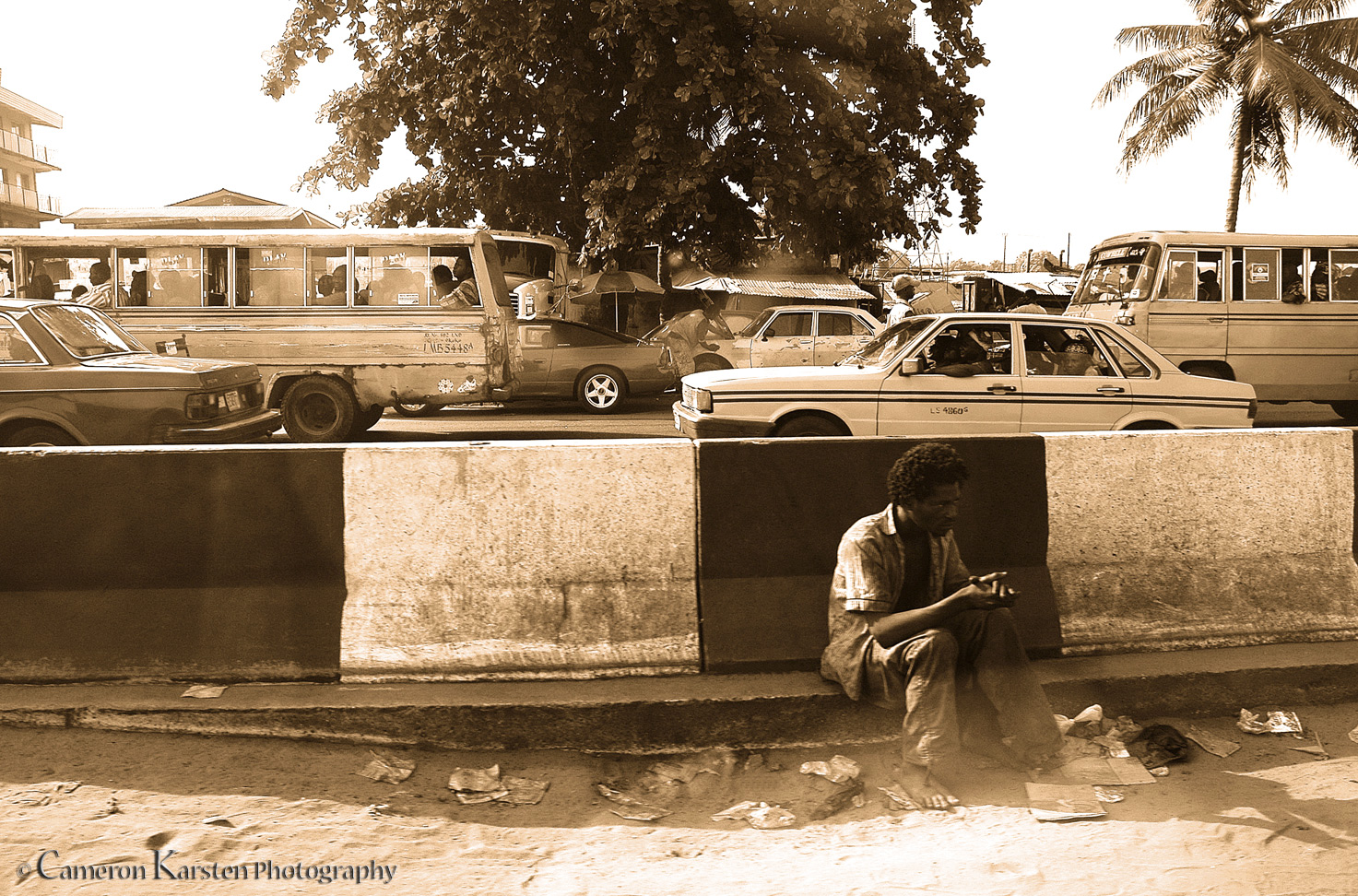
It was what all advisors warned against, including our own leaders and delegates (some of them from the city itself). The traffic, the madness, the exodus of humanity returning home with the 6PM closure of shops and subsequent seven o’clock road-ban of motorcycles due to recent unrest.  The jam was a river of creosote-stained logs, spinning in a whirlpool of rusted industry.

But what intrigued us the most was the sheen of the skin, its black gloss.  It cast a mellow glare like hot candle wax, while headlights from oncoming traffic reflected like sandblasted glass through the rising dust.  Men’s bald heads, their lanky necks and broad, ram-boned shoulders; women in color, rainbows of woven crystal magnified in the haze-ridden beams of night traffic: These two aspects of male/female clashed before slamming into one another with a meager quality of production and care, prosperity and concern.  Their heat infused in the mass of ground movement and mixed within the airborne ether of the African atmosphere.

Again, it was dark—a thick black held in a global container of humidity.  There were few stars, only faint specks seen burning through the dank layers above, and as we crossed the Danger Zone our Nigerian delegate, Nicholas Ijabor, announced,  “In the mid ’90s, even at the turn of the century, this was a battlefield.”

We nodded.  We stared.  White eyes blinking without sound.  There was nothing but black and that brown night beyond the bus’ thin glass.  Our bubble felt small, insignificant.

“This junction is the line,” Nicky continued, “the line of property both Ijaw and Itsekiri battled for.”  His talk was smooth, stirring our fears with his ease of localism.

I know what we were all thinking just then.  First, the reality of being in Nigeria.  I heard that chant in my head.  I looked across at Eric.  He felt it.  It was in his heart:  Nigeria, Nigeria, Nigeria.  In a peculiar way, we were all familiarized by now, but at the same time, we knew we never would be.  We were Americans in Africa.  We came from a culture that exploited their livelihoods and raped their lands.  At that moment, we were taking their oil, paying the multinationals to supply our economy, which gave the people little in return.  This was not our land.  It was not our oil.  It never was and it never will be.  We turned a blind eye as people died, wars raged and violence within a suppressed people’s revolution prevailed.  Oil was spilling across humanity.

Secondly, the US State Department recently released a statement on its website specifically advising travelers not to enter the Delta State.  This surfaced immediately.  Our minds spun with the cars, mottos, lorries, and people outside.  The bubble became smaller.

The feelings, the facts—our rationality—compiled.  As I sat in my seat the bus trundled thru traffic.  I came to a third carriage of thought.  The Security General had reported to our delegation his own personal concern: Do not travel outside Lagos, Africa’s 2nd largest city, without a trunk-full of AK-47s and a MOP squad for escort.

Suddenly, there was space for reflection.  The churning seas parted and we saw the Security General as a professional with words; sentences used by professionals for those very professional reasons.  That was what he was there to do. Cogs and bolts greased, the mind’s moving machine continued, traveling with the rest of Warri as a ship across calming waters.

Now a fourth and final respect reared: our own leaders, one by the name Joel Bisina—a local of Warri-town—warned of the adverse potentials after nightfall.  Looking out the windows again, blinking, and making sure what we saw was real, we wondered whether our bus with its government plates was a paradox.  We were white, rich in most eyes, with the world at our fingertips.  And we were traveling through their existence, at the opposite end of the spectrum, through the blackest of nights.  A deep brown of raw earth permeated my vision and there was only that steady darkness within my mind and within those who stared at our bus’ identification.

Being white in Africa, I seemed to relate with what was white.  Therefore, the only visibility I could perceive from our air-conditioned vehicle was the eyes and teeth of our fellow humans.  They were a clear, clean reflection that caught the glare of passing headlights.  They reflected back like moonlight on a pond, soothing us, reminding us of the perceptions we perceived and the choices we made.  Our minds reflected an external landscape.  Our environment mirrored that of our internal framework.  Everywhere was an oily darkness that stuck to the skin, but there were those eyes, those teeth—the inner brilliance of the light of the soul.  My eyes adjusted, my mind reorganized, and what I saw was the reality of an oasis amidst a midnight dust storm.

Our eyes remained wide, our thoughts pondered the “adverse potentials” as we crossed the Danger Zone, and we played nervous finger games among ourselves while the bus surged through any opportunity for space.  Then we crawled out, smelled the air and broke the bubble.  The eyes and teeth were filled with the light of many smiles as colors absolved.  This was Warri, the West African oil boomtown we sought.  This was our level of desire, arriving for awareness, breaking down fears and moving forward to change.  We were freely caught in this chant—Nigeria, Nigeria, Nigeria—where the oil suddenly ceased importance, where money did not matter, and what only existed was humanity and the planet we thrived upon.  I had an opportunity.  He had that opportunity.  She had the opportunity.  It was their land and their lifestyle.  But it was our connection as humans that united us within that African night.